

Puerto Rican sancocho is a hearty beef stew with sofrito, root vegetables, green plantain, squash and corn. This generous pot serves eight; cooking the beef first and adding vegetables in stages keeps the meat tender and the chunks intact.
Puerto Rican Sancocho at a Glance
What Is Puerto Rican Sancocho?
Sancocho is a family of substantial soups and stews found across Latin America and the Caribbean. In Puerto Rico, it often combines meat with viandas—starchy roots and other staple vegetables—and a fragrant sofrito base. The exact pot changes with the household, what is available, and how many people are coming to eat.
Beef-only versions belong comfortably within that range. Puerto Rican chef Christian Quiñones’s sancocho recipe shared by Hilton combines beef with sofrito, yautía, potato, plantain, and corn. Other cooks add pork or chicken. You do not need a fixed number of meats or every possible root vegetable to make a satisfying pot.
The Ingredients That Build the Flavor
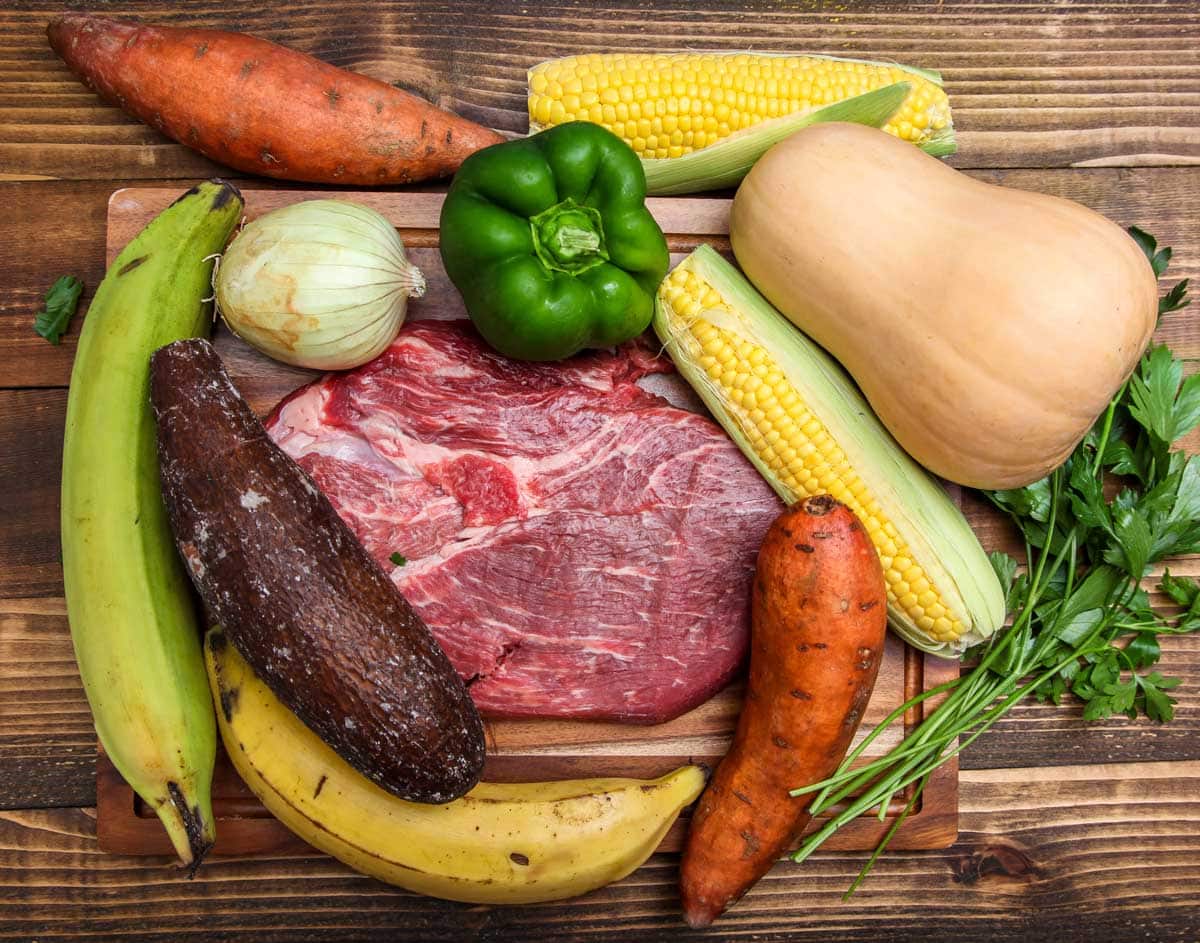
Beef chuck: choose a cut suited to slow cooking, with some connective tissue and marbling. Cut it into evenly sized pieces so it cooks predictably. A package labeled simply “stew meat” may contain different cuts that soften at different rates. Lean steak is not the best substitute for a long simmer.
Sofrito: this is the aromatic foundation. Our Puerto Rican sofrito recipe combines peppers, onion, garlic, cilantro, and recao without added salt. If yours is store-bought and salted, start with less salt in the stew and adjust at the end.

Tomato sauce, oregano, and bay: a modest amount of plain tomato sauce gives the broth body and color without turning the dish into a tomato stew. Oregano adds an earthy note. Use plain sauce rather than a seasoned pasta sauce that could overwhelm the sofrito.
Low-sodium broth: it lets you control seasoning as liquid evaporates. Keep extra hot broth or water available, because pot width, lid position, and simmer strength all change how much liquid you need.
A Guide to the Roots, Plantain, and Squash
| Ingredient | Texture and role | Practical substitute |
|---|---|---|
| Yuca / cassava | Dense and starchy, with a satisfying bite. Use peeled frozen pieces and cook separately as directed. | An equal weight of potatoes is simpler, though the texture changes. |
| Yautía | Creamy, earthy root vegetable that helps give the stew substance. | Use more potatoes if unavailable. Check market labels carefully. |
| Potatoes | Familiar, tender pieces that can also thicken the broth. | Use a variety that holds its shape reasonably well, such as Yukon Gold. |
| Green plantain | Firm and starchy rather than sweet. | More root vegetables can replace the volume; ripe plantain produces a sweeter result. |
| Calabaza | Soft, mildly sweet squash that adds color and body. | Butternut squash is a useful substitute. |
| Corn on the cob | Sweet kernels and an easy-to-recognize piece in each bowl. | Frozen corn-on-the-cob sections work; follow their cooking directions. |
You do not have to hunt down every ingredient to make dinner. Keep a balance between firm starches and softer squash, and replace by prepared weight so you do not accidentally double the amount in the pot. The recipe uses modest quantities of several vegetables; adding a whole large specimen of each can overwhelm the broth.
Preparing Yuca

For convenience, this recipe calls for peeled frozen yuca. Boil it separately according to its package instructions until fully cooked, drain it, discard the cooking water, and remove any tough center fibers before adding it near the end of the stew. Frozen does not automatically mean fully cooked; read the label.
Do not taste raw cassava. Food Standards Australia New Zealand explains why cassava requires proper peeling and cooking. Our yuca guide has more background on this staple. Using a prepared frozen product with clear directions makes this recipe easier to follow.
Peeling Green Plantain and Yautía
Green plantain skin does not slip off like a ripe banana peel. Trim the ends, make shallow lengthwise cuts through the skin, and lift away the strips. Keep the pieces fairly thick so they survive simmering. Rinse peeled roots, and use gloves if handling raw yautía irritates your skin. Never taste the roots before cooking.
When to Add Each Vegetable
The clock below starts after the beef is nearly tender. That first beef simmer can take longer than expected, so test a piece before moving on. Keep the stew at a gentle simmer and stir carefully after adding the vegetables.
| Stage | Add to the pot | Approximate time |
|---|---|---|
| Beef first | Browned chuck, sofrito, seasonings, and broth | Simmer about 75–105 minutes, or longer until nearly tender. |
| Firm vegetables | Yautía, potatoes, and green plantain | Give these a 15-minute head start. |
| Softer vegetables | Calabaza and corn | Simmer another 15–20 minutes, checking every vegetable for tenderness. |
| Already cooked yuca | Drained, fully cooked yuca pieces | Fold in for the final 10 minutes. |
| Finish | Cilantro; adjust salt and broth consistency | Add when the meat and vegetables are ready. |
Chunk size matters as much as the vegetable’s name. A large piece of potato may take longer than a small piece of yautía. The goal is a fork-tender center without a hard or chalky core. If one ingredient finishes early, lift it into a bowl with a slotted spoon and return it once the remaining pieces are ready.
Puerto Rican Sancocho Recipe
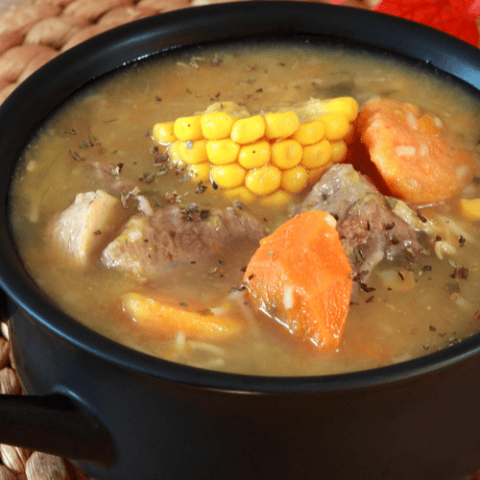
Puerto Rican Sancocho (Beef and Root Vegetable Stew)
A hearty Puerto Rican-style beef stew with sofrito, corn, plantain, and root vegetables. Cook the beef until nearly tender before adding the vegetables in stages.
Ingredients
- 2 pounds (900 g) boneless beef chuck, cut into 1 1/2-inch cubes
- 2 tablespoons olive oil
- 1/2 cup unsalted Puerto Rican sofrito
- 1/2 cup plain tomato sauce
- 1 teaspoon dried oregano
- 2 bay leaves
- 8 cups low-sodium beef broth, plus 1–2 cups more or water as needed
- 1 teaspoon fine salt to start, plus more to taste
- 1/2 teaspoon ground black pepper
- 1 pound (450 g) frozen peeled yuca, cooked separately according to package instructions and drained
- 1/2 pound (225 g) peeled yautía, cut into 1-inch chunks (or additional potatoes)
- 1/2 pound (225 g) peeled potatoes, cut into 1-inch chunks
- 1 green plantain, peeled and cut into 1-inch rounds
- 1/2 pound (225 g) peeled, seeded calabaza or butternut squash, cut into 1 1/2-inch chunks
- 2 ears corn, husked and cut crosswise into 4 pieces each
- 1/4 cup chopped cilantro
- Lime wedges and cooked white rice, for serving (optional)
Instructions
- Pat the beef dry and season with the teaspoon of salt and the pepper. Heat the oil in a heavy 8-quart pot over medium-high heat. Brown the beef in 2–3 batches, about 6–8 minutes per batch, turning to color several sides. Transfer to a bowl.
- Lower the heat to medium. Add the sofrito and cook, stirring, for 2–3 minutes. Add the tomato sauce and oregano and cook for 1 minute. Pour in a little broth and scrape up the browned bits. Return the beef and its juices to the pot, then add the remaining 8 cups total broth and the bay leaves.
- Bring to a boil, then reduce to a gentle simmer. Partially cover and cook until the beef is nearly fork-tender, about 75–105 minutes; allow longer if needed. Stir occasionally and add hot water or broth if the meat is no longer covered.
- While the beef simmers, boil the frozen peeled yuca in a separate saucepan according to its package instructions until fully cooked and tender. Drain and discard the cooking water. When cool enough to handle, remove any tough central fibers and cut into bite-size pieces. Prepare the other vegetables.
- Once the beef is nearly tender, add the yautía, potatoes, and green plantain. Add enough hot broth or water to keep the ingredients just covered. Simmer for 15 minutes, stirring gently.
- Add the calabaza and corn. Simmer for another 15–20 minutes, until the roots and plantain are fully tender and the squash is soft but still holds some shape. Fold in the cooked yuca for the final 10 minutes, allowing it to heat through. If any vegetable is still firm, continue cooking and check every few minutes.
- Remove the bay leaves. For a thicker broth, mash a few pieces of cooked potato or squash against the side of the pot and stir them in. For a thinner stew, add hot broth. Taste and adjust salt and pepper, then stir in the cilantro. Serve hot with lime wedges and white rice if desired.
Notes
Cooking time is approximate and depends on the beef and vegetable sizes; allow about 2–3 hours total cooking if the chuck needs extra time. Do not add all the vegetables while the beef is still tough. Use peeled frozen yuca and follow its package cooking instructions; it is cooked separately and drained in this recipe. Yautía can be replaced by an equal weight of potatoes, and butternut squash can replace calabaza. Use an 8-quart pot with room to stir safely. Refrigerate leftovers promptly in shallow containers for 3–4 days; reheat to 165°F.
How Thick Should Sancocho Be?
Expect a hearty broth with enough liquid to spoon around the meat and vegetables. Some families prefer a soupier bowl; others like a thicker stew. You can adjust either direction without flour or cornstarch.
For more body, mash a few fully cooked pieces of potato or squash against the pot and stir them in. For a looser broth, add hot water or broth a little at a time, then taste again for salt. Letting the entire pot boil hard to thicken it is less predictable and can break apart the vegetables.
Do not confuse sancocho with asopao de pollo. Asopao uses rice as a defining part of its texture, while this sancocho gets its substance from roots, plantain, and other vegetables. Both belong in a collection of comforting Puerto Rican soups and stews.
Can You Use Frozen Sancocho Vegetables?
Yes, but inspect the package before adding everything at once. Mixed bags can include yuca, plantain, squash, malanga, and other roots in different sizes. Some ingredients may already be cooked; others require thorough cooking. Follow the product’s instructions, particularly for cassava.
For the closest match to this recipe, buy individual frozen vegetables so you can control their amounts and timing. Add firm roots earlier and delicate squash later. If using a mixed bag, accept that the softer ingredients may break down more and thicken the broth. Do not add the whole mixture at the beginning of a long beef simmer.
Variations: Meat, Vegetables, and Broth
Different beef cuts: boneless short ribs can make a rich stew, but cost more and may release more fat. Trim only large hard pieces of fat, brown the meat, and judge doneness by tenderness. The chuck timing remains a guide rather than a guarantee.
Chicken sancocho: this requires a different schedule. Chicken should not simmer for the full beef timing, which can leave it dry and stringy. Use a recipe written for the cut of chicken you choose, verify that it reaches 165°F, and coordinate the vegetables accordingly.
A meatless version: vegetable broth, extra viandas, and beans can make a substantial stew inspired by sancocho. Skip the beef stage and build the broth from sautéed sofrito, then simmer the vegetables according to their texture. It will have a different flavor and body from the beef recipe.
For a broader comparison, see our guide to sancocho across Latin America. Colombian, Dominican, and Puerto Rican versions all vary internally, so one ingredient list should not be treated as the rule for an entire country.
What to Serve with Sancocho
White rice is a useful accompaniment: serve it on the side so each person can add as much as they like. Avocado slices, a lime wedge, or a simple salad provide contrast to the rich broth. Since the stew already contains several starches, you do not need an elaborate set of sides.
For a larger gathering, offer small portions of tostones as a starter and choose dessert from our Puerto Rican food guide. If you are planning a different main course for another day, our pernil recipe covers a garlic-seasoned pork roast.
Storage, Freezing, and Reheating
Divide leftover stew into shallow containers instead of leaving a large pot to cool on the counter. Refrigerate within two hours, or within one hour if the surrounding temperature is above 90°F. Use refrigerated leftovers within three to four days and reheat to 165°F, following USDA leftover safety guidance.
The broth often thickens in the refrigerator. Reheat gently with a splash of water, stirring from the bottom so it does not stick. Freeze meal-size portions with space for expansion and use within about three months for best quality. Potatoes and squash can soften further after freezing, so expect a slightly thicker texture.
Puerto Rican Sancocho FAQs
Does sancocho need seven meats?
No. Seven-meat sancocho is associated with particular versions, especially the Dominican sancocho de siete carnes made for celebrations. This Puerto Rican beef version is complete with one meat and a range of vegetables.
Why is my beef tough when the vegetables are done?
The vegetables probably went in before the beef had softened enough. Lift the cooked vegetables out, continue simmering the beef, then return the vegetables to warm through. Next time, test the beef before beginning the vegetable stages.
Can I leave out yautía or yuca?
Yes. Replace either with an equal prepared weight of potatoes, or adjust the mix using the vegetables you have. Keep the total quantity similar so the pot still has enough broth. The result will taste a little different but remain hearty.
Is green plantain the same as a green banana?
No. They are different ingredients, although both can be used in savory Caribbean cooking. This recipe specifies green plantain, which contributes dense, starchy pieces. A ripe yellow-black plantain would add sweetness and soften faster.
Can I make this in a pressure cooker?
A pressure cooker can shorten the beef stage, but the vegetables still need separate timing. Do not pressure-cook all the ingredients for the full beef duration. Follow a pressure-cooker-specific recipe and the appliance’s fill limits; this large stovetop batch may exceed a smaller cooker’s capacity.
More Puerto Rican Foods
See all →
Jorge Garcia is the founder of AmigoFoods, where he has spent over 20 years helping readers discover authentic Latin American and Spanish cuisine. Raised in a Cuban-American household, Jorge learned to cook at the hands of his mother and grandmother, carrying forward generations of family recipes. That heritage, backed by his family’s four-generation history in the Latin food industry, inspired him to launch AmigoFoods in 2003. With more than 1,000 published articles on recipes, ingredients, and food culture, Jorge’s mission is simple: make authentic Latin cooking approachable for home cooks everywhere while honoring the traditions behind every dish.