
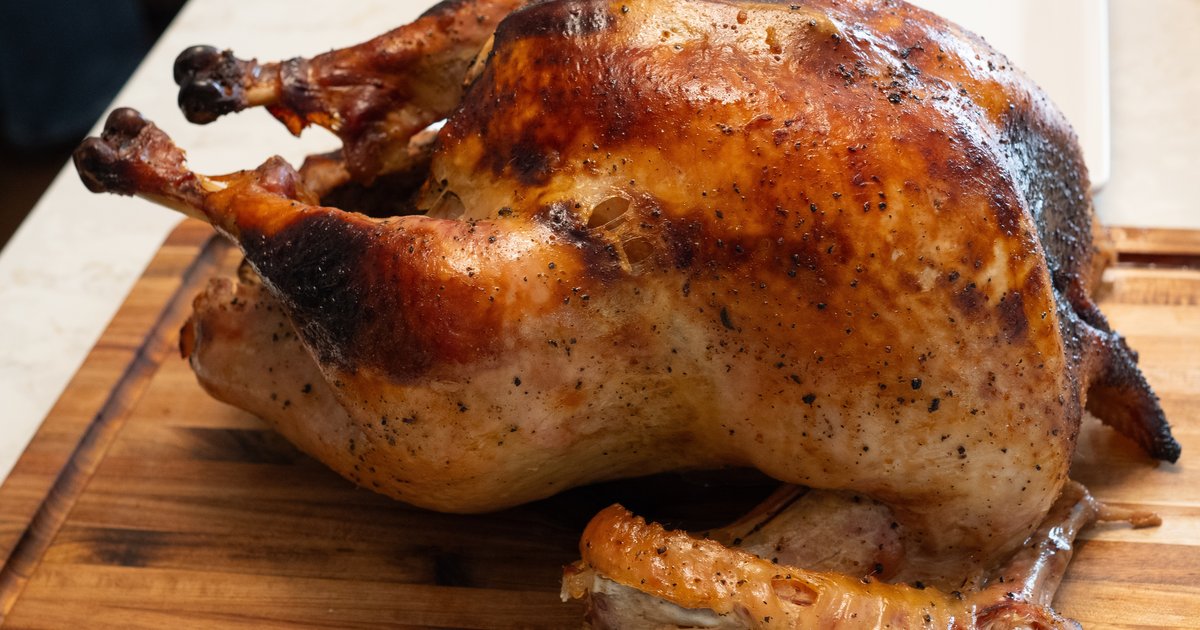
Puerto Rican Thanksgiving food centers on pavochón, a turkey seasoned and roasted like pernil, served with mofongo stuffing, arroz con gandules, pasteles, potato salad and tostones, with tembleque or flan for dessert and a glass of coquito to finish. Below are 18 dishes, two ready-made menus, our mofongo stuffing recipe and a day-by-day plan.
Thanksgiving, or Día de Acción de Gracias, is an official holiday on the island, held on the same fourth Thursday of November as on the mainland. It arrived after 1898, when Puerto Rico became a U.S. territory, and Puerto Rican cooks made it their own: the turkey gets the same garlic, oregano and adobo treatment as a holiday pork shoulder, and the side dishes come straight from the Christmas table. That makes sense, because in Puerto Rico Thanksgiving also opens the longest Christmas season around, one that runs through the Fiestas de la Calle San Sebastián in January.
Puerto Rican Thanksgiving at a Glance
Hosting a mixed Latin crowd? My Latin Thanksgiving menu combines Puerto Rican, Cuban and Mexican dishes, with a shopping list and a make-ahead timeline.
Two Puerto Rican Thanksgiving Menus to Start From
Puerto Rican holiday tables are generous, but nobody expects you to cook all 18 dishes. Pick a menu, then swap dishes in and out. Aim for one roast, the rice, one plantain dish, one cold salad, and one dessert.
The Main Event
1. Pavochón (Puerto Rican Turkey)
Pavochón is the star of a Puerto Rican Thanksgiving. The name joins pavo (turkey) and lechón (roast pig), and the idea is exactly that: a turkey seasoned and roasted the way Puerto Ricans roast pork. Instead of butter and sage, the bird gets a wet rub of mashed garlic, dried oregano, black pepper, adobo, sazón, olive oil and a splash of sour orange or vinegar, pushed under the skin and into slits in the meat.
The secret is time. Pavochón sits in its seasoning for one to two days in the refrigerator, so the garlic and oregano reach all the way into the breast. It then roasts low at 325°F, covered at first and uncovered at the end so the skin turns deep golden and crisp, much like the cuerito on a pernil. Many families stuff it with mofongo; we bake the mofongo in its own dish (see #4) so the turkey does not overcook while the stuffing comes up to temperature.
The pantry for pavochón: Goya adobo and Goya sazón con culantro y achiote (not sure which does what? Read our guide to adobo vs. sazón). For two days of marinating, an extra-large brining bag keeps the bird and its seasoning contained in the refrigerator, and a MEATER wireless thermometer or a simple instant-read thermometer tells you exactly when it reaches 165°F.
2. Pernil

In many Puerto Rican homes there is a turkey on Thanksgiving and a pernil right next to it. The pork shoulder is marinated in the same garlic and oregano mix, then roasted for hours until the meat pulls apart and the skin turns into crackling cuerito that everyone fights over. If you are cooking for a crowd, a pernil is also the easiest way to stretch the meal.
For a big family gathering, some families skip the oven entirely and order a whole lechón asado from a lechonera.
3. Pasteles

Pasteles are Puerto Rico’s answer to tamales: a masa of grated green bananas, plantain and yautía wrapped around seasoned pork, folded in banana leaves and boiled. They are a Christmas tradition, which is exactly why they show up at Thanksgiving. Many families hold the big pastelada, the assembly-line day of grating and wrapping, the weekend before or after the holiday and freeze dozens at once.
You will need banana leaves for wrapping, and our Puerto Rican sofrito for the filling.
Stuffing and Sides
4. Mofongo Stuffing
Mofongo stuffing replaces bread dressing on a Puerto Rican table. Green plantains are fried until tender, then mashed with garlic, olive oil, crushed chicharrón, sofrito and enough warm broth to make them soft and spoonable. Baked in a dish, it develops a golden top and stays moist inside, and it soaks up turkey gravy better than any bread stuffing.
It is the same mixture as a classic mofongo, loosened with broth so it can feed a crowd. Our full recipe, with a printable card, is further down this page.
Mash it in a traditional wooden pilón and tostonera set, or use a potato masher if you are making a big batch.
5. Arroz con Gandules

No Puerto Rican holiday meal happens without arroz con gandules. The rice is cooked in a caldero with sofrito, sazón, pigeon peas, olives and a little pork, and the best part is the pegao, the crispy layer that forms on the bottom of the pot. Make a double batch: it goes with turkey, pernil and every leftover plate the next day.
Stock up on canned gandules before the holiday rush.
6. Pastelón
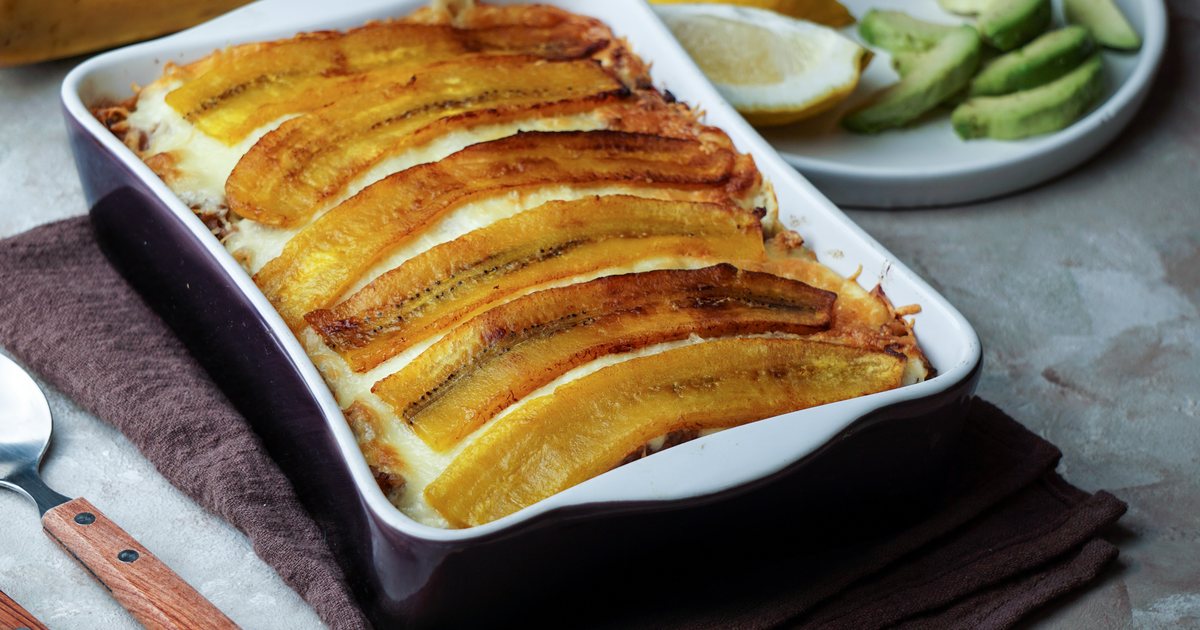
Pastelón is often called Puerto Rican lasagna: layers of fried sweet plantain and picadillo (seasoned ground beef) under melted cheese. It plays the role a sweet potato casserole plays on the mainland, sweet and savory at once, and it can be assembled a day early and baked while the turkey rests.
7. Ensalada de Papa

Puerto Rican potato salad, ensalada de papa, is on almost every holiday table. It is creamy with mayonnaise, chopped egg and onion, and many families add diced apple for a sweet crunch. It is the cold, mild side that balances all the garlic and fried food, and it is better made the day before. Find it with other favorites in our guide to Puerto Rican side dishes.
8. Tostones

Tostones are green plantain slices fried, smashed flat and fried again until crisp. Serve them with mayoketchup or a garlic mojo for dipping. They are best fresh, but you can do the first fry in the morning and the second just before dinner. If the stove is full, try tostones in the air fryer.
9. Amarillos (Sweet Plantains)

Amarillos are very ripe, almost black plantains fried until their edges caramelize. Puerto Ricans call them amarillos for their yellow color; elsewhere they are known as plátanos maduros. Their sweetness next to salty pavochón is one of the best bites of the meal. Not sure which plantain dish to make? Here is the difference between tostones and maduros.
10. Yuca con Mojo
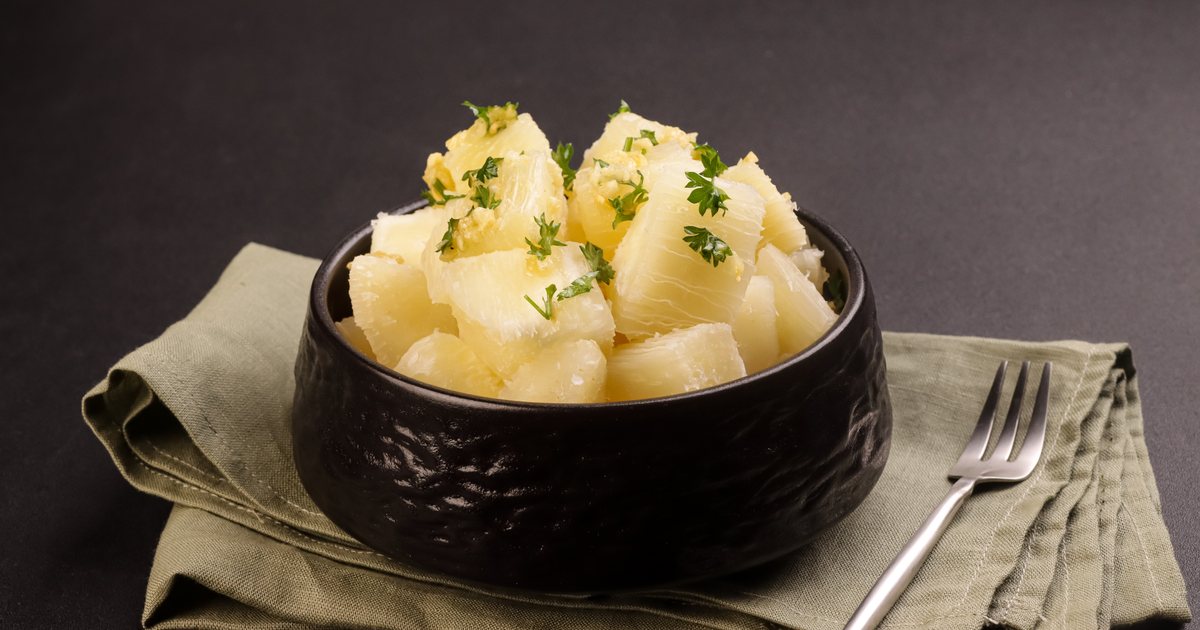
Boiled yuca dressed with warm garlic and olive oil is a simple side that tastes like home to a lot of Caribbean families. It pairs well with pernil, and the leftover garlic oil is good on everything. Puerto Rican cooks also serve yuca en escabeche, pickled with onions and olive oil, as a cold side. Our yuca con mojo recipe shows how to cook it until tender.
11. Guineítos en Escabeche
Guineítos en escabeche are boiled green bananas marinated in olive oil, vinegar, onions, garlic, bay leaf and peppercorns. Some families add chicken gizzards (mollejas). It is served cold or at room temperature, which makes it an ideal make-ahead dish, and its tang cuts through the richer food on the plate. Make it one or two days early so the bananas absorb the marinade.
12. Morcilla

Puerto Rican morcilla is a blood sausage filled with rice and seasoned with culantro, garlic and ají dulce. It is a holiday treat that tends to disappear before dinner starts. Slice it and pan-fry it until crisp, and set it out with the other frituras.
Frituras and Starters
13. Alcapurrias and Bacalaítos

While the turkey finishes, put out a tray of frituras. Alcapurrias are fritters of green banana and yautía masa stuffed with picadillo, and bacalaítos are crisp, thin salt cod fritters. Both are classic beach and roadside snacks, and both are easy to fry in batches. For more ideas, see our full guide to cuchifritos.
Desserts
14. Tembleque

Tembleque is the Puerto Rican dessert that takes the place of pumpkin pie. Coconut milk, sugar and cornstarch are cooked into a silky pudding, chilled in a mold until it wobbles (its name comes from temblar, to tremble), and dusted with cinnamon. It needs at least four hours in the refrigerator, so make it the day before.
15. Arroz con Dulce

Arroz con dulce is a rice pudding cooked in coconut milk with ginger, cinnamon, cloves and raisins. It is firmer and spicier than a typical rice pudding and is usually served at room temperature, cut into squares or scooped into small cups.
16. Flan

A Puerto Rican holiday table usually has at least one flan, often flan de queso (made with cream cheese) or flan de coco. If you want a seasonal twist, add a cup of pumpkin purée and a little cinnamon to the custard for a calabaza flan that bridges both traditions.
17. Budín

Puerto Rican budín is a dense bread pudding made with day-old bread, coconut milk, raisins and warm spices, baked over caramel and served cold in slices. It is a smart way to use up the extra bread from the holiday week. Find it and more in our roundup of Puerto Rican desserts.
Drinks
18. Coquito

Coquito is the drink of the Puerto Rican holiday season: coconut milk, cream of coconut, condensed and evaporated milk, cinnamon and Puerto Rican rum blended and chilled. The first batch usually appears at Thanksgiving, and bottles keep circulating as gifts until January. Make it at least a day ahead so the flavors settle, and keep an alcohol-free batch for the kids. For other options, see our list of Puerto Rican drinks.
The key ingredients are Coco López cream of coconut and Goya coconut milk.
How Much to Make for 12, and How to Build the Plate
These amounts feed 12 adults generously from the Classic Pavochón Table menu, with turkey left over for Friday.
| Dish | How much | Why |
|---|---|---|
| Pavochón | 12–14 lb whole turkey | About 1¼ lb per person, with leftovers |
| Pernil (if serving both) | 6–7 lb bone-in pork shoulder | Then a 10–12 lb turkey is enough |
| Arroz con gandules | 4 cups uncooked rice | About 12 cups cooked |
| Mofongo stuffing | 8 green plantains | One 9×13-inch dish |
| Pasteles | 2 dozen | One or two per person, with a few to freeze |
| Ensalada de papa | 4 lb potatoes | A generous scoop each |
| Tostones | 6 green plantains | About 8 tostones per plantain |
| Amarillos | 5 very ripe plantains | 3 or 4 slices per person |
| Tembleque and flan | One of each | 10–12 servings between them |
| Coquito | One batch (about 6 cups) | 12 small 4-ounce glasses |
A Puerto Rican Thanksgiving plate is built in layers: a slice of pavochón (and a piece of pernil with its cuerito, if there is one), a mound of arroz con gandules, a spoonful of mofongo stuffing, a scoop of ensalada de papa, a pastel unwrapped from its leaf, and a few tostones or amarillos on the edge. The pan juice goes over the turkey and the stuffing, not the rice.
Recipe: Pavochón (Puerto Rican Roast Turkey)
This is how to make pavochón for a 12–14 lb turkey that feeds 10 to 12 with leftovers. The seasoning is a wet adobo of mashed garlic, oregano, adobo and sazón, the same base Puerto Rican cooks rub into a pernil. Season the bird a day or two ahead; on Thanksgiving it only needs the oven.
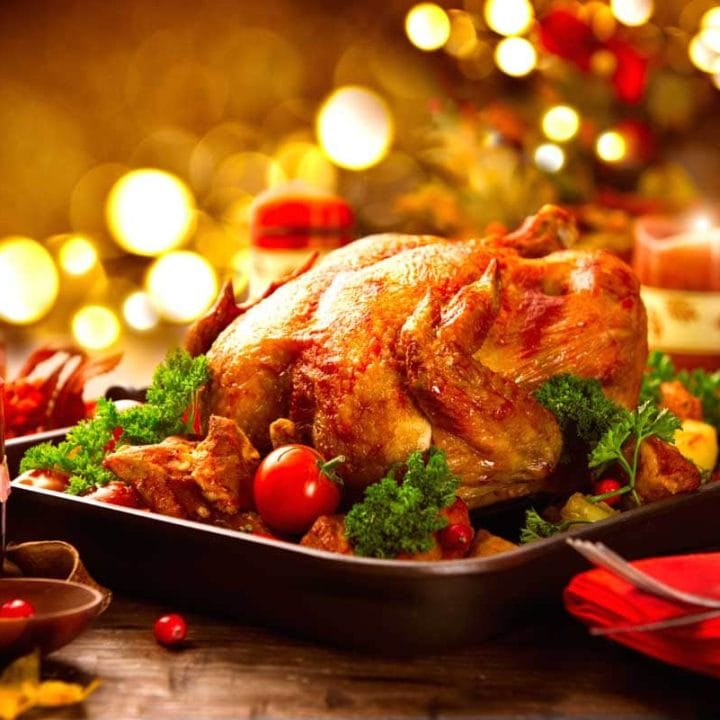
Pavochón (Puerto Rican Roast Turkey)
Pavochón is the Puerto Rican Thanksgiving turkey: a whole bird seasoned like pernil with mashed garlic, oregano, adobo and sazón, marinated for a day or two and roasted until the skin is crisp and golden.
Ingredients
Turkey
- 1 whole turkey (12 to 14 lb), fully thawed, neck and giblets removed
- 2 cups low-sodium chicken broth or water, for the pan
Pavochón seasoning
- 2 heads garlic (about 24 cloves), peeled
- 1 tablespoon kosher salt (Diamond Crystal; use 2 teaspoons if using Morton)
- 2 teaspoons black peppercorns (or 1½ teaspoons ground black pepper)
- 2 tablespoons dried oregano
- 2 tablespoons adobo all-purpose seasoning
- 2 packets sazón con culantro y achiote
- ¼ cup Puerto Rican sofrito (optional)
- ⅓ cup olive oil
- ¼ cup sour orange juice or white vinegar
Pan juice
- ½ cup low-sodium chicken broth
- 1 tablespoon cornstarch mixed with 2 tablespoons cold water (optional)
Instructions
- Make the seasoning. In a pilón or food processor, mash the garlic with the salt and peppercorns into a coarse, wet paste. Stir in the oregano, adobo, sazón, sofrito (if using), olive oil and sour orange juice. You should have about 1¼ cups.
- Season the turkey (1 to 2 days ahead). Pat the turkey dry inside and out. Slide your fingers under the skin of the breast and thighs to loosen it. With a paring knife, cut 1-inch-deep slits about 2 inches apart in the breast, thighs and drumsticks. Push the seasoning into the slits and under the skin, then rub the rest over the outside and inside the cavity.
- Marinate. Put the turkey in a large brining bag or a covered roasting pan and refrigerate for 24 to 48 hours, turning it once. For crisper skin, uncover it and leave it on a rack in the refrigerator for the last 8 hours.
- Get ready to roast. Take the turkey out of the refrigerator 1 hour before roasting. Heat the oven to 325°F with a rack in the lower third. Tuck the wing tips under, tie the legs together, set the turkey on a rack in a roasting pan and pour the broth into the pan. Cover the pan loosely with foil.
- Roast. Roast covered for about 2 hours. Uncover, baste with the pan juices and keep roasting until an instant-read thermometer reads 165°F in the thickest part of the breast and the innermost part of the thigh, about 3 to 3¾ hours in total. If the skin is still pale when the breast reaches about 155°F, raise the oven to 400°F for the last 15 to 20 minutes and watch it closely.
- Rest and make the pan juice. Move the turkey to a board, tent it loosely with foil and rest it 30 minutes. Meanwhile, pour the pan juices into a measuring cup and spoon off the fat. Simmer the juices with the extra ½ cup broth for 5 minutes, thicken with the cornstarch slurry if you like a gravy, and season to taste. Carve and spoon the juice over the slices.
Notes
Turkey size: for an 18 to 20 lb turkey, make 1½ times the seasoning and plan on 4¼ to 4½ hours at 325°F (USDA times for an unstuffed bird). Always go by the thermometer, not the clock.
Salt: adobo and sazón are already salty, so the recipe adds only 1 tablespoon of kosher salt. If your adobo is a low-sodium version, add another 2 teaspoons.
Stuffing: many families stuff pavochón with mofongo. Baking the mofongo stuffing in its own dish is easier and keeps the breast from overcooking; if you do stuff the bird, the center of the stuffing must reach 165°F.
Leftovers: refrigerate within 2 hours and use within 3 to 4 days.
Recipe: Mofongo Stuffing for Thanksgiving
This recipe fills a 9×13-inch dish and serves 10 to 12 as a side. You can fry the plantains and mash the stuffing the day before, then bake it while the turkey rests.
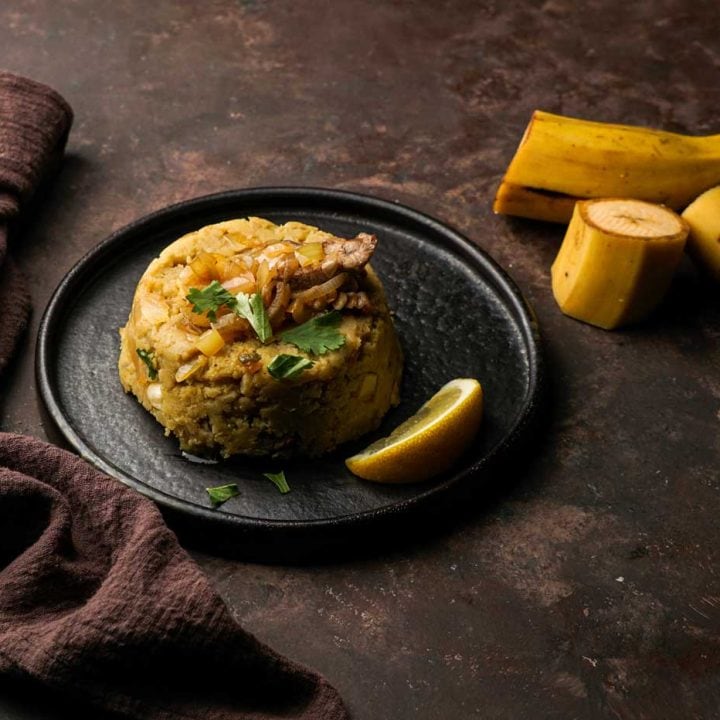
Mofongo Stuffing (Relleno de Mofongo)
Puerto Rican mofongo stuffing for Thanksgiving: fried green plantains mashed with garlic, crushed chicharrón, sofrito and warm broth, then baked in a dish until golden on top.
Ingredients
Plantains
- 8 large green plantains
- Vegetable oil, for frying (about 3 cups)
Garlic oil
- 10 garlic cloves, peeled
- 1 teaspoon kosher salt
- ⅓ cup olive oil
Stuffing
- 4 slices bacon, chopped (optional)
- ½ cup Puerto Rican sofrito
- 1 packet sazón con culantro y achiote
- 4 oz chicharrones (pork rinds), crushed (about 2 cups)
- 2 to 2½ cups low-sodium chicken broth, warm
- 4 tablespoons unsalted butter, melted, plus more for the dish
- ¼ cup chopped cilantro or culantro
- Kosher salt and black pepper, to taste
Instructions
- Peel the plantains: cut off both ends, score the skin lengthwise in 2 or 3 places, and pry it off with your thumb. Cut the plantains into 1-inch pieces.
- Heat about 1 inch of oil in a large, heavy skillet or pot to 325°F. Fry the plantains in batches for 6 to 8 minutes, turning once, until tender all the way through and light golden. They should be soft, not crisp. Drain on paper towels.
- Make the garlic oil: mash the garlic with the salt in a pilón or mortar until it forms a paste, then stir in the olive oil. (Or blend them together briefly.)
- If using bacon, cook it in a skillet over medium heat until crisp. Add the sofrito and sazón and cook 2 minutes, until fragrant. Remove from the heat.
- Heat the oven to 350°F and butter a 9x13-inch baking dish. Working in batches, mash the warm plantains with some of the garlic oil, chicharrones and sofrito mixture in a pilón, or combine everything in a large bowl and mash with a potato masher. Add the warm broth a little at a time until the mixture is moist and spoonable, like thick mashed potatoes. Stir in the cilantro and season with salt and pepper.
- Spread the stuffing in the baking dish and drizzle with the melted butter. Cover with foil and bake 20 minutes. Uncover and bake 10 to 15 minutes more, until hot throughout and lightly golden on top.
Notes
Make ahead: mash the stuffing up to 1 day ahead, spread it in the buttered dish, cover and refrigerate. Drizzle with ½ cup warm broth before baking and add 10 minutes to the covered baking time.
Texture: mofongo firms up as it cools, so keep it on the moist side. Add more warm broth if it looks dry before baking.
Stuffing the turkey: if you stuff the bird, pack it loosely and make sure the center of the stuffing reaches 165°F. Baking it in a dish is easier and keeps the turkey from overcooking.
Pork-free: leave out the bacon and replace the chicharrones with toasted, crushed plantain chips.
Your Puerto Rican Thanksgiving Make-Ahead Timeline
This plan assumes dinner at 4 p.m. on Thursday and one oven. The pernil roasts on Wednesday and reheats while the turkey rests, so the two never fight for oven space.
| When | What to do |
|---|---|
| Weekend before | Make pasteles and freeze them (or order them). Blend a big batch of sofrito. Make the coquito. |
| Saturday | Move a frozen turkey to the refrigerator. The USDA allows about 24 hours of refrigerator thawing for every 4 to 5 pounds, so a 12–14 lb bird needs about 3 days. |
| Tuesday | Season the turkey for pavochón and the pork shoulder for pernil, and return both to the refrigerator. Make the guineítos en escabeche. |
| Wednesday | Roast the pernil (it needs the oven most of the day), then refrigerate it whole. Make the tembleque and the flan or budín. Make the potato salad. Fry the plantains and mash the mofongo stuffing into its baking dish. Assemble the pastelón. |
| Thursday 9:15 a.m. | Bake the pastelón at 350°F, then set it aside, covered. |
| 10:15 a.m. | Take the turkey out of the refrigerator and pat the skin dry. |
| 11:15 a.m. | Turkey into the oven at 325°F, loosely covered with foil. |
| 1:15 p.m. | Uncover the turkey and baste. Do the first fry of the tostones. Slice the pernil. |
| 2:30 p.m. | Start the arroz con gandules on the stovetop. Check the turkey temperature. |
| 2:45 p.m. | Put the frozen pasteles into boiling salted water (about an hour). |
| 3:00 p.m. | Turkey out at 165°F to rest. Oven to 350°F: mofongo stuffing in, plus the covered pernil and pastelón to rewarm. |
| 3:30 p.m. | Fry the amarillos and give the tostones their second fry. Make the pan juice. |
| 3:45 p.m. | Carve the turkey. Unwrap the pasteles. Put out the potato salad and guineítos. |
| 4:00 p.m. | Dinner. Pour the coquito with dessert, and refrigerate leftovers within 2 hours. |
Cooked turkey keeps 3 to 4 days in the refrigerator, and leftovers should be reheated to 165°F.
What to Do With the Leftovers
The day after a Puerto Rican Thanksgiving is almost as good as the day itself.
- Turkey sandwich, Puerto Rican style: pile leftover pavochón on a sweet pan de mallorca roll, pressed and toasted.
- Turkey jibarito: use flattened fried plantains instead of bread, as in a jibarito, with lettuce, tomato and garlic mayo.
- Asopao: turn the turkey carcass into broth and make a pot of asopao with turkey in place of chicken.
- Pegao and pernil: crisp up leftover arroz con gandules in a hot pan and top it with shredded pernil and a fried egg.
Puerto Rican Thanksgiving Food: Common Questions
Do Puerto Ricans celebrate Thanksgiving?
Yes. Día de Acción de Gracias is an official holiday in Puerto Rico, held on the fourth Thursday of November, the same day as on the U.S. mainland. Families gather for a large meal, and on the island the day also marks the start of the Christmas season, which lasts into January.
What is a traditional Puerto Rican Thanksgiving dinner?
A typical Puerto Rican Thanksgiving dinner has pavochón (turkey seasoned like pernil) as the main dish, often alongside pernil, with arroz con gandules, mofongo stuffing, potato salad, pasteles and fried plantains. Tembleque, flan or arroz con dulce are the usual desserts, with coquito to drink.
What is pavochón?
Pavochón is a Puerto Rican roast turkey seasoned the way roast pork is. The name combines pavo (turkey) and lechón (roast pig). The turkey is rubbed with garlic, oregano, adobo, sazón, olive oil and sour orange or vinegar, marinated for a day or two, then roasted until the skin is crisp.
How does Puerto Rico celebrate Thanksgiving?
Much like the mainland: a big family meal on the fourth Thursday of November, built around a turkey seasoned like pernil and served with Puerto Rican sides. On the island the holiday also kicks off the Christmas season, so the first coquito gets poured, decorations go up that weekend, and Black Friday shopping is as big as it is anywhere in the United States.
What is a Puerto Rican recipe for turkey?
Pavochón. The turkey is rubbed inside and out with a paste of mashed garlic, oregano, adobo, sazón, olive oil and sour orange or vinegar, marinated for one to two days and roasted at 325°F until the skin is crisp. The full recipe is in the pavochón recipe card above.
How long should pavochón marinate?
At least 24 hours and up to 48, in the refrigerator. One night works if you are short on time, but the second day is what carries the garlic and oregano all the way into the breast.
What do Puerto Ricans call Thanksgiving?
The formal name is Día de Acción de Gracias. Many Puerto Ricans also call it Día del Pavo, and older generations often use “San Guivin,” a playful Puerto Rican pronunciation of the English word “Thanksgiving.”
What can I serve instead of pumpkin pie?
Tembleque, the coconut pudding dusted with cinnamon, is the most common Puerto Rican replacement for pumpkin pie. Flan, arroz con dulce and budín are also popular. For a bridge between the two traditions, make a pumpkin flan.
Can I make mofongo stuffing ahead of time?
Yes. Fry the plantains and mash the stuffing up to one day ahead, cover it and refrigerate it in the baking dish. Before baking, drizzle about ½ cup of warm broth over the top so it does not dry out, then bake covered until hot.
More for Your Puerto Rican Holiday Table
Thanksgiving is only the start of the season. Keep going with our guide to Puerto Rican Christmas foods, browse every Puerto Rican holiday dish, explore the classics in our list of Puerto Rican dishes, or stock up from our Puerto Rican pantry list on Amazon.
More Puerto Rican Foods
See all →
Jorge Garcia is the founder of AmigoFoods, where he has spent over 20 years helping readers discover authentic Latin American and Spanish cuisine. Raised in a Cuban-American household, Jorge learned to cook at the hands of his mother and grandmother, carrying forward generations of family recipes. That heritage, backed by his family’s four-generation history in the Latin food industry, inspired him to launch AmigoFoods in 2003. With more than 1,000 published articles on recipes, ingredients, and food culture, Jorge’s mission is simple: make authentic Latin cooking approachable for home cooks everywhere while honoring the traditions behind every dish.