
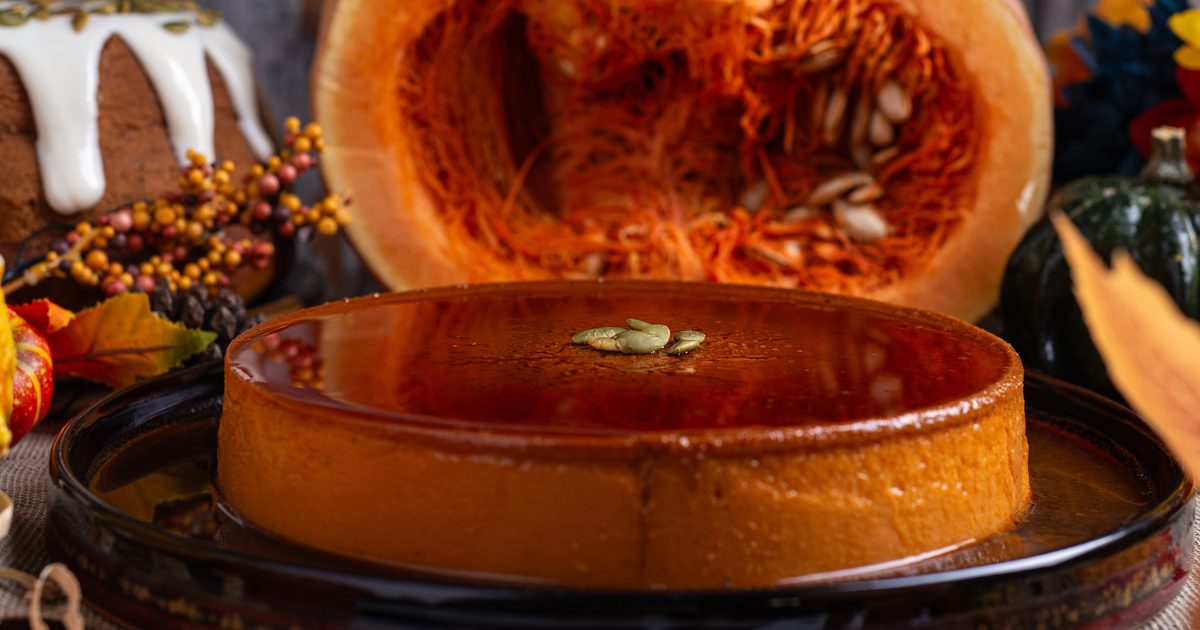
Pumpkin flan (flan de calabaza) is a classic Latin caramel flan with pumpkin purée and warm spices blended into the custard. It tastes like the filling of a pumpkin pie, but silkier, with no crust and a pool of amber caramel on top. It is made in a blender with canned pumpkin, sweetened condensed milk, evaporated milk and eggs, baked in a water bath and chilled overnight, so it is one of the easiest Thanksgiving desserts to make ahead. Below is how pumpkin flan differs from pumpkin pie and from a plain flan, whether to use canned pumpkin or fresh calabaza, how to tell when it is done, the cream cheese version (flan de calabaza y queso), a make-ahead plan, fixes for the common problems and the full recipe.
Pumpkin Flan at a Glance
The short version: Cook sugar to a deep amber caramel and pour it into a 9-inch pan. Blend condensed milk, evaporated milk, 1 cup pumpkin purée, 4 eggs, vanilla and spices, strain it over the caramel, cover with foil and bake in a hot water bath at 350°F for 60 to 75 minutes, until the center wobbles. Cool, chill at least 6 hours and turn it out onto a deep platter.
AmigoFoods may earn a commission from qualifying Amazon purchases made through links on this page.
What is pumpkin flan?
A flan is a baked custard of eggs, milk and sugar, cooked over a layer of caramel and turned out upside down so the caramel becomes a sauce. Pumpkin flan simply adds pumpkin purée and pumpkin-pie spices to that custard. The pumpkin makes it a little denser and more orange than a plain flan, and it gives the custard an earthy sweetness that the caramel balances.
In Spanish it is flan de calabaza. Calabaza is the general word for pumpkin and winter squash, and in the Spanish-speaking Caribbean it also names the West Indian pumpkin, a large squash with green or mottled skin and deep orange flesh (in the Dominican Republic it is called auyama). In Puerto Rico and the Dominican Republic, cream cheese, coconut and pumpkin flans often share the table at Christmas, as we describe in our guide to how to make classic flan. In the US, pumpkin flan has become a favorite at Latin Thanksgiving tables because it brings the flavor of pumpkin pie to a dessert most families already make.
This recipe follows the Latin American style of flan, the one made with sweetened condensed and evaporated milk instead of only fresh milk. That style is creamier and more forgiving than the Spanish flan casero, and it holds up well to the extra moisture from the pumpkin. If you have never made a flan before, our classic caramel flan guide covers the caramel and the water bath in more detail, and our comparison of pudim, flan and crème caramel explains how the family of caramel custards fits together.
Pumpkin flan vs. pumpkin pie
Both are pumpkin custards set with eggs. The difference is in the dairy, the texture and the topping.
| Pumpkin flan | Pumpkin pie | |
|---|---|---|
| Base | No crust; baked in a caramel-lined pan | Pastry crust |
| Dairy | Sweetened condensed milk plus evaporated milk | Usually evaporated milk or cream, with sugar added separately |
| Pumpkin | About 1 cup, so the custard stays silky | Often a full 15-oz can, so the filling is denser |
| How it bakes | Covered, in a water bath, at 350°F | Open, directly on the oven rack |
| Topping | Its own caramel sauce | Whipped cream |
| Served | Cold, turned out of the pan | Cool or at room temperature, sliced in the dish |
| Make ahead | Best made 1 day ahead | Best the day it is baked or the next |
If your table is split between the two, pumpkin flan is the compromise: the pie spices are there, but the texture and the caramel are pure flan. For a pumpkin dessert you can eat with your hands, try our pumpkin empanadas (empanadas de calabaza) with piloncillo.
The ingredients
- Granulated sugar and water for the caramel. White sugar gives a clear caramel whose color you can judge.
- Sweetened condensed milk (one 14-oz can). It sweetens the custard and gives it body. There is no other sugar in the custard.
- Evaporated milk (one 12-oz can). It thins the custard to the right consistency without diluting the flavor the way fresh milk would.
- Pumpkin purée (1 cup, about 245 g). Use plain canned pumpkin labeled 100% pumpkin, or homemade calabaza purée. Do not use canned pumpkin pie filling, which is already sweetened and spiced.
- Eggs (4 large). They set the custard. Room-temperature eggs blend more evenly.
- Spices: ground cinnamon, ground ginger, nutmeg and a pinch of cloves. You can replace them with 1½ teaspoons of pumpkin pie spice.
- Vanilla and a pinch of salt. The salt keeps the custard from tasting flat next to the caramel.
You only need a cup of pumpkin, so a 15-oz can leaves you with extra. Freeze the rest, or use it in a batch of pumpkin empanadas.
Canned pumpkin or fresh calabaza?
Canned pumpkin is the easier choice and the more predictable one: its moisture and sweetness are the same every time, which matters in a custard. Taste of Home’s test kitchen recommends canned pumpkin for baking for exactly that reason, and it is what this recipe is written for.
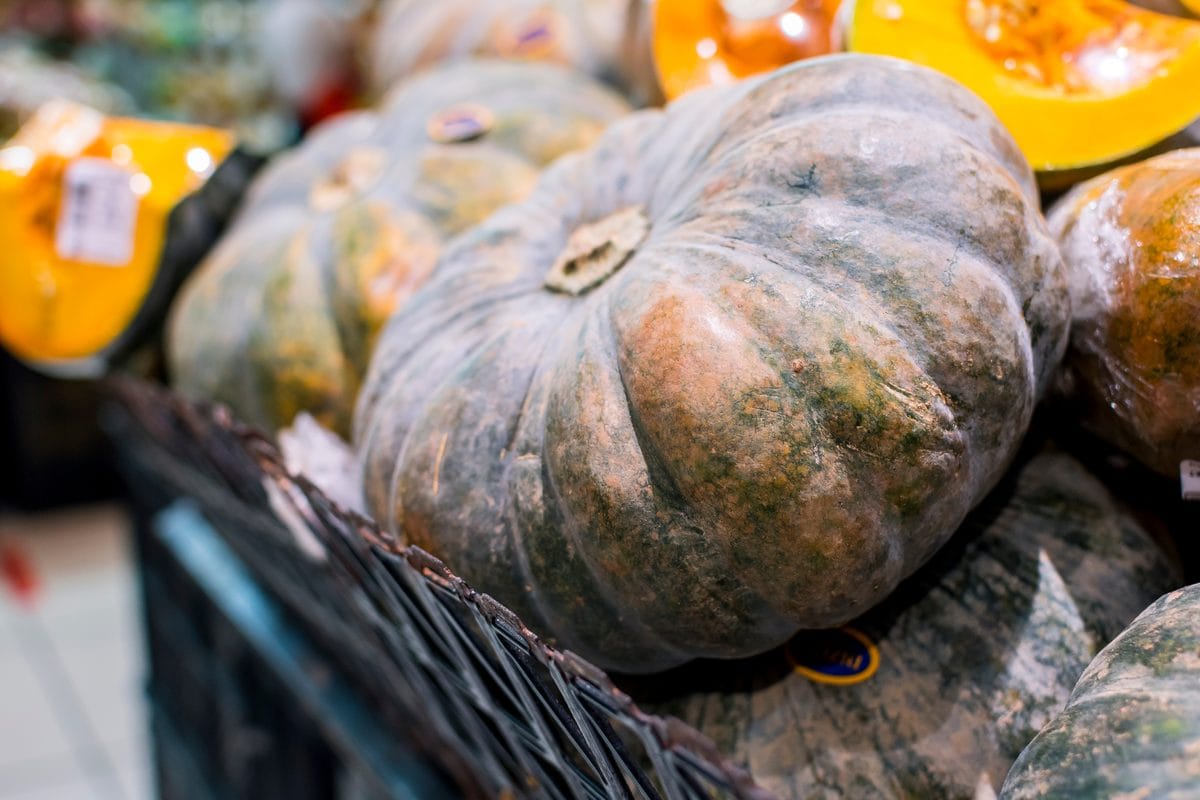
If you can find calabaza at a Latin or Caribbean market, a homemade purée tastes a little fresher and less earthy. Butternut squash works the same way. To make it:
- Peel about 1 lb of calabaza or butternut, scoop out the seeds and cut it into 1-inch chunks.
- Steam the chunks or boil them in unsalted water until a fork goes through easily, about 15 minutes.
- Drain them very well in a colander for 10 minutes, then purée in the blender or food processor until completely smooth.
- If the purée looks loose or watery, cook it in a dry skillet over medium heat, stirring, for a few minutes until it is as thick as canned pumpkin. Cool before using.
Measure 1 cup of the thick purée for the flan. A watery purée is the most common reason a homemade pumpkin flan comes out soft or weeps liquid.
Calabaza is also the pumpkin used for calabaza en tacha, Mexico’s pumpkin candied in piloncillo syrup for Día de Muertos, and for the many Latin versions of dulce de calabaza. If you buy a whole one, you can make both.
How to make pumpkin flan
1. Set up the pans and the water
Heat the oven to 350°F (175°C) with a rack in the middle. Set a 9-inch round cake pan (at least 2 inches deep) or a 1½-quart flanera inside a larger roasting pan or 9×13 baking dish. Put a kettle of water on to boil.
2. Make the caramel
Put the sugar and water in a small, light-colored saucepan over medium heat. Swirl the pan until the sugar dissolves, but do not stir it with a spoon, which can make the sugar crystallize. Let it bubble, swirling now and then, until it turns a deep amber, like maple syrup, 8 to 10 minutes. It goes from golden to burnt quickly at the end, so stay at the stove.

Immediately pour the caramel into the cake pan and tilt it so it covers the bottom and a little of the sides. Be careful: the caramel is extremely hot and the pan will heat up fast. The caramel will harden and may crack; it melts back into sauce in the oven.
A 9-inch round cake pan at least 2 inches deep works, or use a 1½-quart flanera: shop flan molds on Amazon.
3. Blend the custard
Put the condensed milk, evaporated milk, pumpkin, eggs, vanilla, cinnamon, ginger, nutmeg, cloves and salt in a blender. Blend on low for 20 to 30 seconds, just until smooth. Blending on high whips air into the custard, and those bubbles turn into holes in the finished flan.
4. Strain and fill
Pour the custard through a fine-mesh sieve into a pitcher, pressing the pumpkin through with a spatula. This catches any threads of egg white and any bits of pumpkin skin or fiber, and it is the difference between a smooth flan and a slightly grainy one. Skim off the foam, then pour the custard over the hardened caramel.
5. Cover and bake in a water bath
Cover the pan tightly with foil. Set the roasting pan on the oven rack, then pour boiling water into the roasting pan until it comes halfway up the sides of the flan pan. The water keeps the temperature around the custard gentle and even, which prevents cracks, bubbles and a rubbery edge. Bake 60 to 75 minutes, checking from 55 minutes, until the edges are set and the center wobbles as one piece, or an instant-read thermometer in the center reads about 175°F.
6. Cool and chill
Lift the flan pan out of the water bath and let it cool on a rack for about 1 hour, until it reaches room temperature. Then cover it and refrigerate at least 6 hours, preferably overnight. Chilling finishes setting the custard and lets the hard caramel dissolve back into a sauce.
7. Turn it out
Run a thin knife around the edge of the pan, pressing against the pan so you do not cut the flan. Set a deep platter (one with a rim, to hold the caramel) upside down on the pan, hold the two together and flip them in one quick motion. Lift the pan off and let the caramel run over the flan. If some caramel stays stuck to the bottom of the pan, set the pan over low heat for a minute and pour the melted caramel over the top.
How to tell when it is done
Lift a corner of the foil and gently shake the pan. A finished pumpkin flan is set around the edges, and the center 2 to 3 inches wobble like gelatin as a whole, without looking liquid or sloshing. A knife inserted halfway between the edge and the center should come out clean or with a little thick custard on it.
If you have an instant-read thermometer, the center should read about 175°F, which is the temperature Taste of Home’s test kitchen gives for its pumpkin flan. The flan keeps setting as it cools, so it is better to take it out with a wobble than to wait until the center is firm. An overbaked flan has a spongy texture and small holes.
Variations
Flan de calabaza y queso (pumpkin cream cheese flan)
Puerto Rican cooks often make flan de queso with cream cheese, and the pumpkin version is popular for the holidays. Add 4 oz (half a block) of softened cream cheese to the blender with the milks and blend it smooth before adding the eggs. The flan will be denser and tangier, almost like a cheesecake, and it may need 5 to 10 minutes more in the oven. For a very rich version, use the full 8 oz block.
Pumpkin flan in ramekins
Divide the caramel among eight 6-oz ramekins, then fill them with the custard. Set the ramekins in a roasting pan, cover the pan with foil, add the hot water and bake 40 to 50 minutes, checking from 40 minutes. Individual flans set faster, chill faster and are easier to serve at a big Thanksgiving dinner.
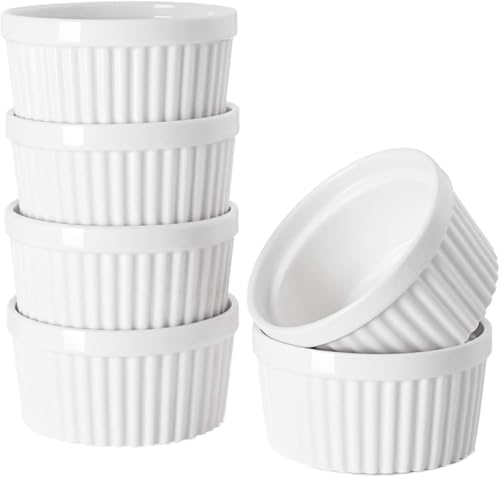
- SUPERIOR CERAMIC HEAT DISTRIBUTION & CRUST PERFECTION: Crafted from premium-grade, heavy-duty...
- SOCIAL MEDIA TRENDING RECIPES & AIR FRYER ESSENTIAL: Perfectly sized to fit 4QT to 10QT single or...
Other ways to change it
- Dulce de leche: replace half the condensed milk with dulce de leche. See our dulce de leche flan for how it changes the custard.
- Coconut: replace the evaporated milk with a 13.5-oz can of coconut milk for a pumpkin and coconut flan.
- Orange: add the finely grated zest of 1 orange to the blender, or a tablespoon of orange liqueur.
- Rum or coffee: add 1 to 2 tablespoons of dark rum, or 1 teaspoon of instant espresso dissolved in the vanilla.
- Chocoflan: for a two-layer cake with a pumpkin flan layer, see the pumpkin variation in our chocoflan recipe.
Make ahead for Thanksgiving
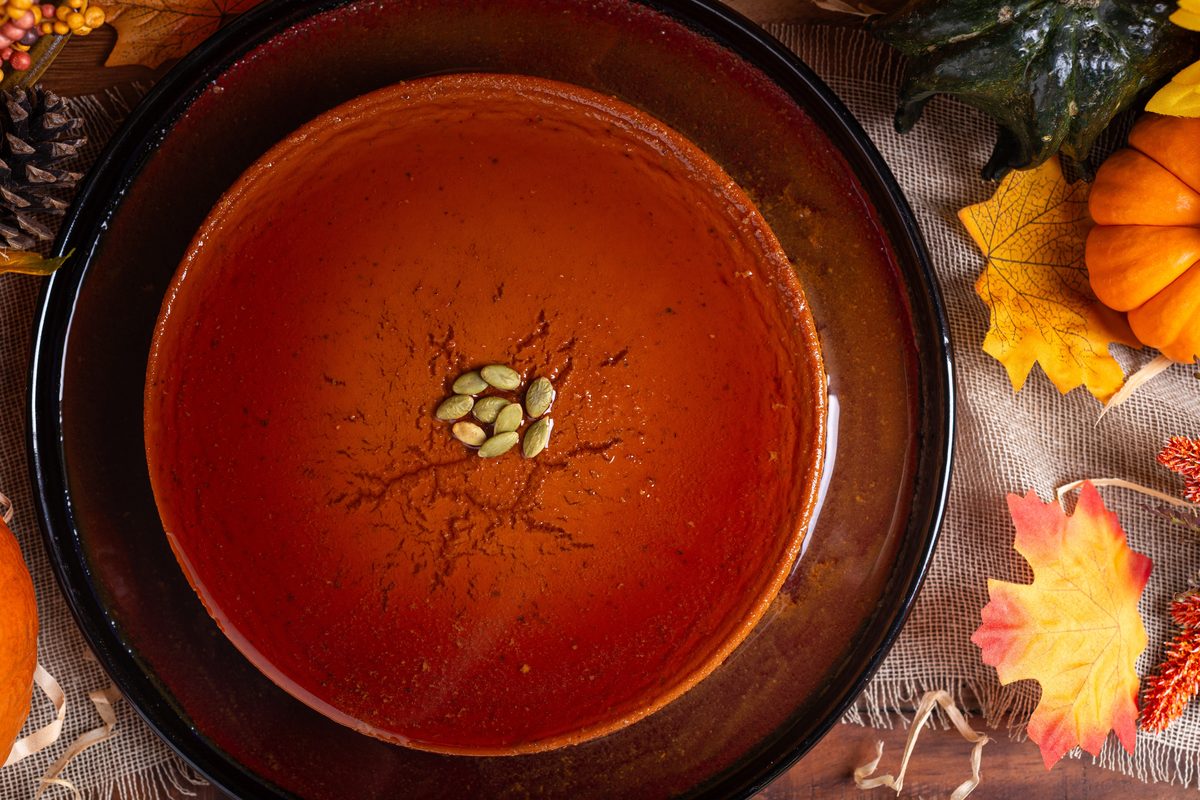
Pumpkin flan needs to be made ahead: it has to chill for at least 6 hours, and it tastes best the next day. That frees up the oven on Thanksgiving for the turkey and the sides.
- Two days before: bake the flan, cool it and refrigerate it, still in its pan, covered tightly.
- Or the day before (ideal): same steps; it will be fully set and the caramel fully melted by dessert time.
- Thanksgiving: turn it out 1 to 2 hours before dessert and keep it in the refrigerator on its platter until serving.
Leftover flan keeps, covered, in the refrigerator for 3 to 4 days. Do not freeze it: freezing breaks the custard and it thaws watery and grainy.
Pumpkin flan works on any Latin Thanksgiving table. For a full plan, see our Latin Thanksgiving menu, the Puerto Rican Thanksgiving menu (pumpkin flan sits well next to tembleque) and our list of Mexican Thanksgiving food, where it pairs with calabaza en tacha.
Troubleshooting
| Problem | Likely cause | Fix |
|---|---|---|
| Bubbles or small holes in the flan | Blended too fast or too long, or overbaked | Blend on low just until smooth, strain, skim the foam and take it out while the center still wobbles |
| Grainy or slightly gritty texture | Pumpkin fibers or bits of egg white | Strain the custard through a fine sieve, pressing the pumpkin through |
| Still liquid in the center after 75 minutes | Watery homemade purée, a deep pan, or the oven runs cool | Keep baking in 5- to 10-minute steps; use thick purée and an oven thermometer next time |
| Cracked top or rubbery edge | Oven too hot, or no water bath | Always bake in a hot water bath, covered with foil, at 350°F |
| Bitter caramel | The caramel went past deep amber | Take it off the heat as soon as it reaches maple-syrup color; start again if it smells burnt |
| Caramel stuck to the pan | Not chilled long enough | Chill overnight; warm the empty pan over low heat to melt the rest |
| The flan will not come out | Edge not loosened, or not chilled | Run a knife all the way around, or dip the bottom of the pan in hot water for 30 seconds, then flip |
| Liquid around the flan after a day | Normal separation, or a watery purée | Spoon the liquid over the slices with the caramel; drain homemade purée well next time |
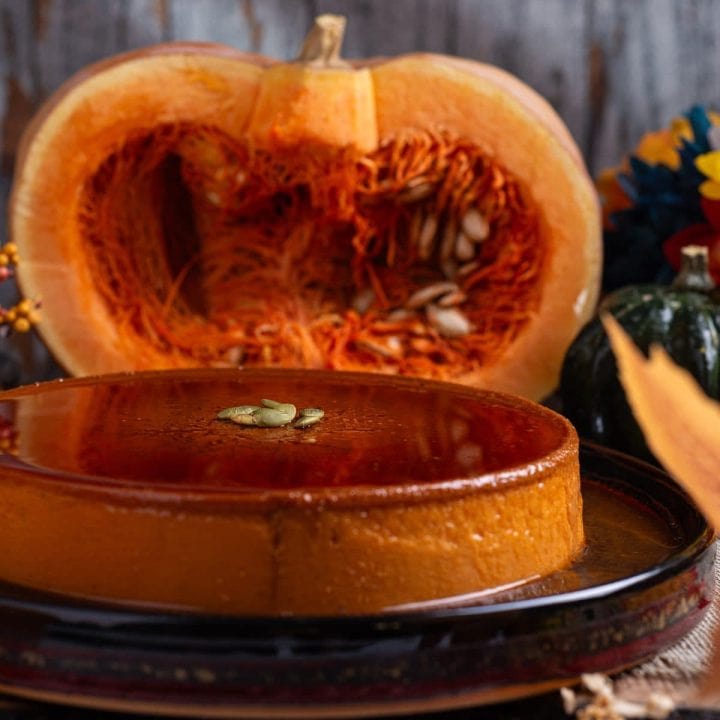
Pumpkin Flan (Flan de Calabaza)
A silky Latin-style pumpkin flan: pumpkin purée, sweetened condensed milk, evaporated milk, eggs and warm spices blended together, baked over amber caramel in a water bath and chilled overnight. A make-ahead Thanksgiving dessert that tastes like pumpkin pie without the crust.
Ingredients
- 3/4 cup (150 g) granulated sugar
- 3 tablespoons water
- 1 can (14 oz) sweetened condensed milk
- 1 can (12 oz) evaporated milk
- 1 cup (245 g) canned pumpkin purée (100% pumpkin, not pie filling) or thick homemade calabaza purée
- 4 large eggs, at room temperature
- 1 teaspoon vanilla extract
- 1 teaspoon ground cinnamon
- 1/2 teaspoon ground ginger
- 1/4 teaspoon ground nutmeg
- 1 pinch ground cloves
- 1/8 teaspoon salt
Instructions
- Set up the pans and the water. Heat the oven to 350°F (175°C) with a rack in the middle. Set a 9-inch round cake pan (at least 2 inches deep) or a 1½-quart flanera inside a larger roasting pan or 9x13 baking dish. Put a kettle of water on to boil.
- Make the caramel. Put the sugar and water in a small, light-colored saucepan over medium heat. Swirl the pan until the sugar dissolves, but do not stir it with a spoon, which can make the sugar crystallize. Let it bubble, swirling now and then, until it turns a deep amber, like maple syrup, 8 to 10 minutes. It goes from golden to burnt quickly at the end, so stay at the stove. Immediately pour the caramel into the cake pan and tilt it so it covers the bottom and a little of the sides. Be careful: the caramel is extremely hot and the pan will heat up fast. The caramel will harden and may crack; it melts back into sauce in the oven.
- Blend the custard. Put the condensed milk, evaporated milk, pumpkin, eggs, vanilla, cinnamon, ginger, nutmeg, cloves and salt in a blender. Blend on low for 20 to 30 seconds, just until smooth. Blending on high whips air into the custard, and those bubbles turn into holes in the finished flan.
- Strain and fill. Pour the custard through a fine-mesh sieve into a pitcher, pressing the pumpkin through with a spatula. This catches any threads of egg white and any bits of pumpkin skin or fiber, and it is the difference between a smooth flan and a slightly grainy one. Skim off the foam, then pour the custard over the hardened caramel.
- Cover and bake in a water bath. Cover the pan tightly with foil. Set the roasting pan on the oven rack, then pour boiling water into the roasting pan until it comes halfway up the sides of the flan pan. The water keeps the temperature around the custard gentle and even, which prevents cracks, bubbles and a rubbery edge. Bake 60 to 75 minutes, checking from 55 minutes, until the edges are set and the center wobbles as one piece, or an instant-read thermometer in the center reads about 175°F.
- Cool and chill. Lift the flan pan out of the water bath and let it cool on a rack for about 1 hour, until it reaches room temperature. Then cover it and refrigerate at least 6 hours, preferably overnight. Chilling finishes setting the custard and lets the hard caramel dissolve back into a sauce.
- Turn it out. Run a thin knife around the edge of the pan, pressing against the pan so you do not cut the flan. Set a deep platter (one with a rim, to hold the caramel) upside down on the pan, hold the two together and flip them in one quick motion. Lift the pan off and let the caramel run over the flan. If some caramel stays stuck to the bottom of the pan, set the pan over low heat for a minute and pour the melted caramel over the top.
Notes
Ramekins: divide the caramel and custard among eight 6-oz ramekins, set them in a roasting pan, cover the pan with foil, add the hot water and bake 40 to 50 minutes, checking from 40 minutes.
Pumpkin cream cheese flan (flan de calabaza y queso): blend 4 oz softened cream cheese with the milks before adding the eggs; add 5 to 10 minutes of baking.
Homemade purée: drain well and cook it down until as thick as canned pumpkin, or the flan may weep.
Storage: covered in the refrigerator for 3 to 4 days. Do not freeze.
Nutrition Information:
Yield: 10 Serving Size: 1 slice (1/10 of recipe)Amount Per Serving: Calories: 273Total Fat: 8gSaturated Fat: 4.5gTrans Fat: 0gUnsaturated Fat: 3gCholesterol: 99mgSodium: 149mgCarbohydrates: 43gFiber: 1gSugar: 41gProtein: 9g
Nutrition information is an estimate and will vary with the brands and amounts used.
Pumpkin Flan FAQ
What is flan de calabaza?
It is the Spanish name for pumpkin flan: a caramel custard made with pumpkin or calabaza (West Indian pumpkin) purée and warm spices, baked in a water bath and turned out of the pan.
Can I use pumpkin pie filling instead of pumpkin purée?
Not in this recipe. Pumpkin pie filling already contains sugar and spices, so the flan would be too sweet and over-spiced. Use plain canned pumpkin labeled 100% pumpkin, or homemade purée.
How long does pumpkin flan need to bake?
About 60 to 75 minutes at 350°F in a water bath for a 9-inch flan. Start checking at 55 minutes. Ramekins take about 40 to 50 minutes.
Why is my pumpkin flan watery?
It is usually underbaked, or the pumpkin purée was too wet. Bake until the center wobbles as one piece rather than sloshing, and if you make your own purée, drain it and cook it down until it is as thick as canned pumpkin.
Can I make pumpkin flan without a blender?
Yes. Whisk the eggs well in a large bowl, whisk in the pumpkin and spices, then the two milks and vanilla. Strain it carefully, because whisking leaves more egg threads than blending.
How far ahead can I make pumpkin flan?
Up to 2 days ahead. Keep it in its pan, covered, in the refrigerator, and turn it out shortly before serving.
Is pumpkin flan Mexican or Puerto Rican?
It is not tied to one country. Flan is made all over Latin America, pumpkin flan is a holiday dessert in Puerto Rico and the Dominican Republic, and Latin families across the US make it for Thanksgiving. The cream cheese version, flan de calabaza y queso, is especially popular with Puerto Rican cooks.
More pumpkin and flan recipes
For more caramel custards, see our classic flan, dulce de leche flan and the full list of Latin American custards and puddings. For more pumpkin desserts, make calabaza en tacha, dulce de calabaza or pumpkin empanadas, and browse our Puerto Rican desserts and Mexican desserts.
Shopping list: sweetened condensed milk, Carnation evaporated milk, Libby’s 100% pure pumpkin, ground cinnamon, an IMUSA flan mold (flanera) and 6-oz ramekins for individual flans.
Sources
- Taste of Home: Pumpkin Flan
- Bon Appétit (Jesse Szewczyk): Pumpkin Flan de Queso
- Kitchen Gidget: Pumpkin Flan (Flan de Calabaza)
- USDA FoodData Central (nutrition estimate)
More Dessert
See all →
Jorge Garcia is the founder of AmigoFoods, where he has spent over 20 years helping readers discover authentic Latin American and Spanish cuisine. Raised in a Cuban-American household, Jorge learned to cook at the hands of his mother and grandmother, carrying forward generations of family recipes. That heritage, backed by his family’s four-generation history in the Latin food industry, inspired him to launch AmigoFoods in 2003. With more than 1,000 published articles on recipes, ingredients, and food culture, Jorge’s mission is simple: make authentic Latin cooking approachable for home cooks everywhere while honoring the traditions behind every dish.