
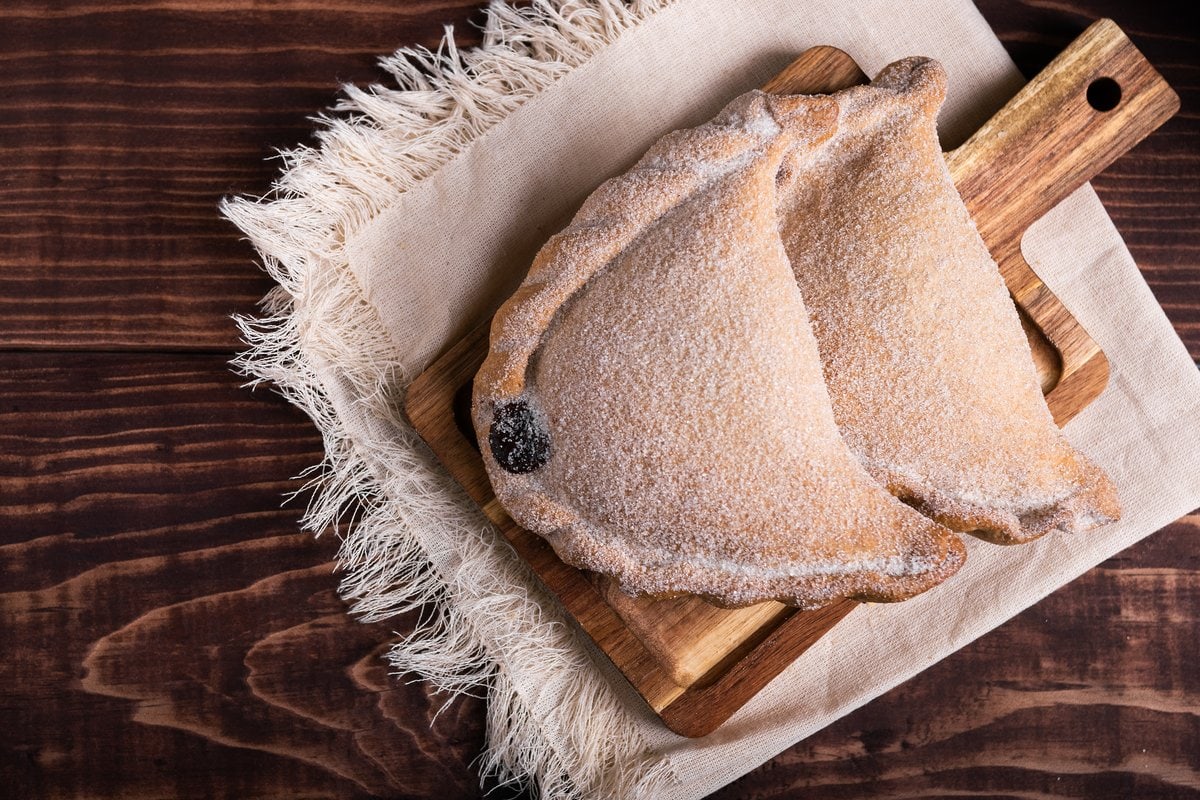
Pumpkin empanadas, or empanadas de calabaza, are the half-moon pastries that fill the trays of Mexican panaderías every fall: a tender, lightly sweet crust wrapped around pumpkin cooked down with piloncillo and cinnamon, then dusted with cinnamon sugar. They taste like pumpkin pie you can hold in one hand, and they are a lot less fussy than a pie. These are the empanadas we would put next to the pumpkin pie on any Thanksgiving table. Below you will find the filling, three ways to handle the dough, baked and fried methods, and what to do when the filling leaks.
Pumpkin Empanadas at a Glance
AmigoFoods may earn a commission from qualifying Amazon purchases made through links on this page.
What are empanadas de calabaza?
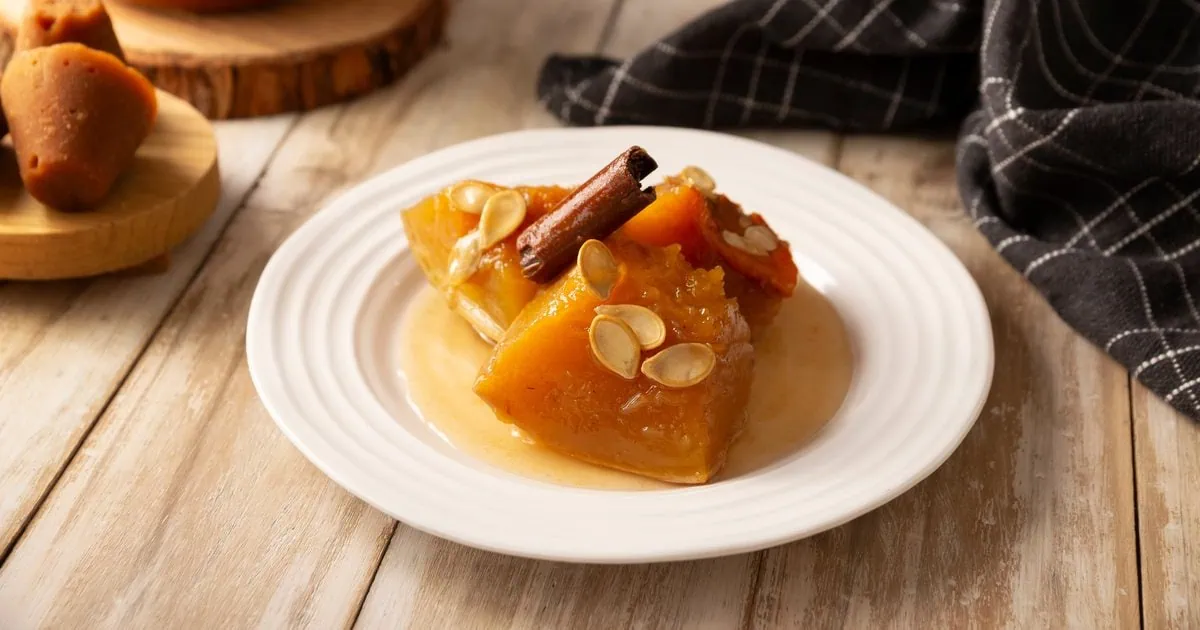
In Mexico, empanadas de calabaza are a sweet pastry, not a savory one. They sit with the conchas and orejas as part of the pan dulce lineup, and they show up from the start of fall through Christmas, especially around Día de los Muertos, when calabaza en tacha (pumpkin candied in piloncillo syrup) is on every altar. Many families make the filling from leftover candied pumpkin, mashed and cooked down a little more.
The crust varies by bakery and by family. Some are flaky, some soft and cookie-like, and older recipes use lard or a yeasted dough. Mexican-American panaderías in Texas, California and the Southwest sell them all year, often next to pineapple and camote (sweet potato) empanadas.
Fresh or canned pumpkin?
Both work. Canned pumpkin is the easy, consistent choice: buy a can labeled 100% pure pumpkin, not pumpkin pie filling, which is already sweetened and spiced. One 15-ounce can gives a little under 2 cups.
For fresh, use about 2 1/2 pounds of a dense, sweet squash, which gives roughly 2 cups of roasted puree. In Mexico that is the big calabaza de Castilla. In the U.S., a small sugar or pie pumpkin, kabocha or butternut squash comes closest. Skip carving pumpkins, which are watery and bland. Halve the squash, scoop out the seeds, roast cut side down at 400°F for 45 to 60 minutes until a knife slides in easily, then scoop and mash. Fresh puree holds more water, so plan on 5 to 10 extra minutes of cooking in the pan.

Piloncillo and spices
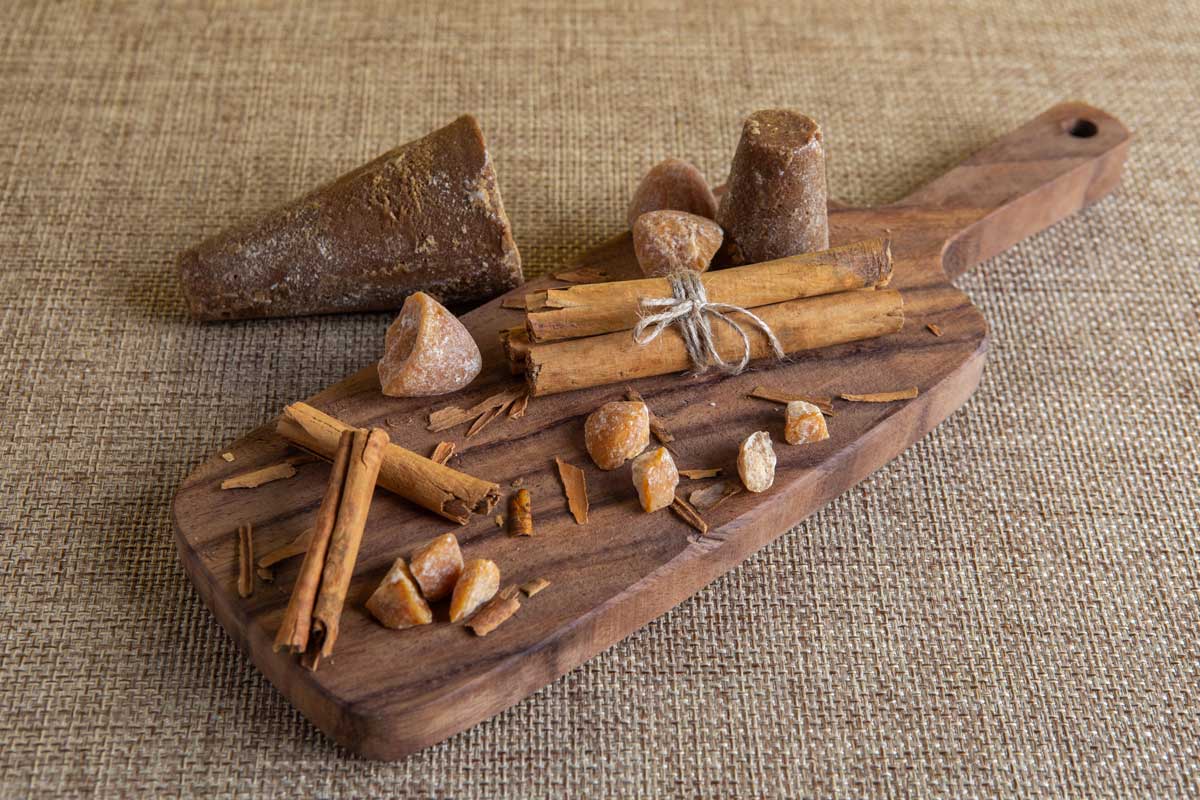
Piloncillo is unrefined cane sugar pressed into cones. It tastes deeper than brown sugar, with notes of molasses, caramel and a little smoke, and it is what makes the filling taste Mexican instead of like American pie. It is very hard, so melt it rather than grate it: break the cone with a heavy knife or a meat mallet, put the pieces in the pan with a splash of water and a cinnamon stick, and let it dissolve over low heat before the pumpkin goes in. If you cannot find it, use the same weight of dark brown sugar.
The classic spices are canela (soft Ceylon cinnamon), a pinch of ground cloves, and sometimes anise seed. A strip of orange zest is common too. Keep the spices light so the piloncillo and pumpkin come through.
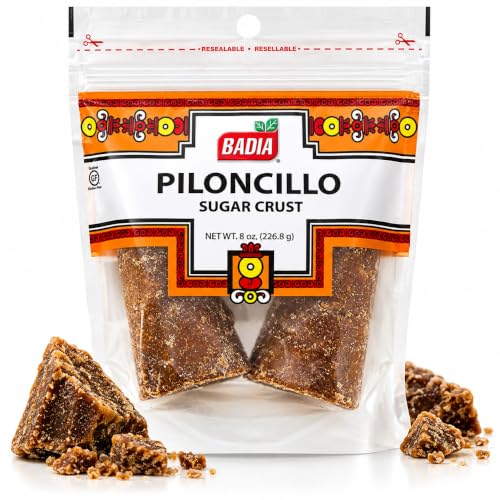
- Traditional Sweetener: Classic unrefined Panela brown cane sugar widely used across Latin American...
- Baking & Dessert Essential: Perfect for cookies, pastries, empanadas, cakes and seasonal treats...

Which dough to use
The recipe card below uses a butter dough that comes together in a food processor or by hand and bakes up tender and lightly flaky. Here is how it compares with the other common choices.
| Dough | Texture | Best for |
|---|---|---|
| Butter dough (recipe below) | Tender, lightly flaky, a little sweet | Baking; closest to many panadería versions |
| Lard or shortening dough | Very short and crumbly | Traditional flavor; frying or baking |
| Yeasted panadería dough | Soft and bready | Bakery-style empanadas; needs about 1 1/2 hours to rise |
| Store-bought discos (Goya and similar) | Flaky; the puff pastry type puffs a lot | Weeknights; use the “for baking” type to bake |
| Refrigerated pie crust | Crisp and buttery | The fastest shortcut; gets about 6 rounds per crust |
For more on fats, folds and freezing dough, see our empanada dough guide.
How to fill and seal
Roll the dough about 1/8 inch thick and cut 4 1/2-inch circles. Put about 1 1/2 tablespoons of cold filling slightly off center, leaving a clean border. Brush half the edge with egg wash or water, fold into a half-moon, and press out the air as you seal. Crimp with a fork, or fold the edge over itself in a rope pattern, the repulgue. An empanada press does the folding and crimping in one step, which helps when you are making several dozen for a crowd.


- ✔ 4 SIZES PROFESSIONAL EMPANADAS MAKER -This set includes four different sizes of dumpling presses...
- ✔ EASY TO USE -Simply cut a slice of dough, place it on the press, add your filling, flip it...
Baked vs. fried
Baked
The panadería way. Brush with egg wash, cut a small steam vent, sprinkle with cinnamon sugar and bake at 375°F for 20 to 25 minutes, until deep golden. Easy to make in big batches, and they keep better.
Fried
Crisper and richer, closer to a home-style treat. Fry in 350°F oil, 2 or 3 at a time, for 2 to 3 minutes per side, then roll in cinnamon sugar while warm. Seal very well, and eat them the same day.
For an air fryer, brush with egg wash and cook at 350°F for 9 to 12 minutes in a single layer.

Make ahead and freezing
- Filling: Refrigerate up to 5 days in a covered container, or freeze up to 3 months. Cold filling is also easier to work with.
- Dough: Refrigerate up to 2 days, wrapped, or freeze up to 3 months. Thaw overnight in the fridge.
- Unbaked empanadas: Freeze on a sheet pan until solid, then bag them. Bake straight from frozen and add 5 to 10 minutes.
- Baked empanadas: Keep at room temperature for up to 2 days, or in the fridge for up to 4. Reheat at 350°F for 8 to 10 minutes.
Troubleshooting
| Problem | Likely cause | Fix |
|---|---|---|
| Filling leaks or the seams open | Filling too thin or warm, overfilled, or egg wash on the seal | Cook the filling thicker, chill it, use 1 1/2 tablespoons, keep the border clean and cut a steam vent |
| Soggy bottoms | Wet filling or a pan that is too crowded | Bake on the lower-middle rack with space between empanadas |
| Dough cracks when folded | Too cold or too dry | Let it sit 5 minutes, or knead in a teaspoon of milk |
| Tough crust | Overworked dough or too many rerolls | Mix just until it holds, chill, and reroll scraps only once |
| Bland filling | Not enough piloncillo or salt | Add a pinch of salt and a little more piloncillo while it is still hot |
Other Latin versions
Argentina: Empanadas de calabaza y queso are savory. Mashed squash is seasoned with onion, nutmeg and pepper and mixed with mozzarella, the same flavors as locro de zapallo. They are a vegetarian favorite at Argentine empanada shops.
Mexico, other fillings: The same dough is filled with camote, pineapple, cajeta or piloncillo alone, like Sonoran coyotas. See our Mexican empanadas guide for the pineapple version, and apple empanadas for a caramel apple filling. For 12 more, see our sweet empanadas roundup.
Ecuador: Empanadas de viento are filled with cheese, fried until they puff, and dusted with sugar. Pumpkin is not the filling, but the sweet-and-salty idea is the same.
Serving them at Thanksgiving
Pumpkin empanadas solve the dessert problem for a crowd: they can be made weeks ahead and frozen, they need no slicing, and kids grab them first. Put them out with café de olla, champurrado or Mexican hot chocolate. Make them smaller (3-inch rounds and 2 teaspoons of filling) for a dessert table, and serve them after a mojo turkey or as part of a full Mexican Thanksgiving spread.
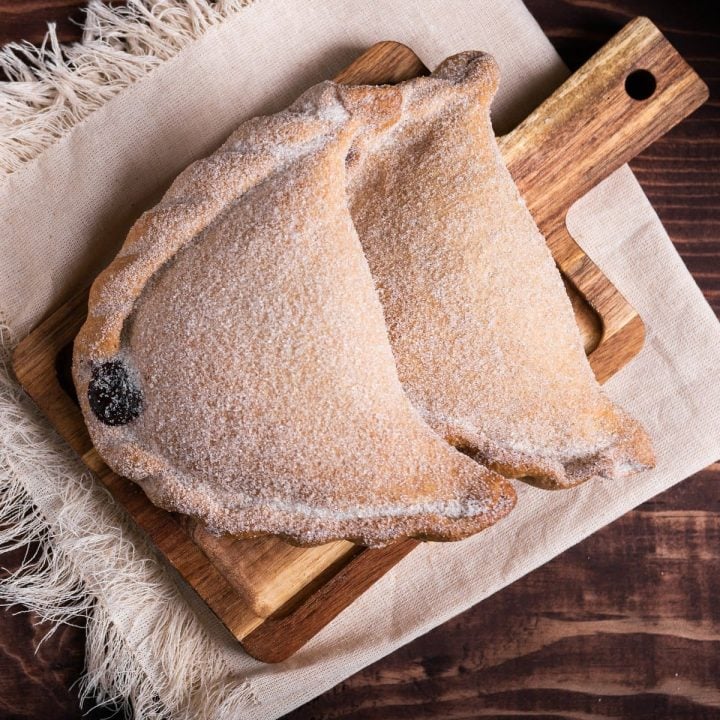
Pumpkin Empanadas (Empanadas de Calabaza)
Mexican-style pumpkin empanadas: a tender butter crust wrapped around pumpkin cooked down with piloncillo, cinnamon and a pinch of cloves, then brushed with egg and finished with cinnamon sugar. They are baked, can be frozen unbaked for up to 3 months, and are an easy make-ahead Thanksgiving dessert.
Ingredients
Filling
- 4 ounces piloncillo (half of an 8-ounce cone), broken into pieces, or 1/2 cup packed dark brown sugar
- 1/4 cup water
- 1 cinnamon stick, preferably Ceylon (canela)
- 1 can (15 ounces) 100% pure pumpkin, or about 2 cups roasted fresh pumpkin puree (see Notes)
- 1/2 teaspoon ground cinnamon
- 1/8 teaspoon ground cloves
- 1/4 teaspoon anise seed (optional)
- Pinch of salt
- 1 teaspoon vanilla extract
Dough
- 3 cups (360 g) all-purpose flour, plus more for rolling
- 2 tablespoons sugar
- 1 teaspoon baking powder
- 1/2 teaspoon fine salt
- 1 cup (2 sticks, 226 g) cold unsalted butter, cut into cubes
- 1 large egg
- 1/2 cup cold whole milk, plus 1 to 2 tablespoons if needed
Topping
- 1 large egg beaten with 1 tablespoon milk, for egg wash
- 3 tablespoons sugar mixed with 1 teaspoon ground cinnamon
Instructions
- Melt the piloncillo. Put the piloncillo, water and cinnamon stick in a medium saucepan over low heat. Cook, stirring now and then, for 6 to 8 minutes, until the piloncillo has dissolved into a syrup.
- Cook the filling. Stir in the pumpkin, ground cinnamon, cloves, anise (if using) and salt. Cook over medium-low heat, stirring often, for 10 to 15 minutes, until very thick: a spoon dragged across the bottom of the pan should leave a clear trail. Fresh puree may need 5 to 10 minutes more. Remove the cinnamon stick, stir in the vanilla and spread the filling in a shallow dish. Cool, then refrigerate until cold, at least 30 minutes.
- Make the dough. Whisk or pulse the flour, sugar, baking powder and salt in a large bowl or food processor. Cut in the butter with a pastry cutter, or pulse, until the largest pieces are the size of peas. Beat the egg with the milk, add it, and mix just until the dough holds together when squeezed, adding 1 to 2 tablespoons more milk if it is dry.
- Chill. Divide the dough in half, flatten each half into a disk, wrap, and refrigerate for 30 minutes.
- Heat the oven to 375°F and line two sheet pans with parchment.
- Cut the rounds. On a floured counter, roll one disk about 1/8 inch thick. Cut 4 1/2-inch circles with a cutter or a small bowl. Gather the scraps, reroll once, and cut more. Repeat with the second disk to get about 16 rounds.
- Fill and seal. Put about 1 1/2 tablespoons of cold filling slightly off center on each round. Brush half the edge with a little egg wash, fold into a half-moon, press out the air and seal. Crimp the edge with a fork. Place on the pans about 1 inch apart.
- Top. Brush the tops with egg wash, cut a small slit in each for steam, and sprinkle with cinnamon sugar.
- Bake for 20 to 25 minutes, switching the pans halfway, until deep golden on top and underneath. Cool on the pan for 10 minutes. Serve warm or at room temperature.
Notes
Fresh pumpkin: Halve about 2 1/2 pounds of pie pumpkin, kabocha or butternut squash, remove the seeds and roast cut side down at 400°F for 45 to 60 minutes, until tender. Scoop and mash to get about 2 cups. Do not use carving pumpkins.
Thick filling is the key. A loose or warm filling is the main reason empanadas leak. Cook it down until it holds its shape and always chill it.
Shortcuts: Use 16 store-bought empanada discs for baking (thawed), or 3 refrigerated pie crusts (about 6 rounds each). For puff pastry discs, bake at 400°F to 425°F following the package.
Fried version: Skip the egg wash and topping. Fry in 350°F oil, 2 or 3 at a time, for 2 to 3 minutes per side, drain, and roll in cinnamon sugar while warm.
Air fryer: Brush with egg wash and cook at 350°F for 9 to 12 minutes in a single layer.
Make ahead: The filling keeps 5 days in the fridge or 3 months in the freezer. The dough keeps 2 days in the fridge or 3 months frozen.
Freeze unbaked: Freeze the shaped empanadas on a sheet pan until solid, then bag them for up to 3 months. Egg wash and bake from frozen, adding 5 to 10 minutes.
Storage: Keep baked empanadas covered at room temperature for up to 2 days, or refrigerated for up to 4. Reheat at 350°F for 8 to 10 minutes.
Do not can the filling. Home canning mashed or pureed pumpkin is not recommended (National Center for Home Food Preservation).
Nutrition Information:
Yield: 16 Serving Size: 1 empanadaAmount Per Serving: Calories: 245Total Fat: 12gSaturated Fat: 7.5gTrans Fat: 0gUnsaturated Fat: 4gCholesterol: 50mgSodium: 125mgCarbohydrates: 30gFiber: 1.5gSugar: 11gProtein: 4g
Nutrition information is an estimate and will vary with the brands and amounts used.
Pumpkin Empanadas FAQ
Can I use pumpkin pie filling instead of pure pumpkin?
Yes, but leave out the piloncillo and spices, which are already in it, and still cook it down for 5 to 10 minutes so it is thick. The flavor will be closer to American pie than to a Mexican empanada.
Why are my pumpkin empanadas leaking?
Almost always because the filling is too loose or too warm, or the empanadas are overfilled. The filling should be thick enough that a spoon dragged through the pan leaves a trail. Chill it before filling, and cut a small vent on top so steam can escape.
Do pumpkin empanadas need to be refrigerated?
Baked empanadas are fine at room temperature, covered, for up to 2 days. After that, refrigerate them for up to 4 days in total and warm them in the oven before serving.
Can I make them with sweet potato instead?
Yes. Use the same amount of mashed, cooked sweet potato or camote. It is naturally sweeter and drier, so cut the piloncillo by about a quarter and add a splash of milk if the filling is stiff.
What is the difference between calabaza and pumpkin?
In Spanish, calabaza covers pumpkins and most squash. In Mexico the word usually means calabaza de Castilla, a large squash with sweet, dense orange flesh. In the Caribbean, the same idea is called calabaza or auyama.
Can I use puff pastry?
Yes. Puff pastry discs or sheets bake into a flakier, lighter empanada. Bake them at 400°F to 425°F, following the package, and watch them closely after 15 minutes.
More Latin holiday sweets
If you have pumpkin left over, try dulce de calabaza or more traditional Mexican desserts. Plan the rest of the meal with our Latin Thanksgiving menu, see how Puerto Rican families do Thanksgiving, and if you are in the mood for more turnovers, read our best empanadas roundup.
Shopping list: a cone of piloncillo, Ceylon cinnamon sticks, 100% pure canned pumpkin, a French rolling pin, a set of round cutters, a pastry brush and parchment sheets for the pans.
Sources
- USDA FoodData Central: Pumpkin, canned, without salt (FDC ID 168450)
- National Center for Home Food Preservation, University of Georgia: Beware: Pumpkin Butter
- National Center for Home Food Preservation: Pumpkins and Winter Squash, Cubed
- Mexico in My Kitchen: Pumpkin Empanadas (Empanadas de Calabaza)
- Goya Foods: Pumpkin Empanadas
- TN (Argentina): Empanadas de calabaza y queso (Spanish)
More Mexican Foods
See all →
Jorge Garcia is the founder of AmigoFoods, where he has spent over 20 years helping readers discover authentic Latin American and Spanish cuisine. Raised in a Cuban-American household, Jorge learned to cook at the hands of his mother and grandmother, carrying forward generations of family recipes. That heritage, backed by his family’s four-generation history in the Latin food industry, inspired him to launch AmigoFoods in 2003. With more than 1,000 published articles on recipes, ingredients, and food culture, Jorge’s mission is simple: make authentic Latin cooking approachable for home cooks everywhere while honoring the traditions behind every dish.