
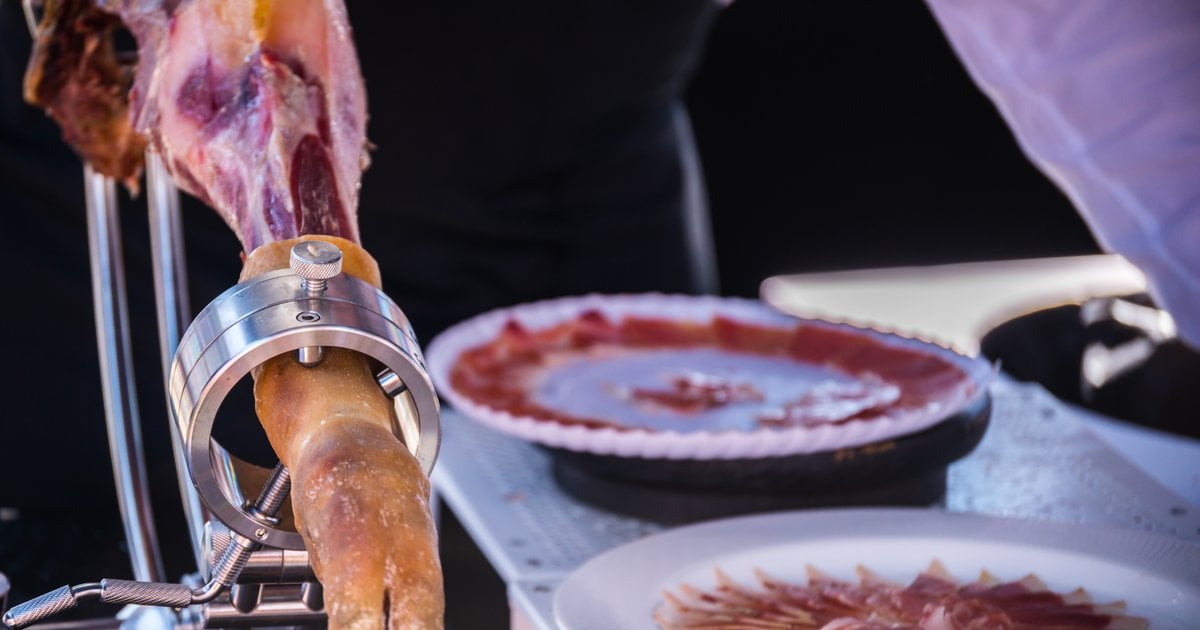
Serrano ham (jamón serrano) is Spain’s everyday dry-cured ham: the hind leg of a white pig, buried in sea salt, then hung to dry for at least seven months and usually a year or more. It is never cooked. You eat it raw, sliced paper-thin, the way Spaniards have eaten it in bars and kitchens for centuries.
It is the ham most people in Spain actually eat day to day, and the one you are most likely to find in US stores, including the giant bone-in legs Costco sells every holiday season. Here is what serrano ham is, how it is made, how to read the label, how it compares to prosciutto, and how to slice, store and eat it.
On this page
Serrano Ham at a Glance
What Is Serrano Ham?
Jamón means ham, and serrano comes from sierra, mountain range. The name goes back to the way these hams were traditionally made: salted in winter and hung to dry in the cold, dry air of Spain’s mountain villages. Today most serrano is cured in modern drying rooms, but the method is the same.
In Spain, “jamón serrano” is used two ways. Loosely, people use it for almost any dry-cured ham, as opposed to jamón de York, the cooked ham you put in a sandwich. Strictly, it means dry-cured ham from white pigs, which separates it from jamón ibérico, the far pricier ham from black Iberian pigs. On a label in the US, serrano almost always means the white-pig ham.
Jamón Serrano is protected in the EU as a Traditional Speciality Guaranteed (TSG). That status protects the method rather than a place, so serrano can be cured anywhere in Spain from pigs raised anywhere in the EU, as long as it follows the recipe and cures for at least 210 days.
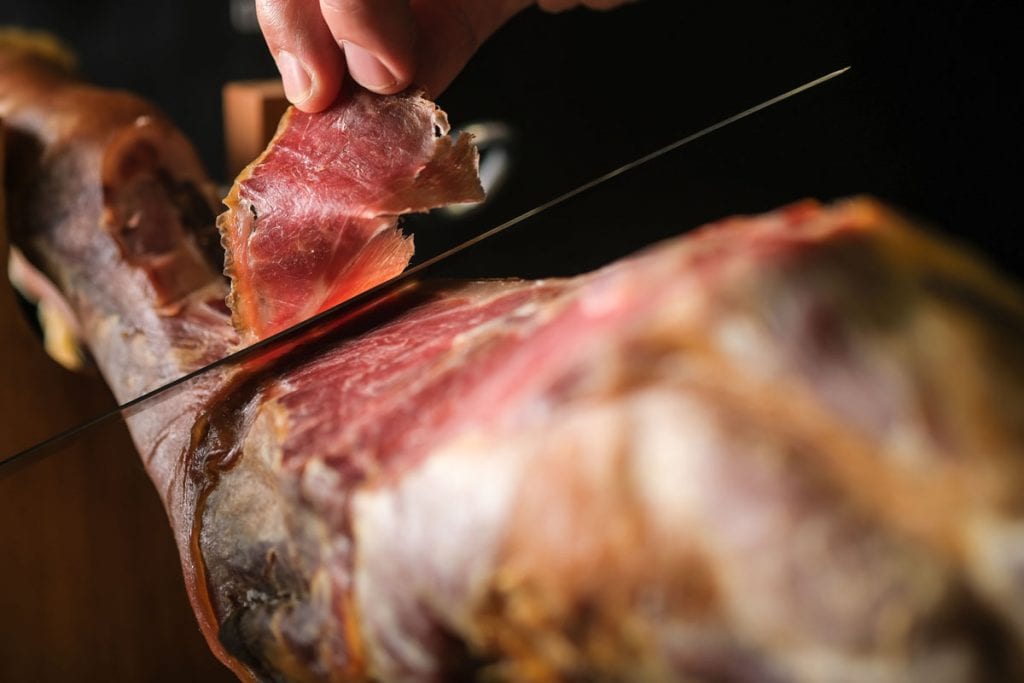
Is serrano ham raw?Yes, in the sense that it is never cooked. But it is not raw pork. Months of salting and drying pull out so much moisture that the ham is cured and safe to eat as is, the same as prosciutto. Do not cook a good serrano before eating it; you only heat it when it is an ingredient in a dish.
How Serrano Ham Is Made
The only ingredients are pork legs and sea salt. Everything else is time, temperature and humidity. Under the TSG rules, the process looks like this:
- Select and trim. Fresh hind legs are trimmed into the classic V shape, with a layer of fat left on to protect the meat while it dries.
- Salt. The legs are buried in sea salt for roughly 0.65 to 2 days per kilo of weight, about one to two weeks for an average leg, in cold rooms.
- Rest. The salt is brushed off and the hams rest for at least 40 days at 6°C (43°F) or colder, so the salt spreads evenly through the meat.
- Dry. The hams move to a drying room (secadero), where the temperature is raised slowly over months. The fat softens and seeps into the muscle, and the ham loses a large share of its weight as water.
- Age. Finally the hams hang in a cellar (bodega) until they reach their grade. The total must be at least 210 days, about seven months; most good serrano goes 12 to 18 months or longer.

Serrano Ham Grades and Labels
Serrano is graded by how long it cured. The names are trade terms rather than law, so the exact months shift a little between producers, but this is what you will see:
Beyond the grade, a few marks are worth looking for:
- “Jamón Serrano” with the EU TSG seal: the ham meets the official method and the 210-day minimum.
- Consorcio del Jamón Serrano Español seal: stricter: Spanish pigs, individually inspected legs and at least 12 months of curing.
- Jamón de Teruel: a protected-origin white-pig ham from Aragón, cured at least 14 months and branded with an eight-pointed star.
- Jamón de Trevélez: a protected ham from the high Alpujarra villages of the Sierra Nevada, known for needing less salt in the thin mountain air.
- Months of curing: good producers print it. More months generally means more flavor and a higher price.

What Does Serrano Ham Taste Like?
Good serrano is savory, clean and noticeably salty, with a gentle sweetness from the fat and a firm, slightly chewy bite. The meat is deep rosy red; the fat is white to pale cream and should smell sweet, never sharp or rancid. The longer the cure, the drier and more concentrated it gets, so a Gran Reserva tastes deeper and nuttier than a young Bodega.
It tastes nothing like American deli ham. Most US ham is wet-brined, cooked and often smoked, which makes it soft, moist and mild. Serrano is dried, not cooked, so it is denser, saltier and far more intense. A few thin slices go a long way.
Serrano Ham vs. Prosciutto
This is the comparison most people are really asking about, because the two look almost identical in the package. Both are raw, salt-cured hams from white pigs. The differences are in the style:
| Serrano ham | Prosciutto | |
|---|---|---|
| Country | Spain | Italy (Parma, San Daniele and others) |
| Pig | White breeds | White breeds |
| Typical cure | 12–18 months, drier | About a year or more, moister |
| Texture | Firmer, chewier | Softer, silkier |
| Flavor | Bolder, more savory and salty | Sweeter, milder, more delicate |
| How it is sliced | Often hand-carved into small, slightly thicker slices | Usually machine-sliced paper-thin |
They are close enough to swap in most recipes. If a recipe calls for serrano and you only have prosciutto, use it; expect a milder, softer result. Going the other way, use a little less serrano, because it is saltier. Spanish lomo or a dry Italian speck also work in a pinch.
Serrano and jamón ibérico, on the other hand, are not interchangeable. Ibérico comes from black Iberian pigs, often acorn-fed, and cures for years instead of months. For the full side-by-side, see jamón ibérico vs. jamón serrano.
Buying Serrano Ham: Sliced or Whole Leg?
| Format | Best for | Watch out for |
|---|---|---|
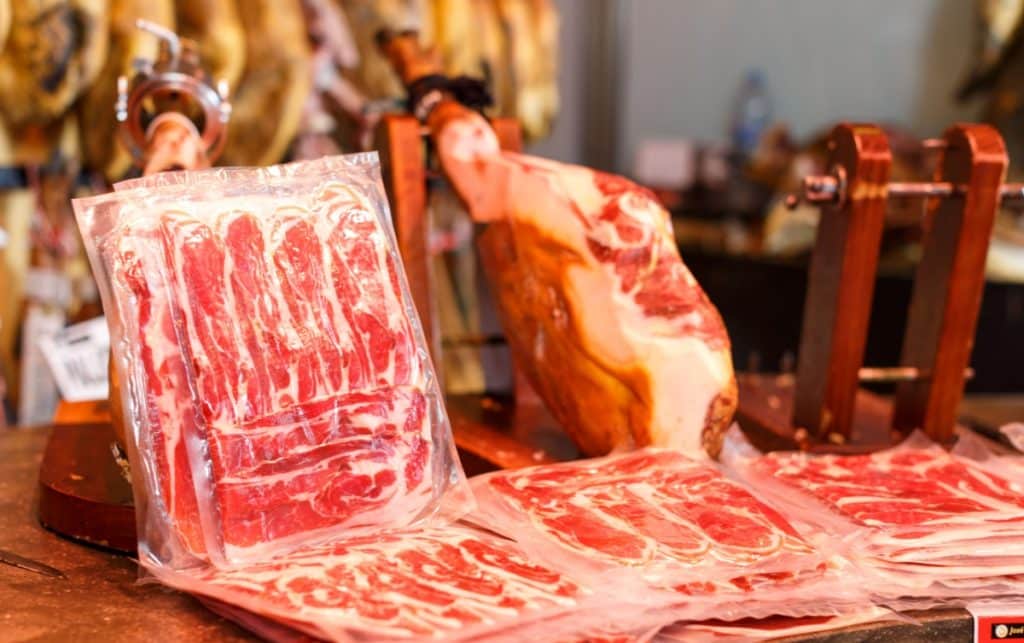
| Pre-sliced packs | Small households, sandwiches, a tapas board this weekend | Costs the most per pound (about $50/lb); slices can stick together, so let the pack warm up before peeling them apart |
| Boneless block | Slicing at home on a meat slicer | Easier to store than a leg, but you lose the ritual of carving |
| Bone-in leg (pierna) | Parties, holidays, families who will eat it over a few weeks | Needs a stand, a long knife and counter space; a good part of the weight is bone, skin and fat |
The Costco Serrano Ham Leg
Every fall, Costco brings back a whole serrano leg in a gift box, and it sells out fast. For many American families it is their first serrano ham, so it is worth knowing exactly what you are getting.
- The ham
- A 14 lb bone-in serrano leg. For years it has been Noel’s Consorcio Serrano Reserva; some warehouses have also carried a Costa Brava serrano leg of the same size.
- Curing
- About 12 months, Reserva grade
- In the box
- A wooden ham stand (jamonero), a long carving knife and carving instructions
- Price
- Usually about $100 to $113 in the warehouse, a little more online
- When
- Seasonal, from roughly October through the holidays, while supplies last
Is it worth it? For a party or a holiday stretch with family, yes. At about $7 to $8 a pound with a stand and knife included, it is one of the best-value serrano legs in the country, and the Consorcio seal on the Noel ham means it meets the stricter 12-month standard. The catch is time: once you start carving, plan to finish it within about six to eight weeks, so it suits a crowd better than a couple. Some shoppers report their warehouse marking leftover legs down after the holidays, but that varies by store.

How to Slice a Whole Serrano Ham
- Pick a side. If you will finish the ham within a few weeks, clamp it hoof up and start on the wide, meaty side (the maza). If it will take longer, start hoof down on the narrower side (the babilla) so the juicier maza stays protected.
- Clear a window. With a short, stiff knife, cut away the skin and the yellowed outer fat, only over the area you will slice today. Keep a few pieces of clean white fat to cover the cut later.
- Slice thin and flat. With a long, flexible ham knife, cut thin, palm-sized slices, working away from you in a flat, even plane. Each slice should have a little fat on the edge.
- Follow the bone. When you reach the bone, use the short knife to free the meat around it, and turn the leg to start on the other side.
- Cover it. Lay the reserved fat over the cut face, then cover with a clean cotton cloth.
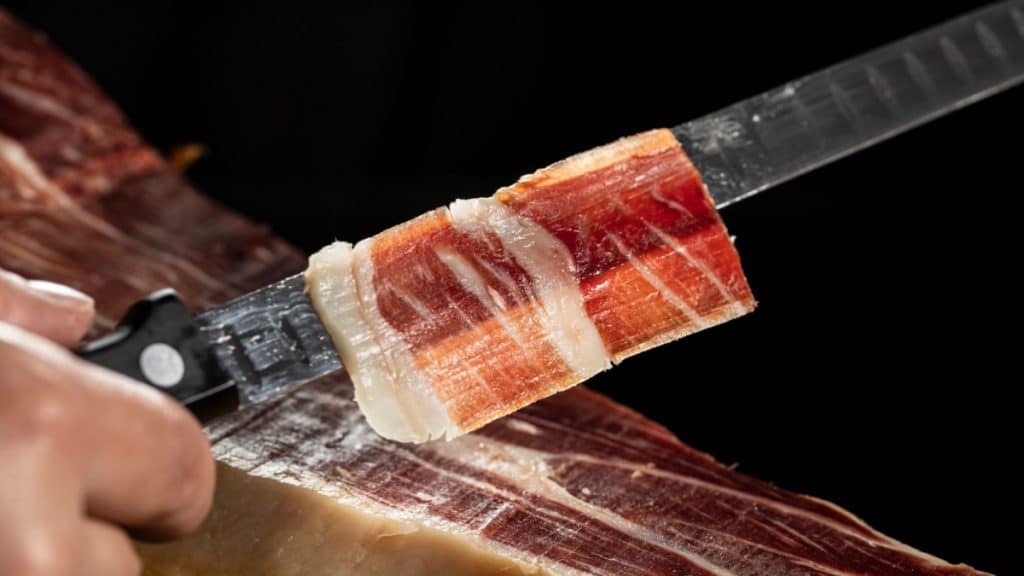
For a fuller walkthrough with every cut, see our guide to slicing jamón; the method is the same for serrano.
How Long Does Serrano Ham Last?
| Format | Where to keep it | How long |
|---|---|---|
| Whole leg, uncut | Cool, dry spot out of the sun, in its cloth or box | Several months; check the producer’s date |
| Whole leg, started | On its stand, cut face covered with its own fat and a cotton cloth | About 6–8 weeks |
| Vacuum packs, sealed | Refrigerator | Until the date on the pack |
| Opened packs or sliced | Refrigerator, tightly wrapped | A few days; slices dry out fast |
Do not wrap a started leg in plastic; it traps moisture and invites mold. A little white surface mold on the outer skin of an uncut leg is normal and can be wiped off with a cloth dampened with olive oil. Anything soft, slimy or sour-smelling on the meat is not. More detail is in our guide to storing jamón.
How to Eat Serrano Ham
Take it out of the fridge 20 to 30 minutes before serving, so the fat softens and the flavor opens up. Then keep it simple. In Spain, serrano shows up everywhere:
- On its own, as a tapa with bread, olives and a glass of wine or a cold beer
- On toast: pan con tomate with a slice or two laid on top
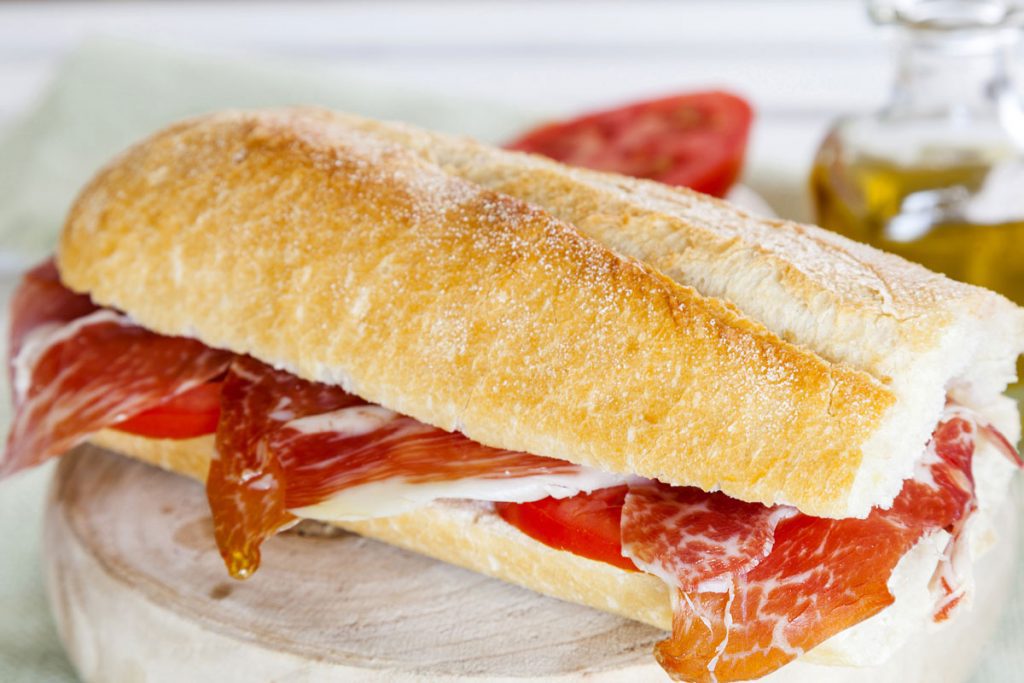
- In a bocadillo, the plain Spanish sandwich of crusty bread, olive oil and ham, or a serranito from Seville
- In croquetas: chopped into croquetas de jamón, the classic use for end pieces
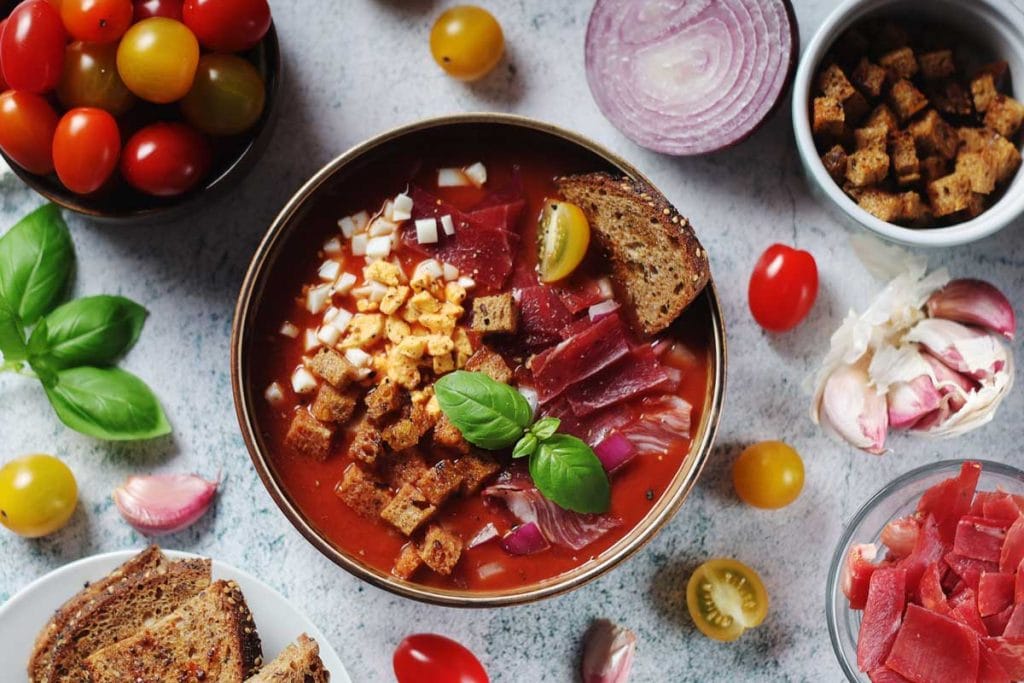
- Over soups: diced on cold salmorejo with hard-boiled egg
- With eggs: crisped in a pan and laid over huevos rotos
- Rolled into dinner: layered inside cachopo, Asturias’s ham-and-cheese stuffed steak
- On a board with Manchego, membrillo and almonds; see our Spanish tapas board
When you cook with it, add it at the end. A minute or two of heat crisps it nicely; longer and it turns tough and salty. The bone is worth saving too: it gives a deep, savory base to bean stews, lentils and caldo.
Where to Buy Serrano Ham
Most US supermarkets with a good deli counter carry pre-sliced serrano, and specialty Spanish shops sell boneless blocks and whole legs. Costco brings in whole legs for the holidays. Online, these are solid choices:
As an Amazon Associate, AmigoFoods earns from qualifying purchases. Prices were checked in October 2026 and change often.
Buying a leg without a stand? You will need a sturdy ham stand (jamonero) to hold it steady while you carve. For more places to shop for Spanish ham, see where to buy jamón.
Serrano Ham FAQ
What is jamón serrano in English?
Serrano ham, or literally “mountain ham.” It is Spanish dry-cured ham made from white pigs and eaten without cooking.
Is serrano ham the same as prosciutto?
No, but they are close cousins. Both are raw, salt-cured hams from white pigs. Serrano is Spanish, usually cured longer, and drier, firmer and saltier; prosciutto is Italian, softer and sweeter.
Do you cook serrano ham?
No. It is cured and ready to eat straight from the pack or the leg. You only heat it when it is part of a cooked dish, and then just briefly.
Is serrano ham better than regular ham?
It is a different thing. Regular American ham is brined and cooked, so it is moist and mild. Serrano is dried for months, so it is firmer and much more intense. It is meant to be eaten in small amounts, sliced very thin.
Why is serrano ham so salty?
Salt is what cures it. The legs are buried in sea salt and then dried, which concentrates the flavor. Longer-cured hams and well-made Consorcio or Teruel hams tend to taste more balanced and less aggressively salty.
Can dogs eat serrano ham or the bone?
It is best not to. Cured ham is very high in salt, and ham bones can splinter or cause blockages. Use the bone for stock instead.
How long does a Costco serrano ham last?
Sealed, it keeps for months in a cool, dry place. Once you start carving, plan on about six to eight weeks, with the cut face covered by its own fat and a cotton cloth between sessions.
More on Spanish ham
Sources
- Consorcio del Jamón Serrano Español
- Wikipedia: Jamón
- La Estrella del Jamón: Serrano TSG vs. Teruel PDO requirements
More Spanish Foods
See all →
Jorge Garcia is the founder of AmigoFoods, where he has spent over 20 years helping readers discover authentic Latin American and Spanish cuisine. Raised in a Cuban-American household, Jorge learned to cook at the hands of his mother and grandmother, carrying forward generations of family recipes. That heritage, backed by his family’s four-generation history in the Latin food industry, inspired him to launch AmigoFoods in 2003. With more than 1,000 published articles on recipes, ingredients, and food culture, Jorge’s mission is simple: make authentic Latin cooking approachable for home cooks everywhere while honoring the traditions behind every dish.