
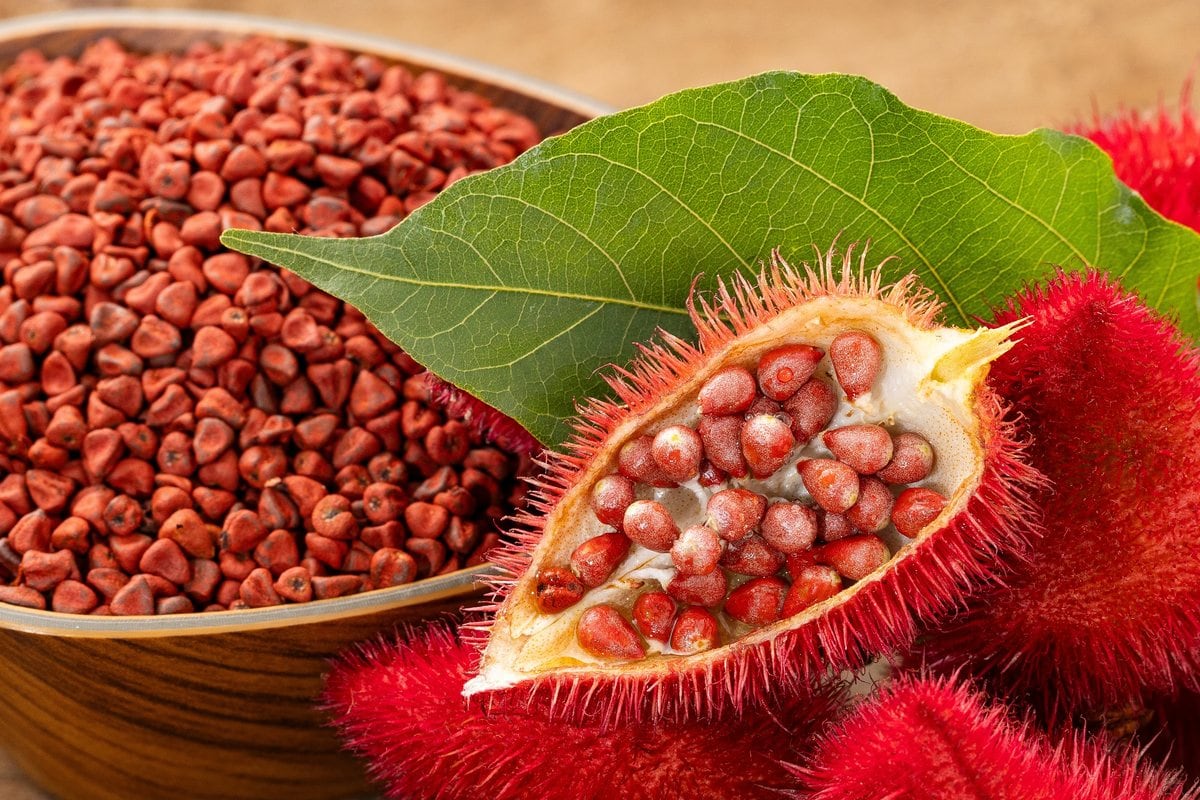
Achiote (ah-chee-OH-teh), also called annatto, is the brick-red seed of the Bixa orellana shrub, a tropical plant native to the Americas. Ground into a powder, blended into a paste or warmed in oil, it gives cochinita pibil its color, turns Puerto Rican rice golden and makes Cheddar orange. The flavor is mild, earthy and a little peppery, and it is not spicy.
This guide covers what achiote tastes like, the difference between annatto seeds, powder, paste and oil, how to make achiote oil and homemade achiote paste (recado rojo), the dishes that use it across Latin America, the best substitutes, and why annatto ends up in so much cheese.
Homemade Achiote Paste at a Glance
What Is Achiote?
Achiote is the seed of Bixa orellana, a shrub or small tree that grows wild and in gardens from Mexico to Brazil and across the Caribbean. Its spiky, heart-shaped pods ripen to red, then dry and split open to show a few dozen small seeds wrapped in a waxy, blood-red coating.
That coating is the whole point. It holds the pigments that cooks, cheesemakers and food companies use, and it rubs off on your fingers the moment you touch a seed.
The name comes from the Nahuatl word āchiotl. Long before achiote was a seasoning, it was a dye. The Maya used it to color cacao drinks red, many Amazonian and Caribbean peoples painted their skin with it, and Tsáchila men in Ecuador still style their hair with achiote paste, which is why the Spanish called them los Colorados. The English nickname “lipstick tree” comes from the same habit.
Achiote vs. Annatto: Same Seed, Many Names
Achiote and annatto are the same thing. “Achiote” is the Spanish name used in Mexico, Central America and much of South America. “Annatto” is the English name, and it is the word you will see on cheese and snack labels. These are the other names you will run into on packages and in family recipes:
Two common mix-ups: achiote is not paprika, which is ground dried peppers (see our guide to pimentón, Spanish smoked paprika), and it is not saffron, although cooks across Latin America have long used it as an affordable way to get saffron‘s golden color.
What Does Achiote Taste Like?
Achiote tastes earthy and slightly peppery, with a faint sweetness and a nutty, almost nutmeg-like edge. Used in quantity it turns pleasantly bitter, like a well-toasted spice. It is mild enough that most of what you notice is color, which is why a marinade uses a lot of it and a pot of rice needs only a pinch.
It is not hot. Any heat in an achiote dish comes from the chiles cooked with it, such as habanero in Yucatán or guajillo in al pastor.
Forms of Achiote: Seeds, Powder, Paste & Oil
You can buy achiote four ways, and they are not interchangeable spoon for spoon. Here is what each one is for.
| Form | What it is | Best for | How long it keeps |
|---|---|---|---|
| Whole seeds (annatto seeds) | Dried seeds, rock hard | Achiote oil or lard; grinding fresh for paste | Up to 2 years, airtight and dark |
| Ground (achiote powder) | Finely milled seeds, sometimes cut with cornmeal or salt | Rubs, rice, soups, masa, sofrito | Best color within 6 months |
| Paste (recado rojo) | Ground seeds with garlic, spices and vinegar or citrus, pressed into a block | Marinades for pork, chicken and fish | Months in the fridge once opened, tightly wrapped |
| Oil (aceite de achiote) | Oil or lard warmed with seeds, then strained | Starting sofrito; coloring rice, beans and masa | About 1 month in the fridge |

How to Use Achiote Seeds
Whole achiote seeds are almost too hard to bite and barely soften in cooking, so they are rarely eaten. Cooks pull the color and flavor out of them in one of three ways:
- Warm them in fat to make achiote oil. This is the everyday method in Puerto Rico, the Dominican Republic, Venezuela and Ecuador.
- Grind them in a spice or coffee grinder for powder or paste. A mortar and pestle works with patience; most blenders cannot break them.
- Soak them in liquid. A tablespoon of seeds steeped in a cup of hot water or citrus juice for 30 minutes gives a golden liquid for cooking rice, and an overnight soak softens them enough to blend into paste.
Achiote Oil (Aceite de Achiote)
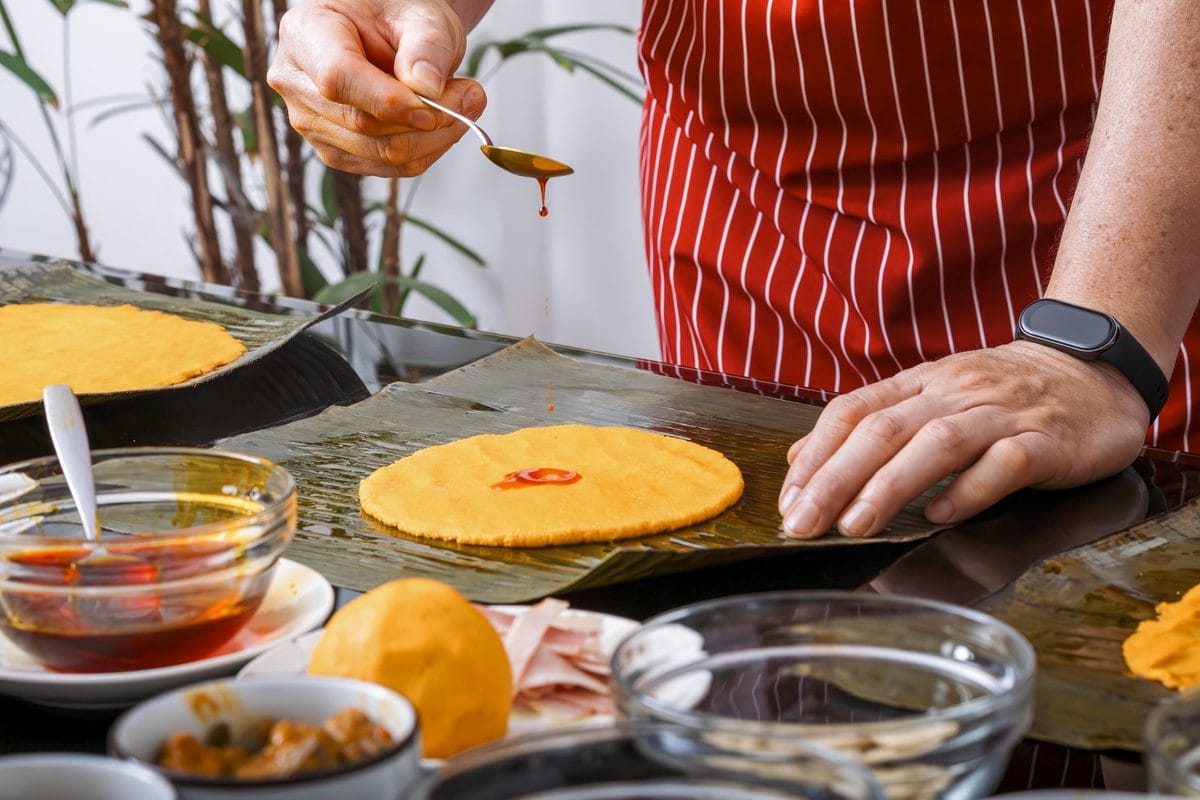
Achiote oil is called aceite de achiote in Puerto Rico and aceite onotado in Venezuela, and made with lard it becomes manteca de color. It is the simplest way to cook with achiote: warm ¼ cup seeds in 1 cup oil or lard over low heat until the fat turns deep red-orange, then strain out the seeds. A spoonful colors rice, beans, a sofrito, or the dough for pasteles, hallacas, alcapurrias and empanadas.
For exact amounts, the low-heat cue that keeps it from turning bitter, versions made from powder or lard, and how long it keeps, follow our full achiote oil recipe.
Achiote Paste (Recado Rojo): What It Is and How to Use It
Achiote paste is ground achiote seeds mixed with garlic, spices such as cumin, black pepper, allspice, clove and oregano, and vinegar or bitter orange juice. In Yucatán it is called recado rojo, “red seasoning,” and it is the backbone of the peninsula’s cooking. Store-bought paste usually comes as a firm 3.5-ounce block; Central American brands also sell a softer recado in jars.
The block is too stiff to use straight. To turn it into a marinade:
- Crumble it into a glass bowl and mash it with about ½ cup sour orange juice (or orange juice with a squeeze of lime) until it looks like thick ketchup.
- Rub it over pork, chicken or fish, cover and refrigerate 4 hours to overnight. Fish needs only 30 minutes.
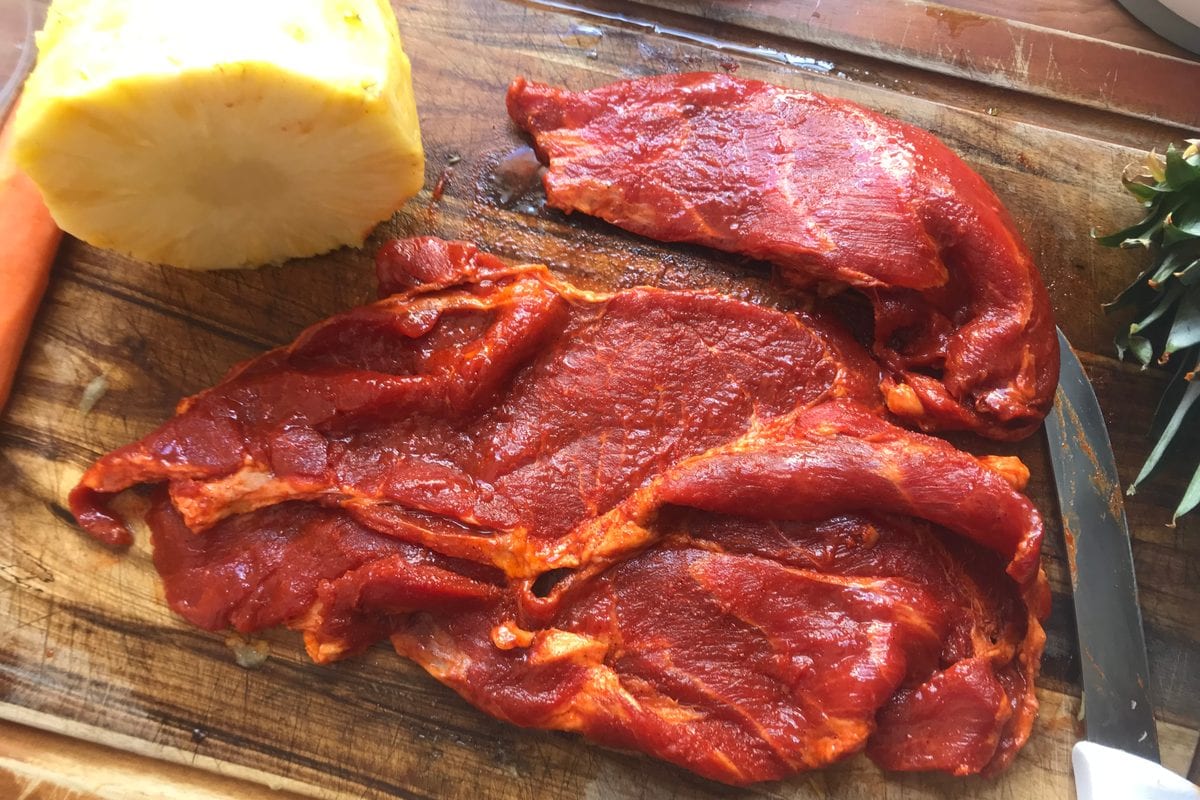
- Roast, grill, or wrap the meat in banana leaves and braise it. One block covers about 2 to 4 pounds of meat, depending on how deep a color you want.
For a full weeknight recipe built on one block of paste, try our achiote chicken (pollo en achiote).
Achiote paste also gives many versions of tacos al pastor their red color, blended with guajillo chiles and pineapple.
Homemade Achiote Paste Recipe (Recado Rojo)
Store-bought blocks are convenient, but homemade recado rojo smells brighter and lets you control the salt and garlic. The only hard step is grinding the seeds, and a spice or coffee grinder does it in about two minutes. Without one, soak the seeds overnight in the citrus juice and blend everything together; the paste will be a little grainier.
Homemade Achiote Paste (Recado Rojo)
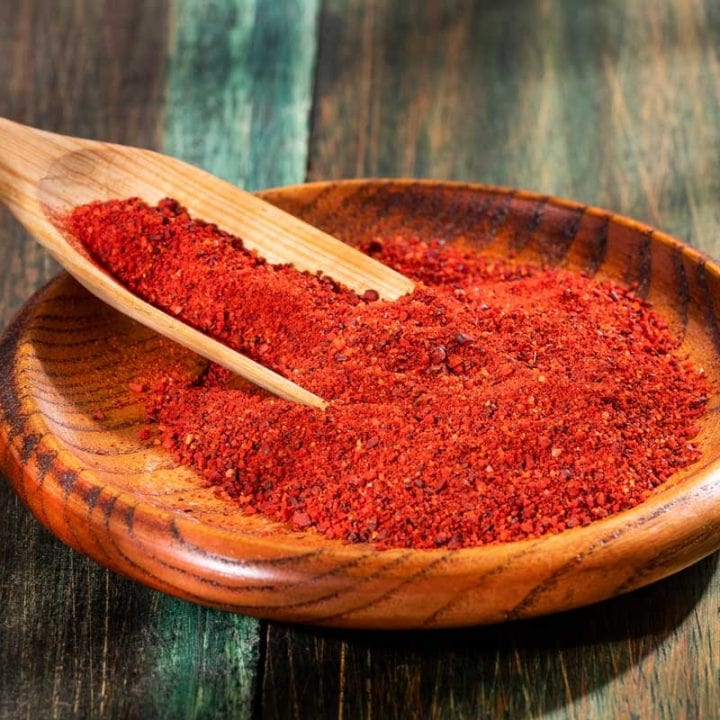
Recado rojo is the brick-red Yucatecan seasoning paste behind cochinita pibil, pollo pibil and tikin xic. Grinding your own achiote seeds with toasted spices, garlic and sour orange gives a brighter, more aromatic paste than the store-bought block, and it takes about 20 minutes.
Ingredients
- 1/4 cup (about 40 g) achiote (annatto) seeds
- 1 teaspoon cumin seeds
- 1 teaspoon black peppercorns
- 1/2 teaspoon allspice berries
- 4 whole cloves
- 1 tablespoon dried Mexican oregano
- 1 1/2 teaspoons kosher salt
- 6 garlic cloves, peeled
- 1/2 cup sour orange juice (or 6 tablespoons orange juice plus 2 tablespoons lime juice)
- 1 tablespoon white or cider vinegar
Instructions
- Toast the spices. Put the cumin seeds, black peppercorns, allspice berries and cloves in a dry skillet over medium heat. Shake the pan for 1 to 2 minutes, just until fragrant, then tip them onto a plate to cool.
- Grind the achiote. Add the achiote seeds, toasted spices and oregano to a spice grinder or clean coffee grinder. Grind in 20-second bursts for 1 to 2 minutes, until you have a fine brick-red powder. Sift it through a fine strainer and regrind anything that stays behind. (No grinder: soak the seeds in the citrus juice overnight, then go to step 3 and blend everything together; the paste will be slightly grainier.)
- Blend the paste. Put the ground spices, garlic, salt, citrus juice and vinegar in a small blender, mini food processor or molcajete. Blend to a thick, smooth paste about the texture of tomato paste, adding a spoonful more juice only if the blades stall.
- Use or store. Use it right away as a marinade base, or pack it into a small jar and press plastic wrap onto the surface. Refrigerate up to 2 weeks, or freeze in tablespoon portions up to 6 months.
Notes
To use: the whole batch seasons 4 to 5 pounds of pork shoulder or chicken. For a marinade, loosen it with another 1/4 cup sour orange juice, rub it over the meat and refrigerate 4 hours to overnight.
Stains: achiote dyes plastic, wood and skin. Wear gloves and use a glass or stainless bowl. To clean the grinder, whir a tablespoon of raw rice in it and wipe it out.
No sour oranges: use 6 tablespoons orange juice plus 2 tablespoons lime juice, or bottled naranja agria.
Dishes That Use Achiote, Country by Country
Achiote turns up wherever Indigenous, Spanish and African cooking met in the American tropics. These are the best places to taste it.
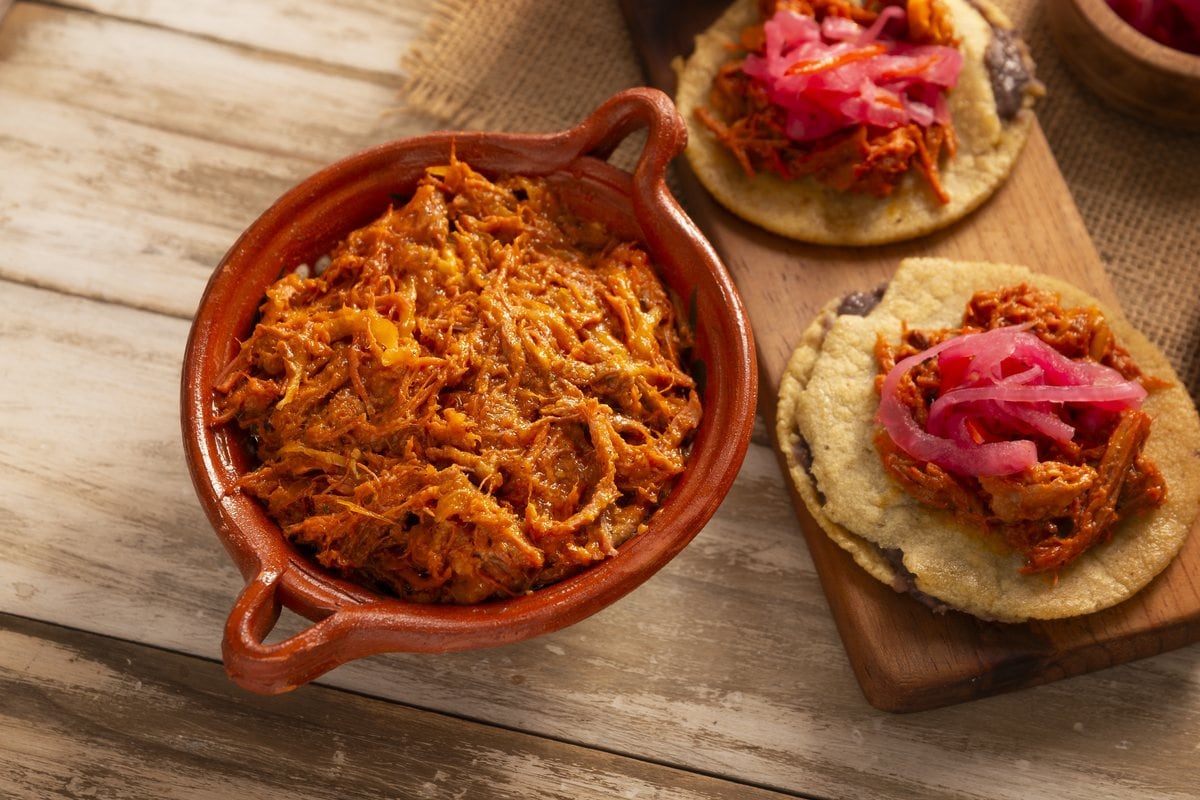
Mexico (Yucatán)
recado rojo
Recado rojo and sour orange make cochinita pibil, pollo pibil and tikin xic, a grilled whole fish. Explore more in our guide to Yucatán food.
Guatemala
achiote
Achiote reddens the broth of kak’ik, the Mayan turkey soup, and the recado for hilachas.
Puerto Rico
achiote or achote
Achiote oil or sazón colors arroz con gandules, pasteles and the masa for alcapurrias.
Nicaragua & Costa Rica
achiote
Achiote paste colors the masa of nacatamales and Costa Rican Christmas tamales, along with rice dishes.
Colombia
achiote or “color”
Achiote gives regional Colombian tamales such as tamal tolimense their golden masa.
Ecuador
achiote
A refrito of onion, garlic and achiote starts soups and potato dishes such as llapingachos. More in our Ecuadorian ingredients guide.
Cuba & Dominican Republic
bija
Bija or Bijol turns Cuban arroz con pollo and Dominican locrio de pollo yellow-orange.
Brazil & Peru
urucum
Urucum, not dendê oil, colors moqueca capixaba from Espírito Santo. In the Peruvian Amazon, achiote or palillo colors juane, the rice tamal wrapped in bijao leaves.
Beyond Latin America
atsuete
Spanish galleons carried achiote to the Philippines, where atsuete colors kare-kare, pancit and chicken inasal.

Achiote Substitutes
Nothing matches achiote exactly, so choose a substitute based on what the recipe needs it for: color, seasoning, or a full marinade.
| If you need | Use | How much |
|---|---|---|
| Color for rice, oil or masa | Sweet paprika plus a pinch of turmeric | 1 tsp paprika + ⅛ tsp turmeric for each 1 tsp ground achiote |
| Color and seasoning in Caribbean rice and beans | Sazón with culantro and achiote | 1 packet for a pot of rice that serves 4 to 6, then cut back on salt |
| A replacement for achiote paste | Paprika paste: 2 tbsp sweet paprika, 1 tsp each cumin and oregano, 2 garlic cloves, 3 tbsp citrus juice, 1 tsp vinegar | Replaces one 3.5-oz block. Flavor is close, color is less red |
| A red marinade with more depth | Guajillo chile paste | Adds fruitiness and a little heat that achiote does not have |
| Golden color only | Turmeric or saffron | A pinch. They make food yellow rather than red-orange |
Sazón packets are a shortcut, not pure achiote. Most mix it with salt, garlic, cumin and coriander, and many get part of their color from added food dyes, so read the label if you want a dye-free version. Our adobo vs. sazón guide explains how the blends differ.

Annatto in Cheese, Butter and Packaged Foods
If you have eaten orange Cheddar, Colby, Red Leicester, Double Gloucester, Mimolette or the orange rind on American Muenster, you have eaten annatto. It also colors some butter, margarine, smoked fish, custards, cereals and snack foods.
The cheese habit goes back to 17th-century England. Milk from cows grazing on summer pasture is naturally golden, so a deep yellow cheese signaled rich, full-fat milk. When cheesemakers began skimming off cream to sell as butter, they colored the paler cheese, first with saffron, marigold and carrot juice and later with imported annatto. Buyers came to expect the color, and the tradition crossed the Atlantic with American cheddar makers.
On ingredient labels it appears as “annatto,” “annatto extract” or “annatto color,” and in Europe as E160b.
Is Annatto Safe? Health, Allergies and Nutrition
For most people, yes. In the United States, annatto extract is an approved color additive exempt from certification, and achiote has been eaten across Latin America for centuries. The amounts used in cooking are small.
- Allergies: reactions are uncommon but documented, from hives to, very rarely, anaphylaxis. If you react, check cheese, snack and cereal labels for annatto.
- Not a tree nut: annatto is a seed and is not one of the major food allergens that U.S. labels must declare.
- Gluten-free and vegan: pure achiote is both. Powders and pastes can contain fillers or other additives, so check the label.
- Sensitivities: some people with irritable bowel syndrome or food-dye sensitivities report reacting to annatto. Evidence is limited, but if you suspect it, avoid it.
- Heart health: there is no good evidence that annatto in food harms the heart. The seeds contain tocotrienols, a form of vitamin E, though a spoonful of seasoning holds very little.
Most of the health benefits you will read about come from lab studies of concentrated extracts, not from the amounts in a pot of rice.
Where to Buy Achiote (and Brands to Look For)
Look in the Hispanic or international aisle of most U.S. supermarkets, usually near the Goya products, or at Mexican, Central American and Caribbean grocers. El Yucateco paste blocks and Badia seeds and powder are the easiest to find. These are the ones worth keeping in the pantry:
The classic Yucatecan red block. Mash it with sour orange juice for cochinita pibil and pollo pibil.
A softer Central American-style recado in a jar, made for coloring rice, stews and tamales.
For achiote oil and homemade recado rojo. A 10-ounce bag lasts a long time.
For rubs, rice, soups and masa when you would rather not grind seeds.
The shortcut for Puerto Rican and Dominican rice, beans and stews.
The traditional acid for recado rojo when fresh sour oranges are hard to find.
As an Amazon Associate, AmigoFoods earns from qualifying purchases.
How to Store Achiote
Light and air fade achiote faster than time does, so keep every form sealed and out of the sun.
- Seeds: in an airtight jar in a cool, dark cupboard for up to 2 years. If they look brown instead of red, replace them.
- Powder: airtight and away from light; best within 6 months.
- Store-bought paste: once opened, wrap it tightly and refrigerate. It keeps for months.
- Homemade paste: refrigerate up to 2 weeks or freeze in tablespoon portions up to 6 months.
- Achiote oil: refrigerate up to 1 month.
Achiote FAQ
Is achiote spicy?
No. Achiote is earthy and mildly peppery but has no heat. If an achiote dish is spicy, the heat comes from chiles such as habanero or guajillo.
Is achiote the same as paprika?
No. Paprika is made from ground dried peppers, while achiote comes from the seeds of the Bixa orellana shrub. Paprika can stand in for achiote’s color, especially with a pinch of turmeric, but the flavors are different.
What is achiote in English?
Achiote is called annatto in English. You may also see annatto seed, annatto powder or the plant’s nickname, the lipstick tree.
Can you eat achiote seeds?
They are not harmful, but whole seeds are too hard to enjoy. Cooks grind them into powder or paste, or warm them in oil and strain them out.
Does achiote stain?
Yes, and fast. It dyes skin, wooden spoons, plastic and grout. Wear gloves, use glass or stainless bowls, and rub stained hands with a little cooking oil before washing with dish soap. Sunlight slowly fades stains on plastic containers.
What is the difference between achiote paste and achiote powder?
Achiote powder is only ground seeds. Achiote paste (recado rojo) is ground seeds blended with garlic, spices and vinegar or citrus, so it is a ready-made seasoning for marinades rather than a single spice.
Where is achiote paste in the grocery store?
Usually in the Hispanic or international aisle, near the Goya products and dried chiles, sold as a small boxed block. Latin markets often keep it by the spices or at the register.
What can I use instead of achiote paste?
Mix 2 tablespoons sweet paprika with 1 teaspoon each of cumin and oregano, 2 garlic cloves, 3 tablespoons citrus juice and 1 teaspoon vinegar. See achiote substitutes for more options.
Keep exploring the Latin pantry with our guide to Latin American pantry essentials and our country-by-country guide to Latin American chile peppers.
More Ingredients
See all →
Jorge Garcia is the founder of AmigoFoods, where he has spent over 20 years helping readers discover authentic Latin American and Spanish cuisine. Raised in a Cuban-American household, Jorge learned to cook at the hands of his mother and grandmother, carrying forward generations of family recipes. That heritage, backed by his family’s four-generation history in the Latin food industry, inspired him to launch AmigoFoods in 2003. With more than 1,000 published articles on recipes, ingredients, and food culture, Jorge’s mission is simple: make authentic Latin cooking approachable for home cooks everywhere while honoring the traditions behind every dish.