
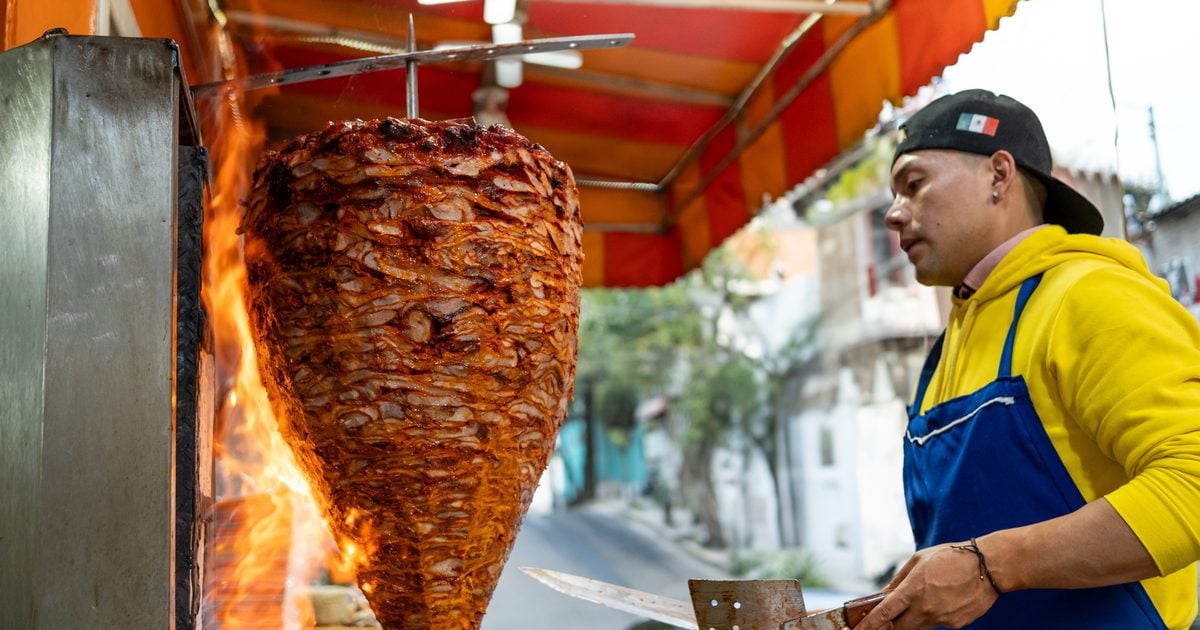
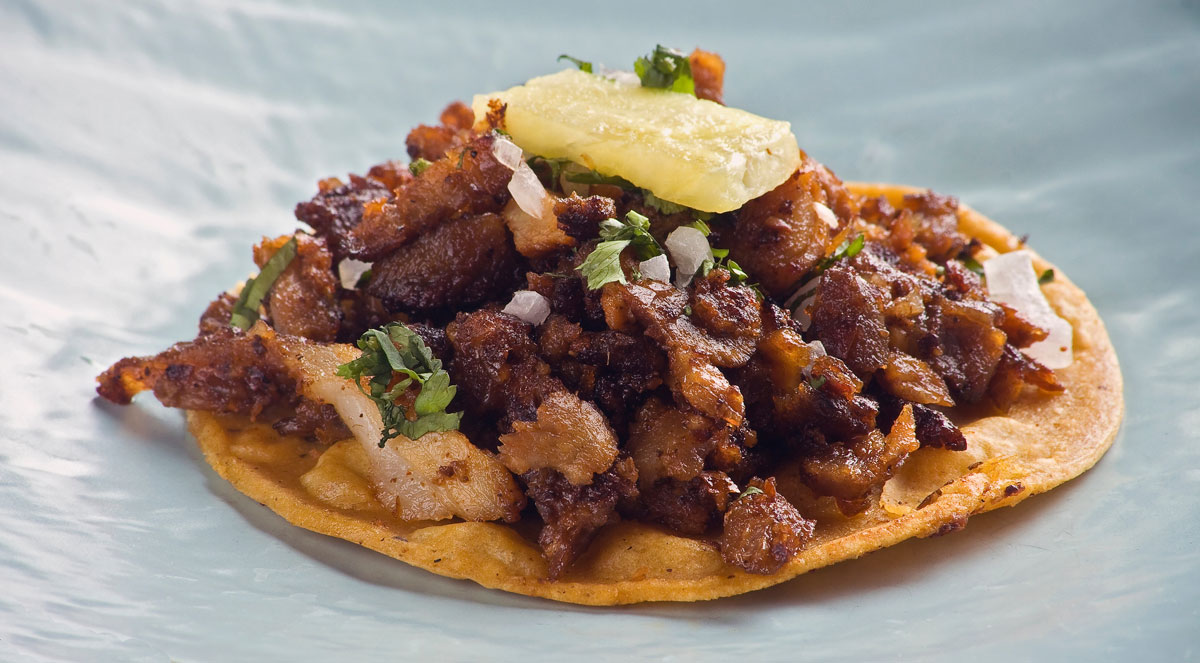
Tacos al pastor bring together chile-and-achiote-marinated pork, charred pineapple, onion and cilantro on warm corn tortillas. This home version uses thin slices of pork shoulder and a hot skillet to recreate the browned edges of Mexico’s famous trompo-cooked tacos.
Tacos al Pastor at a Glance
What Is Al Pastor?
Al pastor (pronounced ahl pahs-TOR) means “shepherd style” in English. The name comes from asado al pastor, the old countryside way of roasting meat on a spit over an open fire, the way shepherds did. When people say “al pastor meat” or just “pastor,” they mean pork, almost always shoulder, sliced thin, soaked in a chile and achiote adobo, and cooked on a vertical rotisserie.
Three things make a taco al pastor what it is:
1. The marinade
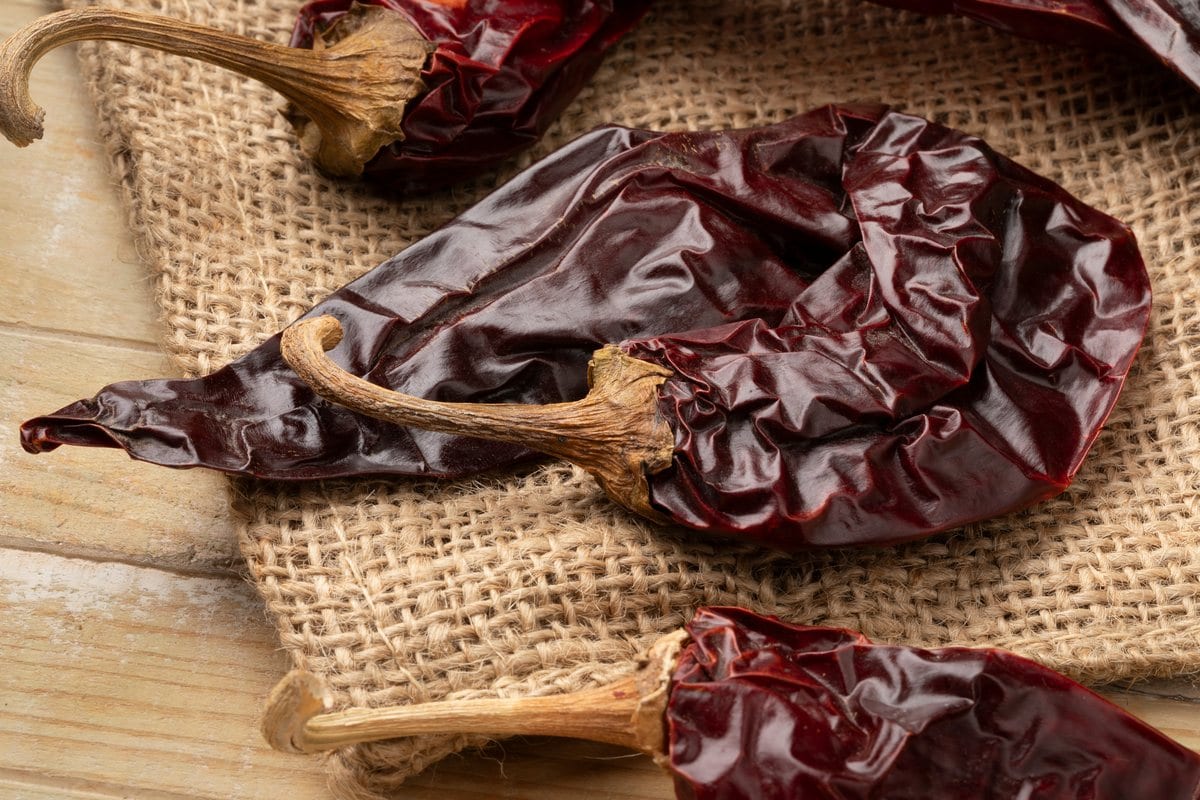
Guajillo chiles give the color and gentle heat. Achiote paste adds an earthy, brick-red stain. Pineapple juice, vinegar, garlic, cumin and Mexican oregano round it out.
2. The trompo
The slices are pressed onto a spit in a tight cone and roasted beside a flame. The taquero shaves off only the browned outside, so every taco gets crisp edges and juicy meat.
3. The toppings
A sliver of roasted pineapple, chopped white onion, cilantro, a squeeze of lime and salsa. Nothing more. The tortilla is corn, and it is small.
Tacos al Pastor Essentials
| Detail | Tacos al pastor |
|---|---|
| Meaning | “Shepherd style,” from asado al pastor, spit-roasting over fire |
| Origin | Lebanese shawarma brought to Puebla in the 1920s and 1930s; perfected in Mexico City by the 1960s |
| Meat | Pork shoulder (sometimes leg), sliced thin |
| Marinade | Guajillo chiles, achiote, pineapple juice, vinegar, garlic, cumin, oregano, clove |
| Cooking | Stacked on a vertical spit (trompo) and roasted beside a flame |
| Tortilla | Small corn tortillas, often doubled |
| Toppings | Pineapple, white onion, cilantro, lime, salsa verde or salsa roja |
| Heat level | Mild; the heat comes from the salsa you add |
| Where to find it | Everywhere in Mexico, especially Mexico City and Puebla; most Mexican restaurants in the U.S. |
History of Tacos al Pastor: From Shawarma to the Trompo
Tacos al pastor are barely a century old, which makes them young by Mexican standards. Their story starts far from Mexico.
Lebanese immigrants and tacos árabes
Between the 1890s and the 1930s, thousands of Lebanese families left the Ottoman-ruled Levant and settled in Mexico, many of them in Puebla. They brought shawarma with them: lamb stacked on a vertical spit, roasted slowly and shaved into flatbread.
In Puebla that dish became tacos árabes, “Arab tacos.” They are still sold there today on a soft, pita-like flour bread called pan árabe, with a simple salt-and-spice seasoning and a chipotle salsa.
Pork, adobo and the corn tortilla
Mexican cooks took the spit and made the dish their own. Lamb gave way to pork, which was cheaper and more popular. The plain seasoning gave way to a red adobo of dried chiles, achiote and vinegar, the same family of marinades used across central Mexico. And the pan árabe gave way to the corn tortilla.
By the time this version reached Mexico City, it had a new name that tied it back to the old countryside spit roast: al pastor.
Mexico City makes it famous
Two capital taquerías still argue over who did it first. El Huequito, open downtown since 1959, says it served the first tacos al pastor from its trompo. El Tizoncito, which opened in the Condesa neighborhood in 1966, says it invented the dish and was the first to crown the trompo with a pineapple. Nobody has settled the argument.
The short version:
- 1890s to 1930sLebanese immigrants settle in Puebla and bring the vertical spit with them.
- 1930s to 1950sTacos árabes take hold in Puebla: spit-roasted meat on pan árabe.
- 1959El Huequito opens in Mexico City and claims the first tacos al pastor.
- 1966El Tizoncito opens in Condesa and claims the first pineapple on top.
- TodayAl pastor is on nearly every taquería menu in Mexico and the U.S., and TasteAtlas has ranked it among the best dishes in the world.

How the Trompo Works
The trompo (“spinning top”) is the heart of the dish, and it is why al pastor from a taquería tastes different from anything made in a pan.
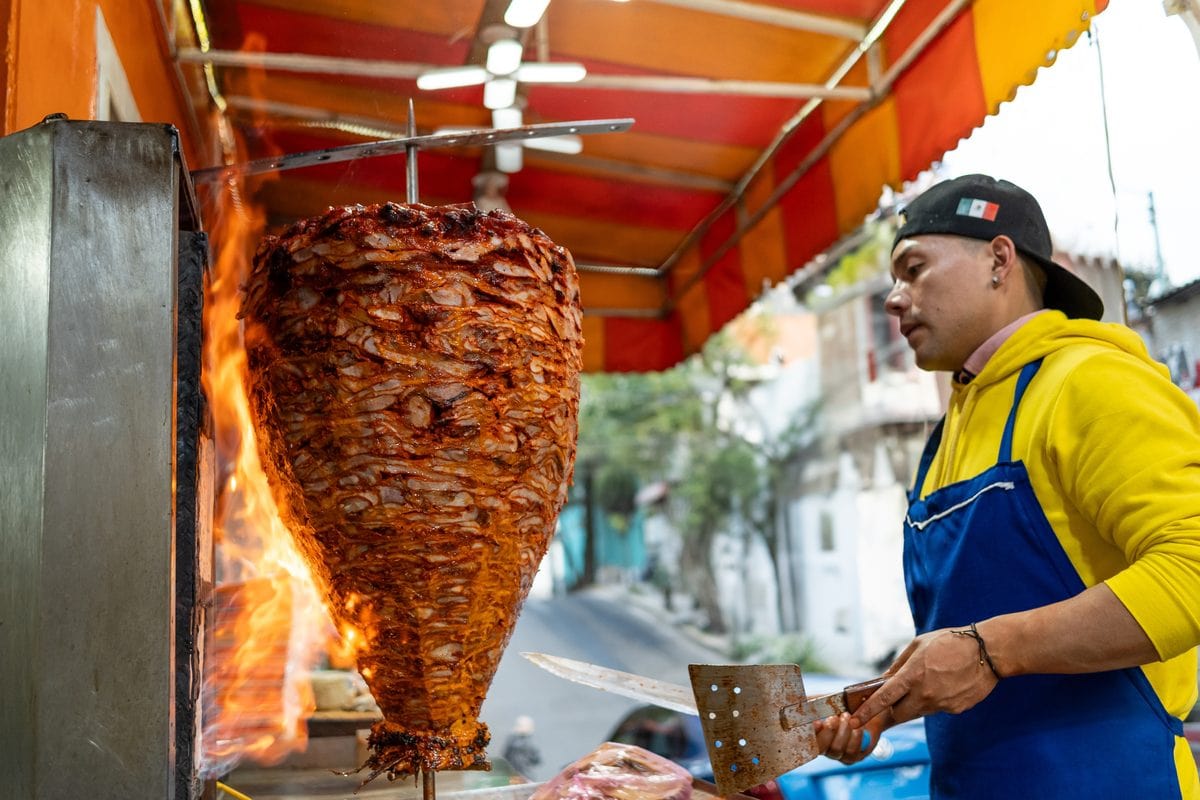
- Stacking. The taquero threads thin, marinated slices of pork shoulder onto a long vertical skewer, pressing each one down until the stack forms a tight cone that can weigh 40 to 130 pounds. A thick slice of onion sits at the base, and a whole peeled pineapple goes on top.
- Roasting. The trompo turns slowly beside a gas flame (charcoal in the old days). Only the outer layer cooks at a time. Fat and marinade drip down the cone, basting the meat below, while pineapple juice trickles down from above.
- Shaving. As the surface browns, the taquero shaves off thin ribbons straight onto a tortilla held in the other hand, then flicks a piece of pineapple off the top with the knife tip so it lands on the taco. Good taqueros never miss.
Why it matters: because only the outside of the cone is ever cooked, each shaving mixes charred edge with tender interior. Many taquerías finish the shavings on a flat griddle for extra crispness. That contrast is what you are chasing at home, and it is why thin slicing and high heat matter more than any single marinade ingredient.
What Does Al Pastor Taste Like?
Good al pastor is tangy first, then savory and lightly sweet, with smoky, crackly edges. The achiote gives it an earthy, almost peppery depth, the vinegar and pineapple keep it bright, and the warm spices (clove, cumin, a little cinnamon) sit quietly in the background. It is not a spicy meat; the fire comes from the salsa.
The Al Pastor Marinade: What Goes In and Why
Every taquería guards its own adobo, but the base is remarkably consistent. Here is what each ingredient does.
| Ingredient | What it does | Substitute |
|---|---|---|
| Guajillo chiles | The backbone. Bright red color, tangy fruitiness and mild heat. | Ancho for a darker, sweeter adobo; New Mexico chiles in a pinch |
| Achiote paste | Annatto seeds ground with spices and vinegar. Gives al pastor its orange-red stain and an earthy, peppery note. | Achiote (annatto) powder plus a little extra vinegar |
| Pineapple juice | Sweetness and a touch of acid that balances the chiles. | Orange juice |
| White vinegar | Tang and preservation, a legacy of the Spanish adobo tradition. | Apple cider vinegar |
| Garlic and white onion | Savory depth. | None needed |
| Cumin, Mexican oregano, clove, cinnamon | The warm spices. Clove and cinnamon are the quiet link back to Lebanese shawarma marinades. | Regular oregano works; skip cinnamon for a cleaner chile flavor |
| Chile de árbol (optional) | Heat. Traditional al pastor is only mildly spicy. | A pinch of cayenne |
Canned or fresh pineapple juice? Use canned. Fresh pineapple contains bromelain, an enzyme that breaks down protein. Left overnight in fresh juice, thin pork slices turn mushy and mealy. Canned juice is heat-treated, which switches the enzyme off, so you get the sweetness without the damage and can marinate a full 24 hours. If fresh juice is all you have, keep the marinade to 4 to 6 hours.
The al pastor pantry. Everything except the pork and pineapple keeps for months, so one shopping trip covers several batches:
- El Molcajete whole dried guajillo chiles (8 oz), enough for about four batches of adobo
- El Yucateco achiote paste, the brick most taquerías use
- Mexican oregano, more citrusy and floral than Mediterranean oregano
- Chiles de árbol, if you like heat in the meat itself
As an Amazon Associate, AmigoFoods earns from qualifying purchases.

- AUTHENTIC DRIED GUAJILLO CHILE PEPPERS – A must-have for authentic Mexican cuisine, these Guajillo...
- DEEP, RICH FLAVOR WITH MILD HEAT – Our Guajillo Chile peppers offer a perfect balance of...
For more on what to look for, see our guide to essential Mexican ingredients, the Mexican peppers guide (guajillo, ancho and árbol in more detail), and our Latin American pantry essentials.
Al pastor seasoning (dry blend)
Short on time, or want a jar of al pastor seasoning in the cupboard? This dry blend gets you close. Rub it on pork or chicken as is, or stir it into pineapple juice and vinegar for a 10-minute paste.
Al pastor seasoning (enough for 2 lb of meat)
- 2 tablespoons ground guajillo chile (or 1 tablespoon ancho powder plus 1 tablespoon paprika)
- 1 tablespoon achiote (annatto) powder
- 2 teaspoons garlic powder
- 1 teaspoon onion powder
- 1 teaspoon ground cumin
- 1 teaspoon Mexican oregano
- ½ teaspoon black pepper
- ¼ teaspoon ground cinnamon
- ⅛ teaspoon ground cloves
- 2 teaspoons kosher salt
For a quick paste, mix the whole batch with ¼ cup canned pineapple juice and 2 tablespoons white vinegar.
How to Make Tacos al Pastor at Home
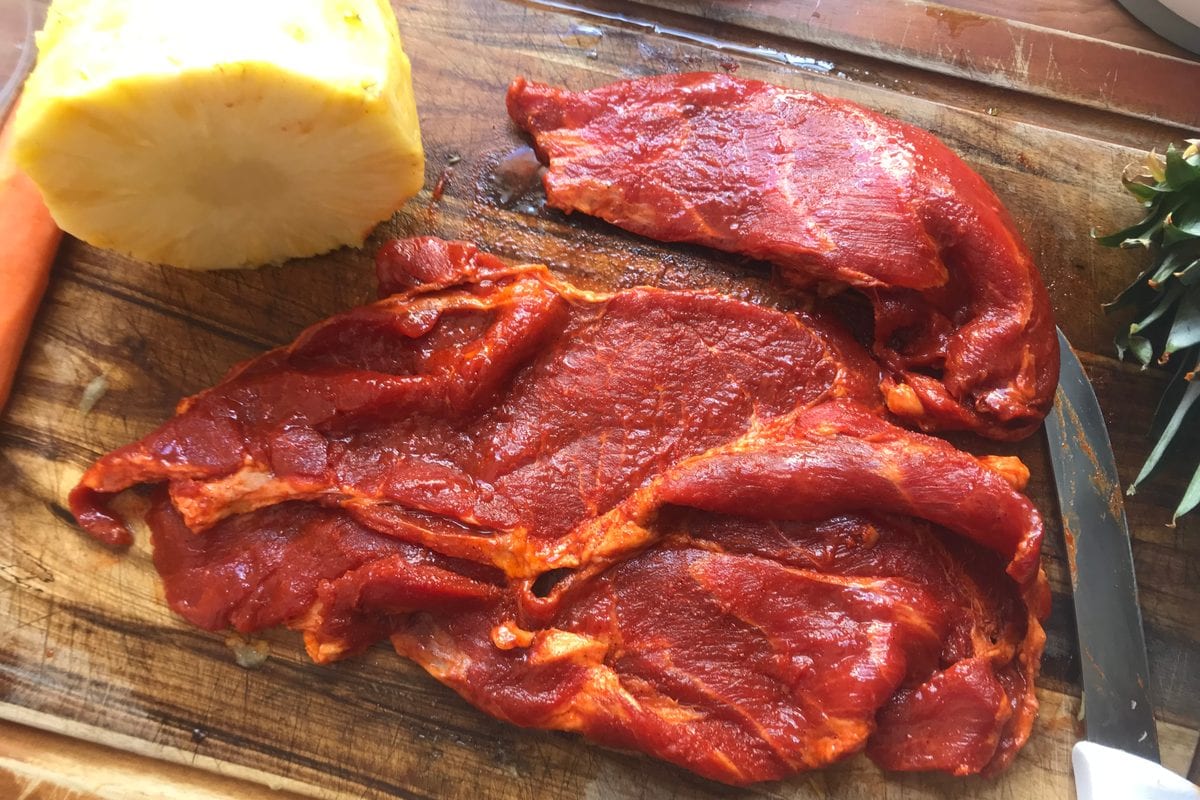
You do not need a trompo. The goal is the same as the taquero’s: thin slices, a red adobo that has had time to soak in, high heat for charred edges, and pineapple that has seen the fire. The recipe below makes about 18 tacos and gives you three ways to cook the pork. Use fresh corn tortillas and a good salsa verde on the side.
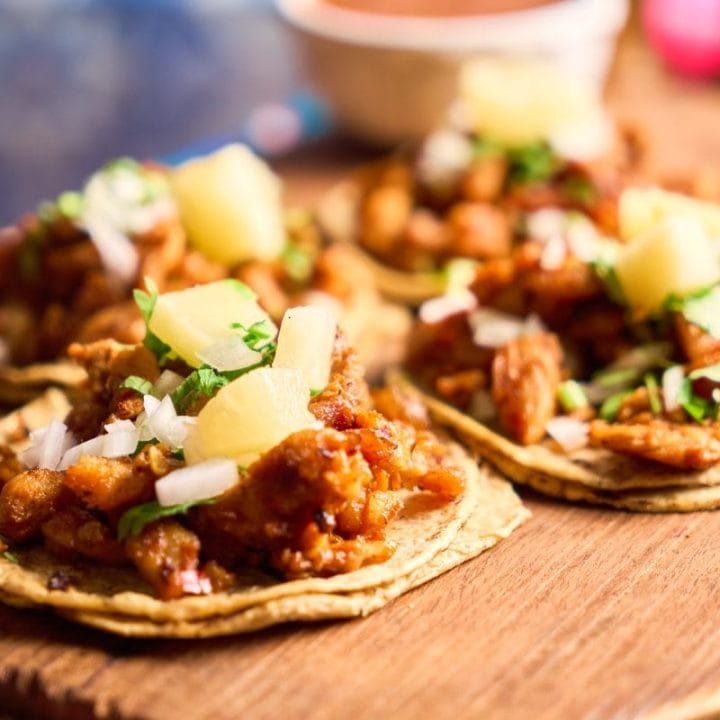
Tacos al Pastor
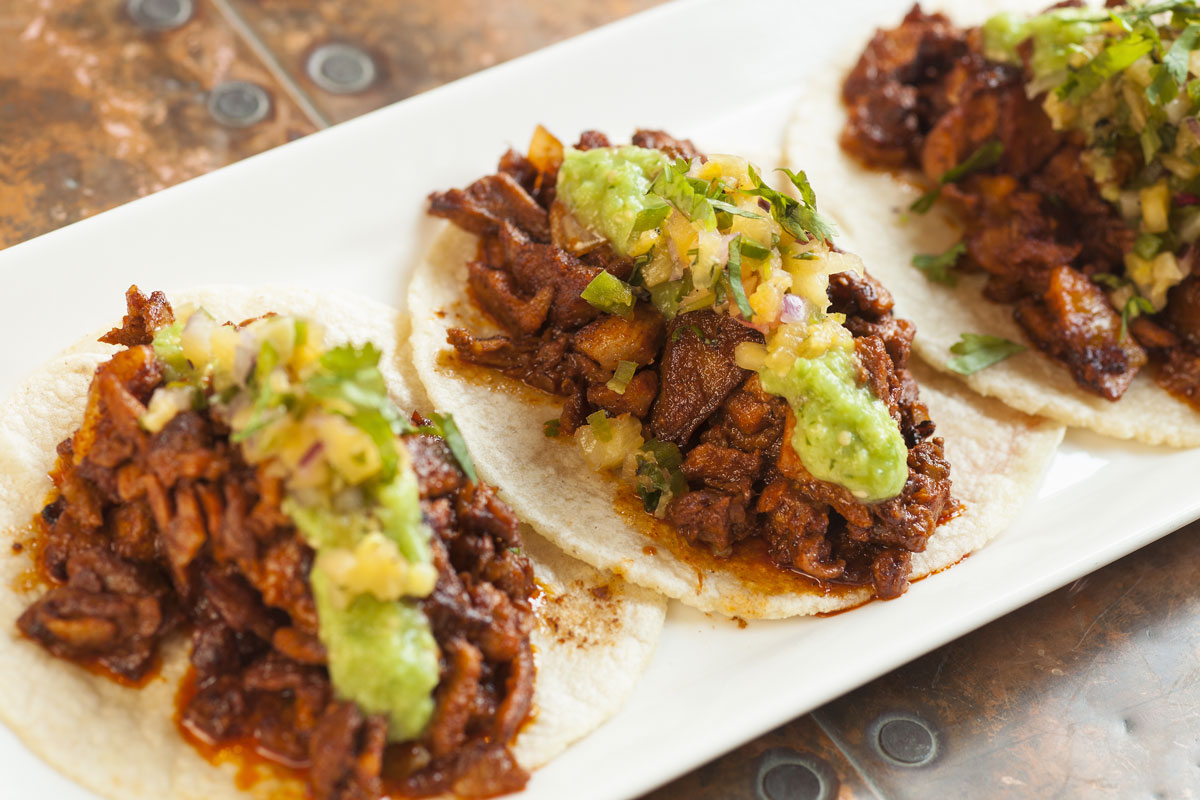
Authentic tacos al pastor at home: thin slices of pork shoulder marinated overnight in a guajillo, achiote and pineapple adobo, seared until the edges char, and served on corn tortillas with charred pineapple, onion, cilantro, lime and salsa. No trompo required.
Ingredients
For the marinade
- 5 dried guajillo chiles (about 1 1/2 oz), stemmed and seeded
- 1 to 2 dried chiles de árbol, optional, for heat
- 2 oz achiote paste (about half a 3.5-oz block)
- 1/2 cup canned pineapple juice
- 1/4 cup white vinegar
- 4 garlic cloves
- 1/4 white onion, roughly chopped
- 1 teaspoon Mexican oregano
- 1 teaspoon ground cumin
- 1/2 teaspoon black pepper
- 3 whole cloves (or 1/8 teaspoon ground)
- 1/4 teaspoon ground cinnamon
- 2 teaspoons kosher salt
For the tacos
- 3 lb boneless pork shoulder, sliced 1/4 inch thick
- 1 ripe pineapple, peeled, cored and cut into 1/2-inch rings
- 18 small corn tortillas
- 1 white onion, finely chopped
- 1 bunch cilantro, chopped
- 3 limes, cut into wedges
- Salsa verde or red salsa, for serving
- 1 tablespoon oil, for the skillet
Instructions
- Press the guajillos (and árbols, if using) flat in a dry skillet over medium heat for 20 to 30 seconds per side until fragrant, without letting them blacken. Cover with hot water and soak 15 minutes until soft, then drain.
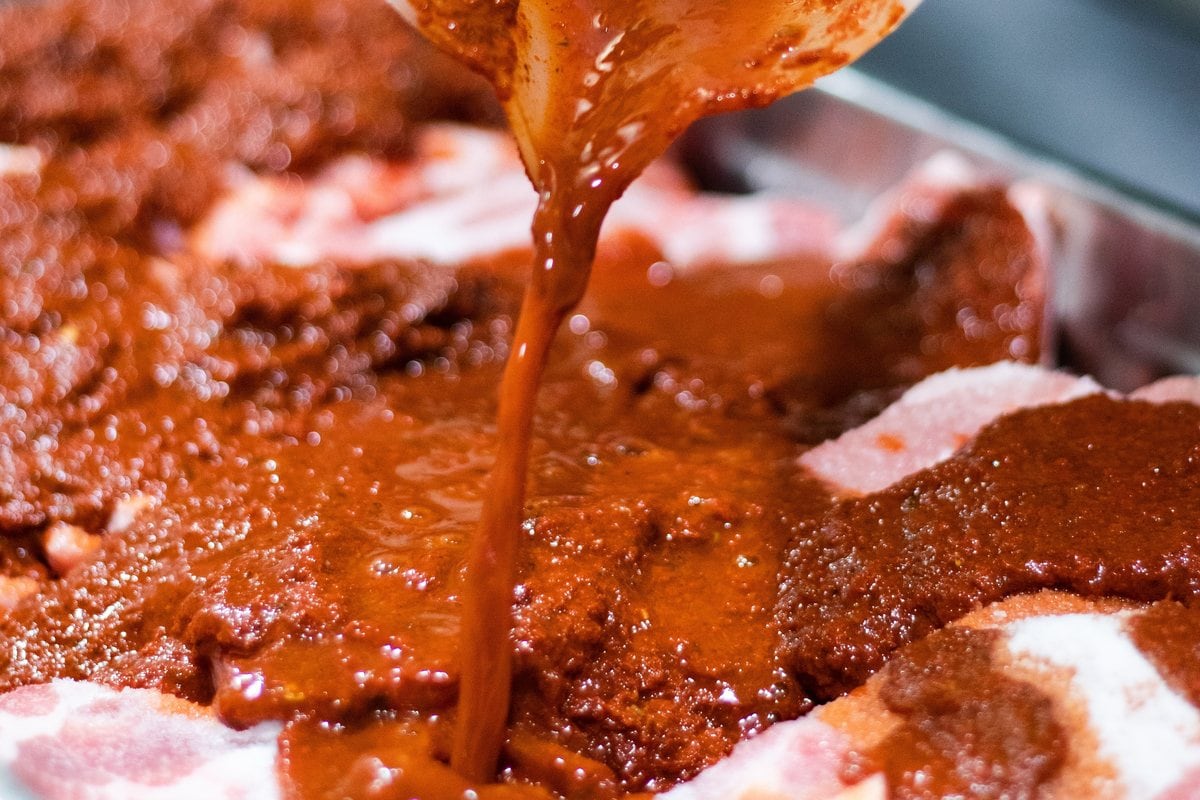
- Blend the drained chiles with the achiote paste, pineapple juice, vinegar, garlic, onion, oregano, cumin, pepper, cloves, cinnamon and salt until completely smooth, adding a splash of water if needed. Strain for a silkier adobo.
- Coat every slice of pork in the adobo, cover and refrigerate at least 4 hours and up to 24. Overnight is best.
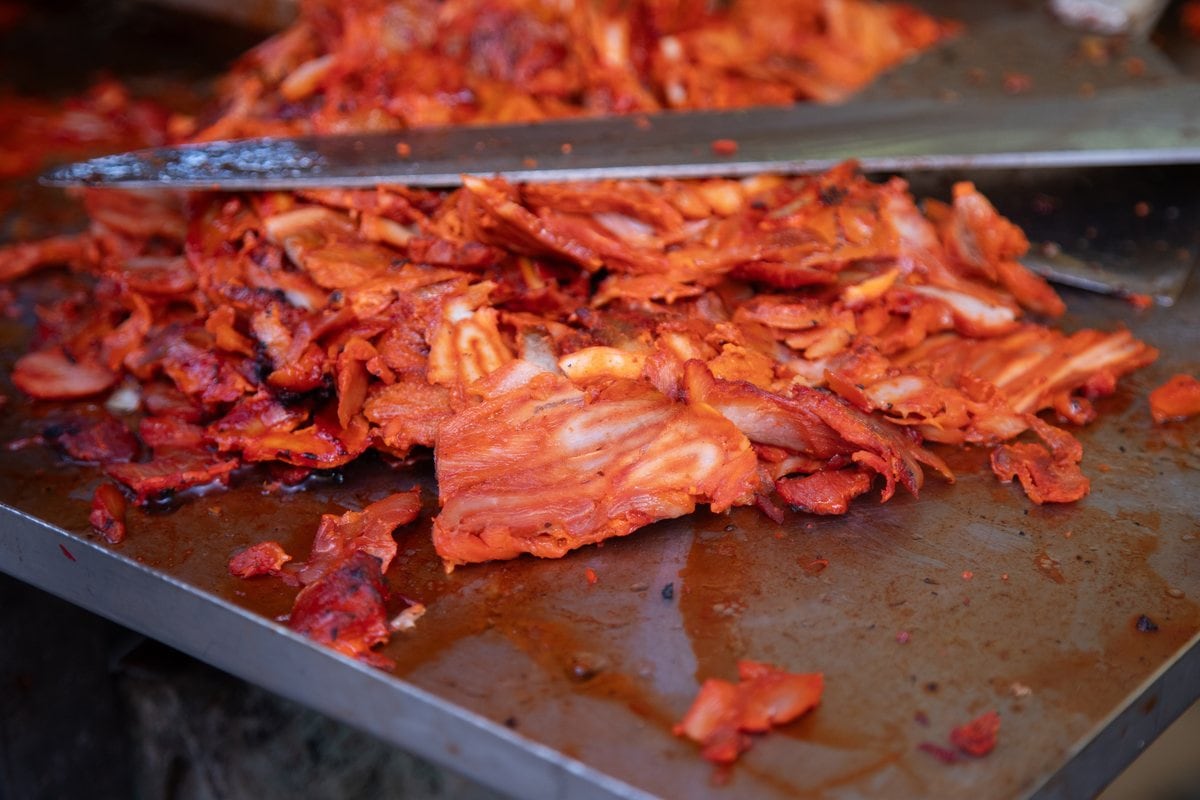
- Skillet method: heat the oil in a cast-iron skillet over high heat. Shake excess marinade off the slices and sear in a single layer, 3 to 4 minutes per side, until deeply browned at the edges, working in batches. Chop into thin strips and return to the pan for a minute to crisp. (Grill: cook the slices over direct high heat 3 to 4 minutes per side. Oven: stack the slices on two skewers set through a pineapple ring, roast at 375°F for 75 to 90 minutes to 145°F, rest 10 minutes, then shave and crisp in a skillet.)
- Cook the pineapple rings in a hot skillet or on the grill until the edges caramelize, then chop into small pieces.
- Warm the tortillas on a dry comal or skillet. Pile on the pork, add pineapple, and finish with onion, cilantro, a squeeze of lime and salsa. Serve immediately.
Notes
Use canned pineapple juice. Fresh juice contains bromelain, which turns thin pork mushy overnight; canned juice is heat-treated, so you can marinate the full 24 hours. With fresh juice, marinate 4 to 6 hours.
Use pork shoulder. Lean loin or tenderloin can also work, but need careful cooking to avoid drying out. Partly freezing the shoulder for 30 to 45 minutes makes thin slicing easier.
Chicken al pastor: use 3 lb boneless, skinless thighs, marinate 2 to 12 hours, and cook to 165°F.
Storage: the marinade keeps a week refrigerated and freezes well. Cooked al pastor keeps 3 to 4 days; reheat in a hot skillet so the edges crisp again.
Nutrition is an estimate per serving of 3 tacos.
Timing: the 5-hour total includes 30 minutes of preparation (including the chile soak), 4 hours of marinating and about 30 minutes for the skillet method. Allow longer for extra batches, an overnight marinade or the oven method, plus an optional 30–45 minutes to partly freeze the pork for slicing.
Nutrition Information:
Yield: 6 Serving Size: 3 tacosAmount Per Serving: Calories: 820Total Fat: 44gSaturated Fat: 15gCholesterol: 155mgSodium: 900mgCarbohydrates: 58gFiber: 7gSugar: 18gProtein: 43g
Three ways to cook the pork
Skillet or plancha
Heat 1 tablespoon of oil in a cast-iron skillet over high heat. Shake excess marinade off the slices and sear in a single layer, 3 to 4 minutes per side, until deeply browned at the edges. Work in batches; crowding steams the meat. Chop into thin strips and return to the pan for a minute to crisp.
Best for weeknights. Closest to the griddle finish taquerías use.
Oven “trompo”
Set a thick pineapple ring on a sheet pan and push two long skewers through it, upright. Thread on the marinated slices, pressing them into a tight stack, and cap with another pineapple ring. Roast at 375°F for 75 to 90 minutes, until the center reads 145°F and the outside is charred; broil the last 5 minutes for color. Rest 10 minutes, carve thin shavings from the outside in, and crisp them in a hot skillet.
Best for parties. The look and layered texture of the real thing.
Grill
Grill the slices over direct high heat, 3 to 4 minutes per side, until charred. Grill the pineapple rings alongside. Chop everything together on a board.
Best for smoky flavor, closest to a charcoal trompo.
If you make al pastor often, a countertop vertical skewer stand makes the oven method easier: it holds the stack upright on a sheet pan so you are not balancing two skewers in a pineapple ring.
Tips for the best al pastor
- Slice thin. A quarter inch or less. Partly freezing the pork for 30 to 45 minutes makes clean slices much easier.
- Use pork shoulder. It has enough fat to stay juicy under high heat.
- Don’t skip the achiote. Chile powder alone gives you a red pork taco, not al pastor.
- Cook the pineapple. Charred pineapple is what the trompo delivers; raw cubes are a shortcut.
- Double the tortillas. Street-style tacos use two small corn tortillas so the juices don’t soak through.
And three mistakes that ruin it:
- Overcooking lean cuts. Loin or tenderloin can work, but need careful cooking to avoid drying out; shoulder is more forgiving.
- A crowded pan. The meat steams in its own juice and never browns.
- Fresh pineapple juice overnight. The enzymes turn the meat mushy. Use canned.
Make ahead and storage
The marinade keeps for a week in the refrigerator and freezes well. Marinated raw pork can be frozen for up to 3 months; thaw it in the refrigerator before cooking. Cooked al pastor keeps 3 to 4 days refrigerated. Reheat it in a hot skillet, not the microwave, so the edges crisp up again.
Chicken Al Pastor and Other Swaps
Chicken al pastor is chicken marinated in the same guajillo-achiote-pineapple adobo and cooked hot and fast. It is not traditional, but it is everywhere now, helped along by chain restaurants putting it on their menus, and it is very good. If that is the version that brought you here, the recipe above works with two small changes:
- Use boneless, skinless thighs, not breasts. Thighs stay juicy at high heat; breasts go dry and stringy.
- Marinate 2 to 12 hours. Chicken absorbs the adobo faster than pork. Cook it to 165°F, on the grill, in a hot skillet, or threaded onto skewers with chunks of pineapple and onion.
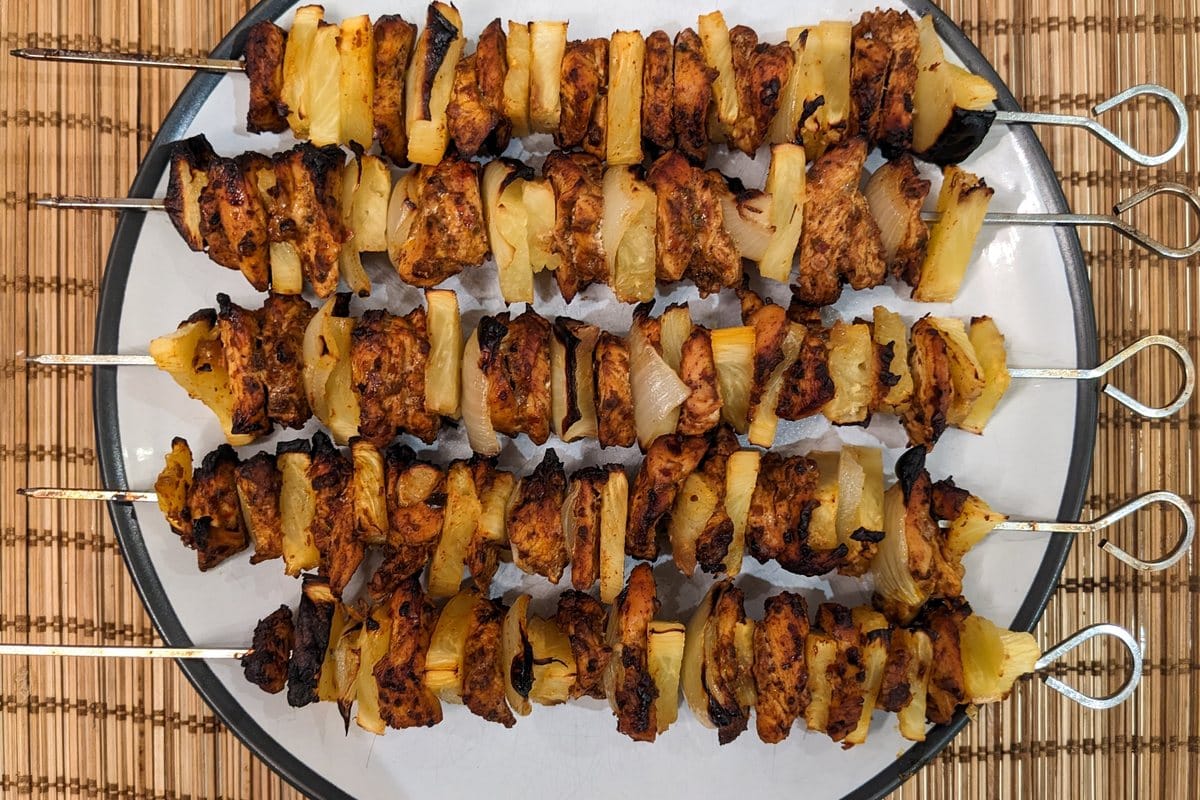
Other swaps that work: beef (thin-sliced chuck or flank, griddled), and for a meatless version, oyster mushrooms or cauliflower, which take the marinade well and char nicely in a hot oven. For another achiote-marinated classic, try Yucatán’s cochinita pibil or poc chuc.
What to Serve With Tacos al Pastor
Keep the toppings classic: chopped white onion, cilantro, lime, charred pineapple and a salsa. In Mexico City the salsa is usually a green tomatillo salsa or a thin, fiery red one, and many taquerías set out pickled jalapeños and radishes too.
To build out the table, add guacamole, pico de gallo, Mexican rice or grilled esquites. Our guide to Mexican salsas has a dozen options, and salsa macha is a great crunchy, nutty alternative.
To drink, go with what the taquería pours: an ice-cold michelada, a glass of tepache (fermented pineapple, so it echoes the taco), or an agua fresca from our Mexican drinks roundup.
Al Pastor vs. Carnitas, Adobada and Barbacoa
These four show up on every taquería menu and get mixed up constantly. Here is how they differ. For the pork-in-lard taco, see our carnitas tacos recipe.
| Taco | Meat | Cooking | Flavor |
|---|---|---|---|
| Al pastor | Pork shoulder, thin slices | Chile-achiote marinade, roasted on a vertical spit | Tangy, lightly sweet, smoky edges; pineapple on top |
| Carnitas | Pork shoulder, chunks | Slow-cooked in lard until tender, then crisped (Michoacán) | Rich, porky, crisp and soft; no chile marinade |
| Adobada | Pork, thin slices | Similar red chile adobo; usually griddled rather than spit-roasted (northern Mexico and California) | Deeper chile flavor, often no pineapple |
| Barbacoa | Lamb, goat or beef | Slow-steamed in a pit or oven, wrapped in maguey leaves | Deeply savory, falling apart, served with consommé |
Carnitas vs. al pastor is the comparison people search for most: both are pork, but carnitas is slow-cooked in its own fat with no chile marinade, while al pastor is marinated red and roasted hot. Al pastor and adobada are cousins that share a marinade and differ mainly in how they are cooked. Our roundup of the best Mexican foods covers the whole family, and the Mexican main dishes page collects every recipe on the blog.
Variations: Gringas, Tortas, Alambre and More
Once the trompo is turning, taquerías put al pastor into almost everything.
Gringa
Al pastor and melted cheese folded in a flour tortilla, like a quesadilla. A Mexico City favorite.
Torta al pastor
The same meat piled into a crusty bolillo roll with avocado and onion. See our guide to Mexican sandwiches.
Alambre al pastor
Pastor griddled with bacon, peppers, onion and cheese, served with tortillas on the side. Here is our alambre recipe.
Tacos árabes
The Puebla original: spit-roasted pork on soft pan árabe with chipotle salsa. Less red, less sweet, no pineapple.
Tacos de trompo
What Monterrey and northern Mexico call their version, often with a simpler, paprika-heavy marinade.
Burritos, mulitas and gorditas
Al pastor tucked into a flour-tortilla burrito, pressed into mulitas, or stuffed into gorditas.
Costra and volcán
Newer taquería inventions where a layer of griddled cheese replaces or tops the tortilla.
Pizza al pastor
A Mexico City pizzeria staple: pastor, pineapple, onion and cilantro on a thin crust.
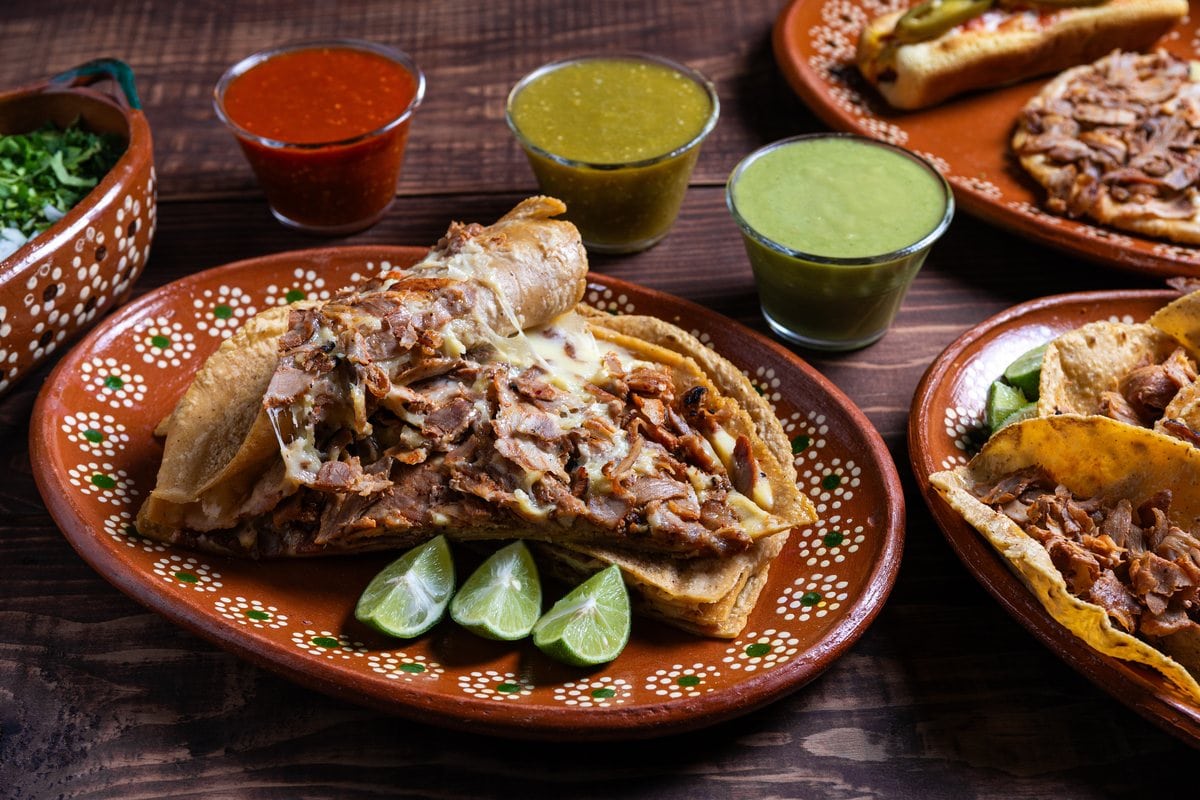
Hungry for more? Try carne asada tacos, suadero tacos, birria and quesabirria, or Baja fish tacos. Our best tacos for Taco Tuesday list and the full Mexican street food guide cover the rest of the antojitos.
Frequently Asked Questions
What does al pastor mean in English?
“Al pastor” means “shepherd style.” It refers to the old practice of roasting meat on a spit over an open fire, which is how the vertical rotisserie got its Mexican name.
Is al pastor pork, beef or chicken?
Traditionally pork: shoulder or leg, sliced thin, marinated in a red chile and achiote adobo and roasted on a vertical spit. Chicken al pastor and beef versions exist, but they are newer adaptations.
Is al pastor spicy?
Only mildly. Guajillo chiles are among the gentler dried chiles, and the marinade is more tangy and sweet than hot. The heat comes from the salsa you add at the table.
What is the difference between al pastor and carnitas?
Both are pork. Al pastor is sliced thin, marinated in red chile and achiote, and roasted on a spit with pineapple. Carnitas is chunks of pork slow-cooked in lard until tender and then crisped, with no chile marinade.
What is the difference between al pastor and adobada?
Both use thin pork slices in a red chile adobo. Al pastor is spit-roasted and served with pineapple; adobada is usually cooked on a griddle, is more common in northern Mexico and the U.S. Southwest, and often skips the pineapple.
Why is there pineapple on tacos al pastor?
The pineapple sits on top of the trompo, where its juice drips down and flavors the meat, and its sweetness balances the tangy adobo. Nobody knows exactly who added it first; El Huequito and El Tizoncito in Mexico City both claim credit.
How long should I marinate al pastor?
At least 4 hours and up to 24 for pork, with canned pineapple juice. With fresh juice, stop at about 6 hours. Chicken needs only 2 to 12 hours.
Can I make tacos al pastor without a trompo?
Yes. Slice the pork thin, marinate it overnight, and either sear it in a very hot skillet, stack it on skewers over a pineapple base and roast it, or grill it. Charred pineapple and a hot final sear bring it closest to the real thing.
Are tacos al pastor the same as shawarma or gyros?
They share the vertical spit, and al pastor descends directly from Lebanese shawarma. But the meat (pork instead of lamb), the marinade (chiles and achiote), the bread (corn tortilla) and the toppings (pineapple, onion, cilantro, salsa) are all Mexican.
Sources
- Wikipedia: Al pastor
- Tasting Table: Tacos Al Pastor: Your Favorite Mexican Food Is Actually Lebanese
- HistoricalMX: Tacos al Pastor: A Mexican Dish with a Recent History
- Rick Bayless: Tacos al Pastor at Home
More Mexican Foods
See all →
Jorge Garcia is the founder of AmigoFoods, where he has spent over 20 years helping readers discover authentic Latin American and Spanish cuisine. Raised in a Cuban-American household, Jorge learned to cook at the hands of his mother and grandmother, carrying forward generations of family recipes. That heritage, backed by his family’s four-generation history in the Latin food industry, inspired him to launch AmigoFoods in 2003. With more than 1,000 published articles on recipes, ingredients, and food culture, Jorge’s mission is simple: make authentic Latin cooking approachable for home cooks everywhere while honoring the traditions behind every dish.