
On this page
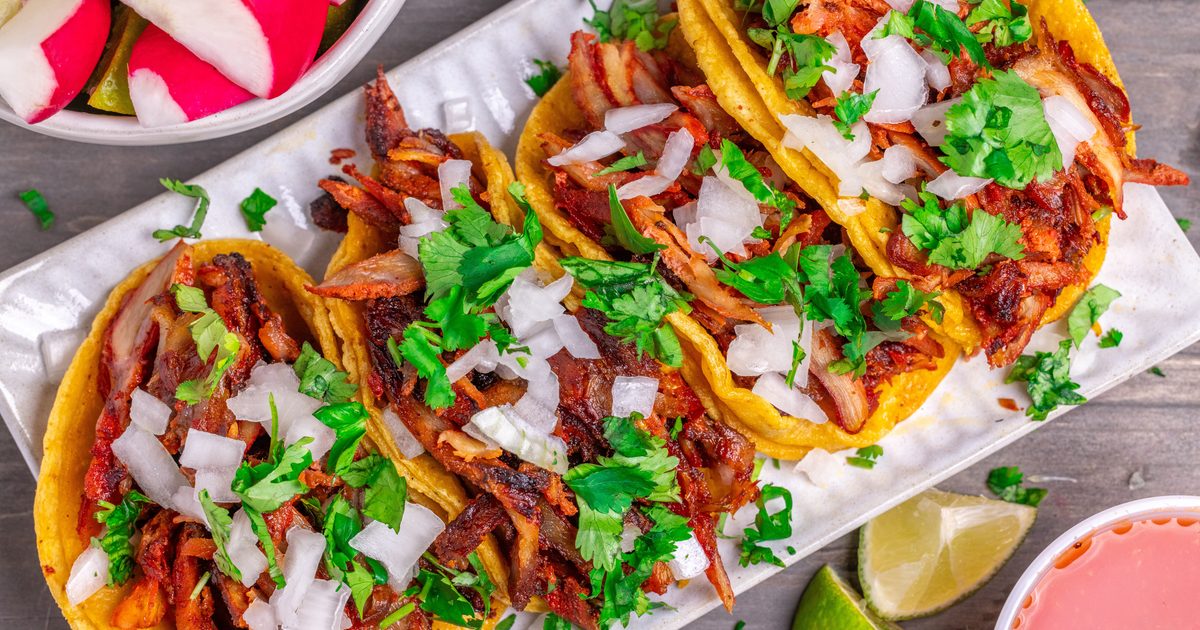
Adobada is pork marinated in a red chile adobo of dried guajillo and ancho chiles, vinegar, garlic and spices, then cooked hot until the edges char. It is one of the most popular taco fillings in Mexico and the American Southwest, and in Tijuana and Southern California, “adobada” is also the name for the red pork carved off a vertical spit. Below is what adobada is, how it differs from al pastor, carne adovada and carne asada, and a recipe for skillet tacos de adobada you can make at home.
Tacos de Adobada at a Glance
Plan ahead: The pork needs at least 4 hours in the marinade, and it is even better overnight. Make the adobo and marinate the meat the day before.
AmigoFoods may earn a commission from qualifying Amazon purchases made through links on this page.
What Is Adobada?
Adobada means “marinated” in Spanish. It comes from adobar, to season or marinate, and adobo, the sauce the meat is marinated in. On a taquería menu, adobada or carne adobada almost always means pork that has soaked in a brick-red paste of dried chiles, vinegar, garlic and spices, then been grilled, griddled or roasted.
The name covers a family of dishes rather than one fixed recipe. In Jalisco, Colima and Michoacán, carne adobada is a classic griddled taco filling. In Tijuana, Mexicali and across Southern California, adobada is the red pork stacked on a trompo (vertical spit) and shaved into tacos, the same setup Mexico City uses for al pastor. North of the border in New Mexico, the related carne adovada is pork baked slowly in red chile sauce.
- What it is
- Pork marinated in red chile adobo, then cooked over high heat
- Meaning
- “Marinated,” from the Spanish adobar
- Usual cut
- Pork shoulder (pork butt), sliced thin
- Main chiles
- Guajillo, often with ancho
- Heat
- Mild to medium; the salsa brings most of the heat
- Best known in
- Tijuana and Baja California, western Mexico and Southern California
What Kind of Meat Is Adobada?
Adobada is pork. The usual cut is boneless pork shoulder, also sold as pork butt, because its fat keeps the thin slices juicy over high heat. Some cooks use pork loin or leg, and in parts of Mexico the same adobo goes on pork ribs (costilla adobada).
Chicken can be prepared the same way, and you will see pollo adobado on menus, but if a taquería just says “adobada,” expect pork. It is not beef: that is carne asada.
What Does Adobada Taste Like?
Adobada tastes savory, tangy and gently smoky, with the fruity, slightly raisin-like flavor of guajillo chiles. The vinegar gives it a bright edge, garlic and cumin make it savory, and a pinch of clove or cinnamon adds a warm background note. When it is cooked properly, the edges caramelize and char while the inside stays juicy.
Despite its deep red color, adobada is not very spicy. Guajillo and ancho are mild chiles, so most of the heat in an adobada taco comes from the salsa you add. If you want it hotter, add a chile de árbol or a chipotle to the marinade.
The Adobada Marinade
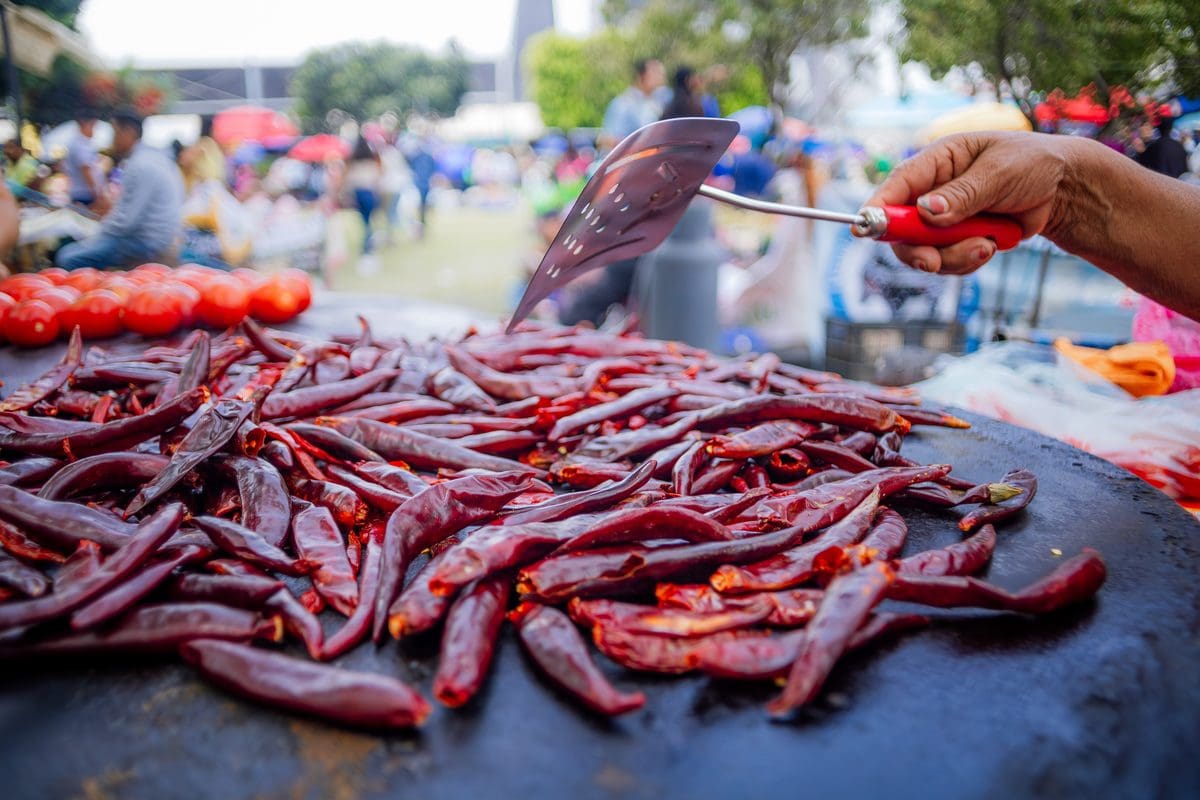
Every cook has their own adobo, but most adobada marinades are built from the same parts:
- Dried chiles: guajillo chiles give the color and tang, and ancho chiles add sweetness and body. They are toasted briefly, soaked and blended.
- Acid: vinegar is the backbone. Many Baja-style recipes add orange juice for sweetness.
- Aromatics: garlic and a little white onion.
- Spices: Mexican oregano, cumin and black pepper, plus a small amount of clove, cinnamon or allspice.
- Optional extras: a chipotle in adobo for smoke, or a chile de árbol for heat.
This Mexican chile adobo is not the same as the dry adobo seasoning sold in Caribbean groceries, which is a garlic-salt blend. See our guide to adobo vs. sazón for the difference.
Adobada vs. Al Pastor: What’s the Difference?
Adobada and al pastor are close cousins, and in Tijuana and Southern California the two names are often used for the same thing. Both are thin slices of pork in a red chile marinade, and both can be cooked on a trompo. The differences, where there are any, come down to the marinade and the garnish:
- Achiote: tacos al pastor in Mexico City almost always use achiote paste, which gives them an orange tint. Adobada relies on guajillo and ancho and often skips the achiote, so it is a deeper brick red.
- Pineapple: al pastor is crowned with pineapple, often roasted on top of the trompo. Tijuana adobada usually comes without it.
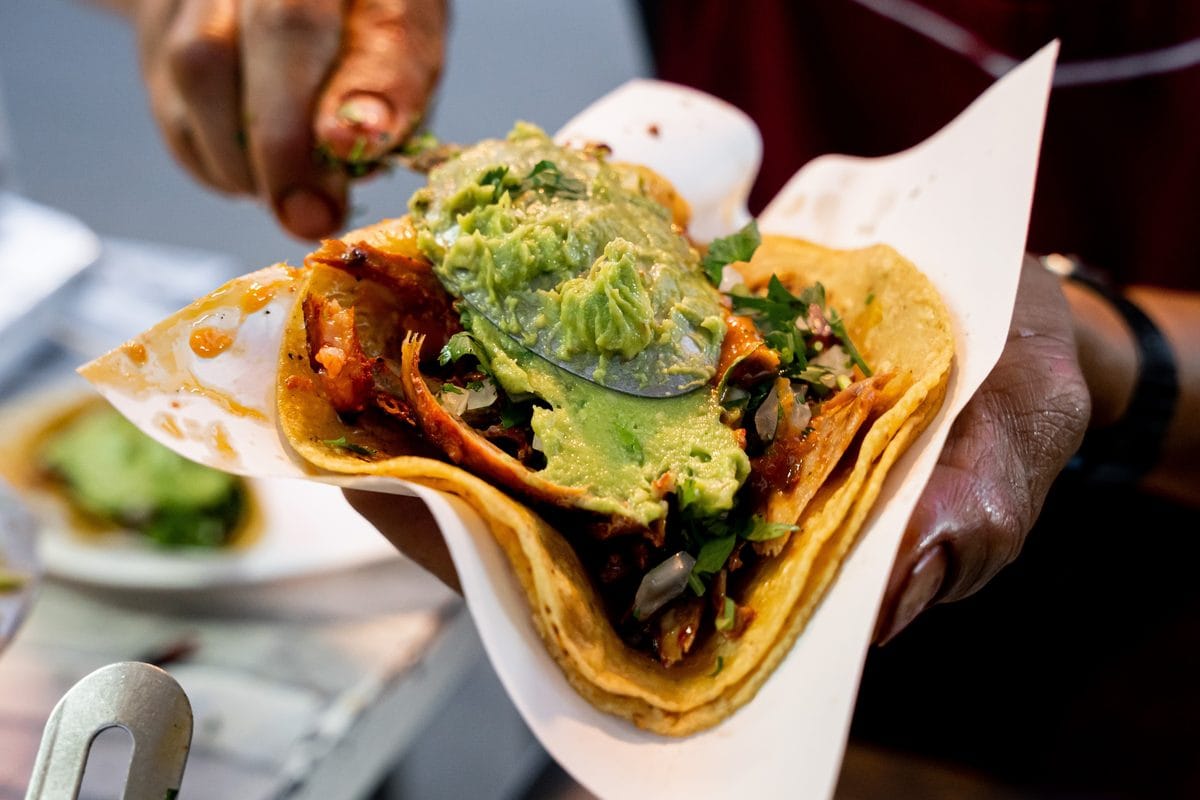
- Toppings: Mexico City al pastor gets onion, cilantro and salsa. Tijuana adobada is famous for a generous spoonful of creamy guacamole salsa.
- Cooking method: al pastor is defined by the trompo. Outside Baja, adobada is just as often cooked on a griddle or grill.
Adobada vs. New Mexico Carne Adovada
Carne adovada, spelled with a “v,” is New Mexico’s version. The idea is the same, pork and red chile, but the dish is very different:
- The chile: it is made with ground New Mexico red chile, such as Hatch or Chimayó, rather than whole guajillos.
- The cut and cooking: the pork is cut into cubes and baked low and slow in the chile sauce for hours until it is fork-tender, more like a braise than a taco filling.
- How it is served: on a plate with beans, rice and tortillas, in burritos, or stuffed into sopaipillas, rather than chopped into street tacos.
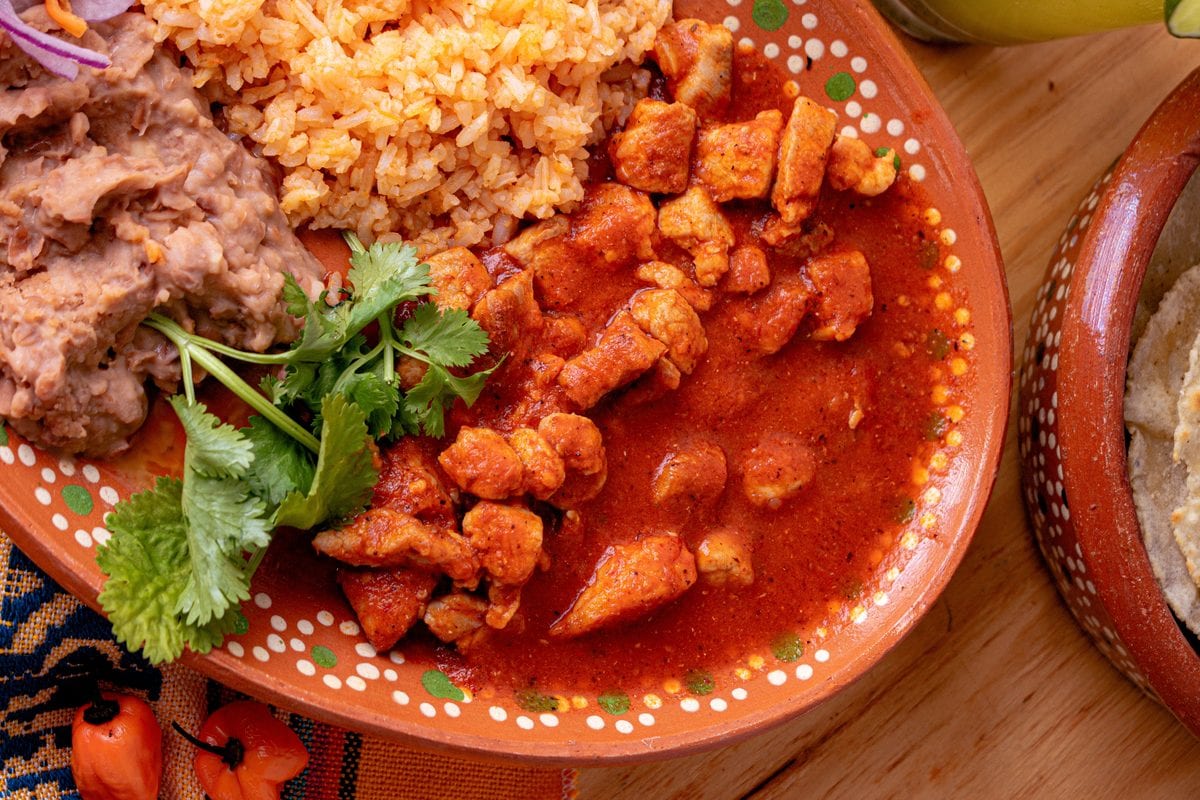
If you like that saucy style, our chile colorado is the beef cousin from northern Mexico.
Adobada vs. Carne Asada
These are the two meats you will see side by side on almost every taco truck menu in the Southwest. Here is how they, al pastor and carne adovada compare:
| Dish | Meat | Marinade | How it is cooked | Typical toppings |
|---|---|---|---|---|
| Adobada | Pork | Guajillo and ancho chiles, vinegar, garlic, spices | Griddle, grill or trompo | Onion, cilantro, guacamole, salsa |
| Al pastor | Pork | Chiles plus achiote and pineapple juice | Trompo (vertical spit) | Pineapple, onion, cilantro, salsa |
| Carne asada | Beef (skirt or flank steak) | Citrus, garlic, salt; little or no chile | Grilled over high heat | Guacamole, pico de gallo, salsa |
| Carne adovada | Pork cubes | New Mexico red chile | Baked slowly in the sauce | Served with beans, rice, tortillas |
In short: carne asada is grilled beef with no chile marinade, while adobada is pork that gets its color and flavor from red chile.
Adobada Around Mexico
Red chile pork goes by several names depending on where you are:
- Tijuana and Baja California: adobada is the trompo pork, served on small corn tortillas with guacamole salsa. It also fills Tijuana’s mulitas, cheesy tortilla sandwiches.
- Jalisco, Colima and Michoacán: carne adobada is a griddled taco and torta filling.
- Guerrero and the Huasteca: similar chile-rubbed pork is called carne enchilada or cecina enchilada.
- Southern California and Las Vegas: adobada is a staple of Tijuana-style taquerías, often carved off a trompo right at the counter.
For more of the taco-stand lineup, browse our best Mexican street foods and the Mexican street food recipes page.
How to Eat Adobada
The classic way is in tacos: chopped adobada on two small, warm corn tortillas (pressed fresh in a tortilla press if you can), topped with white onion, cilantro, lime and salsa. Adobada also works in:
- Mulitas and quesadillas, with melted cheese.
- Burritos and tortas, with beans and avocado.
- Rice bowls or nachos, for using up leftovers.
Serve it with guacamole, one of our Mexican salsas, and a side of chiles toreados. If you like adobada, try carnitas and birria next, or see more ideas on our Mexican main dishes page.
Tacos de Adobada (Skillet Adobada)
This home version cooks adobada the Jalisco way, in a very hot skillet instead of on a trompo, so you get the charred edges without special equipment. The marinade has no achiote and no pineapple, which keeps it different from our al pastor recipe.
Tip: Freeze the pork shoulder for 30 minutes before slicing. Slightly firm meat is much easier to cut into thin, even slices.
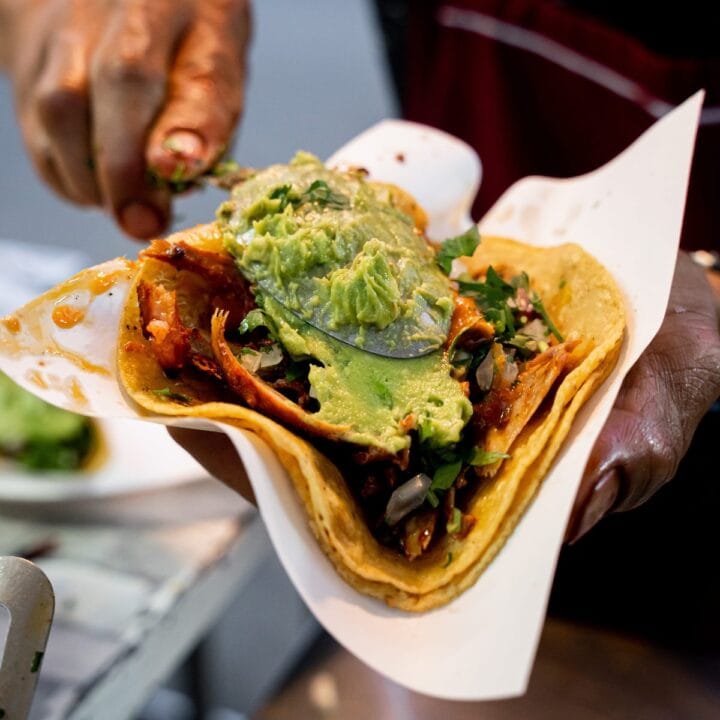
Tacos de Adobada (Skillet Adobada)
Tacos de adobada are made with thin slices of pork shoulder marinated in a red chile adobo of guajillo and ancho chiles, vinegar, orange juice, garlic and spices, then seared in a hot skillet until the edges char. No achiote, no pineapple and no trompo needed.
Ingredients
- 2 pounds boneless pork shoulder (pork butt)
- 6 dried guajillo chiles, stemmed and seeded
- 2 dried ancho chiles, stemmed and seeded
- 1/4 cup apple cider vinegar or white vinegar
- 1/4 cup fresh orange juice
- 5 garlic cloves, peeled
- 1/4 white onion, roughly chopped
- 1 teaspoon Mexican oregano
- 1 teaspoon ground cumin
- 1/4 teaspoon ground cloves
- 1/2 teaspoon black pepper
- 1 small piece (1/2 inch) cinnamon stick, or a pinch of ground cinnamon
- 2 teaspoons kosher salt
- 1 chipotle in adobo, optional, for smoky heat
- 2 tablespoons neutral oil, for the skillet
- 16 small corn tortillas
- 1/2 white onion, finely chopped, for serving
- 1/2 cup chopped cilantro, for serving
- Guacamole or salsa, for serving
- 2 limes, cut into wedges, and sliced radishes, for serving
Instructions
- Toast the chiles: heat a dry skillet over medium heat and toast the guajillo and ancho chiles for 15 to 20 seconds per side, just until fragrant and pliable. Do not let them burn or the adobo will taste bitter.
- Soak the chiles: put them in a bowl, cover with very hot water and soak for 15 to 20 minutes, until soft. Save 1/2 cup of the soaking water.
- Make the adobo: drain the chiles and put them in a blender with the vinegar, orange juice, garlic, onion, oregano, cumin, cloves, black pepper, cinnamon, salt, the chipotle (if using) and the 1/2 cup soaking water. Blend until completely smooth, 1 to 2 minutes.
- Strain the adobo through a fine strainer, pressing on the solids, so the marinade is silky.
- Slice the pork: cut the pork shoulder against the grain into slices about 1/4 inch thick. Freezing it for 30 minutes first makes this much easier.
- Marinate: toss the pork with the adobo until every slice is coated. Cover and refrigerate for at least 4 hours, or overnight (up to 24 hours).
- Sear: heat a large cast-iron skillet or griddle over medium-high heat and add a thin film of oil. Working in batches so the pan is not crowded, lay the pork slices flat and cook for 3 to 4 minutes per side, until cooked through with charred, caramelized edges.
- Chop: move the cooked pork to a cutting board, let it rest for 2 minutes, then chop it into small pieces. Return it all to the hot skillet for 1 minute to crisp and pick up the browned bits.
- Warm the tortillas on a hot comal or skillet for about 30 seconds per side.
- Assemble: stack two tortillas for each taco, add a spoonful of adobada and top with onion, cilantro, guacamole or salsa and a squeeze of lime. Serve with radishes on the side.
Notes
- Heat level: this adobada is mild. Add 1 or 2 stemmed chiles de árbol to the blender for more heat.
- Make ahead: the adobo keeps for 5 days in the refrigerator. Marinated raw pork can be frozen for up to 3 months; thaw it overnight in the refrigerator.
- Grill option: cook the marinated slices over a hot charcoal or gas grill for 3 to 4 minutes per side, then chop.
- Leftovers: keep cooked adobada covered in the refrigerator for up to 4 days and reheat it in a hot skillet so the edges crisp again.
- Chicken: use boneless, skinless chicken thighs for pollo adobado and cook them until they reach 165°F inside.
Frequently Asked Questions
What kind of meat is adobada?
Adobada is pork, usually boneless pork shoulder, marinated in a red chile adobo. Chicken prepared the same way is called pollo adobado.
Is adobada the same thing as al pastor?
Not exactly, but they are close. Both are pork in a red chile marinade. Al pastor adds achiote and pineapple and is cooked on a vertical spit; adobada usually skips both and is often griddled. In Tijuana and Southern California, the spit-roasted pork is often simply called adobada.
What does adobada taste like?
Savory and tangy, with the fruity, mildly smoky flavor of guajillo chiles, a bright vinegar edge and warm spices like cumin and clove. The charred edges add a caramelized, slightly crispy bite.
What’s the difference between asada and adobada?
Carne asada is grilled beef seasoned with citrus and salt. Adobada is pork marinated in red chile adobo. Asada is beefy and smoky; adobada is red, tangy and chile-forward.
Is adobada spicy?
Usually only mildly. Guajillo and ancho chiles are mild, so the heat mostly comes from the salsa you add.
What does adobada mean?
It means “marinated” in Spanish, from the verb adobar. Carne adobada is literally “marinated meat.”
Is carne adobada the same as carne adovada?
They are related but different. Carne adobada is Mexican-style marinated pork, usually cooked hot for tacos. Carne adovada is New Mexico pork baked slowly in New Mexico red chile until tender.
How long should adobada marinate?
At least 4 hours, and ideally overnight. Do not go much past 24 hours, or the vinegar starts to make the texture mushy.
More Mexican Foods
See all →
Jorge Garcia is the founder of AmigoFoods, where he has spent over 20 years helping readers discover authentic Latin American and Spanish cuisine. Raised in a Cuban-American household, Jorge learned to cook at the hands of his mother and grandmother, carrying forward generations of family recipes. That heritage, backed by his family’s four-generation history in the Latin food industry, inspired him to launch AmigoFoods in 2003. With more than 1,000 published articles on recipes, ingredients, and food culture, Jorge’s mission is simple: make authentic Latin cooking approachable for home cooks everywhere while honoring the traditions behind every dish.