
On this page
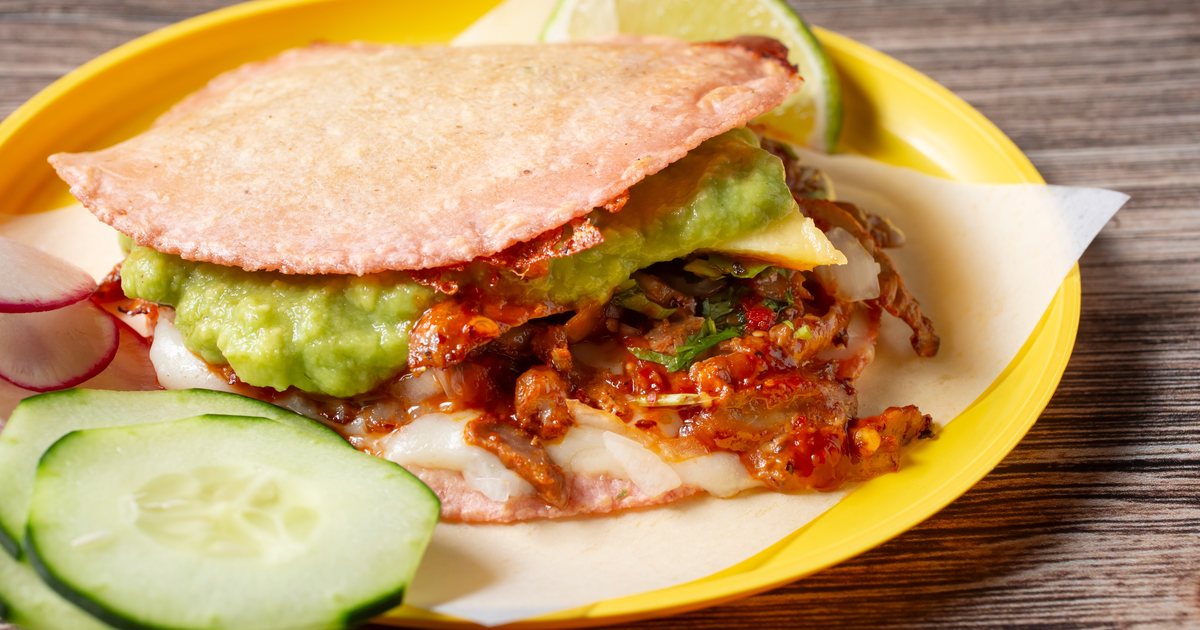
Mulitas are two corn tortillas griddled together with melted cheese and chopped meat inside—usually carne asada or al pastor—until the outside turns crisp and golden. Think of a mulita as a taco built like a sandwich: a Tijuana taquería favorite you can make at home in about 15 minutes once the meat is cooked.
Mulitas at a Glance
AmigoFoods may earn a commission from qualifying Amazon purchases made through links on this page.
What is a mulita?
A mulita is a Mexican street food made from two corn tortillas with cheese and meat sandwiched between them, cooked on a griddle until the cheese melts and glues everything together. The cheese goes against both tortillas, so each side fuses to the filling and the whole thing holds when you pick it up.
The classic taquería mulita is filled with carne asada, onion and cilantro, then opened at the table for salsa and guacamole. Al pastor, birria and carnitas are just as common. It eats like a taco but holds together like a grilled sandwich, which is why taquerías sell it as a step up from a plain taco.
The word means “little mule,” the diminutive of mula. Nobody has a documented reason for the name; the explanation you’ll hear most often is that, like a pack mule, it carries a double load. If you’re searching from Uruguay or Argentina, note that mulita there is the local name for a small armadillo, not a taco.
The history of mulitas
Mulitas belong to the taquería culture of northern Mexico, and taqueros and food writers most often credit them to Tijuana and Baja California, where carne asada and adobada (the city’s name for al pastor-style pork) are cooked over charcoal and served on corn tortillas. No one person or stand is on record as the inventor; mulitas grew out of the same habit that produced the taco itself—putting whatever came off the grill onto a tortilla.
From the border they crossed into Southern California, where Tijuana-style taco shops and taco trucks put mulitas on the menu next to tacos, vampiros and burritos. Today you’ll find them at taquerías across the U.S. West and Southwest, and increasingly everywhere else. For the bigger picture of the food they come from, see our guide to Mexican street food.
Mulitas vs. quesadillas, vampiros and gringas
A mulita uses two corn tortillas stacked flat; a quesadilla is one tortilla folded over. That’s the core difference, but northern Mexican taquerías have a whole family of cheese-and-tortilla builds, and the names trip people up:
| Dish | Tortilla | How it’s built | Typical filling |
|---|---|---|---|
| Mulita | Two corn | Stacked flat like a sandwich, griddled crisp | Cheese plus carne asada, al pastor or birria |
| Quesadilla | One corn or flour | Folded in half | Mostly cheese; meat optional |
| Vampiro | One corn | Toasted until crisp and curled, topped open-face | Melted cheese, meat, salsa |
| Gringa | One or two flour | Folded or stacked | Al pastor and cheese |
| Sincronizada | Two flour | Stacked flat | Ham and cheese |
Some taquerías also sell a mula, usually a larger version made with flour tortillas; others use the word interchangeably with mulita. Ask before you order.
At the other extreme is the machete, Mexico City’s two-foot quesadilla, which trades the second tortilla for sheer length.
Ingredients for mulitas de asada
This recipe makes mulitas de asada, the version most taco shops lead with. The quantities are in the recipe card below; here’s what each part does.
- Skirt steak. The traditional cut for carne asada—thin, beefy and quick to cook. Flank steak works too. Leftover carne asada is perfect.
- Citrus marinade. Lime and orange juice, garlic, salt, cumin and Mexican oregano, which is more citrusy and less minty than the Mediterranean kind.
- Corn tortillas. Use 5½- to 6-inch tortillas, the freshest you can find, or make your own with our corn tortillas guide. Thin, stale tortillas crack when you stack them.
- Melting cheese. See the cheese guide below.
- White onion and cilantro. Finely chopped, the standard taquería garnish, tucked inside before the top tortilla goes on.
- For serving. Salsa, guacamole, lime wedges and sliced radishes.

The best cheese for mulitas
A mulita depends on cheese that melts and stretches, because the cheese is what holds the two tortillas together. These are the best choices:
- Oaxaca cheeseStringy, mild and milky; pull it into shreds rather than grating.
Best overall - Asadero or ChihuahuaThe northern Mexican melting cheeses, smooth and slightly tangy.
Most traditional in the north - Monterey JackEasy to find in any U.S. store and melts evenly. Pepper Jack adds heat.
Easiest - Queso fresco or cotijaThese soften but never melt, so they can’t glue a mulita shut. Crumble them on top instead.
Topping only
How to make mulitas
A mulita is easy to make: cook the meat, chop it small, then build and griddle each one. The full measurements and timings are in the recipe card. These are the steps that make a mulita taste like it came from a taquería:
- Marinate the steak in the citrus, garlic and spices for 30 minutes to 4 hours. Longer than that and the lime starts to turn the surface mushy.
- Sear it hot in a smoking cast-iron skillet or over charcoal, 3 to 4 minutes per side, then rest it 5 minutes.
- Chop it fine—about ¼-inch pieces. Big strips pull out of the mulita on the first bite.
- Crisp the chopped meat in the skillet with its juices for 2 minutes. Taqueros do this on the plancha, and it gives you the crunchy, caramelized edges.
- Build on the griddle: warm two tortillas, lay cheese on both, add meat, onion and cilantro to one, then flip the other on top cheese-side down.
- Press and griddle over medium heat, 2 to 3 minutes per side, until both tortillas are spotted golden and the cheese melts out at the edges and crisps.

Mulita fillings: al pastor, birria and more
Once you know the method, any well-seasoned, finely chopped meat works. These are the fillings you’ll see on taquería menus:
Mulitas al pastor
Chile-and-achiote-marinated pork, chopped with a little pineapple. It’s the other Tijuana classic, often listed as adobada. Use leftovers from our tacos al pastor recipe, and finish with guacamole on top.

Birria mulitas (mulitas de birria)
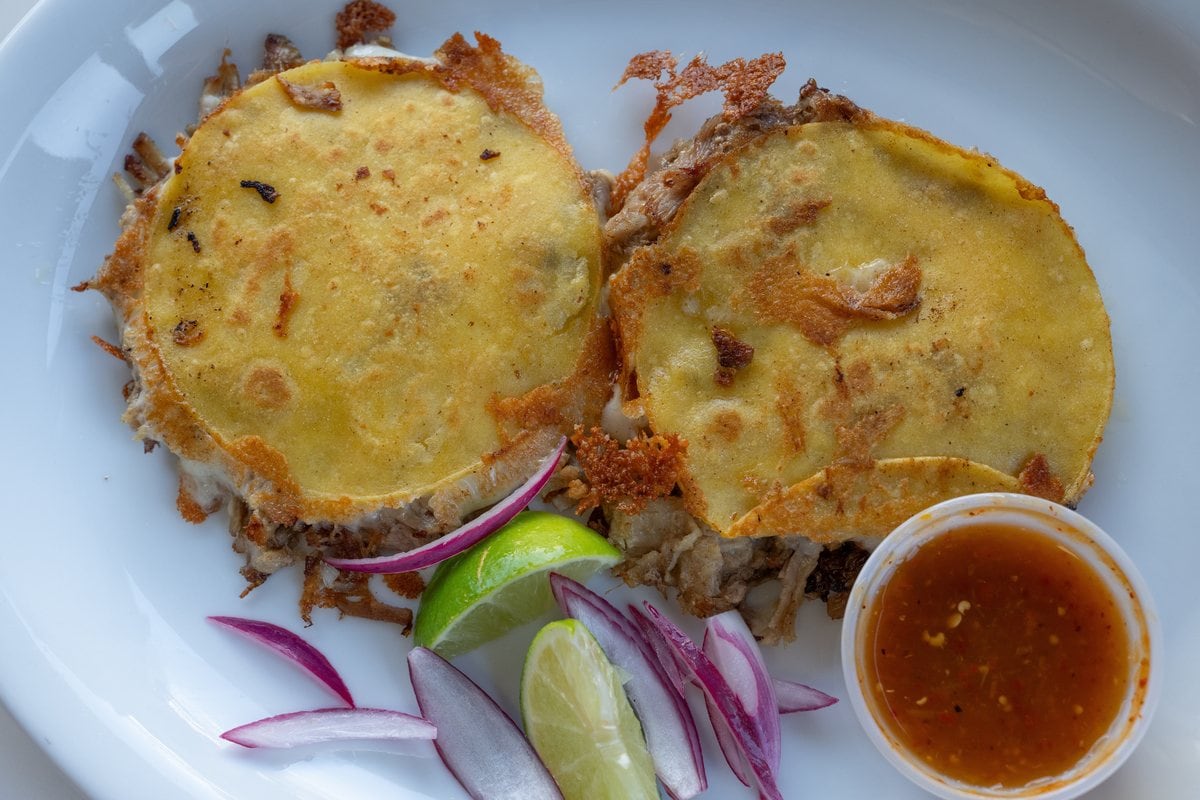
Shredded birria with cheese, with the tortillas first dipped in the red fat skimmed from the stew, then griddled until crisp and served with a cup of consomé for dipping. It’s the mulita version of quesabirria. A guajillo-based stew is the backbone here; El Molcajete dried guajillo chiles are a good pantry stock. Our birria tacos recipe shows the dipping method.
Carnitas, chicken and vegetarian mulitas
- Carnitas: crisp the pulled pork hard on the griddle before building. See our carnitas recipe.
- Chicken: chicken thighs, grilled with the same citrus marinade and chopped small.
- Vegetarian: sautéed mushrooms with poblano rajas, or a thin layer of refried beans under the cheese.
Salsas and toppings
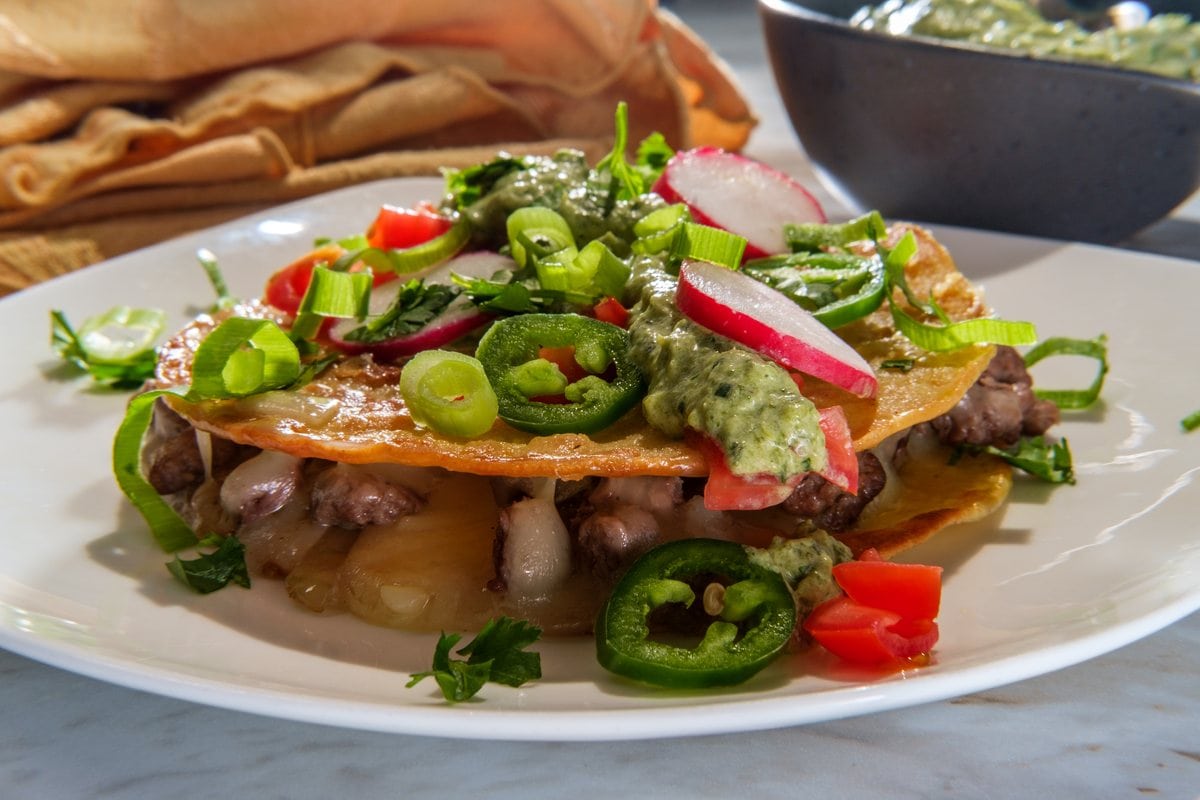
A mulita needs a salsa to cut the richness of the cheese. Lift the top tortilla and spoon it in, or serve it on the side for dipping. These are the best options:
- Salsa verde made from tomatillos, bright and tart, and the best match for carne asada.
- Salsa roja made from dried guajillo or chile de árbol for real heat. More ideas in our Mexican salsas roundup.
- Guacamole or the thin, blended avocado salsa many taco stands use.
- Pico de gallo, sliced radishes, lime wedges, and grilled green onions (cebollitas) on the side.
Tips for crispy mulitas
- Warm the tortillas first. Cold corn tortillas crack. Give each one 20 to 30 seconds on the griddle before you build.
- Use medium heat, not high. High heat browns the tortilla before the cheese in the middle has melted.
- Don’t overfill. About ⅓ cup of meat per mulita. More than that and the cheese can’t hold the stack together.
- Use a little fat. A thin film of oil, or better, the drippings from the steak or the birria fat, gives you golden, blistered tortillas.
- Press once, then leave it. One firm press with a wide spatula seals the mulita; pressing again squeezes out the cheese.
- Use a comal or cast iron. Nonstick pans don’t hold enough heat to crisp corn tortillas.
Storing and reheating mulitas
Mulitas are best right off the griddle. To prep ahead, cook and chop the meat up to 3 days in advance and keep it in the fridge in an airtight container; then building the mulitas takes minutes. Leftover assembled mulitas keep 2 days in the fridge. Reheat them in a dry skillet over medium-low heat for 3 to 4 minutes per side, or in an air fryer at 375°F for 4 to 5 minutes, to bring back the crunch. Don’t use the microwave, which turns them soggy.
What to serve with mulitas
At a taco stand, a mulita comes with grilled onions, radishes and a cold drink. At home, add Mexican rice, a cup of esquites or any of our Mexican side dishes. To drink, an agua fresca such as horchata or agua de jamaica cools the salsa, and a cold Mexican lager or a michelada works for grown-ups.
Mulitas FAQ
What does mulita mean?
Mulita means “little mule” in Spanish. It’s the diminutive of mula. The name is usually explained as the mulita carrying a double load between two tortillas, though there’s no documented origin for it.
Are mulitas made with corn or flour tortillas?
Traditional mulitas use corn tortillas. Two flour tortillas stacked with ham and cheese is a sincronizada, and a flour tortilla with al pastor and cheese is a gringa.
What is the difference between a mulita and a quesadilla?
A mulita is two corn tortillas stacked flat with cheese and meat; a quesadilla is one tortilla folded in half, usually with cheese as the main filling. Mulitas are also cooked crisper and carry more meat.
What is the difference between a vampiro and a mulita?
A vampiro is a single corn tortilla toasted until it’s crisp and curled, then topped open-face with melted cheese, meat and salsa. A mulita closes the filling between two tortillas.
Where did mulitas originate?
Mulitas are most often traced to the taquerías of Tijuana and Baja California, and spread to the U.S. through Tijuana-style taco shops and taco trucks in Southern California.
Can you make mulitas in an air fryer?
Yes. Brush the outside of each assembled mulita lightly with oil and air-fry at 375°F for 6 to 8 minutes, flipping halfway. A griddle gives a crisper crust, but an air fryer is a good hands-off way to make a batch.
Are mulitas gluten-free?
Mulitas made with 100% corn tortillas and a plain meat marinade are naturally gluten-free. Check the labels on store-bought tortillas, seasoning blends and Maggi or soy sauce if you use them in the marinade.
Mulitas de Asada
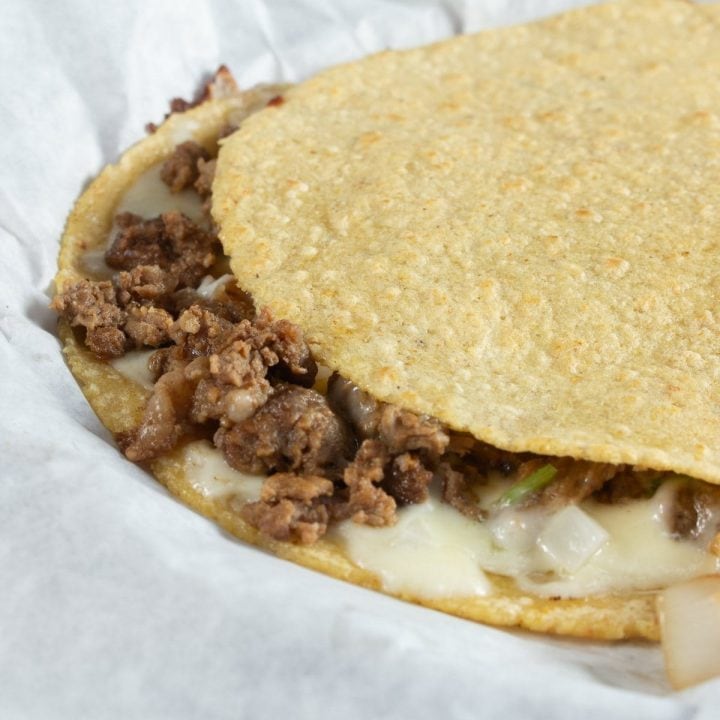
Taquería-style mulitas: citrus-marinated skirt steak, chopped and crisped, sealed with melted cheese between two griddled corn tortillas. Serve with salsa verde, guacamole and lime.
Ingredients
- 1 1/2 lb skirt steak (or flank steak)
- 2 tablespoons fresh lime juice (about 1 lime)
- 1/4 cup fresh orange juice
- 3 garlic cloves, minced
- 1 teaspoon dried Mexican oregano
- 1/2 teaspoon ground cumin
- 1 1/2 teaspoons kosher salt
- 1/2 teaspoon black pepper
- 2 tablespoons neutral oil, divided, plus more for the griddle
- 16 corn tortillas (5 1/2 to 6 inch)
- 3 cups shredded Oaxaca or Monterey Jack cheese (12 oz)
- 1/2 white onion, finely chopped
- 1/2 cup chopped cilantro
- Salsa verde or salsa roja, for serving
- Guacamole, lime wedges and sliced radishes, for serving
Instructions
- Marinate: in a bowl, whisk the lime juice, orange juice, garlic, Mexican oregano, cumin, salt, pepper and 1 tablespoon of the oil. Add the steak, turn to coat, and refrigerate 30 minutes to 4 hours.
- Sear: heat a cast-iron skillet over high heat until smoking (or grill over hot charcoal). Shake off excess marinade and cook the steak 3 to 4 minutes per side for medium. Rest 5 minutes, then chop into roughly 1/4-inch pieces.
- Crisp the meat: return the chopped steak and any juices to the hot skillet with the remaining 1 tablespoon oil. Cook 2 minutes, stirring, until the edges brown. Keep warm.
- Warm the tortillas: heat a comal or griddle over medium heat and brush it lightly with oil. Warm 2 tortillas for about 30 seconds, then flip them.
- Build: sprinkle about 3 tablespoons of cheese over each tortilla. On one, add about 1/3 cup of steak and a pinch each of onion and cilantro. Turn the second tortilla over on top, cheese side down, and press once with a wide spatula.
- Griddle: cook 2 to 3 minutes until the bottom is golden and crisp, flip carefully, and cook 2 minutes more until the cheese is fully melted. Repeat with the remaining tortillas and filling.
- Serve: cut in half if you like, lift the top tortilla, and spoon in salsa and guacamole. Serve right away with lime wedges and radishes.
Notes
Steak: skirt steak is traditional; flank also works. Leftover carne asada, chopped and crisped, cuts the time to about 15 minutes.
Cheese: use a cheese that melts: Oaxaca, asadero, Chihuahua or Monterey Jack. Queso fresco and cotija will not melt, so use them only as a topping.
Tortillas: fresh 5½- to 6-inch corn tortillas work best. Warming them first keeps them from cracking.
Make ahead: marinate no longer than 4 hours, because the citrus softens the meat. Cooked, chopped steak keeps 3 days in the fridge.
Reheat: use a dry skillet over medium-low heat for 3 to 4 minutes per side, or an air fryer at 375°F for 4 to 5 minutes.
More Mexican street food
Hungry for more? Try street-style carne asada tacos, carnitas tacos or Oaxaca’s giant tlayudas. You’ll find dozens more on our Mexican street food recipes page and in our list of the most popular traditional Mexican foods. For ingredients, browse our Mexican pantry list on Amazon.
Sources
- TasteAtlas: Mulita
- Lansing City Pulse: Regional dishes showcase diversity of Mexican cuisine
- The Orion: A father-son duo brings authentic Tijuana taste to Chico
More Mexican Foods
See all →
Jorge Garcia is the founder of AmigoFoods, where he has spent over 20 years helping readers discover authentic Latin American and Spanish cuisine. Raised in a Cuban-American household, Jorge learned to cook at the hands of his mother and grandmother, carrying forward generations of family recipes. That heritage, backed by his family’s four-generation history in the Latin food industry, inspired him to launch AmigoFoods in 2003. With more than 1,000 published articles on recipes, ingredients, and food culture, Jorge’s mission is simple: make authentic Latin cooking approachable for home cooks everywhere while honoring the traditions behind every dish.