
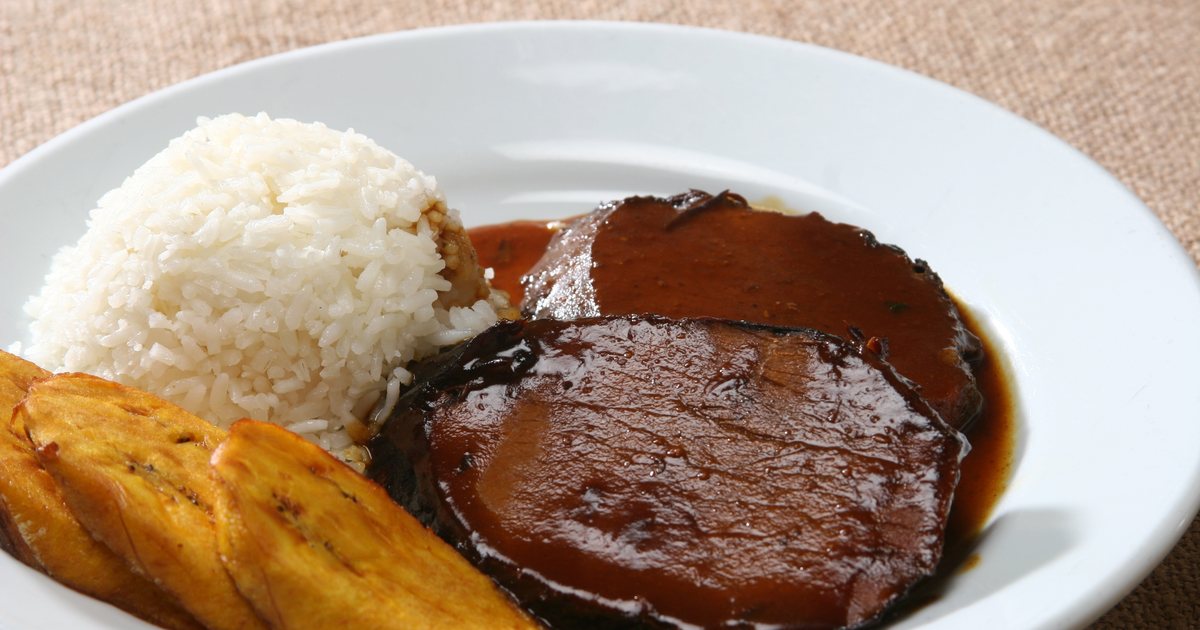
Asado negro is Venezuela’s dark, glossy pot roast: beef browned in caramelized papelón, then slowly braised with onion, sweet peppers, wine and Worcestershire sauce. Slice it thinly across the grain and serve with white rice and tajadas to catch the sweet-savory sauce.
Asado Negro at a Glance
AmigoFoods may earn a commission from qualifying Amazon purchases made through links on this page.
What is asado negro?
Asado negro, literally “black roast,” is a Venezuelan braised beef dish from Caracas and the central region. A whole roast is seared in sugar that has been cooked to a deep caramel, which coats the meat in a dark crust. The roast then simmers slowly in a sauce built from onion, garlic, ají dulce or sweet peppers, wine, and Worcestershire sauce until it is tender enough to slice thin.
It is a celebration dish: Sunday lunch, birthdays, Christmas, and national holidays, including many Venezuelan Independence Day menus. On the plate it sits beside white rice and sweet fried plantains, and leftovers end up in arepas and sandwiches the next day. It is one of the dishes in our guide to traditional Venezuelan food.
Why is it called asado negro?
In most of Latin America, asado means grilled meat, and in Argentina or Uruguay it means the whole barbecue. In Venezuela, asado also refers to a roast cooked in a pot, so asado negro translates best as “black pot roast.” The black comes from the caramel, not from charring. A popular story credits the dish to a Caracas cook who let the sugar go too far and served the roast anyway, but no one can document it.
The dark color is what you are after; a bitter taste is not. Sugar cooked to a deep mahogany gives color and a rich, slightly smoky sweetness. Sugar cooked until it smokes heavily and turns black gives bitterness that no amount of sauce will hide.
The best cut of beef for asado negro
The traditional cut is muchacho redondo, which is eye of round in the United States. It is lean, evenly shaped, and slices neatly across the grain, which is how asado negro is served. Look for a roast of 3 to 3½ pounds with a little fat left on one side.
- Eye of round: the classic choice. Neat slices, mild flavor, and it needs a full slow braise to become tender.
- Bottom round: a good substitute, slightly looser in texture and a bit more forgiving.
- Chuck roast: the most forgiving and juiciest option, but it tends to fall apart rather than slice. Use it if you prefer pulled meat.
Some cooks make cuts in the roast and stuff them with garlic, bacon, or carrot strips before browning, the way a Spanish mechado is prepared. It is optional, and the recipe below works without it.
Ingredients for asado negro
- Papelón or dark brown sugar: papelón, Venezuela’s unrefined cane sugar, gives the deepest flavor. Panela or piloncillo, such as Badia piloncillo, works the same way; grate it before you start. Dark brown sugar is the easiest substitute.
- Worcestershire sauce: used in the marinade and the sauce. Venezuelan cooks call it salsa inglesa, and it is part of the dish’s signature taste.
- Red wine: a dry red adds depth and acidity. Some cooks use sweet Marsala or a mix of red wine and port; if you skip alcohol, use more broth and a splash of red wine vinegar.
- Ají dulce: small sweet peppers with almost no heat and a floral aroma. They are hard to find in the US; use extra red bell pepper if you cannot get them. Our Venezuelan ingredients guide explains this pepper and papelón in more detail.
- Onion, garlic, red bell pepper, and leek: the sofrito that becomes the body of the sauce once it is blended.
- Bay leaves and whole cloves: traditional but optional. Two or three cloves are enough.
How to make asado negro, step by step
1. Season the roast
Pat the beef dry and rub it with garlic, Worcestershire sauce, salt, and pepper. Marinate it in the fridge for at least 2 hours, or overnight for the most flavor. Take it out about 30 minutes before cooking and keep the marinade.
2. Caramelize the sugar and brown the beef
Use a heavy pot that holds the roast snugly, such as a Dutch oven or a cast-aluminum caldero like this IMUSA caldero. Heat the oil over medium heat, add the papelón or sugar, and stir until it melts and turns a deep amber, then mahogany. This takes 3 to 5 minutes. Add the roast carefully, because it will spatter, and turn it every couple of minutes until every side is dark and coated, about 10 to 12 minutes.
If the caramel starts to smoke heavily or smells acrid before the meat goes in, wipe out the pot and start again. It costs you five minutes and saves the dish.
3. Build the sauce
Move the roast to a plate and lower the heat. Add the onions, peppers, ají dulce, garlic, and leek, and cook for 8 to 10 minutes, scraping up the caramel as the vegetables release their moisture. Pour in the wine and let it bubble for a minute, then add the broth, the reserved marinade, more Worcestershire, the bay leaves, and the cloves.
4. Braise low and slow
Return the beef and its juices to the pot. The liquid should come about halfway up the roast. Cover and cook at a gentle simmer for 2½ to 3 hours, turning the roast every 30 to 40 minutes so it colors evenly. It is ready when a fork slides in with little resistance. Add a splash of water if the pot looks dry.
5. Rest, slice, and finish the sauce
Rest the roast for 15 minutes while you finish the sauce. Remove the bay leaves and cloves, then blend the sauce until smooth with an immersion blender. Simmer it uncovered for 10 to 15 minutes, until it is glossy and coats a spoon. Taste for salt and sweetness. Slice the beef about ¼ inch thick across the grain and return the slices to the sauce to warm through.
Oven, slow cooker, and pressure cooker methods
- Oven: after step 3, cover the pot and braise at 325°F for about 3 hours, turning the roast once an hour.
- Slow cooker: do steps 1 to 3 in a skillet, then move everything to the slow cooker and cook on low for 8 hours or on high for 4 to 5 hours. Reduce the sauce on the stove at the end, because slow cookers do not evaporate liquid.
- Pressure cooker: brown the meat and cook the vegetables using the sauté setting, add the liquids, and cook at high pressure for 55 to 60 minutes for a 3-pound roast, then let the pressure release naturally for 15 minutes. Check the meat is tender, then blend and reduce the sauce on sauté. Allow additional time for browning, pressurizing and finishing the sauce.
Tips for a dark, glossy sauce
- Dry the meat well. A wet roast cools the caramel and steams instead of browning.
- Watch the color, not the clock. Stop the caramel at deep mahogany. It keeps darkening for a few seconds after you add the beef.
- Make it a day ahead. Asado negro slices more cleanly when cold, and the flavor improves overnight. Slice the cold roast, then reheat the slices in the sauce.
- Adjust at the end. If the sauce tastes flat, add a pinch of salt or a few drops of vinegar; if it tastes sharp, add a little more papelón.
- Slice thin and across the grain. Eye of round is lean, so thin slices are what make it feel tender.
What to serve with asado negro

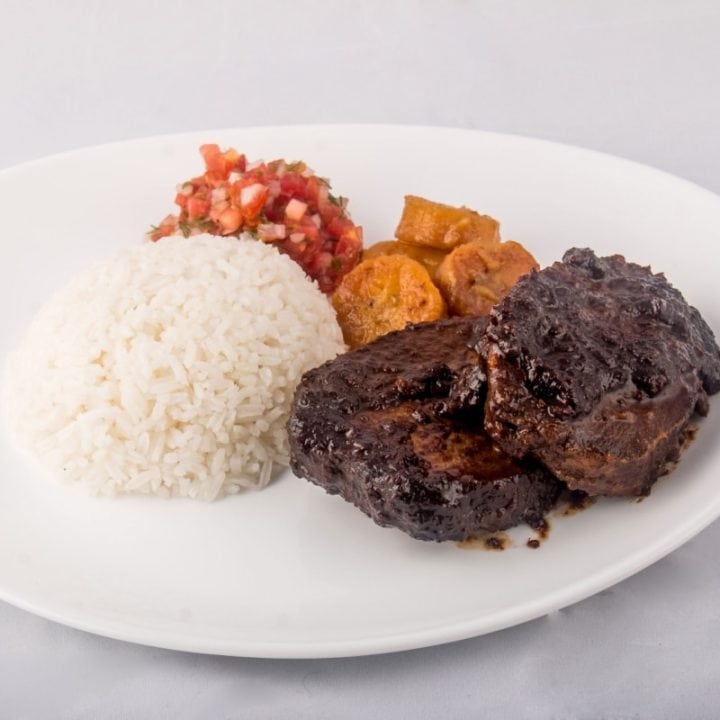
The classic plate is asado negro, white rice, and tajadas, sweet fried ripe plantains. Plain long-grain rice such as Goya Canilla soaks up the sauce. Mashed potatoes are a popular alternative, and a simple green salad or avocado slices add freshness.
For a bigger spread, add caraotas negras or fried yuca, and see our Venezuelan side dishes for more ideas. Leftover slices make an excellent filling for arepas or a sandwich on soft bread.
Storing and reheating
Keep asado negro in its sauce in a covered container in the fridge for up to 4 days. It freezes well for up to 3 months; freeze the slices covered in sauce so they do not dry out. Reheat gently in a covered pan over low heat, adding a splash of water if the sauce has thickened too much.
Asado negro vs. posta negra and pot roast
Asado negro is often compared with Colombia’s posta negra cartagenera, a Caribbean-coast roast also darkened with panela and soda or cola. The two share the caramelized-sugar idea, but asado negro leans on wine, Worcestershire, and sweet peppers, while posta negra often uses cola and has a sweeter, sticky glaze. Compared with an American pot roast, asado negro is sweeter, darker, and served sliced in a smooth sauce rather than with chunky vegetables.
Asado negro FAQ
What is asado negro made of?
A beef roast, traditionally eye of round, browned in caramelized sugar or papelón and braised with onion, garlic, sweet peppers, red wine, Worcestershire sauce, and broth. The sauce is blended smooth at the end.
What does asado negro mean in English?
Asado negro means “black roast.” In Venezuela asado also covers pot roasts, so “black pot roast” is the closest English description.
Is asado negro supposed to taste burnt?
No. The sugar is cooked to a deep caramel, which makes the meat dark, but it should taste rich and lightly sweet. A bitter or acrid taste means the sugar went too far.
What cut of meat is used for asado negro?
Muchacho redondo, which is eye of round in the US. Bottom round and chuck roast also work; chuck is more forgiving but harder to slice neatly.
Can I make asado negro ahead of time?
Yes, and it is better that way. Cook it a day ahead, chill it in its sauce, slice it cold, and reheat the slices gently in the sauce before serving.
Asado Negro Recipe
Asado Negro (Venezuelan Sweet-and-Savory Braised Beef)
Caracas’s Sunday roast: eye of round browned in caramelized papelón, then braised with onions, sweet peppers, red wine and Worcestershire sauce until tender, and served sliced in a dark, glossy sauce.
Ingredients
For the beef
- 1 eye of round roast (3 to 3½ lb / 1.4 to 1.6 kg), trimmed
- 4 garlic cloves, minced
- 3 tablespoons Worcestershire sauce
- 1½ teaspoons salt
- 1 teaspoon black pepper
For searing
- 3 tablespoons vegetable oil
- ⅓ cup grated papelón or packed dark brown sugar
For the sauce
- 2 large onions, chopped
- 1 red bell pepper, chopped
- 6 ají dulce peppers, seeded and chopped (or ½ extra red bell pepper)
- 4 garlic cloves, chopped
- 1 leek, white and light green part, sliced (optional)
- 1 cup dry red wine
- 2 tablespoons Worcestershire sauce
- 1½ cups beef broth or water
- 1 to 2 tablespoons grated papelón or brown sugar, to taste
- 2 bay leaves
- 3 whole cloves (optional)
- Salt and black pepper, to taste
Instructions
- Pat the beef dry and rub it all over with the garlic, Worcestershire sauce, salt and pepper. Cover and refrigerate for at least 2 hours or overnight. Take it out 30 minutes before cooking and keep any marinade.
- Heat the oil in a heavy Dutch oven or caldero over medium heat. Add the papelón or sugar and stir until it melts and turns deep amber to mahogany, 3 to 5 minutes. If it smokes heavily or turns black, wipe out the pot and start again.
- Carefully add the beef (it will spatter) and turn it every 2 minutes until all sides are dark and coated, 10 to 12 minutes total. Move it to a plate.
- Lower the heat to medium-low. Add the onions, bell pepper, ají dulce, garlic and leek and cook for 8 to 10 minutes, scraping up the caramel, until soft.
- Pour in the wine and simmer for 1 minute. Add the broth, the reserved marinade, the Worcestershire sauce, bay leaves and cloves. Return the beef and its juices to the pot; the liquid should come about halfway up the roast.
- Bring to a gentle simmer, cover and cook on low for 2½ to 3 hours, turning the roast every 30 to 40 minutes, until a fork slides in with little resistance. Add a splash of water if the pot gets dry.
- Move the beef to a board and rest it for 15 minutes. Remove the bay leaves and cloves and blend the sauce until smooth. Simmer it uncovered for 10 to 15 minutes, until glossy and thick enough to coat a spoon. Season with salt and more papelón to taste.
- Slice the beef about ¼ inch thick across the grain, return the slices to the sauce to warm through, and serve with white rice and tajadas.
Notes
Cut: eye of round (muchacho redondo) slices neatly; bottom round or chuck roast also work, and chuck will be more tender but harder to slice.
Oven: after adding the liquids, cover and braise at 325°F for about 3 hours. Slow cooker: brown the beef and cook the vegetables in a skillet, then cook on low 8 hours; reduce the sauce on the stove. Pressure cooker: 55 to 60 minutes at high pressure for a 3-lb roast, then 15 minutes natural release.
Make ahead: asado negro slices best cold. Cook it a day ahead, slice, and reheat the slices in the sauce. Keeps 4 days in the fridge or 3 months frozen in its sauce.
Timing: The 6 hour 20 minute estimate includes the minimum 2-hour refrigerated marinade and 30 minutes out of the fridge before browning. An overnight marinade takes longer. Rest the cooked roast for 15 minutes while reducing the sauce. Braise until tender; a tougher roast may need more time. Pressure-cooker times exclude pressurizing, browning and sauce finishing; check tenderness before slicing.
More Venezuelan recipes
Asado negro is one of 32 dishes in our guide to Venezuelan food. Pair it with pabellón criollo for a family lunch, finish with quesillo, or browse the full Venezuelan recipes collection.
More Venezuelan Foods
See all →
Jorge Garcia is the founder of AmigoFoods, where he has spent over 20 years helping readers discover authentic Latin American and Spanish cuisine. Raised in a Cuban-American household, Jorge learned to cook at the hands of his mother and grandmother, carrying forward generations of family recipes. That heritage, backed by his family’s four-generation history in the Latin food industry, inspired him to launch AmigoFoods in 2003. With more than 1,000 published articles on recipes, ingredients, and food culture, Jorge’s mission is simple: make authentic Latin cooking approachable for home cooks everywhere while honoring the traditions behind every dish.