
On this page ⌄
A Venezuelan breakfast is savory and built on corn: hot arepas, perico (eggs scrambled with tomato and onion), black beans, white cheese and salty nata, with strong coffee on the side. On a busy morning it might be a fried empanada with a cold malta, or a ham-filled cachito from the bakery.
Here are the 17 foods you will actually find on the table, region by region, plus how to order coffee and a recipe for the full plate, called desayuno criollo.
Venezuelan Breakfast at a Glance
AmigoFoods may earn a commission from qualifying Amazon purchases made through links on this page.
Just want the recipes? Browse the Venezuelan breakfast recipe hub, where every dish has its own page.
What Is a Typical Venezuelan Breakfast?

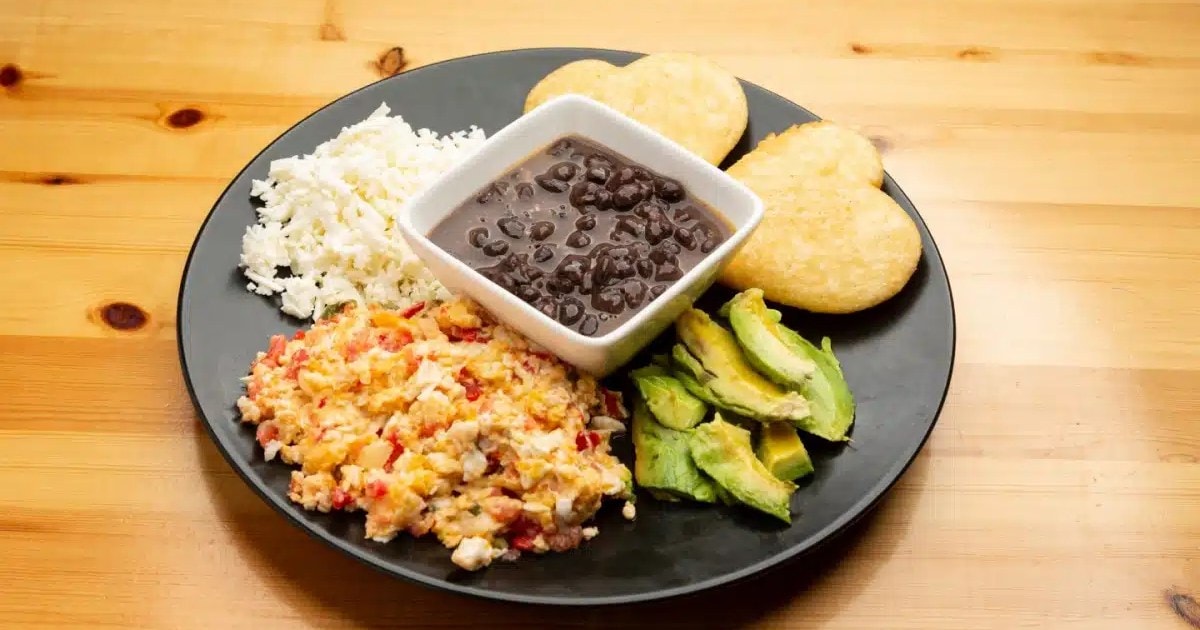
The everyday answer is an arepa with something hot and something salty. At home that usually means eggs, cheese and last night’s beans. Restaurants and weekend tables go further and serve a desayuno criollo, the full Venezuelan breakfast plate.
Sweet breakfasts are the exception. Even the sweet foods, like cachapas and mandocas, get paired with salty cheese. These are the six parts of a classic plate:
17 Venezuelan Breakfast Foods: Quick Guide
| Food | What it is | Where you find it |
|---|---|---|
| On the home plate | ||
| Arepas | Griddled corn cakes | Everywhere, daily |
| Perico | Eggs with tomato and onion | Home, areperas |
| Caraotas negras | Thick black beans | Home, restaurants |
| Queso blanco | Fresh and aged white cheeses | Every table |
| Nata | Salty cultured cream | Every table |
| Carne mechada | Stewed shredded beef | Full plates, arepas |
| Panadería and street | ||
| Empanadas | Fried corn turnovers | Street stands, beaches |
| Cachitos de jamón | Ham-filled crescent rolls | Bakeries |
| Cachapas | Sweet corn pancakes with cheese | Roadside, weekends |
| Golfeados | Sticky papelón rolls with cheese | Bakeries |
| Regional | ||
| Pisca andina | Milky potato and egg soup | The Andes |
| Pastelitos andinos | Fried wheat pastries | The Andes |
| Mandocas | Plantain and corn rings | Zulia, Falcón |
| Desayuno llanero | Ranch-style beef and arepa plate | The Llanos |
| Holiday and party | ||
| Pan de jamón | Ham, olive and raisin bread | December |
| Hallacas | Banana leaf-wrapped corn parcels | December |
| Tequeños | Fried cheese sticks | Parties, bakeries |
On the Home Plate
These six foods make up the breakfast most Venezuelans grew up with. Few homes serve all of them on a weekday, but everyone knows the full lineup.
1 Arepas
- Every day
- Home and areperas

The arepa is the center of the Venezuelan morning. It is a griddled cake of precooked corn flour, crisp outside and steamy inside. Venezuelan arepas are usually thick enough to split and stuff, which is the main way they differ from many Colombian ones.
Morning fillings tend to stay simple:
- Viuda: plain, with butter
- Queso: grated or sliced white cheese
- Perico: stuffed with the eggs below
- Dominó: black beans and white cheese
- Pelúa: shredded beef and yellow cheese
- Reina pepiada: chicken and avocado
Here is our full recipe for Venezuelan arepas. The dough needs precooked corn flour like Harina P.A.N., not regular cornmeal. For a hearty version, try the arepa de pabellón.
2 Perico
- Every day
- Eggs

Perico is Venezuela’s favorite way to scramble eggs: cooked with tomato, onion and often sweet pepper. The name means parakeet, a nod to its bright colors. Some cooks add ham or cheese.
It goes on the plate or inside an arepa, and “una de perico” is one of the most common arepa orders in the country. Get the method in our huevos pericos recipe.
3 Caraotas Negras
- Often leftovers
- Side dish

In Venezuela, black beans are caraotas. At breakfast they are often last night’s pot, reheated until thick and topped with grated white cheese. Some families sweeten them with a little papelón or sugar, which plays well against the salty cheese.
They appear again at lunch beside rice, and in our guide to Venezuelan side dishes.
4 Queso Blanco
- Every table
- Salty contrast
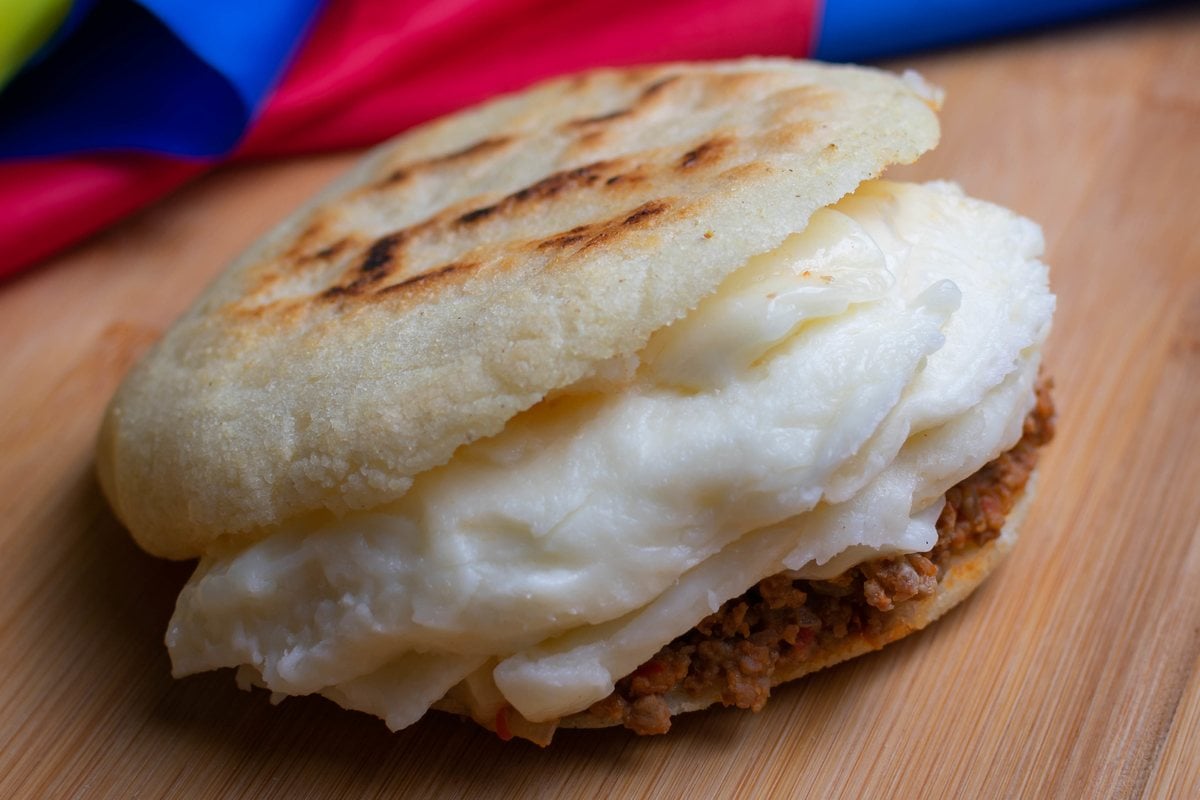
White cheese is the one thing a Venezuelan breakfast cannot go without. It sharpens mild corn and earthy beans. The common types are:
- Queso de mano: soft, stretchy and fresh
- Telita: fresh, mild, sold in thin layers
- Guayanés: soft and milky, from the Guayana region
- Llanero: firm and salty, made for grating
In the US, cotija or a dry queso fresco is the closest stand-in for grated llanero. See more in our guide to Latin cheeses.
5 Nata
- Every table
- Spread
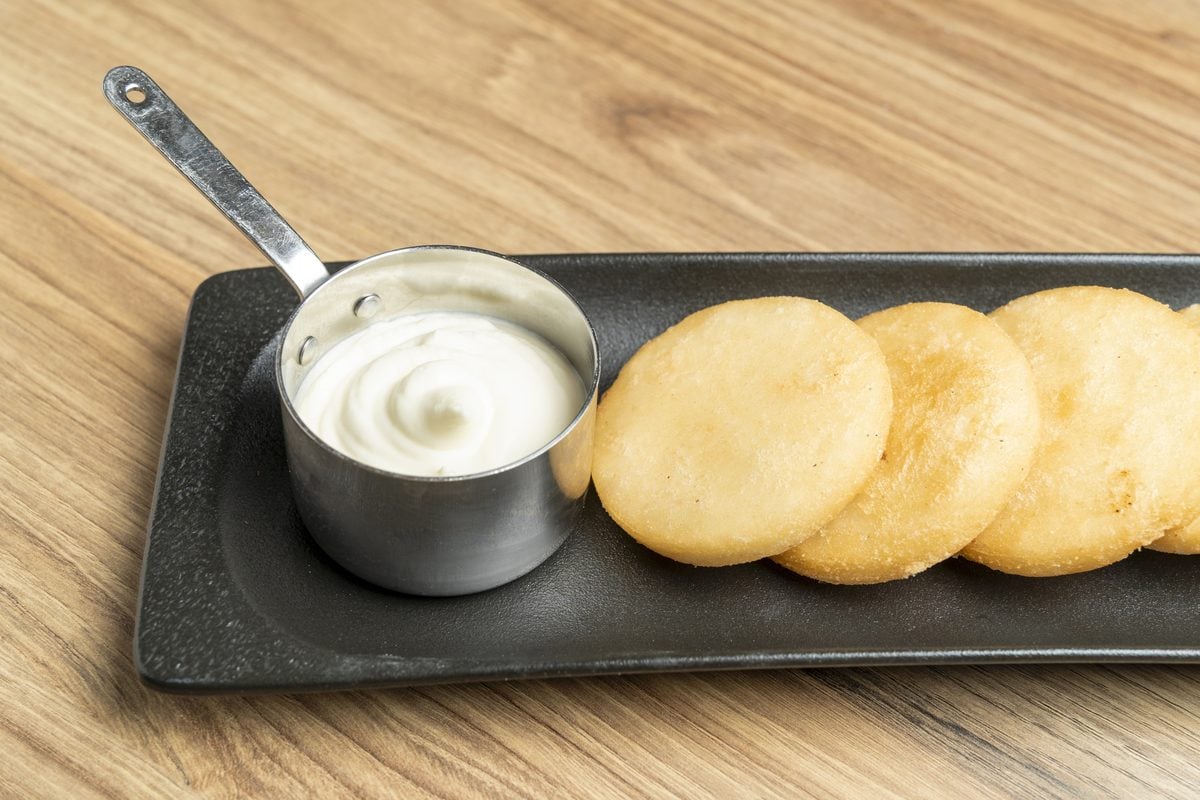
Nata is a thin, tangy, salted cream. It is looser than American sour cream, and it gets spooned over hot arepas, mandocas and cachapas the way butter would. Mexican crema with a pinch of salt comes close. Venezuelan brands turn up in Latin markets, especially in South Florida.
6 Carne Mechada
- Full plates
- Often leftovers
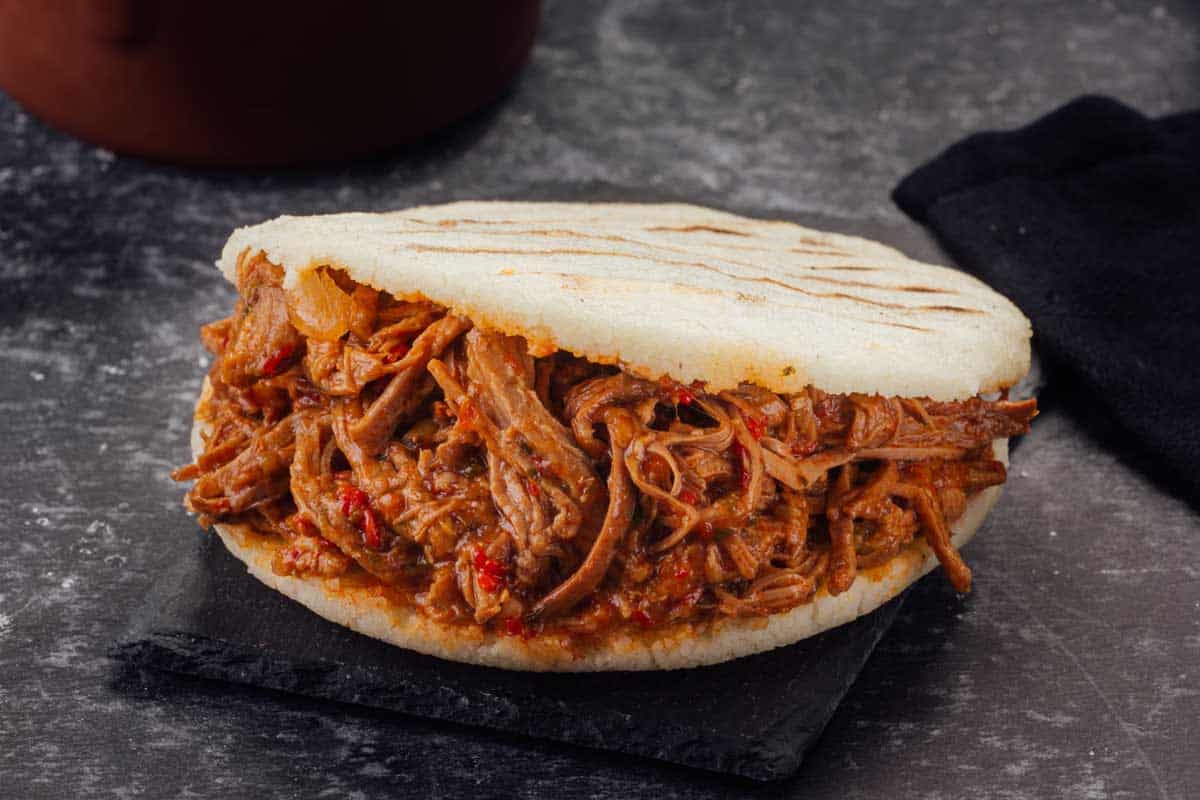
This is the shredded beef from pabellón criollo, stewed with peppers, onion and tomato. Any left from the night before goes into a morning arepa or beside the eggs, and restaurants often include it in their desayuno criollo. Here is our carne mechada recipe.
From the Panadería and the Street

The neighborhood bakery is where many Venezuelans really eat breakfast, standing at the counter with a small coffee. Beach towns and highways have empanada stands that open early.
7 Empanadas
- Street stands
- Grab and go

Venezuelan empanadas use corn dough, not wheat, and they are fried until blistered and crisp. Common fillings are white cheese, carne mechada, chicken, and black beans with plantain. On the eastern coast and Margarita Island, the filling to try is cazón, a small shark.
The classic partner is a cold bottle of malta. Add guasacaca for dipping. Here is how to make Venezuelan empanadas.
8 Cachitos de Jamón
- Bakeries
- With coffee

Cachitos look like croissants but eat like soft dinner rolls. A lightly sweet, buttery dough is rolled around chopped ham, and many bakeries also sell ham and cheese or turkey versions. They are best warm. Try our cachitos recipe.
9 Cachapas
- Weekends
- Roadside stands
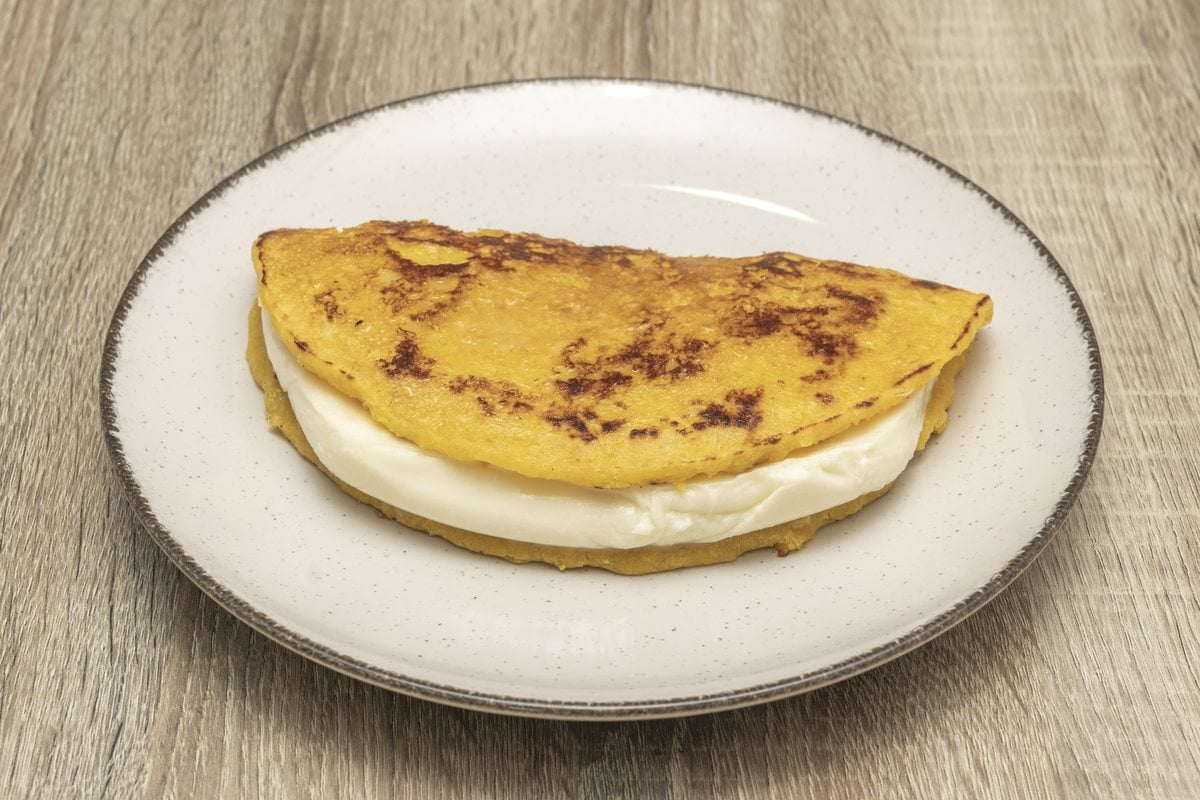
Cachapas are griddled pancakes made from fresh sweet corn, folded over a thick slab of queso de mano. They are filling enough to skip lunch, so they are more of a weekend breakfast or road trip stop. Here is our cachapa recipe.
10 Golfeados
- Bakeries
- Sweet and salty
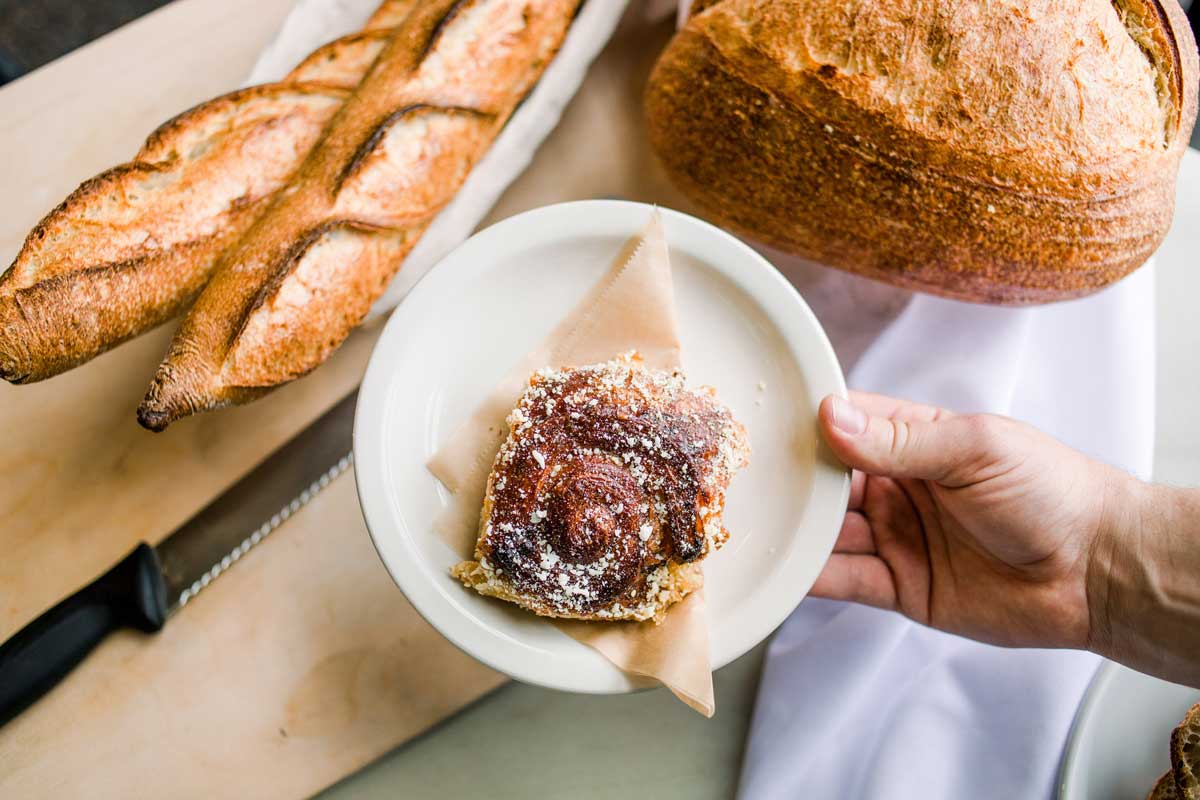
Golfeados are sticky rolls made with papelón and anise, and the twist is the grated white cheese on top. They are the sweet choice at the bakery counter, usually with a coffee and sometimes a slice of queso de mano. See our golfeados recipe.
Regional Venezuelan Breakfasts
Venezuela’s geography changes what’s on the plate. Corn rules the coast and plains, wheat appears in the cool Andes, and plantain shows up around Lake Maracaibo.
11 Pisca Andina
- The Andes
- Soup

Soup for breakfast makes sense on a cold morning in Mérida or Táchira. Pisca andina is a light broth, often with milk, holding potatoes, cilantro, a poached egg and cubes of white cheese. It is usually served with arepas. Here is our pisca andina recipe.
12 Pastelitos Andinos
- The Andes
- Fried pastry

In the Andes, the morning turnover is made from wheat dough, not corn. Pastelitos are fried until they bubble and crisp, then filled with cheese, chicken or seasoned meat. Think of them as the mountain cousin of the empanada.
13 Mandocas
- Zulia and Falcón
- Sweet and salty

Mandocas are the signature breakfast of Zulia and Falcón. Ripe plantain, corn flour, cheese and papelón get mixed into a dough, shaped into rings and fried. The sweet ring is served hot with butter, nata, salty cheese and coffee.
14 Desayuno Llanero
- The Llanos
- Hearty plate
The Llanos are Venezuela’s cattle country, and the morning plate shows it. Restaurants use the name for a big, ranch-style breakfast: an arepa, eggs, beef and a thick slice of queso llanero. It has no single fixed recipe, so expect each kitchen to do it differently.
Holiday and Party Foods at Breakfast
Three foods turn up on most Venezuelan breakfast lists, but they aren’t everyday morning food. You will find them at breakfast at certain times of year or after a good party.
15 Pan de Jamón
- December
- Bakeries

This rolled bread of ham, olives and raisins is a Christmas food. In December, a slice with coffee is a very good breakfast. Bake it with our pan de jamón recipe.
16 Hallacas
- December
- Leftovers

Corn dough, a rich meat stew, olives and raisins, all wrapped in banana leaves. Hallacas belong to Christmas dinner, but families make dozens at a time, so reheated leftovers often appear the next morning. Here is our hallacas recipe, and more in Venezuelan Christmas foods.
17 Tequeños
- Parties
- Bakeries

These fried sticks of white cheese wrapped in dough are the country’s number one party snack. Bakeries and cafés also sell them in the morning, so they sometimes join a weekend breakfast spread. Try our tequeños recipe.
Watch: Venezuelan Breakfast Foods
Here is a short look at some of these dishes before you head to the kitchen.
What Venezuelans Drink With Breakfast
Coffee comes first, and Venezuelans order it by how much milk they want, not by size alone. Learn these names and you can order at any bakery counter, or read our full guide to Venezuelan coffee for brands and a guayoyo recipe:
| Ask for | What you get |
|---|---|
| Guayoyo | Light black coffee, traditionally strained through a cloth filter and served sweet |
| Negrito | A small, strong black coffee |
| Marrón | About half coffee and half milk |
| Marrón claro | A marrón with more milk than coffee |
| Con leche | Mostly steamed milk, about three parts to one of coffee |
| Tetero | Nearly all milk with a touch of coffee. The name means baby bottle. |
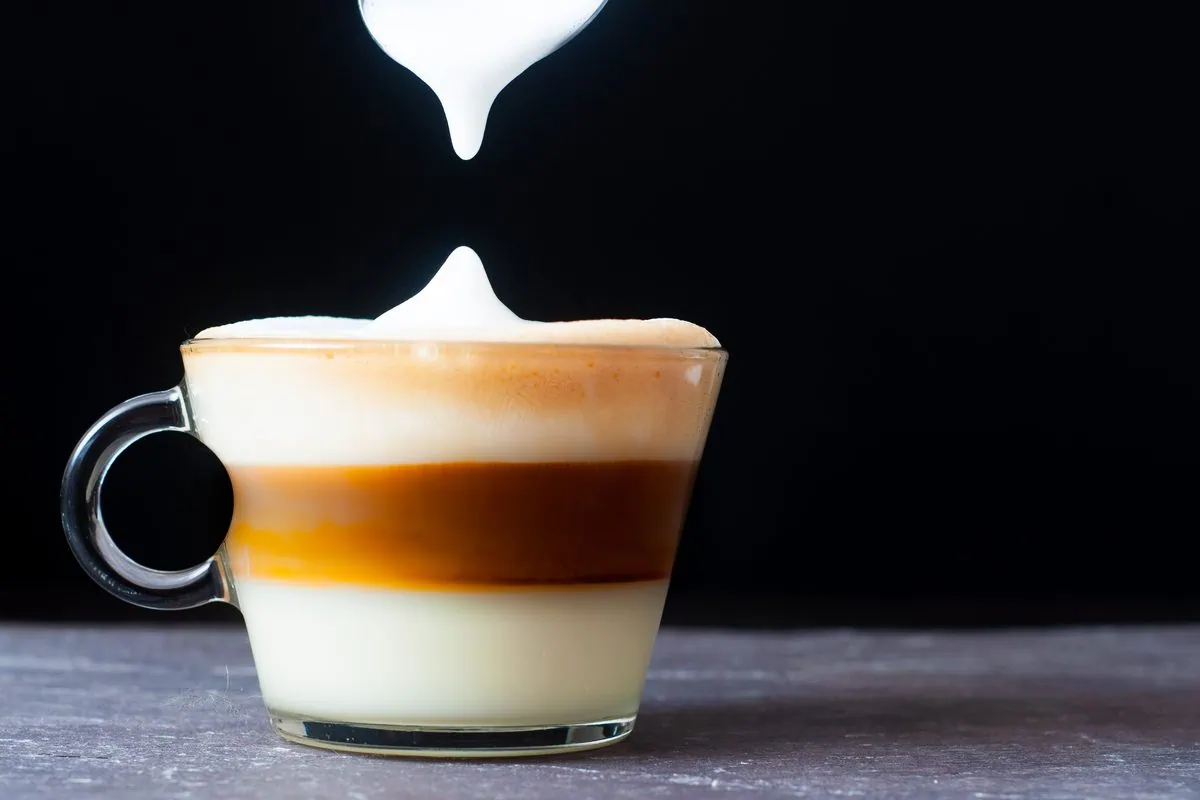
Other morning drinks include:
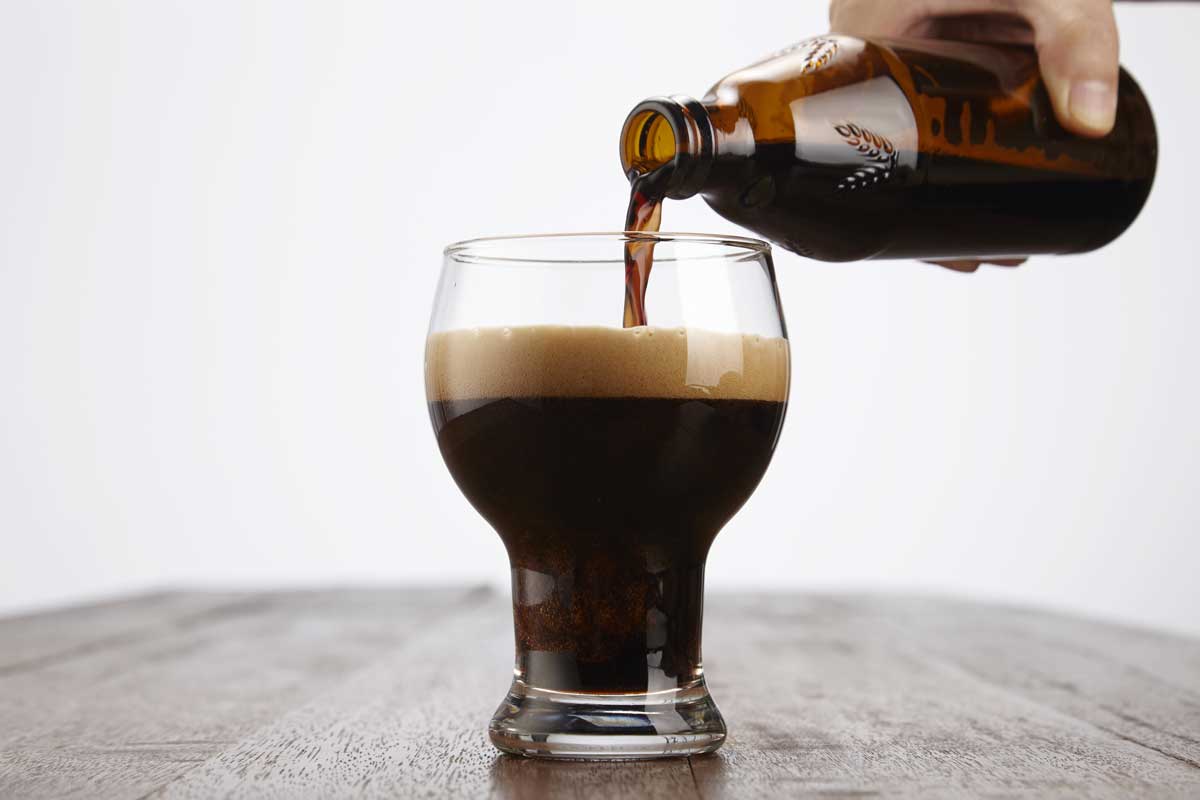
- Malta: a dark, sweet, non-alcoholic malt soda, served very cold with empanadas
- Fresh juice: papaya (lechosa), passion fruit (parchita) or orange
- Hot chocolate: a treat in the cooler Andes
For later in the day, see our guide to Venezuelan drinks, including papelón con limón and chicha venezolana.
Venezuelan vs. Colombian Breakfast
The two neighbors share arepas and scrambled eggs, so they often get mixed up. Here is how they differ:
| Venezuela | Colombia | |
|---|---|---|
| Arepa | Thick, split and stuffed | Often thinner, topped with cheese or butter |
| Eggs | Perico, with tomato, onion and often sweet pepper | Huevos pericos, with tomato and scallion |
| Big plate | Desayuno criollo | Calentado |
| Morning soup | Pisca andina | Changua |
| Coffee | Guayoyo or marrón | Tinto |
For the other side of the border, see our list of Colombian breakfast foods, or compare other countries in Latin breakfasts by country.
How to Make a Desayuno Criollo at Home
The plate looks like a lot of work, but it only takes 45 minutes if you cook in the right order. Everything holds well except the eggs, so they go last:
- Beans first. They simmer with no attention and only improve as they sit.
- Arepas next. Griddle for color, then finish in the oven so the centers cook through. They stay hot there.
- Perico last. The eggs take about 10 minutes and should go straight to the plate.
- Set out the rest. Grate the cheese, slice the avocado and put out the nata while the eggs cook.
The exact amounts are in the recipe card below.
Where to Find a Venezuelan Breakfast in the US
South Florida has the largest concentration of Venezuelan restaurants and bakeries, especially around Doral and Weston. Orlando and Houston also have strong communities. Search for an “arepera” or “panadería venezolana” rather than just breakfast.
When you get there, ask for a desayuno criollo, una arepa de perico, or a cachito with a marrón. For the ingredients, Latin markets are your best bet, or see our guide to Venezuelan ingredients.
Stock a Venezuelan Breakfast Pantry
Precooked corn flour is in most US supermarkets now. These are the items and tools we would reach for:
As an Amazon Associate, AmigoFoods earns from qualifying purchases.
Venezuelan Breakfast FAQ
What is a typical Venezuelan breakfast?
An arepa with eggs, white cheese and black beans, usually with coffee. Perico is the most common egg dish. Many city workers instead grab an empanada or a cachito on the way to work.
What is desayuno criollo?
It is the full Venezuelan breakfast plate: arepa, eggs or perico, black beans, white cheese and often shredded beef and nata. The name means creole breakfast, and most Venezuelan restaurants in the US list it on their menu.
Are arepas a breakfast food?
Yes, but not only breakfast. Venezuelans eat arepas at any meal. In the morning they are usually smaller or simply filled with cheese, eggs or beans.
What do Venezuelans drink for breakfast?
Coffee is the default, most often a guayoyo, marrón or con leche. Fresh juice and cold malta are the other common choices.
What is the difference between perico and huevos pericos?
They are close relatives. Venezuelan perico usually includes tomato, onion and often sweet pepper, while Colombian huevos pericos are known for scallion and tomato. Our huevos pericos recipe covers both.
Is a Venezuelan breakfast gluten-free?
Arepas, corn empanadas, cachapas, perico and black beans are naturally free of wheat. Cachitos, golfeados, pastelitos, tequeños and pan de jamón all use wheat flour. Check labels if you need to be strict.
What is the most famous food in Venezuela?
The arepa is the best-known food, and pabellón criollo is considered the national dish. See our guide to 32 traditional Venezuelan dishes, or start at the Venezuelan food hub.
Desayuno Criollo Recipe
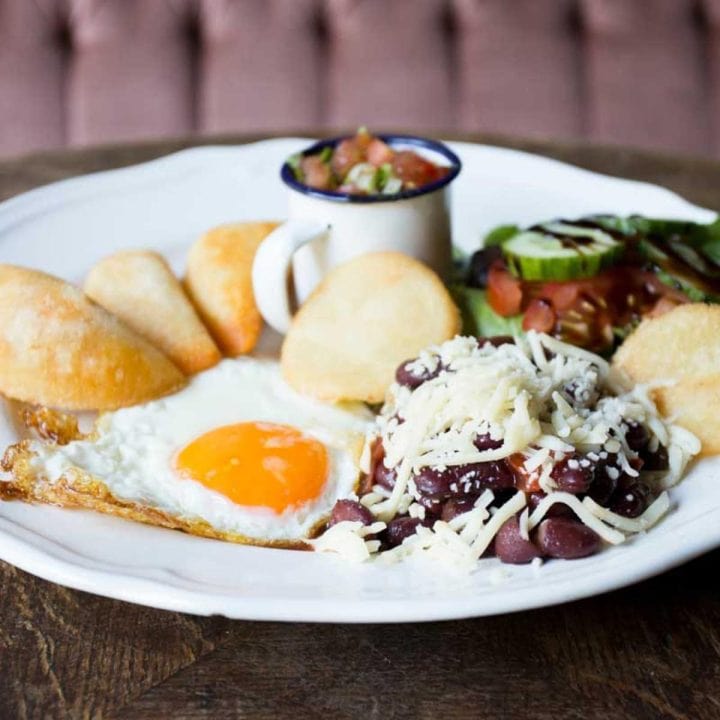
Desayuno Criollo (Venezuelan Breakfast Plate)
The classic Venezuelan breakfast plate: griddled corn arepas, perico (eggs scrambled with tomato and onion), thick black beans, grated white cheese, avocado and nata.
Ingredients
For the black beans
- 1 tablespoon neutral oil
- 1/2 white onion, finely diced
- 1/4 red bell pepper, finely diced
- 2 garlic cloves, minced
- 1/2 teaspoon ground cumin
- 2 cans (15 ounces each) black beans, with their liquid
- 1 teaspoon grated panela or brown sugar
- Salt, to taste
For the arepas
- 2 cups (about 290 g) precooked white corn flour, such as Harina P.A.N.
- 2 1/2 cups warm water
- 1 1/2 teaspoons salt
- 1 tablespoon neutral oil, plus more for the griddle
For the perico
- 2 tablespoons unsalted butter
- 1 small white onion, finely diced
- 1/4 red bell pepper, finely diced
- 2 ripe tomatoes, seeded and diced
- 8 large eggs
- 1/2 teaspoon salt
- 1/4 teaspoon black pepper
To serve
- 4 ounces queso de mano, queso llanero or cotija, grated or crumbled
- 1/2 cup nata, Mexican crema or sour cream
- 1 ripe avocado, sliced
- Fried ripe plantains, optional
- Hot coffee
Instructions
- Start the beans. Heat the oil in a medium saucepan over medium heat. Cook the onion, red pepper and garlic for 5 minutes, until soft. Stir in the cumin, then add the black beans with their liquid and the panela. Simmer gently for 15 to 20 minutes, mashing a few beans against the side of the pot, until thick and glossy. Salt to taste and keep warm.
- Make the arepa dough. Heat the oven to 350°F (175°C). Stir the salt into the warm water in a large bowl. Rain in the corn flour while stirring, then add the oil and knead for 2 minutes. Rest the dough for 5 minutes. It should feel soft and hold a shape without cracking; add a spoonful of water if it splits at the edges.
- Shape the arepas. Divide the dough into 8 balls. Flatten each between your palms into a disc about 3/4 inch thick, smoothing any cracks with a wet finger.
- Griddle and bake. Lightly oil a griddle or cast-iron skillet over medium heat. Cook the arepas in batches for 5 to 6 minutes per side, until golden with dark spots. Move them to a baking sheet and bake 10 to 15 minutes, until they puff slightly and sound hollow when tapped. Leave them in the turned-off oven while you cook the eggs.
- Cook the perico. Melt the butter in a large nonstick skillet over medium heat. Cook the onion and red pepper for 4 minutes. Add the tomatoes and cook 3 to 4 minutes, until most of their juice is gone. Beat the eggs with the salt and pepper, pour them in, lower the heat, and fold gently for 2 to 3 minutes, until just set.
- Build the plates. Split the hot arepas with a knife and butter them or leave them whole. Add a scoop of perico and a scoop of beans to each plate. Shower the beans with cheese, then add avocado, a spoon of nata and fried plantains if you made them. Serve right away with coffee.
Notes
Make it easier: Cook the beans the day before; they thicken and taste better overnight. Baked arepas also freeze well for up to 2 months. Reheat them from frozen at 350°F for about 15 minutes.
Cheese and nata: Use queso de mano, queso llanero or telita if you can find them. Cotija or a dry queso fresco stands in well for grated white cheese. For nata, stir a pinch of salt into Mexican crema or sour cream.
Add meat: A scoop of carne mechada turns this into the full restaurant plate.
More Venezuelan Foods
See all →
Jorge Garcia is the founder of AmigoFoods, where he has spent over 20 years helping readers discover authentic Latin American and Spanish cuisine. Raised in a Cuban-American household, Jorge learned to cook at the hands of his mother and grandmother, carrying forward generations of family recipes. That heritage, backed by his family’s four-generation history in the Latin food industry, inspired him to launch AmigoFoods in 2003. With more than 1,000 published articles on recipes, ingredients, and food culture, Jorge’s mission is simple: make authentic Latin cooking approachable for home cooks everywhere while honoring the traditions behind every dish.