

Agua de Valencia combines fresh orange juice, cava, vodka and gin in a sparkling pitcher cocktail. This version serves eight and takes 15 minutes to mix once the ingredients are chilled, with sugar adjusted to the sweetness of the oranges.
Agua de Valencia at a Glance
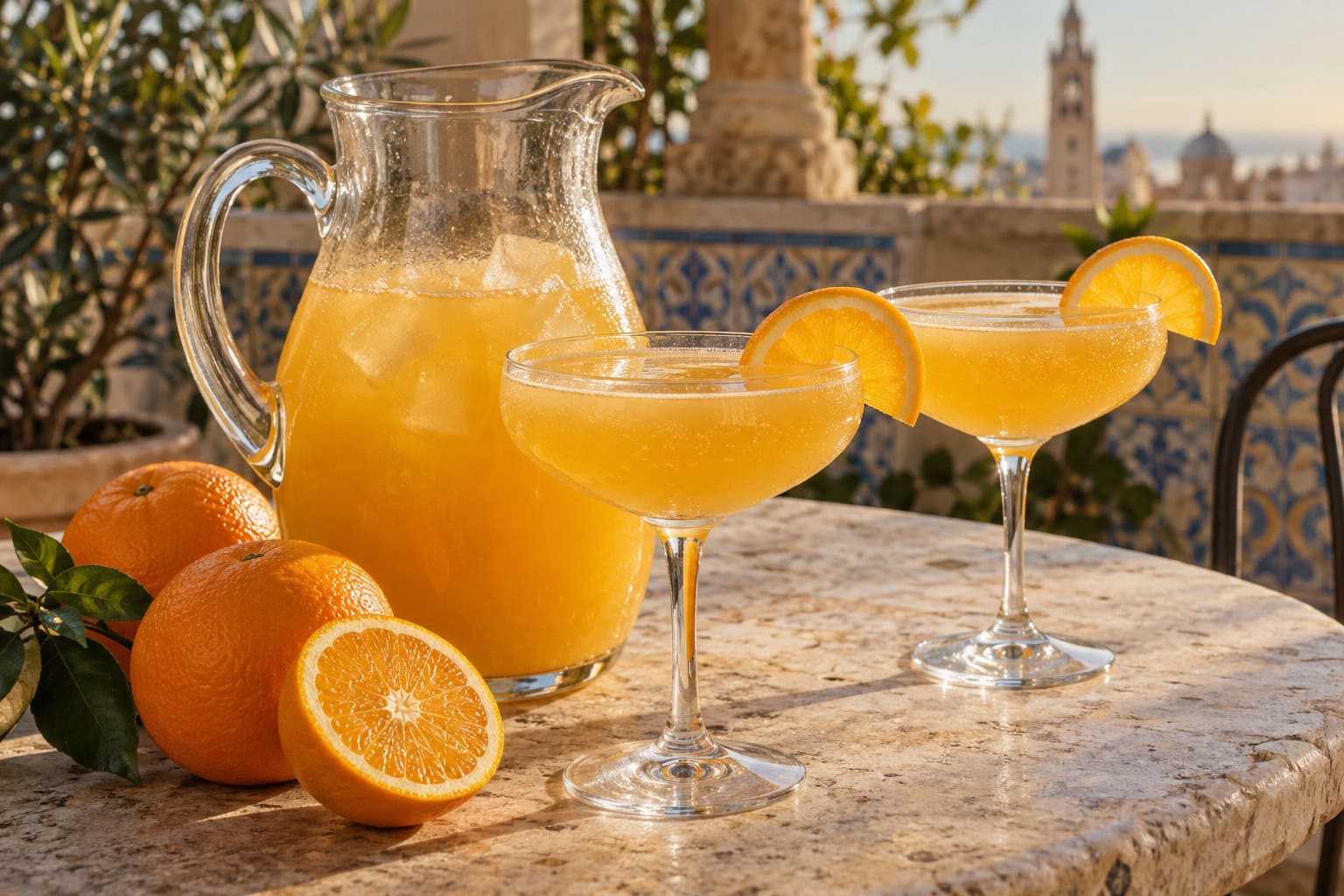
Agua de Valencia Essentials
| What it is | A sparkling orange cocktail made by the jug for sharing |
|---|---|
| Valencian name | Aigua de València |
| Core ingredients | Fresh orange juice, cava, vodka, gin, sugar (optional) |
| Credited creator | Constante Gil Rodríguez (1926–2009), Galician-born painter who ran Cervecería Madrid |
| Year | 1959 in most accounts (some sources say 1956) |
| Strength | About 10–11% ABV for our jug; about 14.5% for the Café Madrid serving below |
| How it’s served | In a jarra (pitcher), poured into wide coupe glasses, well chilled |
| Best with | Tapas, a late-afternoon terrace, summer nights |
The History of Agua de Valencia: What the Sources Actually Say
Plenty of recipe sites repeat a one-line origin story. The documented version is a little richer, and the sources don’t all agree.
Constante Gil and Cervecería Madrid
Constante Gil Rodríguez was born in 1926 in Taragoña (Rianxo, A Coruña) and moved to Valencia in 1948. From 1956 until 2000 he ran the Cervecería Madrid on Calle Abadía de San Martín, just behind the Palacio del Marqués de Dos Aguas. He was also a painter who co-founded the Grupo Bulto art collective in 1972, and his series Tertulias de Café portrays the bar’s regulars during Spain’s transition to democracy.
The building’s history predates him. Valencia Bonita traces it back to an early 20th-century inn, then a German-run beer hall called Oro del Rin and later Cervecería Berlín. It was renamed Madrid in 1940, when Franco-era rules pushed businesses away from foreign names. That’s why some sources give 1900 and others 1940 as the founding date.
The “agua de Bilbao” anecdote
The best-known account comes from writer María Ángeles Arazo’s 1978 book Valencia, noche. A group of Basque regulars kept ordering agua de Bilbao, their joking name for the house’s best sparkling wine. When they challenged Gil to come up with something new, he mixed orange juice, sparkling wine, gin and vodka and named it after his own city. They liked it enough to order it on every visit after that.
Where the versions differ:
- The year. Most sources, including Gil’s 2009 obituaries, say 1959. Guía Repsol and MYR Hotels (the current operator of Café Madrid) say 1956, which is the year Gil took over the bar.
- The reason for the toast. Spanish Wikipedia and El Español repeat a variant where the Basques wanted to celebrate Athletic Bilbao’s 1956 Spanish Cup win. Other accounts just describe regulars tired of the same order.
- The bar’s name. Spanish press sources call it Cervecería Madrid, while most English articles say Café Madrid (or “Café Madrid de Valencia”). A 2021 Valencia Plaza article even calls the drink “El manantial,” “better known as Agua de Valencia.” We haven’t found that name in any other source.
- The recipe. Valencia Bonita reports that the Gil family says the original had a secret ingredient known only to the family.
One common mix-up: Café de las Horas, near the cathedral, is a separate and well-known agua de Valencia bar. It is not the successor to Gil’s place.
From cult drink to city symbol
According to Gil’s obituaries in the Spanish press, the drink stayed a regulars’ secret for about a decade and spread through Valencia’s nightlife in the 1970s. Gil retired in 2000 to paint full time and died in Valencia in June 2009. MYR Hotels reopened the space as Café Madrid in 2018, attached to its Marqués House hotel, and reopened it again in June 2021 after the pandemic closure. Agua de Valencia is still on the menu.
How Strong Is Agua de Valencia? (Ratio and ABV Table)
This is the part most recipes skip. Orange juice and sugar hide the alcohol very well, and a jug disappears fast. A Café Madrid bartender told Guía Repsol that the drink is deceptive precisely because it’s so refreshing.
We calculated each version using cava at 11.5% ABV and vodka and gin at 40% (80 proof), before any melting ice. Actual numbers shift a little with your bottles.
| Version | Juice : cava : vodka : gin | Est. ABV | US standard drinks per 7 oz |
|---|---|---|---|
| Café Madrid serving (Guía Repsol) | 60 : 50 : 20 : 20 ml | ≈14.5% | ≈1.7 |
| Common English-language blog ratio | 500 : 300 : 100 : 100 ml | ≈11.5% | ≈1.3 |
| Our jug (recipe card) | 720 : 750 : 120 : 120 ml | ≈10.7% | ≈1.2 |
| Lighter jug | 720 : 750 : 60 : 60 ml | ≈8.4% | ≈1.0 |
| No-spirits “cava and juice” | 720 : 750 : 0 : 0 ml | ≈5.9% | ≈0.7 |
For comparison, most table wine is 12–14% ABV and a regular beer is about 5%. A US standard drink is 0.6 fl oz (about 17.7 ml) of pure alcohol. Melting ice in the pitcher dilutes it a little further as you go. Pace yourself and drink water between rounds.
How to Make Agua de Valencia
Our jug is balanced rather than bar-strength: roughly equal parts fresh juice and cava, with gin and vodka as backup. It serves eight and takes about 15 minutes of hands-on preparation, most of it squeezing oranges, with no cooking. Allow at least 2 hours to chill the ingredients beforehand (about 2 hours 15 minutes total if starting from room temperature).
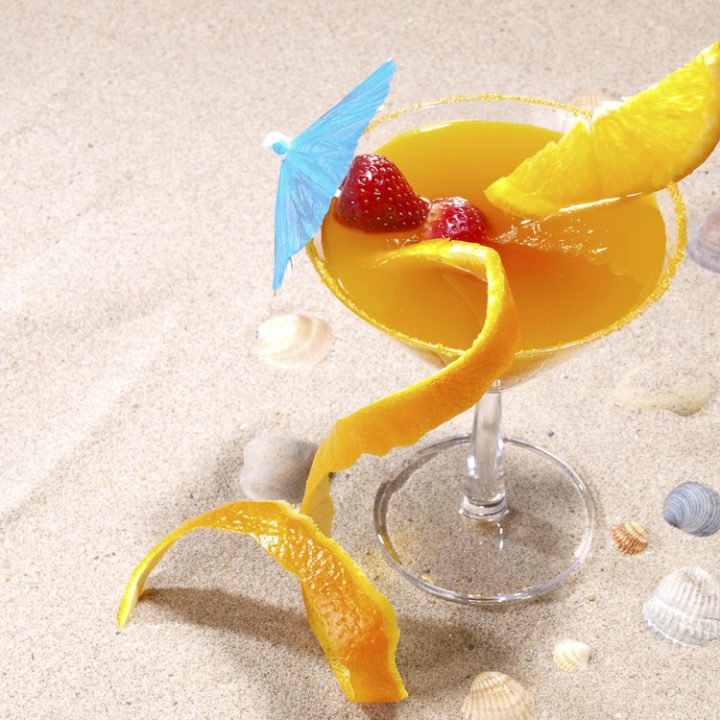
Agua de Valencia (Pitcher)
Valencia's classic sharing cocktail of fresh-squeezed orange juice, cava, vodka and gin, lightly sweetened and served in coupes. This balanced jug comes in around 10.7% ABV.
Ingredients
- 3 cups (720 ml) fresh-squeezed orange juice, from about 8 medium Valencia oranges, chilled
- 1 bottle (750 ml) brut or semi-seco cava, well chilled
- 1/2 cup (120 ml) vodka
- 1/2 cup (120 ml) gin
- 2 to 3 tablespoons (25 to 38 g) superfine sugar, to taste
- Ice cubes
- 1 orange, thinly sliced, for garnish
Instructions
- Chill the oranges, cava, vodka and gin for at least 2 hours.
- Squeeze the oranges and strain the juice through a fine sieve to remove pulp and seeds.
- Pour the juice into a large glass pitcher, add 2 tablespoons of sugar and stir until fully dissolved. Taste and add more sugar only if the oranges are tart.
- Add the vodka and gin and stir.
- Add a handful of ice, then slowly pour in the cava down the side of the pitcher.
- Lift gently once or twice with a long spoon to combine. Do not shake or stir hard.
- Add the orange slices and serve right away in chilled coupe glasses.
Notes
ABV: cava 750 ml at 11.5% + vodka and gin 120 ml each at 40% in 1,710 ml of liquid is about 10.7% ABV before ice melt; a 7 oz (207 ml) serving is about 1.2 US standard drinks. Lighter: use 1/4 cup (60 ml) each of vodka and gin for about 8.4% ABV. Bar-style: the Café Madrid serving reported by Guía Repsol uses 60 ml juice, 50 ml cava, 20 ml vodka and 20 ml gin, about 14.5% ABV before ice dilution with the same bottle strengths. Make ahead: mix juice, sugar and spirits up to 4 hours ahead and refrigerate, then add cava just before serving; use Valencia oranges, since navel juice turns bitter as it sits. Substitutions: Champagne or another dry traditional-method sparkling wine can replace cava; with prosecco, use less sugar. Blood oranges can replace up to a third of the juice. Batch: double everything for a party, but top each pitcher with fresh cava as you serve.
Tips for getting it right
- Squeeze your own juice. It’s the backbone of the drink. Pasteurized carton juice tastes flat and cooked next to cava.
- Dissolve the sugar in the juice first. Sugar added after the cava makes it foam over and settle undissolved.
- Add cava last and stir gently. Pour it down the side of the pitcher and give it one or two slow lifts with a long bar spoon. Never shake it. AmigoFoods earns a commission on qualifying Amazon purchases.
- Strain the pulp if you want the classic silky, pale-orange look.
- Mix only what you’ll pour in 30 minutes. The bubbles fade quickly. Keep the juice-and-spirits base in the fridge and top up with fresh cava for each round.
Which Oranges to Use in the US
The “Valencia orange” name coincidence
Valencia oranges are perfect here, but not because they come from Valencia. According to UC Riverside’s Givaudan Citrus Variety Collection, English nurseryman Thomas Rivers brought the variety from the Azores and listed it in 1865 as “Excelsior.” It reached Florida (as “Hart’s Tardiff”) and California (as “Rivers Late”) in the 1870s.
The Valencia name came later, when a Spanish visitor said it resembled a late orange from the Valencia region. Some popular sources credit California grower William Wolfskill instead. Either way, the name honors Valencia’s reputation for oranges. The variety wasn’t developed there.
What to buy by season
- Spring through summer: Valencia oranges. They’re juicy, sweet-tart and hold their flavor after squeezing. UC Riverside lists them as ripening from March to July, and Florida’s commercial harvest runs March to June.
- Winter: Navels or Cara Caras are fine, but squeeze them right before mixing. Navel juice develops “delayed bitterness” from a compound called limonin as it sits.
- For a twist: Swap in blood oranges for up to a third of the juice. You’ll get a sunset color and berry notes.
- How many: Plan on about 8 medium oranges for 3 cups of juice. A lever-style citrus press makes quick work of it.
Fresh vs. bottled juice
If you have to take a shortcut, buy cold-pressed, not-from-concentrate juice from the refrigerated case and taste it before adding any sugar. Commercial juice is often sweeter than fresh. Skip shelf-stable cartons entirely.
Cava, Prosecco or “Any Bubbly”?
Gil’s drink used cava, Spain’s traditional-method sparkling wine. Fittingly, one of the four official zones of the DO Cava is Requena, in the province of Valencia. Visit València recommends cava from the Requena and Utiel area. For more on styles and labels, see our guide to cava wine.
El Español’s recipe allows “cava or sparkling white wine,” and tourist-oriented versions sometimes cut corners with cheaper bubbly, carton juice or bottom-shelf spirits, something the local site 24/7 Valencia warns about. A Brut or Semi-Seco cava gives the drink its toasty, dry backbone. Prosecco works, but it’s fruitier and softer, so use less sugar. Very sweet sparkling wines make the drink cloying.
Variations, Including a Lighter Version
Lower-alcohol agua de Valencia
Halve the gin and vodka (¼ cup / 60 ml each) and keep everything else the same. That lands the jug around 8.4% ABV, closer to a light white wine. Or skip the spirits and serve cava and juice in the same coupes, for about 6%.
Alcohol-free version
Mix fresh orange juice with chilled sparkling water or a dry non-alcoholic sparkling wine. Add a few drops of orange blossom water or a juniper-forward non-alcoholic gin alternative to hint at the original.
Bar-style twists
Spanish Wikipedia notes that some bars add rum or orange liqueur. Many modern recipes swap part of the sugar for triple sec. Named cousins include agua de Murcia and agua de Sevilla. If you like fruit-and-wine pitchers, compare it with classic Spanish sangría.
How to Serve It the Valencian Way
In Valencia it comes in a jarra (glass pitcher) and is poured into wide champagne coupes, which Spaniards call copa Pompadour. It’s a sociable late-afternoon and evening drink for terraces, birthdays and summer nights, not a solo nightcap.
At home, a clear 2-liter glass pitcher and a set of champagne coupe glasses get you most of the way there. Garnish with a thin orange wheel.
What to eat with agua de Valencia
Its citrus acidity and bubbles cut through fried and salty food, which makes it a natural match for classic Spanish tapas. Try it with:
- Patatas bravas with their smoky, spicy sauce
- Gambas al ajillo (garlic shrimp)
- Boquerones en vinagre and other briny bites
- Manchego cheese and cured ham
- A weekend paella valenciana, for a full Valencian table
Stock up on Spanish olives, tinned seafood and other nibbles with our curated Spanish pantry list.
Where to Drink Agua de Valencia in Valencia
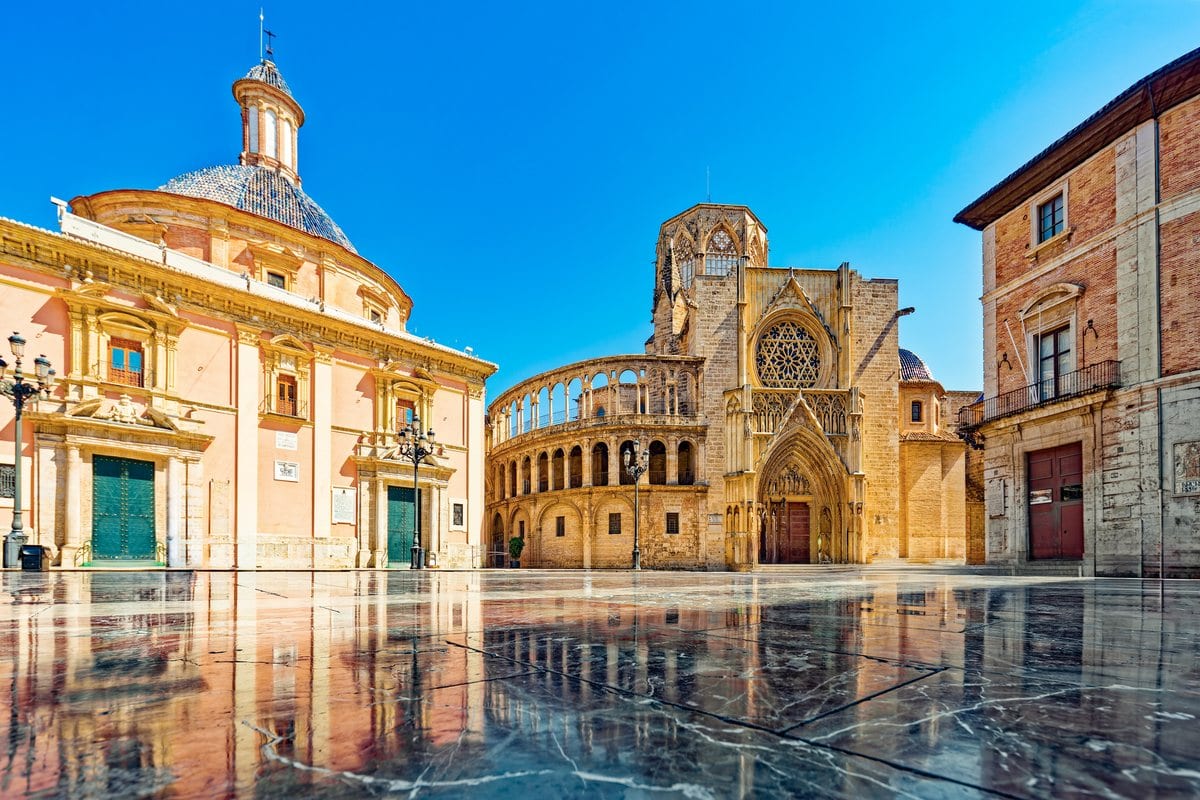
Head for Ciutat Vella, the historic center. The streets around Plaza de la Reina, the cathedral and the Barrio del Carmen are packed with terraces serving jugs. These places are named by Valencia’s official tourism board, Visit València:
- Café Madrid (Calle Abadía de San Martín 10), the birthplace, a few minutes’ walk from Plaza de la Reina.
- Café de las Horas, near the cathedral.
- Café Sant Jaume, on Calle Cavallers in El Carmen.
Hours and menus change, so check before you go. MYR Hotels listed average prices around €6 a glass and €24 a jug. On a hot day, balance a round with a glass of horchata de chufa, Valencia’s other signature drink.
Frequently Asked Questions
What is agua de Valencia made of?
Fresh orange juice, cava, vodka and gin, usually with a little sugar, served cold from a pitcher. Some bars add orange liqueur.
Is agua de Valencia strong?
Yes, stronger than it tastes. Home recipes run about 10–12% ABV, similar to wine, and the Café Madrid ratio above comes to about 14.5% before dilution.
Who invented agua de Valencia?
It’s credited to Constante Gil, owner of Valencia’s Cervecería Madrid (now Café Madrid). Most accounts say 1959, a few say 1956, and the story of Basque regulars ordering “agua de Bilbao” comes from María Ángeles Arazo’s 1978 book Valencia, noche.
What’s the difference between agua de Valencia and a mimosa?
A mimosa is just sparkling wine and orange juice. Agua de Valencia adds gin and vodka, often some sugar, and is made by the jug, so it’s noticeably stronger.
Can I use prosecco or champagne instead of cava?
Yes. Champagne is closest in style since it’s also made by the traditional method. Prosecco is fruitier, so cut back on sugar.
Can I make agua de Valencia ahead of time?
Mix the juice, sugar and spirits up to a few hours ahead and refrigerate (use Valencia oranges, not navels). Add the cava just before serving.
Is agua de Valencia the same as sangría?
No. Sangría is red wine with fruit and often brandy. Agua de Valencia is orange juice with cava and clear spirits. Explore more in our guide to Spanish drinks.
A Jug Worth Sharing
Agua de Valencia began as a bar owner’s comeback to a group of Basque regulars and became the drink of an entire city. Use real oranges, good cava and a gentle hand with the spirits, and keep an eye on the jug.
Want more warm-weather ideas? Browse our Spanish summer drinks and the full collection of Latin American and Spanish cocktails.
More Spanish Foods
See all →
Jorge Garcia is the founder of AmigoFoods, where he has spent over 20 years helping readers discover authentic Latin American and Spanish cuisine. Raised in a Cuban-American household, Jorge learned to cook at the hands of his mother and grandmother, carrying forward generations of family recipes. That heritage, backed by his family’s four-generation history in the Latin food industry, inspired him to launch AmigoFoods in 2003. With more than 1,000 published articles on recipes, ingredients, and food culture, Jorge’s mission is simple: make authentic Latin cooking approachable for home cooks everywhere while honoring the traditions behind every dish.