

Cachapas are Venezuelan sweet corn pancakes with golden edges and a soft, slightly chunky center. Fold them over queso de mano or mozzarella and serve warm with butter for a sweet-and-salty breakfast or a filling snack.
Cachapas at a Glance
What Is a Cachapa?

A cachapa is a pancake made from jojoto, the Venezuelan word for tender fresh corn. The kernels are ground into a thick, wet batter, sweetened a little and cooked on a budare, the flat clay or iron griddle Venezuelans also use for arepas. The result is deep yellow, slightly crisp on the outside and moist inside, with bits of corn you can still feel when you bite into it.
Most cachapas are eaten with cheese. The cook lays slices of queso de mano on one half, folds the cachapa over and lets the heat soften the cheese. A pat of butter on top finishes it. That sweet corn and salty, milky cheese combination is the whole point.
Cachapas are eaten all over Venezuela, at home and at roadside stands called cachaperas. Families stop at them on weekend drives, especially on the highways leading out of Caracas, and order a cachapa with cheese and a side of cochino frito (fried pork) to eat standing up. You’ll find them in our list of traditional Venezuelan food next to arepas, pabellón and hallacas.
Cachapas are a weekend favorite in the morning. For the everyday dishes, see our guide to Venezuelan breakfast foods.
Cachapa vs. Arepa (and Arepa de Choclo)
Cachapas and arepas are both Venezuelan corn cakes cooked on a budare, but they are made from different corn and taste nothing alike. Colombia’s arepa de choclo sits between the two.
| Cachapa | Arepa | Arepa de choclo | |
|---|---|---|---|
| Made from | Fresh corn kernels, ground into a batter | Precooked white corn flour and water | Fresh or sweet corn, often with corn flour |
| Texture | Soft, moist pancake with bits of kernel | Crisp crust, steamy, bready inside | Thick, soft and slightly chewy |
| Flavor | Sweet and corny | Neutral, lightly salted | Sweet |
| Shape | Large, thin round, folded in half | Small, thick disc, split open | Round, cooked flat |
| Cheese | Folded inside, usually queso de mano | Stuffed inside with many other fillings | Melted on top or between two |
| From | Venezuela | Venezuela and Colombia | Colombia |
Costa Rica has a close cousin too: chorreadas, thin sweet corn pancakes served with sour cream. Read more in our guide to traditional Costa Rican foods.
Where Cachapas Come From
Corn was the staple grain of Venezuela long before the Spanish arrived, and indigenous cooks ground it on stones and cooked it on clay griddles, the ancestors of today’s budare. Cachapas grew out of that tradition: a way to eat the new corn of the season, when the kernels are soft, milky and sweet.
The word itself is a Venezuelanism, and Venezuelans claim the dish completely. Cachapas are most at home in the central states around Caracas, where cornfields, dairy farms and cheese makers sit close together, but you’ll find them in every region. One older style, cachapa de hoja, is wrapped in corn husks and boiled instead of griddled, which makes it denser and more like a sweet tamal.
Cachapa Ingredients

A cachapa needs very few ingredients. The corn does the work; everything else adjusts the texture and the sweetness.
- CornYellow corn kernels: fresh from 5 to 6 ears, or frozen and thawed. See the corn guide below.
- Precooked corn flourAbout ⅓ cup of Harina P.A.N. thickens the batter so it holds together in the pan.
- Sugar or papelónA little sugar brings US sweet corn closer to Venezuelan jojoto. Grated papelón (unrefined cane sugar) is the traditional choice.
- Milk, egg and butterMilk loosens the batter, an egg helps it hold, and melted butter adds richness.
- CheeseQueso de mano is classic. Fresh mozzarella or Oaxaca cheese are the best substitutes.
Fresh, frozen or canned corn?
All three work, with small differences. In Venezuela, cachapas are made with starchy, just-picked jojoto. American sweet corn is wetter and sweeter, which is why most recipes outside Venezuela add a little corn flour.
| Corn | Result | What to adjust |
|---|---|---|
| Fresh | Best flavor and the most corn texture | Use the recipe as written; scrape the cobs with the back of a knife for the milky juice. |
| Frozen | Very close to fresh, available all year | Thaw completely and drain well. You may need 1 extra tablespoon of corn flour. |
| Canned | Softer and wetter, slightly less sweet | Drain and pat dry. Skip the milk at first and add it a spoonful at a time. |
| Sweet corn mix | The fastest route; smooth and very consistent | Follow the package, or blend in a cup of kernels for texture. |
If you want cachapas without any blending, P.A.N. makes a sweet corn mix made for exactly this. Just whisk it with water and milk, let it rest a few minutes and cook. Adding a handful of blended kernels brings back some of the fresh-corn texture.
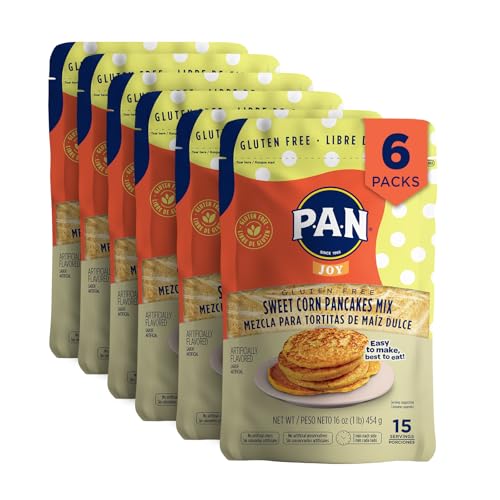
- MAKE THE PERFECT SWEET CORN PANCAKES - It is time to get to your table a delightful classic...
- EASY TO PREPARE – Be the one who creates new memories full of taste with this easy to make mix...

The Best Cheese for Cachapas

Queso de mano (“hand cheese”) is the classic. It is a fresh, soft, mild cheese that is stretched by hand, a lot like fresh mozzarella but saltier and moister, and it’s sold in thick rounds. It softens beautifully against a hot cachapa without turning into a puddle. Outside Venezuela, Latin grocery stores often carry it, but these swaps work well:
| Cheese | What it’s like | How good a swap |
|---|---|---|
| Queso de mano | Soft, moist, mild and salty, hand-stretched | The original |
| Queso guayanés | Very soft, milky, fresh cheese from Venezuela’s Guayana region | Excellent; just as traditional |
| Queso telita | Thin, stretchy fresh cheese sold in layers | Excellent |
| Fresh mozzarella | Soft and milky; less salty | Very good; add a pinch of salt |
| Oaxaca cheese | Stretchy, mild Mexican string cheese | Very good; melts more |
| Queso blanco or queso fresco | Firmer and crumbly; softens but doesn’t stretch | Good in a pinch |
For a closer look at these and other Latin American cheeses, see our guide to Latin cheeses.
How to Make Cachapas

Making cachapas is like making pancakes, with one difference: the batter is heavier and more delicate, so it needs gentler heat and more patience before you flip. Here is the process at a glance; the recipe card below has exact amounts and times.
- Blend the corn. Blend the kernels with milk, sugar, salt, the egg and melted butter until thick and mostly smooth. A little graininess is good.
- Thicken and rest. Stir in the corn flour and a handful of whole kernels. Rest the batter 10 minutes so the flour can hydrate. It should fall slowly from a spoon, like thick pancake batter.
- Cook it slowly. Butter a large griddle or two skillets over medium-low heat to cook two cachapas at once. If using one pan, allow about 50 to 60 minutes to cook all six. Spread about ½ cup of batter into a 6-inch round and cook until the edges look dry and the bottom is deep golden, 4 to 5 minutes.
- Flip and finish. Slide a wide spatula all the way under, flip, and cook 3 to 4 minutes more.
- Fill and fold. Lay cheese over half, fold, top with butter and give it a minute in the pan so the cheese softens. Eat it hot.
No budare? Use cast iron. A heavy cast-iron pan or comal holds even, steady heat the way a budare does, which gives cachapas their golden, freckled crust. Nonstick works too; just keep the heat a notch lower.
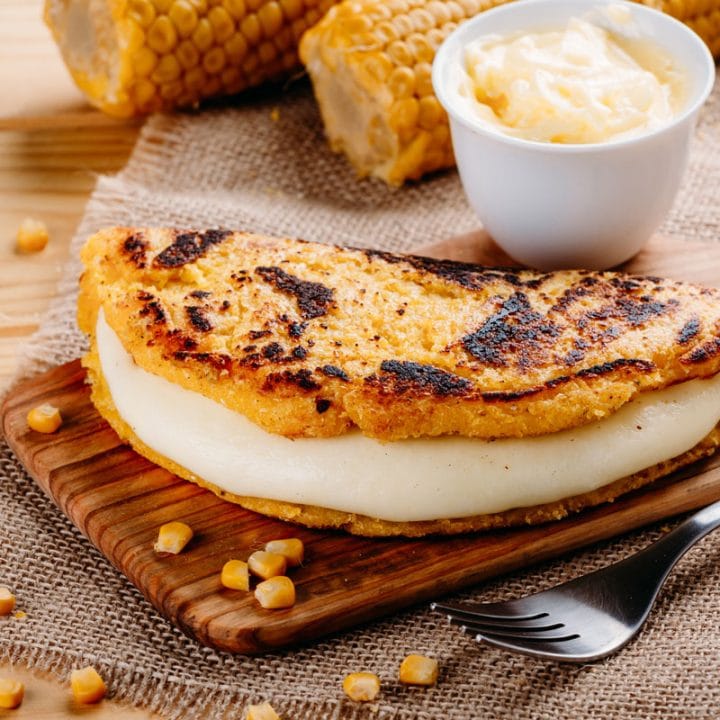
Venezuelan Cachapas (Corn Pancakes with Cheese)
Golden, slightly sweet Venezuelan corn pancakes made from fresh or frozen corn, folded over soft queso de mano and finished with butter. Crisp at the edges, moist inside and naturally gluten-free.
Ingredients
For the cachapas
- 4 cups yellow corn kernels (about 600 g), cut from 5 to 6 fresh ears, or frozen and thawed
- ¼ cup whole milk, plus more if needed
- 2 tablespoons sugar or grated papelón
- ½ teaspoon salt
- 1 large egg
- 2 tablespoons unsalted butter, melted, plus more for the pan
- ⅓ cup precooked yellow or white corn flour, such as Harina P.A.N.
To fill and serve
- 12 ounces queso de mano, or fresh mozzarella or Oaxaca cheese, sliced ½ inch thick
- Butter, for serving
Instructions
- Prepare the corn. If using fresh corn, cut the kernels off the cobs, then scrape each cob with the back of the knife to catch the milky juice. If using frozen corn, thaw it completely and drain well. Set aside ½ cup of kernels.
- Blend the batter. Put the remaining 3½ cups of corn, the milk, sugar, salt, egg and 2 tablespoons melted butter in a blender. Blend until thick and mostly smooth, scraping down the sides. A slightly grainy texture is right.
- Thicken and rest. Pour into a bowl and stir in the precooked corn flour and the reserved ½ cup kernels. Let the batter rest 10 minutes. It should fall slowly from a spoon, like thick pancake batter. If it is runny, stir in another tablespoon of corn flour; if it is stiff, add milk a tablespoon at a time.
- Heat the pan. Heat a cast-iron skillet, comal or large nonstick pan over medium-low heat and brush it with a little butter.
- Cook the first side. Pour about ½ cup of batter into the pan and spread it with the back of a spoon into a 6-inch round about ¼ inch thick. Cook until the edges look dry, small holes appear on top and the bottom is deep golden, 4 to 5 minutes.
- Flip. Slide a wide spatula completely under the cachapa and flip it in one confident motion. Cook the second side until golden, 3 to 4 minutes.
- Fill and fold. Lay 2 ounces of sliced cheese over half the cachapa, fold the other half over it and spread a little butter on top. Leave it in the pan about 1 minute so the cheese softens.
- Repeat and serve. Transfer to a plate and repeat with the remaining batter, buttering the pan before each one. Serve hot, with extra butter.
Notes
Corn: Fresh corn gives the best flavor. Frozen works almost as well. Canned corn is wetter, so drain it, pat it dry and add the milk gradually.
Cheese: Queso de mano is traditional. Queso guayanés, queso telita, fresh mozzarella or Oaxaca cheese are the best substitutes. Add a pinch of salt if using fresh mozzarella.
Shortcut: Replace the corn flour, sugar and most of the corn with 1 cup P.A.N. sweet corn mix, ¾ cup water and ¼ cup milk, plus 1 cup blended kernels for texture.
Gluten-free: This recipe contains no wheat. Use a corn flour labeled gluten-free, such as Harina P.A.N.
Storage: Refrigerate cooked cachapas without cheese up to 3 days or freeze up to 3 months, layered with parchment. Reheat in a buttered skillet over medium-low heat, then add the cheese.
Timing: The 30-minute cooking time assumes cooking two cachapas at once on a large griddle or in two pans. Allow about 50 to 60 minutes to cook all six one at a time, bringing the total to about 75 to 85 minutes.
Tips for Perfect Cachapas
- Keep some texture. Don’t blend the corn to a perfectly smooth puree. Stirring in a few whole kernels at the end gives the classic slightly lumpy bite.
- Let the batter rest. Ten minutes lets the corn flour absorb liquid, so the batter thickens and the cachapas don’t tear when you flip them.
- Medium-low heat, always. Corn sugar browns fast. High heat burns the outside while the middle is still raw.
- Wait for the edges. Flip only when the edges look matte and set and the cachapa slides when you shake the pan.
- Fold while hot. Add the cheese the moment the cachapa leaves the heat, or right in the pan, so it softens without overcooking.
Cachapa Troubleshooting
| Problem | Why it happens | Fix |
|---|---|---|
| Falls apart when flipped | Batter too thin, or flipped too early | Stir in 1 tablespoon corn flour, rest 5 minutes, and wait for dry edges before flipping. |
| Burnt outside, raw inside | Heat too high, or cachapa too thick | Lower the heat and spread the batter thinner, about ¼ inch. |
| Dense and dry | Too much corn flour | Loosen the batter with milk, a tablespoon at a time. |
| Not sweet enough | Starchy or out-of-season corn | Add another teaspoon of sugar or grated papelón to the batter. |
| Sticks to the pan | Pan not hot or not greased enough | Preheat the pan fully and add a little butter before each cachapa. |
How Venezuelans Eat Cachapas

Cheese is the default, but a cachapa can carry a whole meal. These are the combinations you’ll see at cachaperas and Venezuelan restaurants:
- Con queso de manoThe classic: a thick slab of soft cheese and butter. Ask for doble queso for extra.
- Con cochino fritoWith fried pork chunks on the side, the roadside favorite.
- Con pernilFilled with slow-roasted pork leg, often with cheese too.
- Con carne mechadaFilled with Venezuelan shredded beef. Try our carne mechada recipe.
- Con jamón y quesoHam and cheese, an easy breakfast version.
- Con nataWith a spoonful of nata, Venezuela’s tangy thick cream, or just butter.
To drink, Venezuelans reach for a cold papelón con limón, a strong coffee or a glass of fruit juice. If you’re cooking a Venezuelan spread, cachapas sit happily next to tequeños and Venezuelan empanadas.
Cachapa de Hoja
Cachapa de hoja is the other traditional style. The same fresh-corn batter is made a little thicker, spooned onto fresh corn husks, folded into a packet and boiled until firm, about 30 to 40 minutes. It comes out dense, moist and sweet, closer to a fresh-corn tamal than a pancake, and it’s served with cheese and butter like the griddled kind. Use the batter from the recipe card, add 2 extra tablespoons of corn flour so it holds its shape, and tie each packet with a strip of husk.
Making Ahead, Storing and Reheating
- BatterKeeps covered in the fridge for up to 24 hours. Stir and loosen with a spoonful of milk before cooking.
- FridgeCool cooked cachapas (without cheese), stack with parchment between them and refrigerate in a sealed container up to 3 days.
- FreezerFreeze the same way for up to 3 months. Thaw overnight in the fridge.
- ReheatWarm in a buttered skillet over medium-low heat, 2 minutes a side, then add the cheese and fold. Avoid the microwave; it makes them rubbery.

Cachapa FAQ
What is a cachapa?
A cachapa is a Venezuelan pancake made from ground fresh corn, a little sugar, milk and butter, cooked on a griddle and usually folded over soft white cheese such as queso de mano. It is sweet, salty and slightly lumpy from the corn kernels.
What does a cachapa taste like?
A cachapa tastes like fresh sweet corn: sweet, buttery and slightly nutty, with a soft, moist inside and lightly crisp edges. The salty, milky cheese folded inside balances the sweetness, so each bite is both sweet and savory.
How do you pronounce cachapa?
Say it kah-CHAH-pah, with the stress on the middle syllable. The plural is cachapas.
What is the difference between a cachapa and an arepa?
A cachapa is made from fresh corn kernels and is sweet, thin and folded like a pancake. An arepa is made from precooked white corn flour and water, is thick and neutral in flavor, and is split open and stuffed. Both come from Venezuela.
Can I make cachapas with frozen or canned corn?
Yes. Thaw and drain frozen corn completely. Drain canned corn, pat it dry and add the milk gradually, since canned corn is wetter. Either way, a spoonful of extra corn flour helps the batter hold together.
Can I make cachapas with Harina P.A.N.?
Regular white Harina P.A.N. is used in small amounts to thicken a fresh-corn batter, but on its own it makes arepa dough, not cachapas. For cachapas with no fresh corn at all, use P.A.N.’s sweet corn mix, which is made for them.
Are cachapas gluten-free?
Traditional cachapas are naturally gluten-free, because they are made from corn and contain no wheat flour. This recipe is gluten-free as long as your corn flour is labeled gluten-free, as Harina P.A.N. is.
Are cachapas sweet or savory?
Both. The batter is sweet from the corn and a little sugar, and the salty cheese and butter balance it. Venezuelans eat them for breakfast, lunch or dinner rather than as a dessert.
What do you serve with cachapas?
Cheese and butter are essential. For a bigger meal, add fried pork (cochino frito), roast pork, shredded beef or ham, and serve with papelón con limón, coffee or fresh juice.
More Venezuelan Recipes
- Arepas, Venezuela’s everyday corn bread, with fillings
- Pabellón criollo, the national dish of shredded beef, rice, beans and plantains
- Asado negro, beef braised in dark papelón sauce
- Hallacas, the Christmas tamal wrapped in banana leaves
- Chicha venezolana, the creamy rice drink
- Venezuelan ingredients, the pantry behind these recipes
- Venezuelan street food recipes and all Venezuelan recipes
More Venezuelan Foods
See all →
Jorge Garcia is the founder of AmigoFoods, where he has spent over 20 years helping readers discover authentic Latin American and Spanish cuisine. Raised in a Cuban-American household, Jorge learned to cook at the hands of his mother and grandmother, carrying forward generations of family recipes. That heritage, backed by his family’s four-generation history in the Latin food industry, inspired him to launch AmigoFoods in 2003. With more than 1,000 published articles on recipes, ingredients, and food culture, Jorge’s mission is simple: make authentic Latin cooking approachable for home cooks everywhere while honoring the traditions behind every dish.