
Mexican Christmas drinks are mostly hot, sweet and spiced, made in big pots to serve a crowd. They’re poured at the posadas from December 16 to 24 and again at Nochebuena.
Below are the 6 classic Mexican Christmas drinks, plus how each one is made, when it’s served and which one to make first.
Just want the recipes? Every drink below links to our full recipe post.
Mexican Christmas Drinks at a Glance
| [Drink | What it is | Served] |
|---|---|---|
| Ponche Navideño | Hot fruit punch with tejocotes, guava, sugarcane and cinnamon | Posadas and Nochebuena |
| Champurrado | Thick hot drink of corn masa and Mexican chocolate | With tamales, all season |
| Atole | Hot corn masa drink, plain or flavored | With tamales, mornings and nights |
| Chocolate Caliente | Mexican hot chocolate whipped with a molinillo | With pan dulce and buñuelos |
| Café de Olla | Coffee brewed with piloncillo and cinnamon | After dinner and on cold mornings |
| Rompope | Cold eggnog with vanilla and rum | Toasts and dessert |
When Mexicans Drink Them: Las Posadas and Nochebuena
The Christmas season in Mexico starts with the posadas, nine nights from December 16 to 24 that reenact Mary and Joseph’s search for shelter. Neighbors walk with candles and sing at doors until they’re let in. Then come the piñata, tamales and a pot of hot drink for everyone.
December nights are cold in central Mexico, so the drinks are mostly hot and made in quantity. On Nochebuena, December 24, the same drinks come out again around the big dinner. For the food that goes with them, see our guide to Mexican Christmas foods.
1. Ponche Navideño

Ponche navideño is the signature drink of the season. It’s a hot fruit punch, simmered with tejocotes, guava, apples, sugarcane, prunes and hibiscus, sweetened with piloncillo and spiced with cinnamon and cloves. Every family has its own fruit mix.
The tejocote, a small golden fruit related to the hawthorn, is what makes it taste like Christmas. Outside Mexico, look for it fresh, frozen or jarred in Latin markets. For the base you need piloncillo, cinnamon sticks, whole cloves and a handful of dried hibiscus.
2. Champurrado
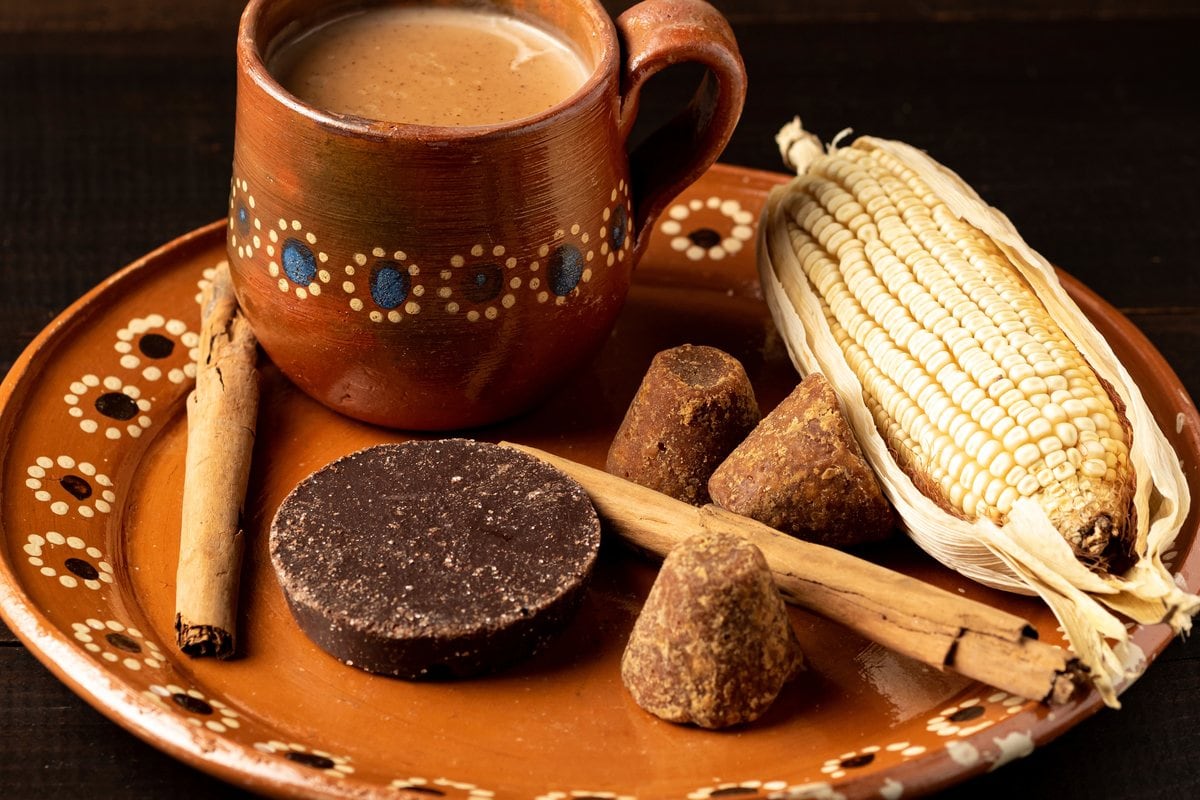
Champurrado is atole made with chocolate. Corn masa is cooked with water or milk, Mexican chocolate, piloncillo and cinnamon until it’s thick and smooth, then whisked to a froth. It’s warm and filling, which is why it goes with tamales from Día de Muertos through the posadas.
Use tablets of Ibarra or Abuelita chocolate, and masa harina such as Maseca if you don’t have fresh masa.
3. Atole
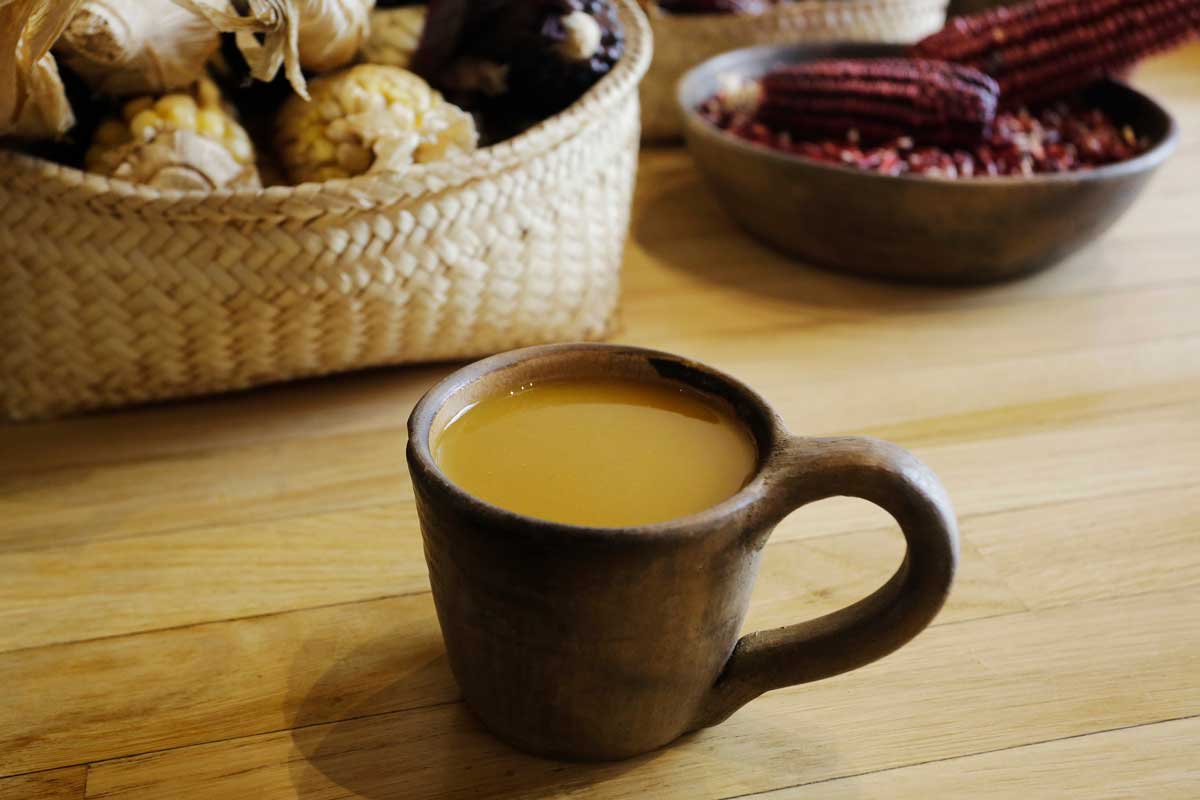
Atole is one of Mexico’s oldest drinks. It dates to before the Spanish arrived, and its name comes from the Náhuatl atolli. At its simplest it’s corn masa cooked in water until thick, then sweetened. At Christmas, people make it with milk, vanilla and cinnamon, or flavor it with fruit, nuts or fresh corn, as in atole de elote. There’s also atole de arroz, made with rice instead of corn.
A tamal with a cup of atole is the classic posada combination, and in many neighborhoods the same vendor sells both.
4. Chocolate Caliente
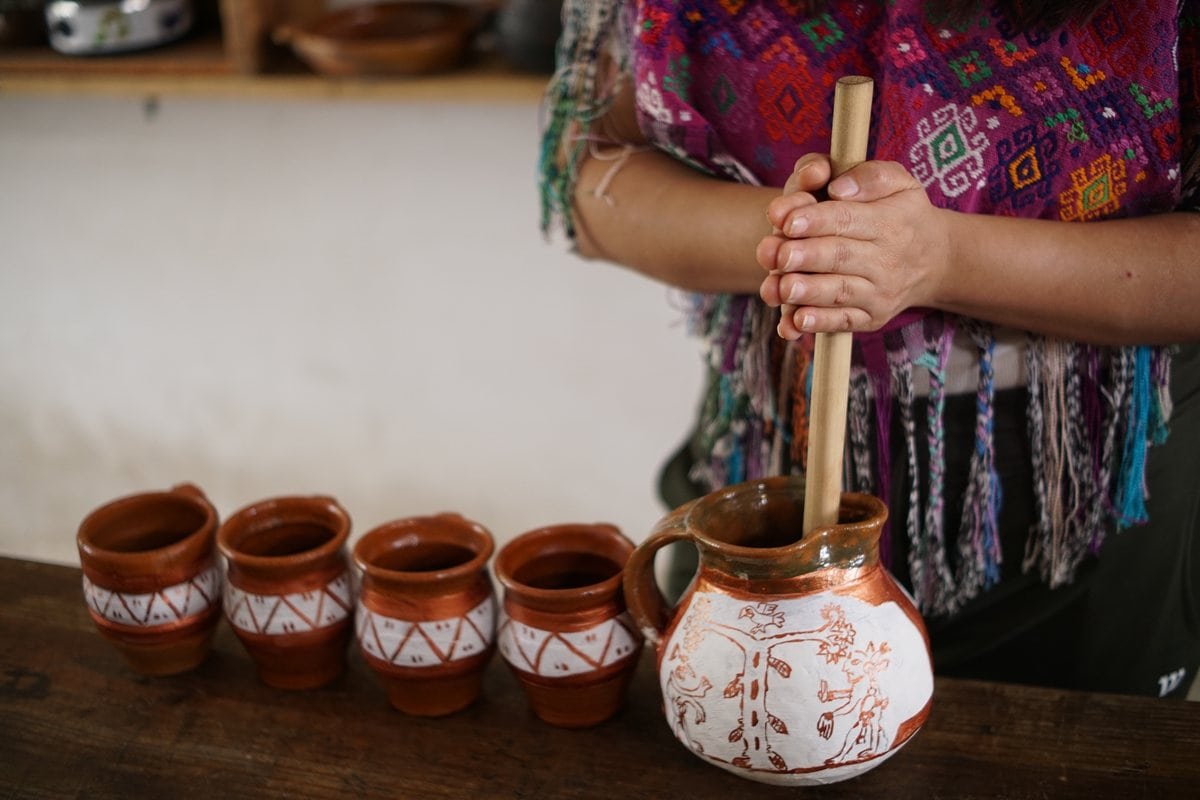
Mexican hot chocolate is made from tablets of chocolate with sugar and cinnamon, melted in hot milk or water. It’s whipped with a wooden molinillo, twirled between the palms, until there’s a layer of foam on top. At Christmas it comes with pan dulce or buñuelos, and on January 6 with the rosca de reyes.
A wooden molinillo gives you the foam; our guide to Mexican cooking utensils explains how to use it.
5. Café de Olla
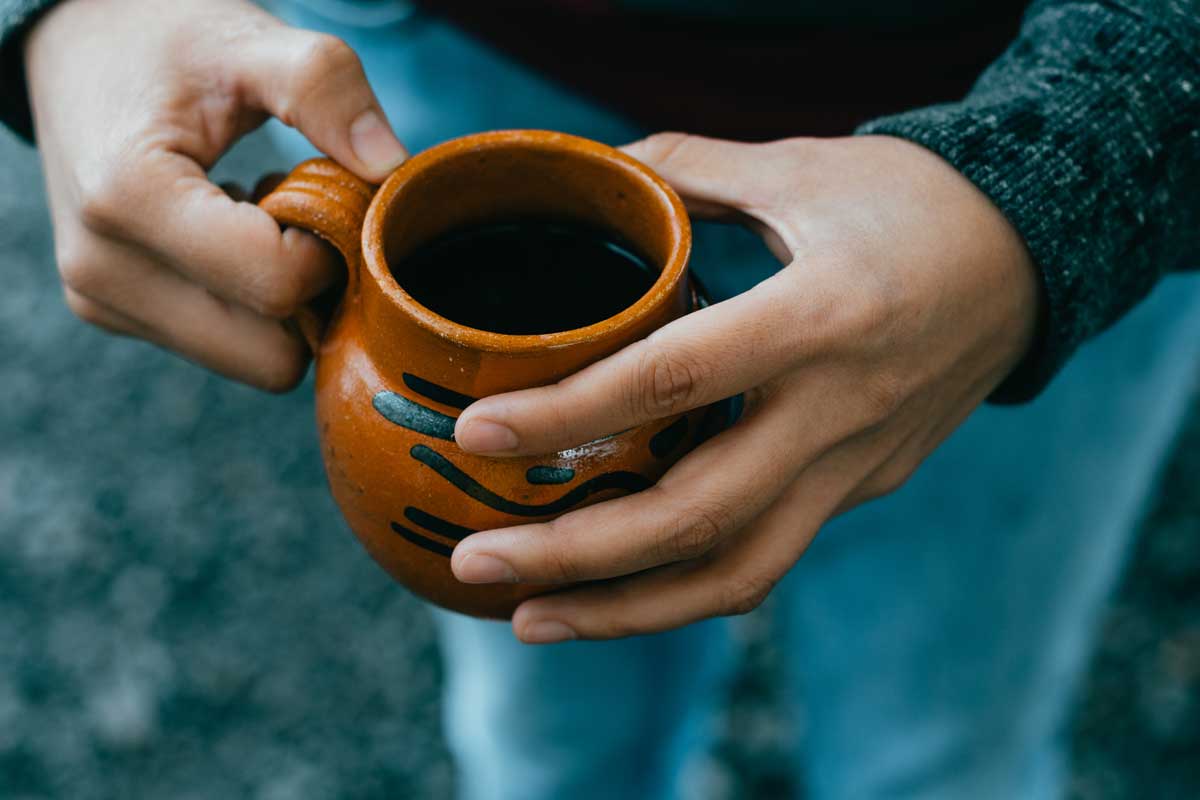
Café de olla is coffee brewed with piloncillo and cinnamon, traditionally in a clay pot, the olla de barro that gives it its name. Some cooks add cloves, star anise or orange peel. It’s served after Christmas dinner and on cold mornings.
Coffee reached Mexico in the late 18th century. A popular story links café de olla to the women who cooked for soldiers during the Mexican Revolution, but there’s no clear record of where it started.
6. Rompope

Rompope is Mexico’s eggnog: milk, sugar, egg yolks and vanilla, cooked gently and spiked with rum or brandy. Unlike the hot drinks, it’s served cold, in small glasses, for toasts and with dessert.
Tradition credits its invention to the Clarisas, the nuns of the Santa Clara convent in Puebla, in the 17th century. It’s a legend rather than documented history, but it’s a good one. A splash of Mexican vanilla makes a big difference.
Con Piquete: Adding a Splash
At adult gatherings, many hosts offer the hot drinks con piquete, “with a sting.” A shot of rum, tequila or brandy goes into the cup of ponche, and sometimes into café de olla. Rompope already has its alcohol. The pot itself stays alcohol-free so children can drink it too.
Which Drink Should You Make?
| [If you want… | Make | Why] |
|---|---|---|
| One drink for a crowd | Ponche navideño | Easy to make in quantity and to keep warm |
| Something filling with tamales | Champurrado or atole | Thick and warm |
| A classic with pan dulce | Chocolate caliente | Quick, using chocolate tablets |
| An after-dinner coffee | Café de olla | Spiced and sweet with no cream needed |
| A cold drink for toasts | Rompope | Can be made days ahead and chilled |
Mexican Christmas Drinks FAQ
What is the most popular Mexican Christmas drink?
Ponche navideño, the hot fruit punch with tejocotes, guava and cinnamon, served at posadas and on Nochebuena.
What is the difference between atole and champurrado?
Champurrado is a type of atole made with chocolate. Plain atole is corn masa cooked with water or milk and sweetened, with or without other flavors.
Is rompope the same as eggnog?
They’re close relatives. Both use milk, sugar and egg yolks, but rompope is cooked and flavored with vanilla and usually rum, and it’s served in small glasses.
What does “con piquete” mean?
It means a drink with a splash of alcohol, usually rum, tequila or brandy, added to a hot drink like ponche.
More Mexican Drinks and Holiday Food
For more ideas, see our guides to Mexican drinks and Latin holiday drinks, or browse the Mexican food hub. To see how the rest of the region celebrates, visit our Nochebuena and Latin Christmas food guide.
AmigoFoods may earn a commission from qualifying Amazon purchases made through links on this page.
More Mexican Foods
See all →
Jorge Garcia is the founder of AmigoFoods, where he has spent over 20 years helping readers discover authentic Latin American and Spanish cuisine. Raised in a Cuban-American household, Jorge learned to cook at the hands of his mother and grandmother, carrying forward generations of family recipes. That heritage, backed by his family’s four-generation history in the Latin food industry, inspired him to launch AmigoFoods in 2003. With more than 1,000 published articles on recipes, ingredients, and food culture, Jorge’s mission is simple: make authentic Latin cooking approachable for home cooks everywhere while honoring the traditions behind every dish.