
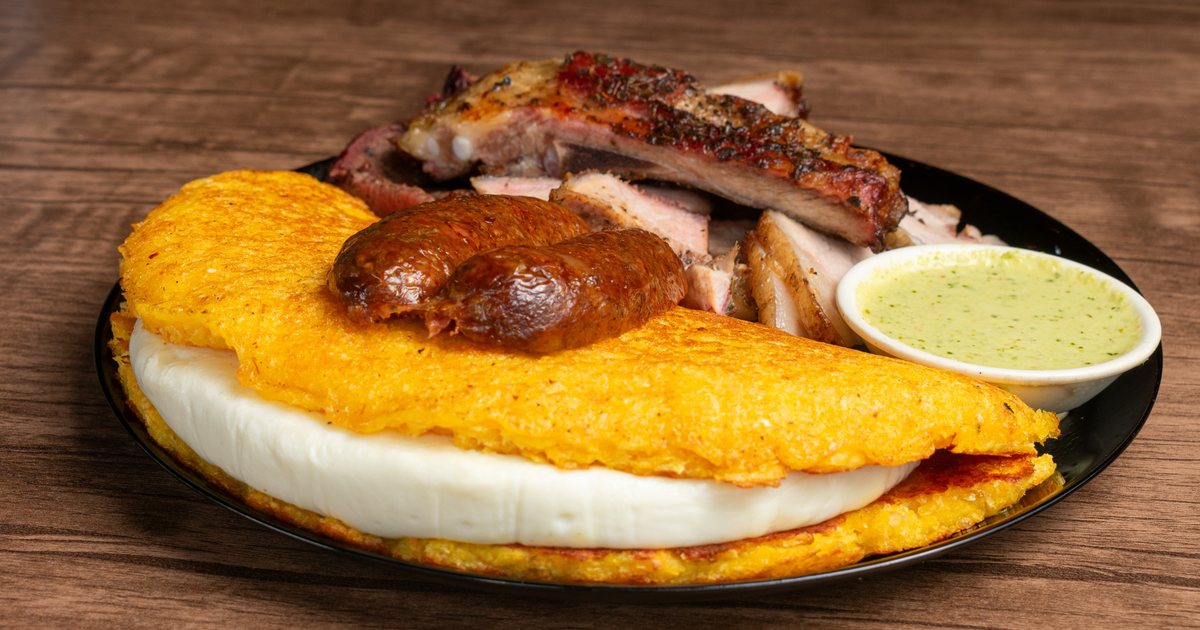
Queso de mano is Venezuela’s soft, layered, hand-stretched cheese, traditionally tucked into cachapas and arepas. The shortcut recipe below starts with fresh mozzarella curd and folds it into a mild, milky round in about half an hour.
Queso de Mano at a Glance
What Is Queso de Mano?
Queso de mano is a fresh Venezuelan cheese made by stretching warm curd by hand, the same basic technique Italians use for mozzarella. The name means “hand cheese,” because the curd is kneaded, pulled and folded by hand rather than pressed in a mold. That folding is what gives it its signature: when you tear a piece, it separates into soft, thin layers.
It is sold in thick, flat rounds, usually wrapped in plastic, and it is eaten fresh, not aged. In Venezuela you find it at every bakery counter and roadside cachapera, cut into thick slabs to order. It belongs to a family of soft white Venezuelan cheeses that includes queso guayanés and queso telita; all three are fresh, mild and made to be eaten within days.
How Queso de Mano Is Made
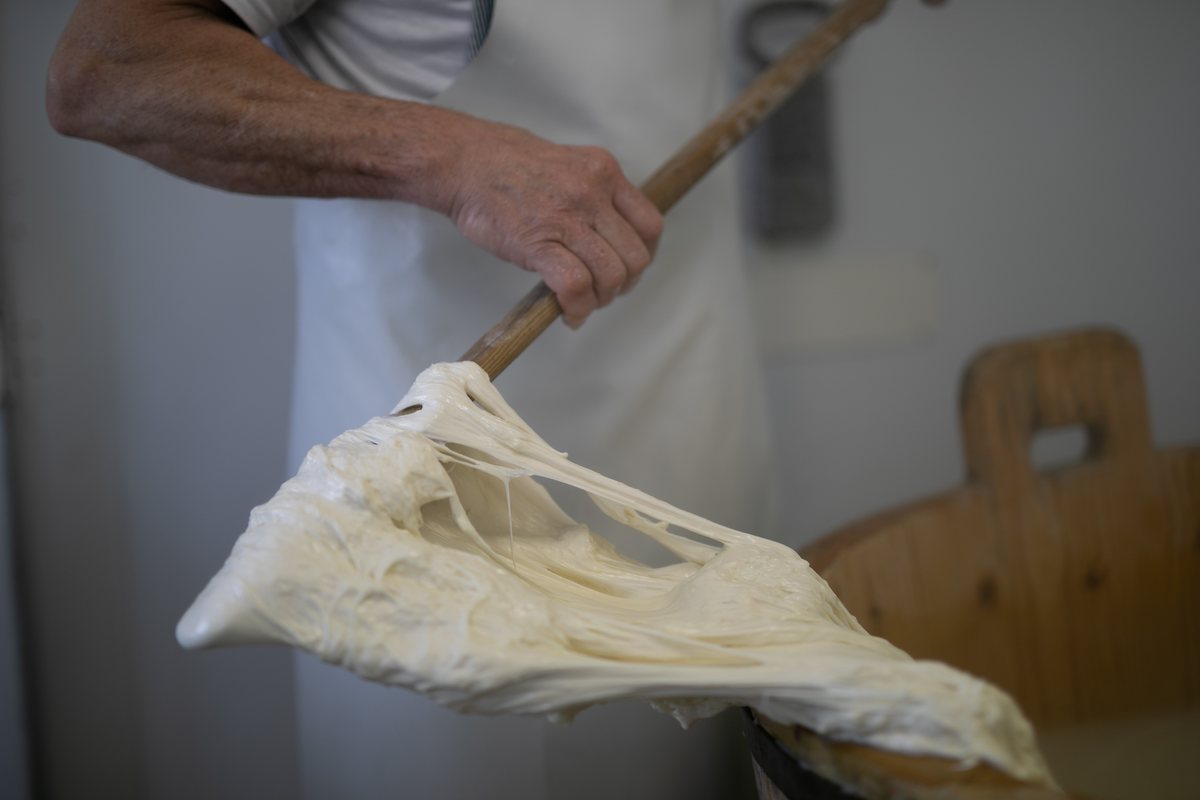
The method is simple, but it takes practice. Cheesemakers follow the same steps Venezuelan dairies have used for generations:
- Make the curd. Milk is warmed, lightly acidified and set with rennet. The firm curd that forms is called cuajada.
- Drain and rest. The whey is drained off and the curd is left to sour slightly. The right acidity is what lets it stretch later.
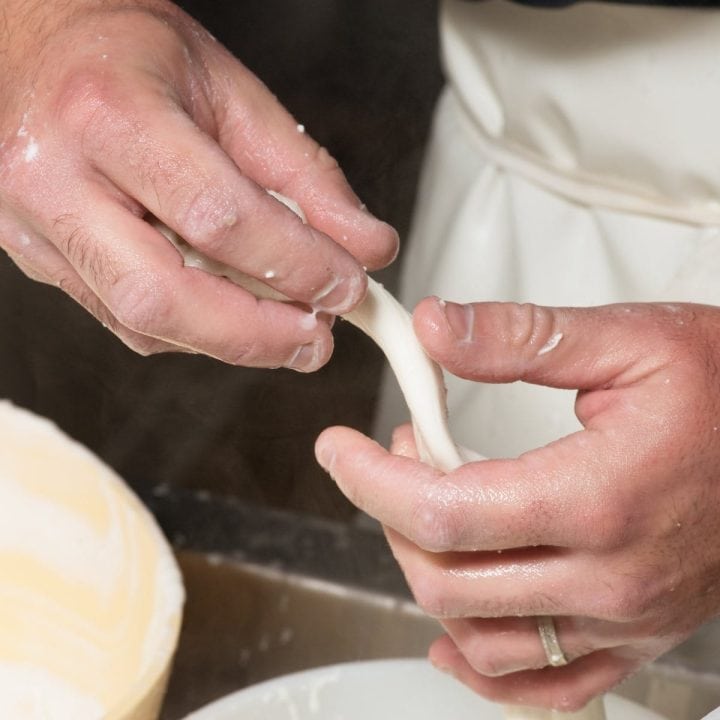
- Stretch in hot water. The curd is cut into pieces and worked in very hot water until it turns elastic and glossy, then pulled and kneaded by hand.
- Fold into layers. The cheesemaker stretches the curd into a long sheet and folds it over itself again and again, building up the layers.
- Shape and cool. The cheese is pressed into a flat round, cooled in cold water or brine to set its shape, and salted.
What Does Queso de Mano Taste Like?
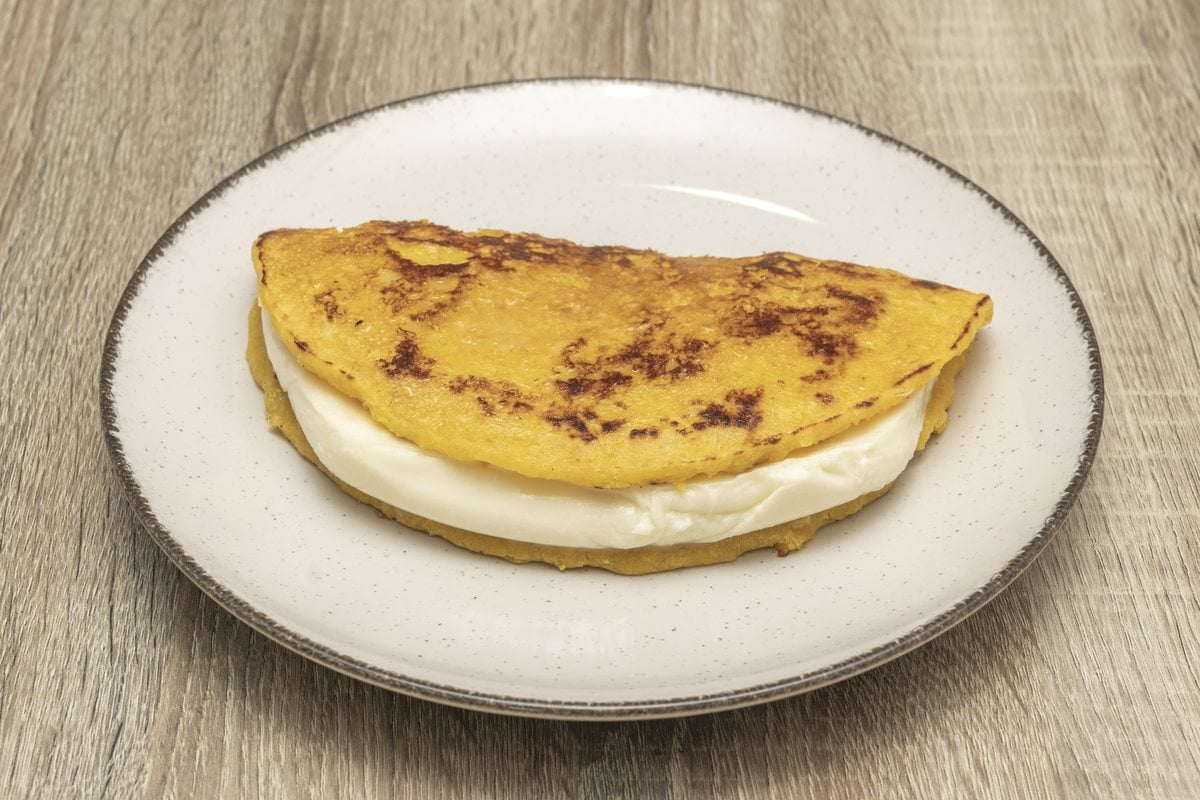
Queso de mano tastes clean and milky, with a gentle saltiness and a faint tang from the soured curd. It is moister and saltier than American mozzarella, and softer than queso fresco. On a hot cachapa or arepa it softens and turns glossy and stretchy, but it holds its shape instead of melting into a puddle, so you get a thick, tender layer of cheese in every bite.
Queso de Mano vs. Other Cheeses
Queso de mano is often compared to mozzarella, and outside Venezuela it gets confused with several other Latin American fresh cheeses. Here is how they differ:
| Cheese | From | Texture and flavor | Compared with queso de mano |
|---|---|---|---|
| Queso de mano | Venezuela | Soft, moist, layered; mild and lightly salty | The original |
| Queso guayanés | Venezuela (Guayana region) | Very soft, wet and creamy; milky and mild | Softer and more delicate; the closest Venezuelan alternative |
| Queso telita | Venezuela | Thin, stretchy sheets; mild | Same stretched style, made in thin layers |
| Fresh mozzarella | Italy | Soft, milky, elastic; less salty | The best widely available substitute |
| Oaxaca cheese (quesillo) | Mexico | Stretched and wound into a ball; mild, slightly tangy | Very similar; melts and strings more |
| Queso fresco | Mexico and Central America | Crumbly, moist, mildly salty | Not stretched, so it crumbles instead of layering |
| Queso llanero | Venezuela | Firm, dry and salty; grated | A different cheese entirely, used grated on arepas and beans |
For a broader look at these, see our guides to Latin cheeses, Oaxaca cheese and queso fresco.
How to Use Queso de Mano
Queso de mano is a fresh cheese for eating, not for cooking into sauces. Venezuelans use it in thick slices, usually against something hot so it softens:
- CachapasThe classic. A thick slab folded inside a hot cachapa, with butter on top.
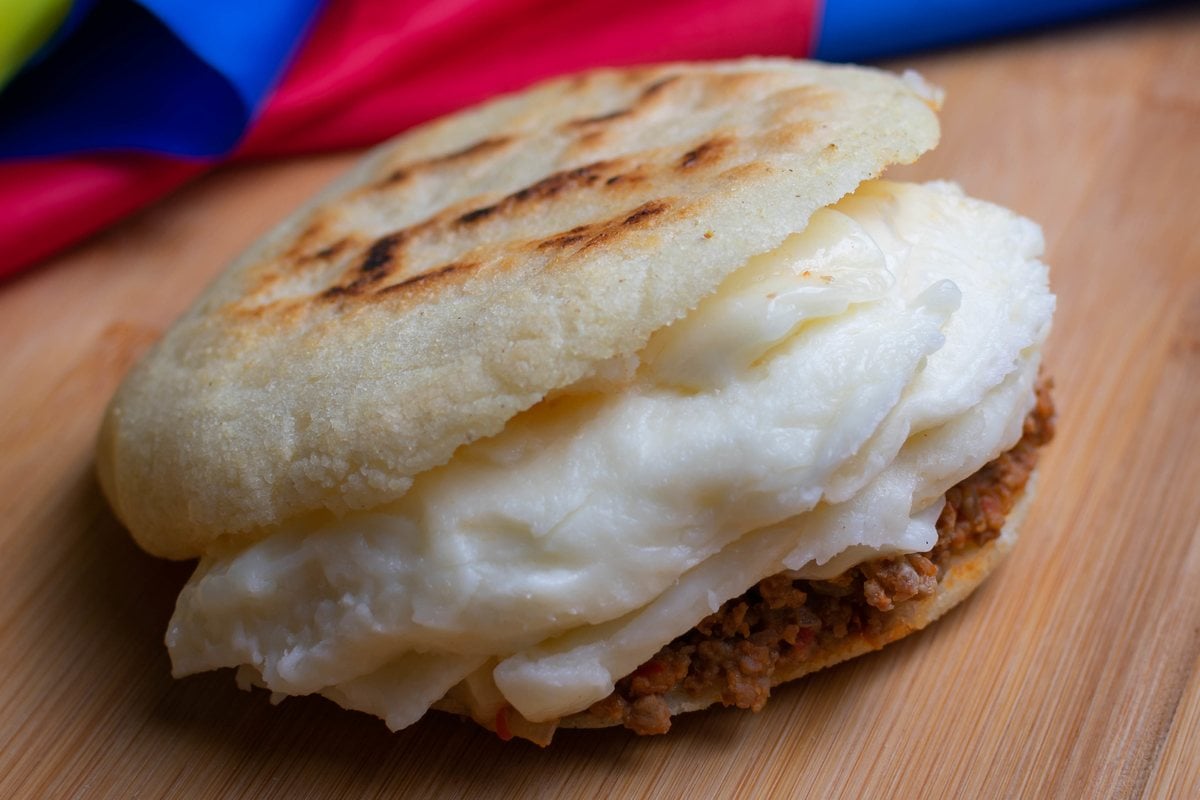
- ArepasSplit a hot arepa and slide in a slice, alone or with ham, avocado or carne mechada.
- GolfeadosSpiral sweet rolls glazed with papelón syrup are served with queso de mano for a sweet-salty contrast. See golfeados.
- Breakfast platesSliced next to eggs, black beans and arepas in a Venezuelan breakfast.
- With fruit or sweetsA slice with guava paste or a cup of strong coffee is a simple Venezuelan snack.
- Pabellón and platesA slice on the side of pabellón criollo or grilled meats.
Not for tequeños. Queso de mano is too soft and moist to fry; it leaks out of the dough. Tequeños use a firmer, drier white cheese that holds its shape in hot oil.
Where to Buy Queso de Mano in the US
Queso de mano is a fresh, refrigerated cheese, so you find it in the cheese or dairy case, not on the shelf. Look for it at:
- Latin and Venezuelan marketsThe most reliable source, especially in South Florida, Houston, New York, Orlando and Atlanta.
- Venezuelan bakeries and arepa shopsMany sell rounds of the same cheese they use in their cachapas.
- Large supermarketsSome carry US-made queso de mano in the Hispanic cheese section, often from brands like Paisa, El Latino, Los Andes or Venefood.
- OnlineSeveral brands ship refrigerated. You can also find queso de mano on Amazon, where availability depends on your area.
Choose a round that looks moist and bright white, with no yellowing or dry edges, and check that it’s made from pasteurized milk.
The Best Queso de Mano Substitutes
If you can’t find queso de mano, these work best, in order:
- Queso guayanés or telita. If your market has either, use it. They are Venezuelan and taste right.
- Fresh mozzarella. The packed-in-water kind, not the firm block. Slice it thick and add a pinch of salt.
- Oaxaca cheese. Pull it apart into strips. It melts more, so add it at the last minute.
- Queso blanco or queso fresco. Fine in a pinch for arepas; they soften but won’t stretch.
How to Make Queso de Mano at Home
Making queso de mano from milk takes a cheesemaker’s setup. The easier home method starts with fresh mozzarella curd, which is already set and soured; you just do the Venezuelan part: stretch it in hot salted water and fold it into layers. It takes about half an hour and makes a soft, layered round that tastes close to the cheese at a Venezuelan bakery.
- Cube and salt the curd. Cut the curd into small pieces in a heatproof bowl.
- Soften in hot water. Pour in salted water at 175 to 180°F (80°C) and let the curd soften for a minute or two.
- Stretch. Using two wooden spoons or heat-safe gloves, lift and pull the curd until smooth and glossy.
- Fold the layers. Stretch it into a long sheet, then fold it over itself several times into a thick round.
- Set it. Drop the round into ice water for 5 minutes so it holds its shape.
Find mozzarella curd at cheesemaking suppliers and some Italian delis and restaurant supply stores. Whole-milk low-moisture mozzarella, cut into cubes, also works, though the result is a little firmer. The recipe card below has exact amounts.
Homemade Queso de Mano (Venezuelan Hand Cheese)
A soft, layered Venezuelan hand cheese made at home by stretching fresh mozzarella curd in hot salted water and folding it into a thick round. Mild, milky and lightly salty, made for cachapas and arepas.
Ingredients
- 1 pound fresh mozzarella curd (unsalted)
- 2 quarts water
- 2 tablespoons plus 1 teaspoon kosher salt, divided
- Ice water, for setting
Instructions
- Prepare the curd. Cut the mozzarella curd into ½-inch cubes and put them in a large heatproof bowl. Sprinkle with 1 teaspoon of the salt and toss.
- Heat the water. Heat the water with the remaining 2 tablespoons salt to 175 to 180°F (80°C), just below a simmer. Fill a second bowl with ice water.
- Soften the curd. Pour enough hot water over the curd to cover it. Let it sit 1 to 2 minutes, until the cubes soften and start to fuse.
- Stretch. Using two wooden spoons or heat-safe gloves, gather the curd into a mass, lift it and let it stretch, then fold it back. Repeat for 2 to 3 minutes, until smooth and glossy. If it stiffens, dip it back into the hot water for 20 to 30 seconds.
- Fold into layers. Stretch the cheese into a long, flat sheet about the width of your hand. Fold it over itself 5 or 6 times, pressing gently, to build up layers. Shape into a round about 5 inches wide and 1 inch thick.
- Set and chill. Lower the round into the ice water for 5 minutes to firm up. Pat dry, wrap tightly and refrigerate. Slice thick to serve.
Notes
Curd: Fresh mozzarella curd is sold by cheesemaking suppliers and some Italian delis and restaurant supply stores. Whole-milk low-moisture mozzarella, cut into cubes, also works but gives a slightly firmer cheese.
Hot water: Use a thermometer. Below 165°F the curd won't stretch; well above 185°F it turns rubbery and loses fat.
Salt: Queso de mano is lightly salty. Taste a scrap after stretching and add a pinch of fine salt between the layers if you like it saltier.
Storage: Keep wrapped in the fridge and eat within 3 to 4 days. Don't freeze it.
How to Store Queso de Mano
- FridgeKeep it wrapped tightly in plastic or in an airtight container. Eat it within about a week of opening, or within 3 to 4 days if homemade.
- FreezerNot recommended. Freezing makes fresh cheese watery and crumbly, and the layers fall apart.
- ServingTake it out of the fridge 15 minutes before serving so it softens and tastes milkier.
- Signs it’s past its bestA sour smell, a slimy surface, yellowing or a dry, rubbery edge.
Queso de Mano FAQ
What is queso de mano?
Queso de mano is a soft, fresh white cheese from Venezuela made by stretching warm curd by hand and folding it into layers. It is mild, milky and lightly salty, and it is best known as the cheese folded inside cachapas.
Why is it called queso de mano?
“Queso de mano” means “hand cheese.” The curd is kneaded, stretched and folded by hand instead of being pressed in a mold, which is also what gives it its soft layers.
What is queso de mano called in English?
It is usually just called queso de mano, or “Venezuelan hand cheese.” The closest cheese most Americans know is fresh mozzarella.
What is queso de mano called in Mexico?
Mexico doesn’t make queso de mano, but its closest relative is Oaxaca cheese, also called quesillo, which is made with the same stretched-curd method.
Is queso de mano the same as mozzarella?
No, but they are close cousins. Both are stretched-curd cheeses. Queso de mano is saltier, moister and built in layers, while fresh mozzarella is milder and smoother.
Does queso de mano melt?
It softens and turns stretchy against hot food, but it doesn’t run like cheddar or American cheese. That’s why it works so well folded inside a cachapa.
What is the difference between queso de mano and queso guayanés?
Both are fresh Venezuelan cheeses. Queso guayanés, from the Guayana region, is softer, wetter and creamier. Queso de mano is a little firmer and stretched into layers.
How long does queso de mano last?
Store-bought queso de mano keeps about a week in the fridge once opened, if wrapped tightly. Homemade queso de mano is best within 3 to 4 days.
More Venezuelan Recipes and Ingredients
- Cachapas, the sweet corn pancakes made for queso de mano
- Arepas, Venezuela’s everyday corn bread
- Golfeados, sticky papelón sweet rolls served with cheese
- Quesillo, Venezuela’s caramel flan
- Venezuelan ingredients, the pantry behind these recipes
- Traditional Venezuelan food and all Venezuelan recipes
More Venezuelan Foods
See all →
Jorge Garcia is the founder of AmigoFoods, where he has spent over 20 years helping readers discover authentic Latin American and Spanish cuisine. Raised in a Cuban-American household, Jorge learned to cook at the hands of his mother and grandmother, carrying forward generations of family recipes. That heritage, backed by his family’s four-generation history in the Latin food industry, inspired him to launch AmigoFoods in 2003. With more than 1,000 published articles on recipes, ingredients, and food culture, Jorge’s mission is simple: make authentic Latin cooking approachable for home cooks everywhere while honoring the traditions behind every dish.