

On this page
Salvadoran soups are big, bone-in broths loaded with chunks of yuca, corn on the cob, güisquil and cabbage, served with rice, warm tortillas and lime. The best known are sopa de res (beef), sopa de gallina india (free-range hen), sopa de pata (cow’s feet), sopa de frijoles (red bean) and mariscada (seafood). Below are 15 soups and stews from El Salvador, plus a full recipe for the most popular one, sopa de res.
Sopa de Res Salvadoreña at a Glance
AmigoFoods may earn a commission from qualifying Amazon purchases made through links on this page.
All 15 Salvadoran Soups and Stews, Side by Side
| Soup | What’s in it | When it’s eaten |
|---|---|---|
| Sopa de res | Beef on the bone, yuca, corn, güisquil, cabbage | Any day; the everyday favorite |
| Sopa de gallina india | Free-range hen, vegetables, herbs; the hen browned on the side | Sundays, birthdays, when someone is sick |
| Sopa de pollo | Chicken, potatoes, carrots, güisquil, tomato | Weeknights |
| Sopa de pata | Cow’s feet, tripe, yuca, plantain, corn | Weekends, especially the morning after a party |
| Sopa de mondongo | Beef tripe, vegetables, achiote | Weekends |
| Sopa de frijoles | Red silk beans, pork ribs, sometimes an egg poached in the broth | Lunch, and the new-bean season in late summer |
| Mariscada | Crab, shrimp, fish and clams, often finished with cream | Beach weekends and celebrations |
| Sopa de pescado | Whole fish or fillets, tomato, green pepper, achiote | Lent and Good Friday |
| Sopa de mora | Hierba mora greens, squash, cream or egg | Rainy-season home cooking |
| Sopa de chipilín | Chipilín leaves, chicken broth, little masa dumplings | Rainy season, when the leaves are fresh |
| Sopa de albóndigas | Beef meatballs in a vegetable broth | Family lunches |
| Sopa de verduras | Seasonal vegetables in chicken or vegetable broth | Light meals, Lent |
| Gallo en chicha | Rooster or chicken braised in fermented corn chicha | Christmas and fiestas |
| Carne guisada | Beef stewed in a tomato and pepper sauce with potatoes | Everyday lunch with rice |
| Pollo guisado | Chicken stewed with tomato, potatoes and carrots | Everyday lunch with rice |
What Makes a Soup Salvadoran?
In El Salvador, soup is a full meal, not a starter. A pot of sopa is the reason the family gets together on a Sunday, and the street stalls that sell it on weekend mornings often have a line.
Most Salvadoran soups share the same habits:
- Meat on the bone. Beef shank, short ribs, a whole hen or cow’s feet go in first and simmer for hours to build the broth.
- Vegetables cut big. Yuca, corn on the cob, güisquil (chayote), carrots and wedges of cabbage are added in rounds so each one keeps its shape.
- Fresh herbs. Cilantro, hierbabuena (mint) and sometimes alcapate (culantro) are thrown in near the end.
- The sides do the rest. White rice, corn tortillas, lime wedges and a hot chile salsa come to the table with every bowl.
For the rest of the country’s cooking, see our guide to Salvadoran food.
1. Sopa de Res (Salvadoran Beef Soup)
Sopa de res is the soup most Salvadorans grow up on. Bone-in beef simmers with garlic, onion, tomato and green pepper until it falls off the bone, then the vegetables go in by how long they take: yuca and corn first, carrots and güisquil next, cabbage, green beans and squash last.
What sets the Salvadoran version apart from a Mexican caldo de res is the yuca and güisquil, and the handful of fresh mint added at the end with the cilantro. Each bowl gets a piece of meat and one of every vegetable, with rice and tortillas on the side.
Make it at home: jump to our sopa de res recipe
2. Sopa de Gallina India (Free-Range Hen Soup)

A gallina india is a free-range country hen, raised loose in the yard. It is older and tougher than a supermarket chicken, so it takes longer to cook, but it gives the broth a deep, golden flavor that Salvadorans say no other bird can match. Food guide Taste Atlas ranked it among the world’s best chicken soups.
The hen is simmered whole with vegetables and herbs. Many families then brown the cooked pieces in a pan or on the grill and serve them on a plate beside the soup, with rice, tortillas and a fresh tomato salsa.
3. Sopa de Pollo (Salvadoran Chicken Soup)
Sopa de pollo is the quicker, everyday cousin of gallina india. It uses an ordinary chicken, so it is ready in about an hour, and the broth is tinted with tomato and green pepper. Potatoes, carrots and güisquil are the usual vegetables; some cooks add a handful of rice or fideo noodles to make it heartier.
It is the soup Salvadoran parents make when someone has a cold, served with lime and a little salt on the side.
4. Sopa de Pata (Cow’s Foot Soup)

Sopa de pata is made with cow’s feet and tripe, cooked until the tendons turn soft and sticky. The broth is rich and gelatinous, so it gets plenty of lime, chopped onion and chile to cut through it. Yuca, ripe or green plantain, corn, güisquil, green beans and cabbage fill out the bowl.
It is a weekend tradition and El Salvador’s favorite hangover cure. Market stalls such as those in San Salvador’s Mercado Tinetti have sold it for decades, and many cooks start the feet a day ahead because they need hours to soften.
5. Sopa de Mondongo (Tripe Soup)

Mondongo is close to sopa de pata, but tripe is the star instead of the feet. Salvadoran cooks color the broth with achiote, which turns it a warm orange-red, and add the same big vegetables as the other soups.
Tripe soup is made all over Latin America, and each country has its own version. Our guide to mondongo explains how to clean tripe and compares the styles.
6. Sopa de Frijoles (Red Bean Soup)
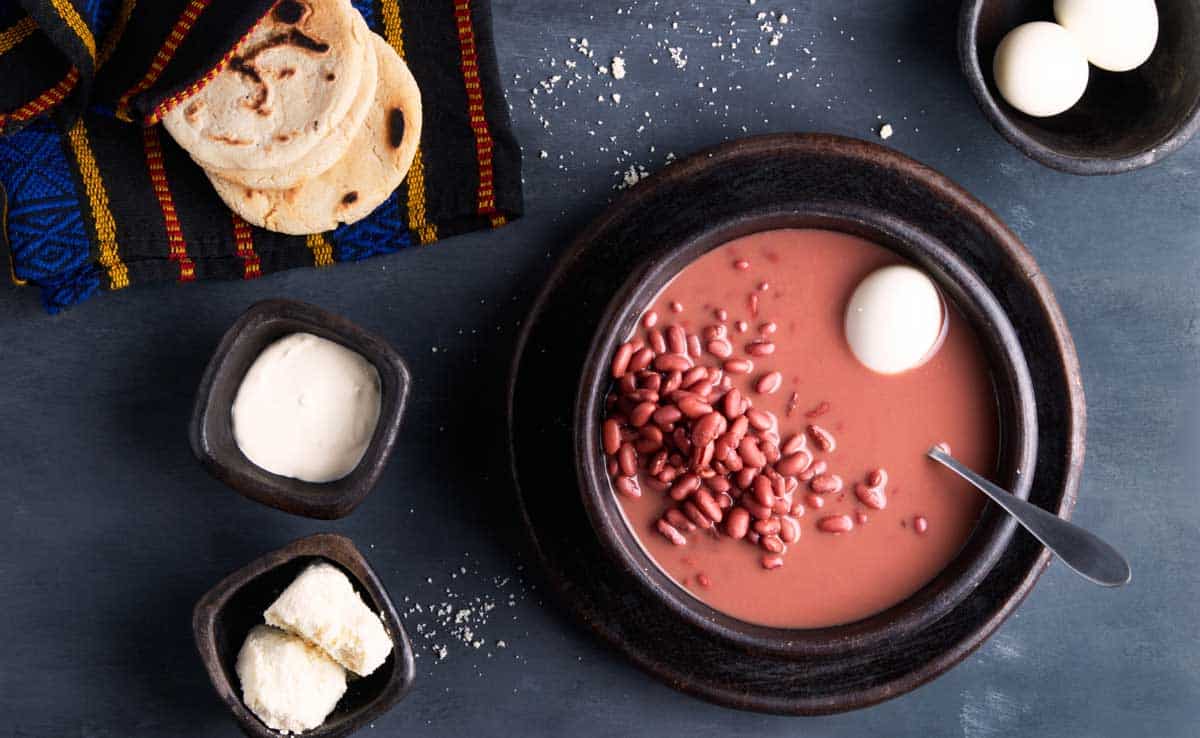
Sopa de frijoles is made with frijol rojo de seda, the small red silk bean El Salvador uses for everything from refried beans to pupusa fillings. The beans simmer with pork ribs or a beef bone until the broth turns thick and brown.
Many families crack an egg or two into the hot soup at the end so they poach in the broth, and some add chunks of ripe plantain. When the new crop of beans arrives in late summer, the soup is made with frijoles nuevos, which cook faster and taste sweeter. In the US, small red beans are the closest match to frijol de seda.
7. Mariscada (Seafood Soup)

Mariscada is El Salvador’s grand seafood soup. Whole crabs, shrimp, fish and clams cook in a broth of tomato, onion, garlic and green pepper. The most loved version is mariscada con crema, finished with Salvadoran cream so the broth turns pale and silky; others keep it clear.
It is the dish families order at the beach, and the eastern port of La Unión holds a mariscada festival every November. A simpler tomato-based sopa de mariscos, without cream, is made at home.
8. Sopa de Pescado (Fish Soup)

Sopa de pescado is the soup of Semana Santa, when many Salvadoran Catholics skip meat. A whole fish or thick fillets simmer in a broth reddened with achiote and seasoned with tomato, green pepper and cumin. Some cooks stir in a little masa or corn flour to give it body.
It is served with rice, lime and tortillas. In the east of the country, river-fish versions such as sopa de bagre (catfish soup) are just as popular.
9. Sopa de Mora (Hierba Mora Soup)
Hierba mora is a dark leafy green, related to nightshade, that grows wild in Salvadoran yards and milpas during the rainy season. Cooked in a light chicken broth with squash or potato, it tastes something like spinach with a slightly bitter edge.
The soup is finished with a spoonful of cream, crumbled cheese or an egg beaten into the hot broth. It is simple, cheap and very much a home dish, the kind of soup you rarely see on a restaurant menu.
10. Sopa de Chipilín (Chipilín Soup with Masa Dumplings)
Chipilín is a small-leafed legume with a grassy, almost pea-like flavor. Salvadorans fold it into pupusas and tamales, and they also make it into soup: a chicken broth full of chipilín leaves, often with corn kernels and little dumplings of masa called bolitas.
Some cooks work fresh cheese into the dumplings, and a swirl of cream goes on top. In the US, chipilín is sold frozen in Central American markets.
11. Sopa de Albóndigas (Meatball Soup)
Salvadoran albóndigas are beef meatballs seasoned with onion, garlic and herbs, bound with egg and a little masa or breadcrumbs. They poach in a tomato-tinted broth with potatoes, carrots and güisquil.
Children love it, and it stretches a pound of ground beef to feed a whole table.
12. Sopa de Verduras (Vegetable Soup)

Sopa de verduras uses the same vegetables as sopa de res (güisquil, carrots, potatoes, squash, green beans and corn) in a lighter chicken or vegetable broth. It is what cooks make when they want soup without a big piece of meat, and it is common during Lent.
The stews
13. Gallo en Chicha (Rooster in Corn Chicha)

Gallo en chicha is El Salvador’s festive stew. A rooster or chicken is braised in chicha, a mildly fermented corn drink, with tomato, onion and spices. Prunes, raisins, capers and olives make the sauce sweet, sour and salty at once.
It is made for Christmas, weddings and town fiestas. See our gallo en chicha recipe for the full method.
14. Carne Guisada (Salvadoran Beef Stew)
Carne guisada is beef stewed slowly in a sauce of tomato, onion, green pepper and garlic until it is tender, with potatoes and carrots cooked in the same pot. It is thicker than a soup and is spooned over white rice, with tortillas to mop up the sauce.
Several Latin American countries make their own carne guisada; our carne guisada guide covers the versions and how to make it.
15. Pollo Guisado (Salvadoran Chicken Stew)
Pollo guisado is the chicken version: pieces browned, then simmered in a tomato and pepper sauce with potatoes and carrots. Some cooks add a few olives or a pinch of achiote for color. Like carne guisada, it is served with rice, beans and tortillas.
How to Make Sopa de Res Salvadoreña
The full recipe with measurements is in the recipe card below. Here is how it comes together.
1. Simmer the beef and skim
Cover 3 pounds of bone-in beef shank or short ribs with about 14 cups of water and bring it to a boil. Skim off the gray foam for the first 10 minutes so the broth stays clear.
2. Add the aromatics and cook low for 2 hours
Add a halved head of garlic, an onion, tomatoes, a green bell pepper, celery, bay leaves and salt. Lower the heat and simmer, partly covered, until the meat is tender and pulls away from the bone, about 2 hours.
3. Add the vegetables in three rounds
Fish out the aromatics. Add yuca and corn first and cook 15 minutes. Add carrots, güisquil and potatoes and cook 10 to 15 minutes more. Finish with green beans, squash and cabbage wedges for the last 10 minutes.
4. Finish with herbs and taste
Stir in a handful of cilantro and a few sprigs of fresh mint for the last 5 minutes. Taste the broth and add salt until it is well seasoned; the vegetables soak up a lot of it.
How Salvadorans Serve Soup
A Salvadoran bowl of soup is built, not just ladled. Each person gets a piece of meat and one of every vegetable, then the hot broth goes over the top. On the side:
- White rice, on its own plate or spooned straight into the soup.
- Corn tortillas, warm, for tearing and dipping.
- Lime wedges to squeeze into the broth.
- Chile, either a hot salsa or chopped fresh chile with onion and cilantro.
Leftovers are better the next day, when the broth has picked up more flavor from the vegetables.
Where to Buy Salvadoran Soup Ingredients in the US
Most of what you need is in any Latin grocery, and many supermarkets now carry it too:
- Güisquil is sold as chayote, a pale green, pear-shaped squash.
- Pipián, the small Salvadoran summer squash, can be replaced with Mexican gray squash or zucchini.
- Yuca is sold fresh or frozen; frozen comes already peeled.
- Alcapate is sold as culantro or recao.
- Hierba mora and chipilín are sold frozen at Salvadoran and Guatemalan markets.
- Achiote for mondongo and fish soup comes as seeds, ground powder or paste. Central American cooks reach for paste such as De Mi País achiote paste; for color only, Badia ground annatto is easy to find.
- Beef bouillon: many Salvadoran cooks add a spoonful of consomé to the broth for extra depth. Knorr granulated bouillon (the three-pack includes beef) works well.
A full batch needs a stockpot that holds at least 8 quarts; a 6-quart pot such as the Lodge enameled Dutch oven handles a half batch. Our guide to Salvadoran ingredients covers loroco, crema, queso duro and the rest of the pantry.
Salvadoran Soups FAQ
What is the most popular soup in El Salvador?
Sopa de res, the beef and vegetable soup, is the one most families make every week. Sopa de gallina india is the most prized, and sopa de pata is the favorite at weekend markets.
What is sopa de gallina india?
It is a soup made with a free-range country hen (gallina india), simmered with vegetables and herbs. The cooked hen is often browned and served on the side with rice and tortillas.
What is the difference between sopa de pata and sopa de mondongo?
Sopa de pata is built on cow’s feet, with some tripe. Sopa de mondongo is built on tripe and is usually colored red with achiote. The vegetables are much the same.
What cut of beef is best for Salvadoran sopa de res?
Bone-in beef shank or short ribs. The bones and connective tissue give the broth its body. Boneless stew meat makes a thinner soup.
What do Salvadorans eat with soup?
White rice, corn tortillas, lime wedges and a chile salsa. Some add chopped onion and cilantro on top.
Is Salvadoran soup spicy?
No. The soups themselves are mild. Heat comes from the chile or hot sauce each person adds at the table.
Sopa de Res Salvadoreña Recipe
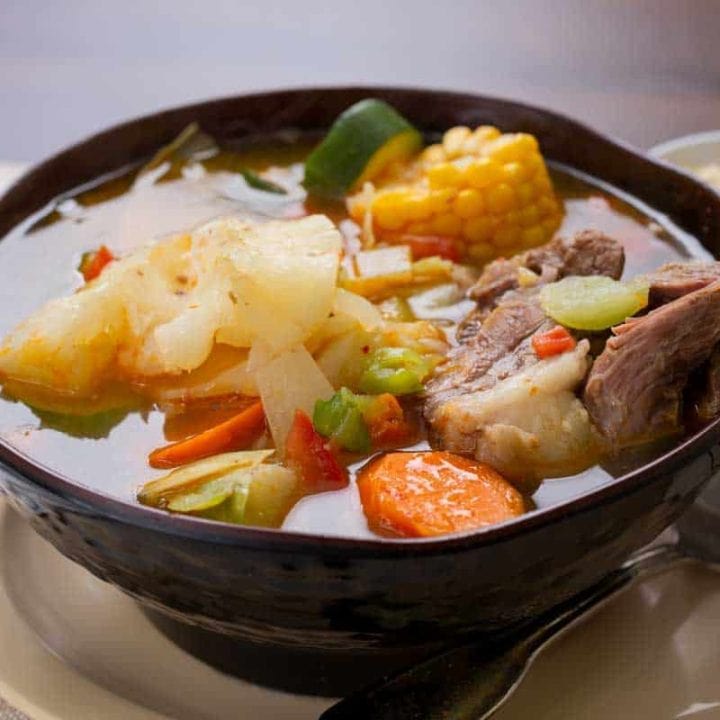
Sopa de Res Salvadoreña (Salvadoran Beef Soup)
A big Salvadoran beef and vegetable soup: bone-in beef simmered until tender, then yuca, corn on the cob, güisquil, carrots, cabbage and fresh mint, served with rice, tortillas and lime.
Ingredients
- 3 pounds bone-in beef shank or short ribs (or a mix)
- 14 cups water
- 1 head garlic, halved crosswise
- 1 white onion, quartered
- 2 Roma tomatoes, halved
- 1 green bell pepper, quartered
- 2 celery stalks, cut into large pieces
- 2 bay leaves
- 1 tablespoon kosher salt, plus more to taste
- 1 tablespoon beef bouillon powder (optional)
- 1 pound yuca, fresh or frozen, cut into 2-inch chunks
- 3 ears corn, each cut into 3 pieces
- 3 carrots, cut into 2-inch pieces
- 2 güisquiles (chayote), peeled and quartered
- 2 medium potatoes, quartered (optional)
- 1 cup green beans, trimmed
- 2 small Mexican gray squash or zucchini, cut into 2-inch pieces
- 1/4 head green cabbage, cut into 4 wedges
- 1 small bunch cilantro
- 4 to 5 sprigs fresh mint (hierbabuena)
- Cooked white rice, warm corn tortillas, lime wedges and chopped onion and chile, for serving
Instructions
- Put the beef in a large stockpot (at least 8 quarts), cover with the water and bring to a boil over high heat. For the first 10 minutes, skim off the gray foam that rises so the broth stays clear.
- Add the garlic, onion, tomatoes, bell pepper, celery, bay leaves, salt and bouillon (if using). Lower the heat, partly cover and simmer gently until the meat is tender and pulls away from the bone, about 2 hours. Add hot water if the level drops below the meat.
- Lift out and discard the onion, tomato skins, pepper, celery, garlic and bay leaves (a slotted spoon makes this easy).
- Add the yuca and corn and simmer for 15 minutes.
- Add the carrots, güisquil and potatoes and simmer 10 to 15 minutes more, until the yuca is nearly tender.
- Add the green beans, squash and cabbage wedges and simmer about 10 minutes, until every vegetable is tender but still holds its shape.
- Stir in the cilantro and mint for the last 5 minutes. Taste the broth and add salt until it is well seasoned.
- To serve, put a piece of beef and one of each vegetable in each deep bowl and ladle the hot broth over the top. Serve with white rice, warm corn tortillas, lime wedges and chopped onion and chile on the side.
Notes
Beef: bone-in shank, short ribs or a mix gives the best broth. Boneless stew meat works but the soup will be thinner.
Yuca: frozen yuca is already peeled and works well. If using fresh, cut it into large chunks and pull out the woody core.
Substitutes: güisquil is sold as chayote. Use zucchini for the squash and add potatoes if you cannot find yuca.
Storage: keep leftovers covered in the fridge for up to 4 days. The broth and meat freeze well for 3 months; the cabbage and yuca soften after freezing.
More Salvadoran Food
Serve your soup with a stack of pupusas and curtido on the side, try salpicón salvadoreño for a cold beef dish, or plan a holiday menu with our Salvadoran Christmas foods. For something sweet afterwards, see our Salvadoran desserts. Soups from the rest of the region are on our Latin soups and stews page.
Sources
- Wikipedia: Sopa de pata and Salvadoran cuisine
- El Diario de Hoy: Sopa de gallina india among the world’s best, per Taste Atlas
- Saveur: Sopa de Gallina (Salvadoran Chicken Soup), from The SalviSoul Cookbook
More Salvadoran Foods
See all →
Jorge Garcia is the founder of AmigoFoods, where he has spent over 20 years helping readers discover authentic Latin American and Spanish cuisine. Raised in a Cuban-American household, Jorge learned to cook at the hands of his mother and grandmother, carrying forward generations of family recipes. That heritage, backed by his family’s four-generation history in the Latin food industry, inspired him to launch AmigoFoods in 2003. With more than 1,000 published articles on recipes, ingredients, and food culture, Jorge’s mission is simple: make authentic Latin cooking approachable for home cooks everywhere while honoring the traditions behind every dish.