

Bollos pelones are Venezuelan corn dumplings: balls of soft Harina P.A.N. dough stuffed with a savory ground-beef guiso, simmered in water until they float, then served in a bright tomato sauce under a snowfall of grated white cheese. One is a bollo pelón; at the table you will almost always see a plateful.
Bollos Pelones at a Glance
AmigoFoods may earn a commission from qualifying Amazon purchases made through links on this page.
What are bollos pelones?
Bollos pelones (also called bollitos pelones) are small boiled dumplings of corn dough with a meat filling, a classic of Venezuelan home cooking. The dough is the same precooked white corn flour used for arepas, usually mixed with broth instead of water so it tastes of something before the filling even arrives.
Inside is a guiso, a slow-cooked sofrito of onion, sweet peppers and garlic with ground beef, a splash of wine, and the briny, sweet notes Venezuelans love in their stews: olives, capers and sometimes raisins. The filled balls are cooked in simmering water, then spooned into tomato sauce and covered with grated hard white cheese.
They are hearty enough for lunch or dinner and turn up at family gatherings and weekend breakfasts. They are usually counted among the classics of Venezuela’s colonial-era criollo cooking, alongside hallacas. You will find them, with 31 other classics, in our guide to Venezuelan food.
Why are they called “pelones”?
Pelón means bald or bare. The usual explanation is that most stuffed corn-dough dishes in Venezuela are wrapped before cooking: hallacas and bollos navideños go into plantain leaves, and many other bollos into corn husks. Bollos pelones are cooked naked, with nothing around the dough, so they come out “bald.”
The name also helps tell them apart from plain bollitos, the unfilled boiled corn dumplings eaten on the side, the way you might eat bread.
Bollos pelones vs. bollitos, hallacas and arepas
All four start with corn dough, which is why the names get mixed up. Here is how they differ.
| Dish | Filling | Wrapped? | How it is cooked | When it is eaten |
|---|---|---|---|---|
| Bollos pelones | Ground-beef or chicken guiso | No | Boiled, then sauced | Any time, often lunch |
| Bollitos | None | No | Boiled | As a side, like bread |
| Hallacas | Stewed beef, pork and chicken with olives and raisins | Plantain leaves | Boiled in the leaves | Christmas |
| Arepas | Split and stuffed after cooking | No | Griddled or baked | Every day, every meal |
If you already make arepas, you have the hard part down: the dough for bollos pelones is mixed the same way, just a little softer.
Ingredients for bollos pelones
The recipe card below has exact amounts. These are the ingredients that matter most.
- Harina P.A.N. (precooked white corn flour): the backbone of the dough. It is corn that has been cooked, dried and milled, so it turns into a smooth dough with nothing but liquid and salt. Mexican masa harina and regular cornmeal will not work the same way; our Harina P.A.N. vs Maseca guide explains why.
- Warm chicken or beef broth: used instead of water for a more savory dough.
- Onoto (annatto) oil: optional, but traditional in many homes. A spoonful tints the dough a warm yellow-orange, like the dough for hallacas.
- Ground beef: 85% lean gives a juicy filling that still holds together. Ground chicken or shredded chicken also work.
- Ají dulce: small, sweet, aromatic peppers that define the Venezuelan sofrito. If you cannot find them, use extra red bell pepper.
- Olives, capers and raisins: the salty-sweet trio that makes the guiso taste Venezuelan. Raisins are optional.
- Queso duro: a salty, dry white cheese grated over the top. Cotija or queso añejo are the closest substitutes in US stores.
Harina P.A.N. is easy to find on Amazon if your grocery store does not carry it:
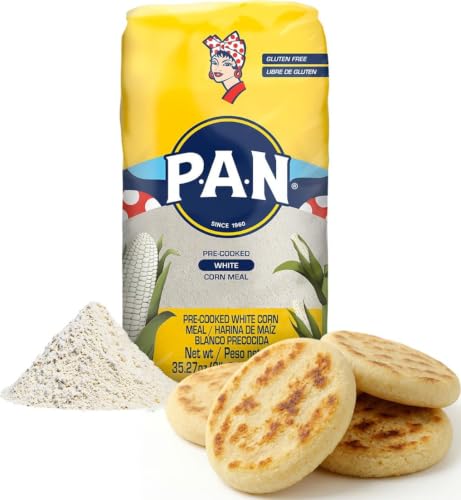
- Pre-cooked white corn flour meal
- Single pack 1Kg (35 oz/ 2 lbs 3.3 oz)

Read more about the flour behind arepas, cachapas and these dumplings in our Harina P.A.N. guide.
How to make bollos pelones
There are three parts: the filling, the sauce and the dough. Make the filling first so it has time to cool.
1. Cook the guiso and let it cool
Soften onion, bell pepper and ají dulce in oil, add garlic and green onion, then brown the beef. Stir in grated tomato, cumin, Worcestershire sauce, red wine and a pinch of brown sugar and simmer until almost dry. Finish with chopped olives, capers and raisins. Spread it on a plate and let it cool completely; warm filling softens the dough and makes the bollos tear.
2. Simmer the tomato sauce
While the filling cools, cook onion and bell pepper in oil, add garlic and crushed tomatoes with a little broth, and simmer for about 20 minutes until thick. Keep it warm.
3. Mix the dough
Whisk salt and onoto oil into warm broth, then add the Harina P.A.N. gradually, kneading by hand for 2 minutes. Let it rest for 5 minutes so the flour finishes absorbing the liquid.
Dough check: press a small ball flat between your palms. If the edges crack, knead in more warm broth a tablespoon at a time. It should feel like soft play dough, smooth and slightly tacky, but not sticky.
4. Fill and shape
Divide the dough into 12 pieces, each a little bigger than a golf ball. With damp hands, press one into a cup about 3½ inches across, add 1½ tablespoons of filling, and pull the edges up over it. Pinch to seal and roll it smooth between your palms.


5. Boil until they float
Bring a wide pot of well-salted water (or water with a little bouillon) to a boil, then lower it to a steady simmer. Lower in five or six bollos at a time. They sink at first and rise as the dough cooks. Simmer for 12 to 15 minutes in total, until they float and feel firm when pressed. Lift them out with a slotted spoon.

How to serve bollos pelones
Slide the cooked bollos into the warm tomato sauce for a minute or two so they are coated all over, then plate two or three per person and grate queso duro thickly over the top. A spoonful of nata (Venezuelan sour cream) is a popular extra.


They make a complete meal on their own, but these go well alongside:
- Tajadas, sweet fried ripe plantain, for a salty-sweet plate.
- Guasacaca, the tangy avocado sauce, for anyone who wants something fresh and green.
- A simple tomato and onion salad or a few slices of avocado.
- To drink: papelón con limón or a cold glass of chicha venezolana.
Variations
- Chicken bollos pelones: fill them with shredded chicken cooked in the same sofrito, or with leftover chicken from a stew.
- Cheese-stuffed: tuck a cube of queso blanco or queso de mano into the center, alone or with the beef.
- Margarita Island style: on Isla de Margarita, cooks blend cooked auyama (West Indian pumpkin) into the dough and fill it with a cazón (small shark) stew, the same filling used in Margarita’s famous empanadas.
- Without sauce: in some homes the bollos are colored with onoto, boiled and eaten plain or with white rice, no tomato sauce at all.
- Bean-filled: a meatless filling of seasoned black beans, a nod to the granos fillings found in Miranda state.
- Fried: fry the filled, uncooked balls in 350°F oil for 6 to 8 minutes until golden for a crisp version that eats like a corn croquette.
- Spicy: add a minced hot pepper to the guiso, or a few dashes of hot sauce to the tomato sauce.
Tips for perfect bollos pelones
- Cool the filling completely. Hot or warm guiso steams the dough from the inside and the bollos split in the pot.
- Keep the filling fairly dry. Simmer the guiso until the liquid is almost gone; a wet filling leaks through the seams.
- Wet your hands, not the dough. Keep a bowl of water nearby and dampen your palms between bollos so the dough does not stick.
- Do not overfill. About 1½ tablespoons per bollo leaves enough dough to seal without thin spots.
- Simmer, do not boil hard. A rolling boil knocks the bollos into each other and can crack them.
- Do not crowd the pot. Cook in batches so the water stays hot and every bollo has room to float.
Make ahead, storing and freezing
- Make ahead: the guiso and the tomato sauce both keep for 3 days in the fridge, so you can split the work over two days.
- Fridge: store cooked bollos and sauce separately in covered containers for up to 3 days.
- Freezer: freeze cooked, unsauced bollos on a tray, then bag them for up to 3 months.
- Reheat: simmer them in the sauce, covered, for 8 to 10 minutes (15 from frozen) until hot all the way through.
Bollos pelones FAQ
What are bollos pelones made of?
A dough of precooked white corn flour (such as Harina P.A.N.), broth and salt, filled with a ground-beef guiso with peppers, olives and capers. They are boiled and served in tomato sauce with grated white cheese.
Why are they called bollos pelones?
Pelón means bald or bare. Unlike hallacas and other bollos, which are wrapped in plantain leaves or corn husks, bollos pelones are cooked with no wrapping at all.
Are bollos pelones boiled or fried?
Traditionally boiled. Fried bollos pelones exist, but the classic version is simmered in water and then served in tomato sauce.
Can I use masa harina or cornmeal instead of Harina P.A.N.?
No. Masa harina is made from nixtamalized corn and behaves differently, and regular cornmeal will not form a dough. Use a precooked white corn flour such as Harina P.A.N.
Are bollos pelones gluten-free?
The dough is naturally gluten-free. Check the labels on your broth and Worcestershire sauce, which can contain gluten.
What is the difference between bollos pelones and hallacas?
Hallacas are a Christmas dish: flat, wrapped in plantain leaves and filled with a richer stew of several meats. Bollos pelones are round, unwrapped, made year-round and served in tomato sauce.
Can I freeze bollos pelones?
Yes. Freeze them cooked and without sauce for up to 3 months, then reheat in simmering sauce.
Bollos Pelones Recipe
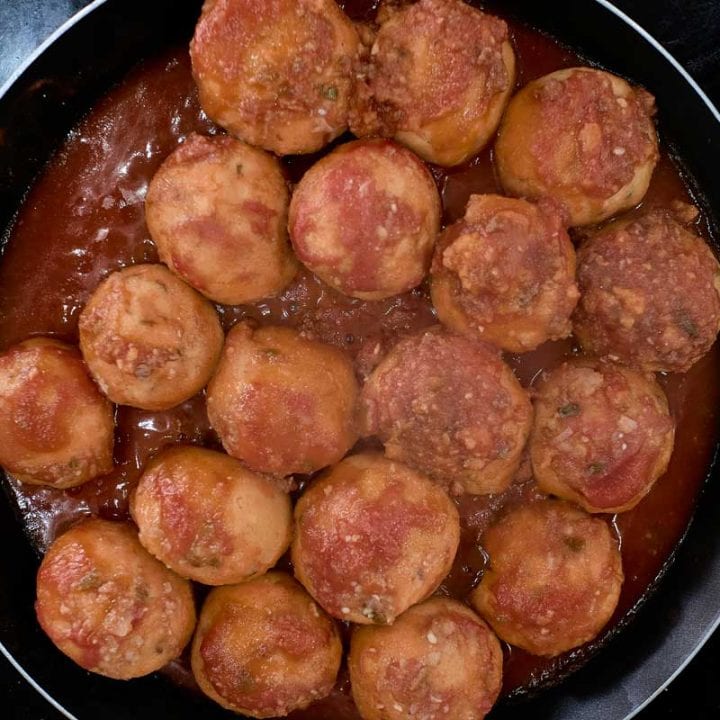
Bollos Pelones (Venezuelan Stuffed Corn Dumplings)
Venezuelan bollos pelones: soft Harina P.A.N. corn dough stuffed with a savory ground-beef guiso, simmered until they float, then served in tomato sauce under a blanket of grated white cheese.
Ingredients
For the filling (guiso)
- 2 tablespoons vegetable oil
- 1 medium onion, finely chopped
- 1/2 red bell pepper, finely chopped
- 4 ají dulce peppers, seeded and minced (or 1/4 more red bell pepper)
- 3 green onions, thinly sliced
- 3 garlic cloves, minced
- 1 lb (450 g) ground beef, 85% lean
- 1 ripe tomato, grated or finely chopped
- 1 teaspoon ground cumin
- 1 tablespoon Worcestershire sauce
- 1 teaspoon brown sugar
- 1/4 cup red wine (or beef broth)
- 1/4 cup pimiento-stuffed green olives, chopped
- 1 tablespoon capers, drained and chopped
- 2 tablespoons raisins, chopped (optional)
- Salt and black pepper to taste
For the tomato sauce
- 2 tablespoons vegetable oil
- 1 small onion, finely chopped
- 1/2 red bell pepper, finely chopped
- 2 garlic cloves, minced
- 1 can (28 oz) crushed tomatoes
- 1/2 cup chicken or beef broth
- 1 teaspoon sugar
- 1/2 teaspoon salt, plus more to taste
For the dough
- 2 1/2 cups (350 g) Harina P.A.N. precooked white corn flour
- 2 3/4 to 3 cups (650 to 720 ml) warm chicken or beef broth
- 1 tablespoon onoto (annatto) oil or vegetable oil
- 1 teaspoon salt
To serve
- 1 cup grated queso duro, cotija or queso añejo
- Sliced green onion (optional)
- Nata or sour cream (optional)
Instructions
- Make the filling: heat the oil in a large skillet over medium heat. Cook the onion, bell pepper and ají dulce for 5 minutes, until soft. Add the green onions and garlic and cook 1 minute more.
- Add the ground beef and cook, breaking it up, for 6 to 8 minutes until browned. Stir in the tomato, cumin, Worcestershire sauce, brown sugar and wine, season with salt and pepper, and simmer for 10 to 12 minutes until the liquid is almost gone.
- Stir in the olives, capers and raisins. Spread the filling on a plate and let it cool completely, about 20 minutes.
- Make the sauce: heat the oil in a saucepan over medium heat and cook the onion and bell pepper for 5 minutes. Add the garlic for 1 minute, then the crushed tomatoes, broth, sugar and salt. Simmer, partly covered, for 20 minutes until thick. Keep warm.
- Make the dough: in a large bowl, whisk the salt and onoto oil into 2 3/4 cups of warm broth. Add the Harina P.A.N. gradually, mixing by hand, then knead for 2 minutes until smooth. Cover and rest 5 minutes. If the dough cracks at the edges when you flatten a piece, knead in more broth a tablespoon at a time.
- Shape: divide the dough into 12 equal pieces. With damp hands, press each into a cup about 3 1/2 inches across, add about 1 1/2 tablespoons of filling, pull the dough over it, pinch to seal and roll into a smooth ball. Keep the shaped bollos covered.
- Cook: bring a wide pot of well-salted water to a boil, then reduce to a steady simmer. Add 5 or 6 bollos at a time and simmer 12 to 15 minutes, until they float and feel firm. Lift out with a slotted spoon and repeat with the rest.
- Serve: slide the bollos into the warm tomato sauce for 1 to 2 minutes to coat. Plate 2 or 3 per person, spoon more sauce over the top and finish with plenty of grated cheese and green onion.
Notes
Flour: use precooked white corn flour such as Harina P.A.N. Masa harina and regular cornmeal will not form the right dough.
Make ahead: the filling and sauce both keep 3 days in the fridge. Cool the filling completely before stuffing or the dough will tear.
Storage: refrigerate cooked bollos and sauce separately for up to 3 days. Freeze cooked, unsauced bollos for up to 3 months; reheat covered in simmering sauce, 8 to 10 minutes (15 from frozen).
Variations: use shredded chicken or a cube of queso blanco as the filling, or fry the uncooked filled balls in 350°F oil for 6 to 8 minutes.
Timing: the total includes 20 minutes of cooling the filling.
More Venezuelan recipes
Use leftover guiso to fill Venezuelan empanadas, try the slow-braised asado negro or the shredded beef in carne mechada, and plan ahead for Venezuelan Christmas foods. All 32 dishes are in our guide to Venezuelan food.
More Venezuelan Foods
See all →
Jorge Garcia is the founder of AmigoFoods, where he has spent over 20 years helping readers discover authentic Latin American and Spanish cuisine. Raised in a Cuban-American household, Jorge learned to cook at the hands of his mother and grandmother, carrying forward generations of family recipes. That heritage, backed by his family’s four-generation history in the Latin food industry, inspired him to launch AmigoFoods in 2003. With more than 1,000 published articles on recipes, ingredients, and food culture, Jorge’s mission is simple: make authentic Latin cooking approachable for home cooks everywhere while honoring the traditions behind every dish.