
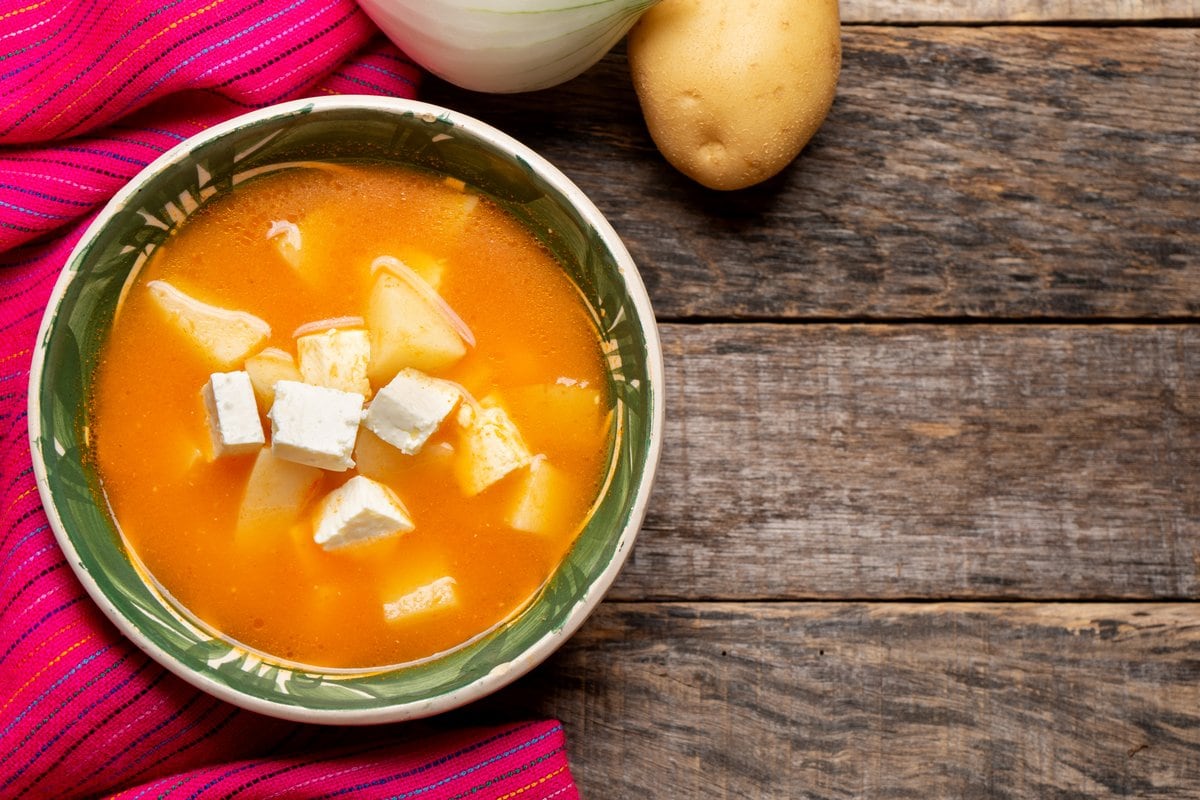
Caldo de queso is the cheese and potato soup of Sonora, in northern Mexico: potatoes and strips of roasted green chile in a light tomato broth, made creamy with milk. Cubes of fresh cheese go into each bowl and soften in the heat without melting away.
Caldo de Queso at a Glance
AmigoFoods may earn a commission from qualifying Amazon purchases made through links on this page.
What is caldo de queso?
The name means “cheese broth,” and in Sonora it is called caldo de queso sonorense or caldo de queso con papas. It is a home and fonda soup from Hermosillo to the border, and common on Sonoran-Mexican menus in Tucson, where Linda Ronstadt included a version in her 2022 book Feels Like Home.
Onion and tomato cook into a quick base, potatoes simmer in chicken broth with strips of roasted Anaheim chile, and warm milk goes in at the end. The cheese never boils in the pot. It goes into the bowl, so every spoonful has soft, warm cubes that still hold their shape. With vegetable broth it is fully meatless, which makes it a good choice for Lenten Fridays.
It belongs to the ranch cooking of northern Mexico, the same region that gives us machaca, carne asada and coyotas. Sonora is dairy and wheat country, so the soup comes to the table with flour tortillas rather than corn.
The best cheese for caldo de queso
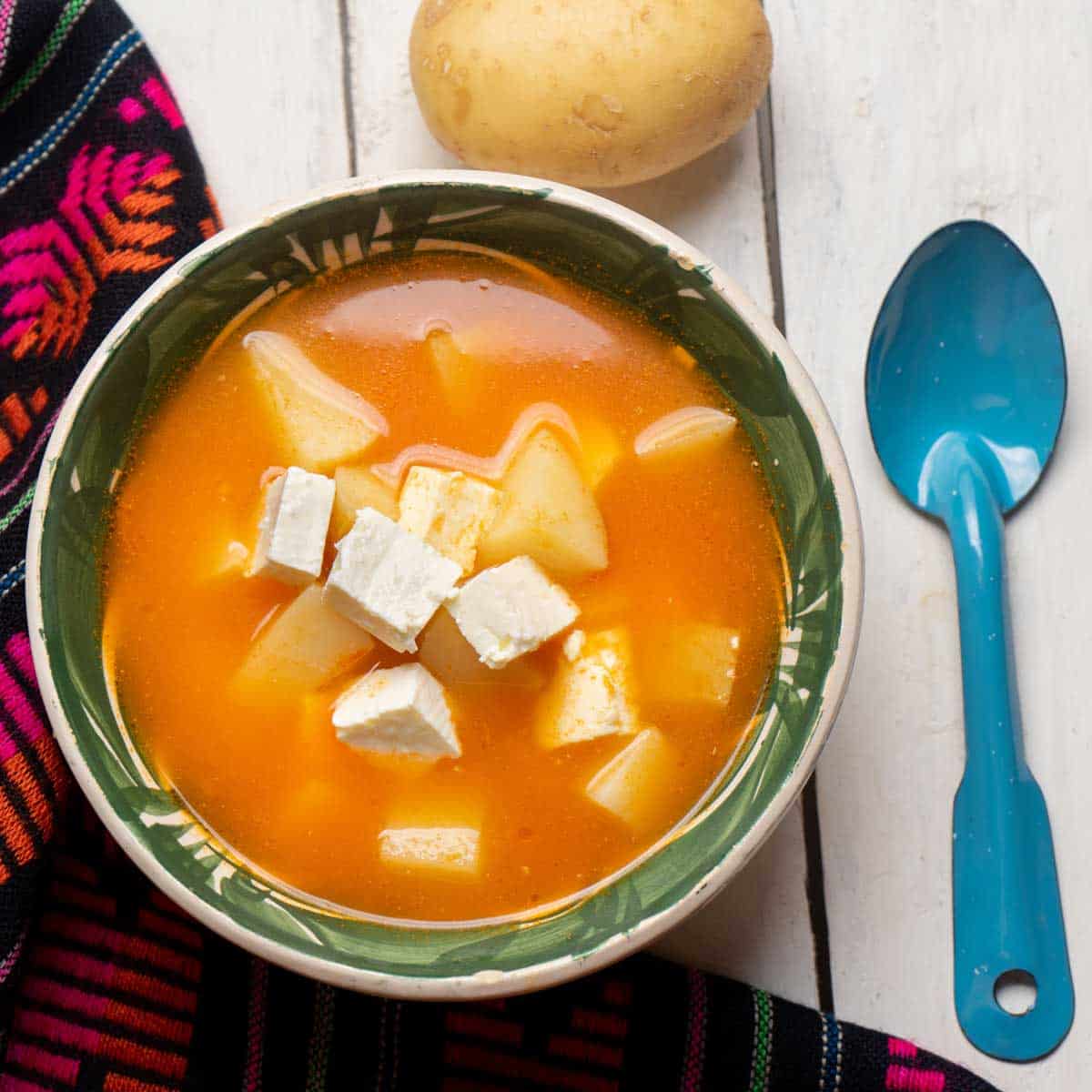
In Sonora cooks use queso regional, a fresh cow’s-milk cheese, or queso cocido, a cooked-curd cheese that turns soft and slightly stretchy in hot broth. Outside the region, queso fresco is the closest match and the one this recipe uses. What you want is a cheese that softens without dissolving.
| Cheese | In the hot broth | Verdict |
|---|---|---|
| Queso fresco | Softens and turns creamy at the edges, keeps its shape | Best widely available choice |
| Queso regional or queso cocido (Sonora) | Soft and slightly stringy | The traditional cheese if you can find it |
| Panela | Stays firm and squeaky | Good if you like distinct cubes |
| Asadero or Oaxaca | Melts into long strings | Shred it into the bowls, not the pot |
| Monterey Jack | Melts smooth | Works in a pinch; the broth gets richer |
| Cotija or other aged cheeses | Stays dry and salty | Not recommended |
Cut the cheese into 3/4-inch cubes, about 2 ounces per bowl, and taste it: salty brands mean less salt in the pot. Our guide to Mexican cheeses covers the other options.

Anaheim chiles and chiltepin
Two chiles do two jobs here. The roasted green chile is in the pot for flavor, and the tiny chiltepin is at the table for heat.
| Chile | Heat | How to use it |
|---|---|---|
| Anaheim (chile verde del norte) | Mild | Roasted, peeled and cut into strips; the classic |
| New Mexico or Hatch | Mild to hot | Same as Anaheim; buy “hot” for more kick |
| Poblano | Mild to medium | Darker, earthier broth; roast the same way |
| Canned diced green chiles | Mild | Two 4-ounce cans, drained, added with the broth |
| Chiltepin | Very hot | Crushed over each bowl, a few at a time |
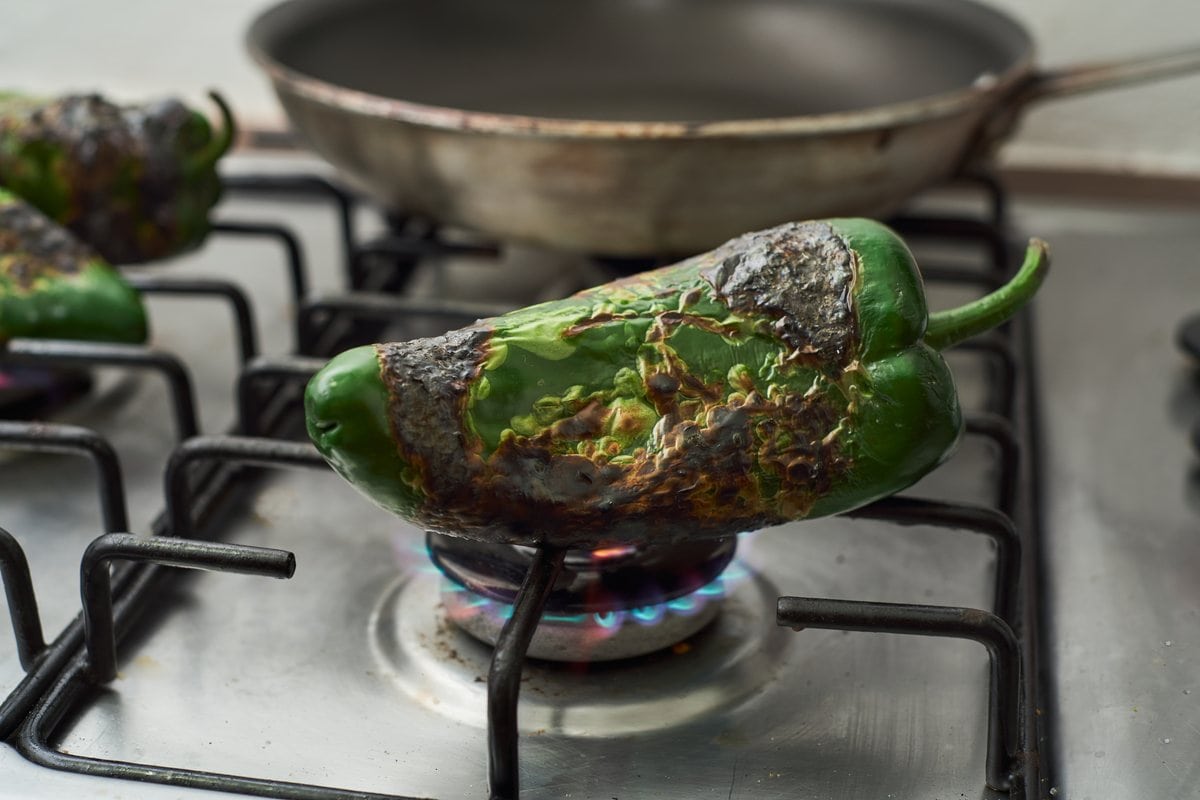
Roasting matters more than the variety. Charring and steaming loosen the skin and gives the broth a light smoky taste. Do not rinse them after peeling, or you wash that flavor away. Canned roasted green chiles are a fair shortcut when fresh Anaheims are out of season.

Chiltepin is the wild chile of the Sonoran Desert, a dried red berry the size of a pea that is far hotter than a jalapeño. Sonorans crush it between their fingers over the bowl. Dried chiltepin keeps for a year in a jar; crushed chile de árbol is the nearest substitute. A pinch of dried Mexican oregano, rubbed between your palms, goes into the pot with the broth.

- AUTHENTIC OREGANO MEXICANO – Premium hojas de oregano with a bold, earthy, and slightly citrusy...
- PERFECT FOR TRADITIONAL RECIPES – Ideal oregano seasoning for pozole, menudo, enchiladas, tacos...
Milk or evaporated milk (and no curdling)
Whole milk gives the cleanest flavor. Evaporated milk, the shelf-stable choice that desert kitchens have relied on for generations, makes a slightly sweeter, richer broth and is less likely to separate. Use one 12-ounce can in place of the 1 1/2 cups of milk. Do not confuse it with sweetened condensed milk.
Milk curdles when it meets acid and high heat at the same time, and the tomatoes make this broth slightly acidic. Three things prevent it:
- Cook the potatoes until fully tender first. The starch they release, plus a few cubes pressed against the pot, helps hold the milk in the broth.
- Warm the milk before it goes in, so the temperature change is small.
- Keep it below a boil once the milk is in. Hot and steaming is enough.
How to make caldo de queso
This caldo de queso recipe starts with the chiles. While they steam, start the onion and tomato base.

- Quality Enameled Dutch Oven: The Lodge Essential Enamel Cast Iron Dutch Oven gives you all the...
- Simmer in Style: This colorful enamel pot comes in a variety of colors to add a pop of interest to...

1. Roast the chiles.
Set the chiles on a baking sheet 3 inches under a hot broiler, or right on the grate of a gas burner over high heat. Turn them every 2 minutes until the skin is blistered and blackened on all sides, 8 to 10 minutes. Put them in a bowl, cover with a plate and let them steam for 10 minutes. Rub off the skins, pull out the stems and seeds (do not rinse) and cut the flesh into 1/2-inch strips.
2. Cook the base.
Heat the oil in a 5- to 6-quart pot over medium heat. Add the onion and cook, stirring, until soft and translucent, 4 to 5 minutes. Add the garlic and cook for 1 minute. Add the tomatoes and cook, stirring and pressing them with the spoon, until they break down into a chunky sauce, about 5 minutes.
3. Simmer the potatoes.
Add the potatoes and stir to coat them in the tomato base. Add the broth, the chile strips, the oregano (crumbled between your fingers) and 1 teaspoon of the salt. Bring to a boil over high heat, then lower the heat and simmer, partly covered, until the potatoes are completely tender, 15 to 20 minutes. Press 5 or 6 potato cubes against the side of the pot to thicken the broth a little.
4. Add the milk.
Warm the milk in a small saucepan until steaming (or 1 minute in the microwave). Turn the soup down to low and pour in the milk slowly, stirring all the time. Heat for 3 to 5 minutes, until hot but not boiling, since a hard boil can make the milk curdle. Season with the remaining 1/2 teaspoon salt and the pepper, then taste.
5. Serve.
Divide the cheese cubes among 6 warm bowls and ladle the hot soup over them. Wait 1 to 2 minutes so the cheese softens. Finish with crushed chiltepin and cilantro and serve with warm flour tortillas.
Caldo de queso vs other cheese soups
Fresh cheese in hot broth turns up across Latin America.
| Soup | Where | How it differs |
|---|---|---|
| Caldo de queso | Sonora, Mexico | Potatoes and roasted green chile in a milky tomato broth |
| Sopa de queso | Nicaragua | Fried corn-and-cheese dumplings in a tomato and mint broth, for Lent |
| Mote de queso | Caribbean Colombia | Thick yam (ñame) soup with costeño cheese |
| Changua | Bogotá, Colombia | Milk and scallion breakfast soup with a poached egg |
| Sopa de papa | All over Mexico | Potato soup, usually with no chile strips or cheese cubes |
Sopa de papa, plain potato soup, is a separate dish; caldo de queso is built around the cheese and green chile.
Serving, storage and reheating
Serve caldo de queso in deep bowls with warm flour tortillas for tearing and dipping, crushed chiltepin and a little cilantro. It is a full meal on its own; a plate of rajas or a simple salad is plenty alongside.
A bowl has about 396 calories and 18 grams of protein, with 862 mg of sodium using low-sodium broth and Diamond Crystal salt.
Store leftover soup and cheese separately if you can, for up to 3 days. Reheat over medium-low heat, stirring, until steaming but not boiling, then add fresh cheese to the bowls. Skip the freezer: the potatoes turn grainy and the milk can separate.
Caldo de Queso (Sonoran Cheese and Potato Soup)
Caldo de queso is the cheese and potato soup of Sonora, in northern Mexico. Potatoes simmer in a light tomato and chicken broth with strips of roasted Anaheim chile, warm milk turns the broth creamy, and cubes of queso fresco go into each bowl so they soften without melting away. Serve with warm flour tortillas and crushed chiltepin.
Ingredients
For the soup
- 4 fresh Anaheim chiles (about 1 pound / 450 g), or two 4-ounce cans diced roasted green chiles, drained
- 2 tablespoons neutral oil, such as avocado, canola or vegetable oil
- 1 medium white onion (about 8 ounces / 225 g), diced
- 3 cloves garlic, minced
- 2 Roma tomatoes (about 8 ounces / 225 g), diced
- 1 1/2 pounds (680 g) Yukon Gold potatoes, peeled and cut into 3/4-inch cubes
- 5 cups low-sodium chicken broth
- 1 teaspoon dried Mexican oregano
- 1 1/2 teaspoons Diamond Crystal kosher salt, divided, plus more to taste
- 1/4 teaspoon freshly ground black pepper
- 1 1/2 cups whole milk (or one 12-ounce can evaporated milk)
- 12 ounces (340 g) queso fresco, cut into 3/4-inch cubes
To serve
- Crushed dried chiltepin chiles
- Chopped cilantro
- Warm flour tortillas
Instructions
- Roast the chiles. Set the chiles on a baking sheet 3 inches under a hot broiler, or right on the grate of a gas burner over high heat. Turn them every 2 minutes until the skin is blistered and blackened on all sides, 8 to 10 minutes. Put them in a bowl, cover with a plate and let them steam for 10 minutes. Rub off the skins, pull out the stems and seeds (do not rinse) and cut the flesh into 1/2-inch strips.
- Cook the base. Heat the oil in a 5- to 6-quart pot over medium heat. Add the onion and cook, stirring, until soft and translucent, 4 to 5 minutes. Add the garlic and cook for 1 minute. Add the tomatoes and cook, stirring and pressing them with the spoon, until they break down into a chunky sauce, about 5 minutes.
- Simmer the potatoes. Add the potatoes and stir to coat them in the tomato base. Add the broth, the chile strips, the oregano (crumbled between your fingers) and 1 teaspoon of the salt. Bring to a boil over high heat, then lower the heat and simmer, partly covered, until the potatoes are completely tender, 15 to 20 minutes. Press 5 or 6 potato cubes against the side of the pot to thicken the broth a little.
- Add the milk. Warm the milk in a small saucepan until steaming (or 1 minute in the microwave). Turn the soup down to low and pour in the milk slowly, stirring all the time. Heat for 3 to 5 minutes, until hot but not boiling, since a hard boil can make the milk curdle. Season with the remaining 1/2 teaspoon salt and the pepper, then taste.
- Serve. Divide the cheese cubes among 6 warm bowls and ladle the hot soup over them. Wait 1 to 2 minutes so the cheese softens. Finish with crushed chiltepin and cilantro and serve with warm flour tortillas.
Notes
Chiles: Anaheim, New Mexico and Hatch chiles all work and are interchangeable here. Poblanos give a darker, earthier broth with a little more heat. Canned diced green chiles go in with the broth in step 3; use two 4-ounce cans, drained.
Cheese: Queso fresco softens and holds its shape. Panela stays firmer, and asadero or Oaxaca melt into strings; for those, add them to the bowls just before the soup, as in step 5. If your cheese is very salty, hold back the last 1/2 teaspoon of salt.
Milk: Evaporated milk is the older Sonoran choice and is less likely to curdle; it makes the broth slightly sweeter and richer. For a lighter soup, use 1 cup milk.
Heat: The soup itself is mild. Chiltepin at the table brings the heat; start with 2 or 3 crushed chiles per bowl.
Vegetarian: Use vegetable broth.
Make ahead: Roasted, peeled chiles keep for 3 days in the fridge. Or cook through step 3 up to 2 days ahead and refrigerate. Reheat until simmering, then continue with step 4.
Storage: Refrigerate for up to 3 days, with the cheese stored separately if you can. Reheat gently over medium-low heat without boiling, to at least 165 degrees F. Freezing is not recommended; the potatoes turn grainy and the milk can separate.
Nutrition Information:
Serving Size: about 1 3/4 cups with 2 ounces of cheeseAmount Per Serving: Calories: 396Total Fat: 21gSaturated Fat: 9gCholesterol: 47mgSodium: 862mgCarbohydrates: 36gFiber: 4gSugar: 11gProtein: 18g
Caldo de queso FAQ
What is caldo de queso in English?
Cheese soup, or more fully, Sonoran cheese and potato soup. It is a light tomato and chicken broth with potatoes, roasted green chiles and milk, poured over cubes of fresh cheese.
What cheese is best for caldo de queso?
Queso fresco is the best widely sold choice because it softens without melting into strings. In Sonora cooks use queso regional or queso cocido; panela works if you want firmer cubes.
Why did my caldo de queso curdle?
The broth boiled after the milk went in, or the milk was cold. Simmer the potatoes until tender, warm the milk, add it slowly over low heat and keep the soup below a boil.
Is caldo de queso spicy?
No. Anaheim chiles are mild. The heat comes from crushed chiltepin at the table, so each person adds as much as they like.
Can I use canned green chiles?
Yes. Use two 4-ounce cans of diced roasted green chiles, drained, and add them with the broth.
More Mexican soups
- Caldo de pollo: Mexican chicken soup with vegetables and lime
- Caldo de res: beef shank and vegetables in a clear broth
- Mole de olla: beef and vegetables in a thin red chile broth
- Albondigas soup: rice-and-mint meatballs in a vegetable caldo
- Sopa de fideo: toasted noodles in a tomato broth
- Sopa de tortilla: tomato and pasilla broth over crisp tortilla strips
Browse the full list in our guide to Mexican soups and stews.
More Mexican Foods
See all →
Jorge Garcia is the founder of AmigoFoods, where he has spent over 20 years helping readers discover authentic Latin American and Spanish cuisine. Raised in a Cuban-American household, Jorge learned to cook at the hands of his mother and grandmother, carrying forward generations of family recipes. That heritage, backed by his family’s four-generation history in the Latin food industry, inspired him to launch AmigoFoods in 2003. With more than 1,000 published articles on recipes, ingredients, and food culture, Jorge’s mission is simple: make authentic Latin cooking approachable for home cooks everywhere while honoring the traditions behind every dish.