

On this page ⌄
Enchiladas potosinas are small red corn tortillas from San Luis Potosí, Mexico, made by kneading dried chile paste right into the masa. They’re stuffed with queso fresco and salsa, folded into half-moons, cooked on a comal and then fried until the edges crisp—served with crema, crumbled cheese, lettuce and fried potatoes and carrots.
Enchiladas Potosinas at a Glance
AmigoFoods may earn a commission from qualifying Amazon purchases made through links on this page.
What Are Enchiladas Potosinas?
In English, enchiladas potosinas are “San Luis Potosí-style enchiladas,” and the name is about the only thing they share with the enchiladas most people know. Potosina simply means “from San Luis Potosí,” the state in north-central Mexico where they were born.
The difference is where the chile goes. A regular enchilada is a plain corn tortilla dipped in chile sauce. Here, the chile is blended into a paste and kneaded straight into the dough, so the tortilla itself comes out brick red and tastes faintly sweet and smoky.
Each little tortilla is filled with a mix of crumbled cheese and salsa, folded once like a turnover and cooked twice: first on a dry comal to set the masa, then in hot lard or oil to blister the outside.

Enchiladas Potosinas vs. Regular Enchiladas and Quesadillas
Outside San Luis Potosí, people often call them quesadillas or even empanadas. Don’t say that to a potosino. Here’s how the three actually compare:
| Enchiladas potosinas | Regular enchiladas | Quesadillas | |
|---|---|---|---|
| Where the chile goes | Kneaded into the masa | In a sauce the tortilla is dipped in | Usually none in the dough |
| Tortilla | Raw red masa, pressed fresh | Cooked plain corn tortilla | Raw masa or a cooked tortilla |
| Shape | Small folded half-moon, sealed | Rolled or folded, sauced on top | Folded half-moon |
| Cooking | Comal, then fried | Briefly fried or baked in sauce | Comal or fried, once |
| Classic filling | Queso fresco and salsa | Chicken, cheese or egg | Cheese, squash blossoms, guisados |
If you want the sauced, rolled kind, see our enchiladas rojas or creamy enchiladas suizas. For the whole family tree, start with our guide to Mexican enchiladas.
The Story: Red Enchiladas Born by Accident
Enchiladas potosinas come from Soledad de Graciano Sánchez, the town that runs into the city of San Luis Potosí. The local story, recorded by the town’s chronicler, credits a tortilla maker named Cristina Jalomo.
In 1919, Doña Cristina took her nixtamalized corn to the neighborhood molino to be ground. The mill had just ground dried chiles for mole, and her masa came back tinted red. She couldn’t afford to throw it out, so she made tortillas with it, filled them with cheese and onion, and her family loved them.
- 1919 — Cristina Jalomo makes the first red-masa “enchiladas” in Soledad de Graciano Sánchez.
- 1923 — At the urging of her children and customers, she starts selling them in Soledad’s main plaza.
- Around 1960 — Her daughter gives them the name “enchiladas potosinas”; the name is registered in 1965.
- 1973 — Doña Cristina dies; her family keeps making them.
- 2014 — A statue of her is unveiled in Soledad’s main plaza.
- 2019 — The town’s Feria Nacional de la Enchilada, held over Easter week, marks the dish’s 100th birthday.
Today they’re one of the most recognized dishes in the state. You’ll find them at breakfast buffets, market stalls and family tables, and you can buy them ready-made and packaged in supermarkets across Mexico. They also appear in our roundup of traditional Mexican food.
Ingredients for Enchiladas Potosinas
The list is short, so each ingredient matters. Full amounts are in the recipe card.

Dried chiles: ancho and guajillo
Ancho chiles are the most common choice. They’re mild, a little sweet and give the masa a deep orange-red. Adding a couple of guajillo chiles brightens the color and adds a tangy edge. Some cooks in San Luis also use cascabel.
Masa harina or fresh masa
Fresh masa from a tortillería tastes best, but masa harina works very well and is what most home cooks use. Maseca instant corn masa flour is the easiest to find. A spoonful of lard makes the dough softer and easier to seal. Don’t use regular cornmeal or precooked arepa flour—neither will hold together.
Cheese
The classic filling is crumbly queso fresco, which softens without leaking out. Melting cheeses like Chihuahua or Oaxaca taste great but tend to burst through the seams. For topping, use salty, aged cotija or queso añejo. Our guide to Mexican cheeses covers the rest.
Salsa for the filling
A quick roasted salsa of tomato, serrano, onion and garlic gets mixed into the cheese. It has to be thick—a watery salsa steams the masa from the inside and splits it open.
Toppings
Shredded lettuce, Mexican crema, crumbled queso, thinly sliced white onion and avocado. That’s the standard San Luis plate.
How to Make Enchiladas Potosinas
Here’s the method in brief, with photos. Exact amounts and timings are in the recipe card below.
1. Soak the chiles and make the paste
Toast the stemmed, seeded chiles on a dry comal for a few seconds per side, just until fragrant. Soak them in very hot water for 15 to 20 minutes, then blend with garlic and a little soaking water until completely smooth.
2. Make the filling and let it cool
Char the tomatoes, serrano, onion and garlic, blend them into a coarse salsa and fry it briefly with a spoonful of the chile paste until thick. Once it’s cool, fold in the queso fresco and chopped onion.
3. Knead the red masa
Mix masa harina and salt with the chile paste, lard and warm water. Knead for 3 to 5 minutes until it feels soft, like Play-Doh, and doesn’t crack at the edges when you flatten a piece. Cover it and let it rest for 15 minutes.
4. Press, fill and fold
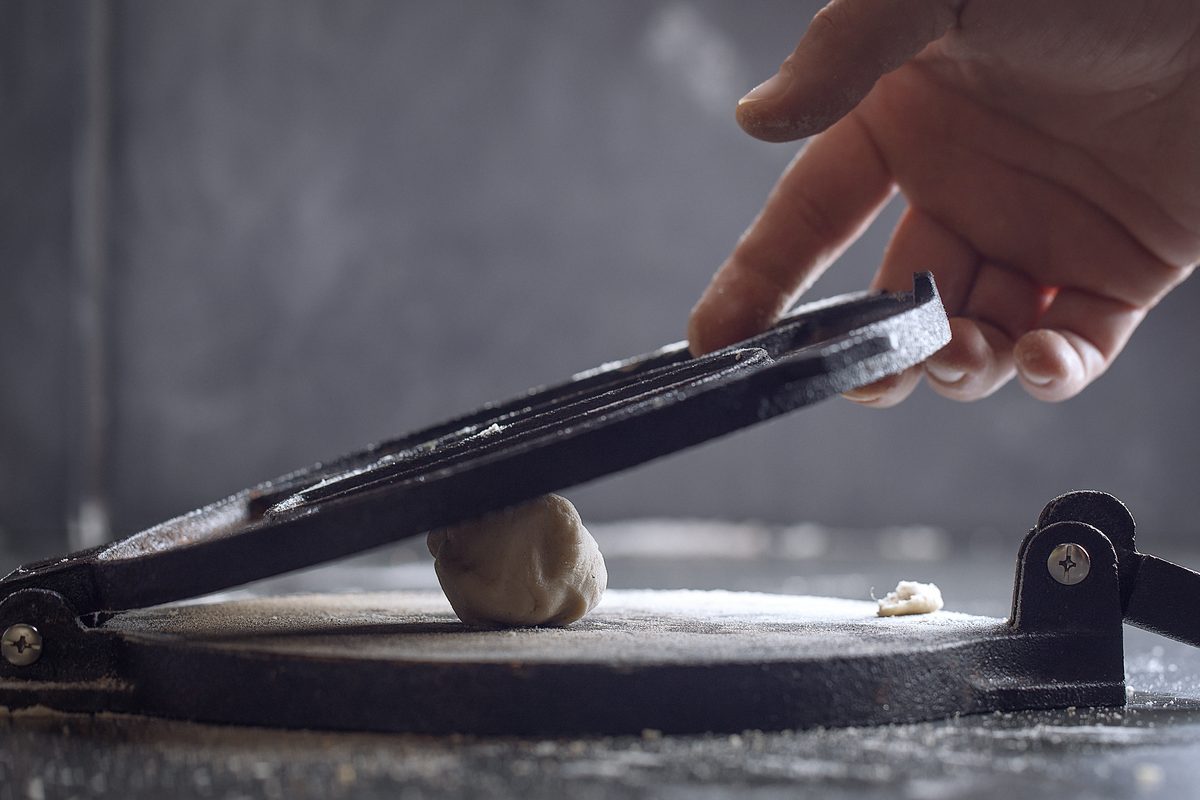
Roll the dough into 12 balls and press each one into a thin 4½-inch round between plastic sheets. A cast-iron tortilla press makes this fast. With the tortilla still on the plastic, spoon filling onto one half, use the plastic to fold it over and pinch the edges shut.
5. Cook on the comal
Cook the enchiladas on a lightly greased comal over medium heat for about 2 minutes per side, until the masa is set and lightly spotted. A heavy round cast-iron comal, such as Lodge’s 10.5-inch round griddle, holds steady heat; any heavy skillet works too. At this point you can stop, cool and refrigerate them.

6. Fry until crisp
Heat a thin layer of lard or oil in a skillet and fry the enchiladas in batches for 1 to 2 minutes per side, until the edges blister and crisp. Drain on paper towels and serve right away. If you prefer them soft, skip this step.
New to working with masa? Our guide to homemade corn tortillas and our list of Mexican cooking utensils cover the basics.
How Enchiladas Potosinas Are Served in San Luis Potosí
An order usually means three or four enchiladas on a bed of shredded lettuce, drizzled with crema and showered with crumbled queso and raw onion. Alongside comes the part many people outside Mexico skip: papas y zanahorias, diced potatoes and carrots fried in the same pan until golden.

Two popular upgrades:
- Con papa y chorizo: fry crumbled Mexican chorizo with the potatoes and carrots. Not sure which chorizo to buy? See chorizo vs. sausage.
- Con cecina: a few slices of salted, air-dried beef seared on the comal, served on the side.
They’re mostly a breakfast or late-morning dish. For more of that table, see our Mexican breakfast recipes; for more antojitos, browse our Mexican street food recipes. An agua fresca—horchata or agua de jamaica—or a cold beer is the usual drink.
Where to Eat (and Buy) Enchiladas Potosinas
In San Luis Potosí they’re everywhere—hotel breakfast buffets, market fondas, Sunday family tables. Soledad de Graciano Sánchez, the town where they were invented, still holds its Feria Nacional de la Enchilada over Holy Week. Mexican supermarkets also sell them ready-made: packs of comal-cooked enchiladas you fry at home, the same make-ahead trick families use with a homemade batch.
North of the border they’re harder to find. Some Mexican bakeries, tortillerías and taquerías run by potosino families make them, often only on weekends, so it’s worth calling ahead. The surest route is the recipe below—and because comal-cooked enchiladas freeze well, one batch covers several breakfasts.
Variations
- Enchiladas rioverdenses: from Rioverde, in the state’s Región Media. The red masa is made into small flat discs and served with beans, salsa and queso fresco rather than folded.
- Bean-filled: refried pinto beans, alone or with cheese, are a common home filling.
- Papas con chorizo filling: mashed potato with fried chorizo makes a heartier version.
- Chicken: finely shredded chicken mixed with the cheese and salsa.
- Vegetarian by default: the classic cheese filling is already meat-free. See more vegetarian enchiladas.
Enchiladas Potosinas vs. Other Regional Enchiladas
San Luis Potosí isn’t the only state in central Mexico with a signature enchilada. Guanajuato and Michoacán have famous ones too, and because they share a plate of fried potatoes and carrots, people mix them up all the time. Here’s how to tell them apart.
| Style | Where it’s from | What makes it different |
|---|---|---|
| Enchiladas potosinas | San Luis Potosí | Chile is kneaded into raw masa; the tortilla is filled, sealed into a half-moon, cooked on the comal, then fried |
| Enchiladas mineras | Guanajuato | Plain tortillas dipped in guajillo sauce and lard, filled with aged cheese and onion, topped with potatoes, carrots and pickled chiles—the miners’ dish |
| Enchiladas placeras | Morelia, Michoacán | Guajillo-dipped, fried tortillas served alongside pollo placero (pan-fried chicken) with potatoes and carrots |
| Enchiladas divorciadas | All over Mexico | Half the plate in red sauce, half in green—”divorced” because the two salsas never mix |
| Enchiladas rojas | All over Mexico | Cooked tortillas dipped in red chile sauce, then rolled or folded around a filling |
The quick test: if the chile is in the dough, it’s a potosina. Every other style on this list puts the chile in a sauce. For the Michoacán side of the family, see our guide to Michoacán cuisine; for the sauced classic, our enchiladas rojas recipe.
Tips for Perfect Enchiladas Potosinas
- Cracked edges mean dry masa. Knead in warm water a tablespoon at a time until a pressed round has smooth edges.
- Keep the dough covered. Masa dries fast; keep the balls under a damp towel and press only one or two at a time.
- Don’t overfill. About 1½ tablespoons is right for a 4½-inch round. More, and the seam won’t close.
- Cool the filling completely. Warm filling softens the masa and makes it tear.
- Control the heat. Medium on the comal, medium-high (about 350°F) for frying. Too hot and the chile in the dough scorches and turns bitter.
- Strain the chile paste. Bits of skin make little tears when you press the tortillas.
Make Ahead, Storing and Reheating
This is how families in San Luis do it: cook a big batch on the comal, keep them in the fridge and fry a few at a time.
- Fridge: cool the comal-cooked (unfried) enchiladas, then store them airtight for up to 3 days.
- Freezer: freeze in a single layer, then bag them for up to 2 months. Thaw in the fridge overnight, or fry from frozen over medium-low heat.
- Reheat: fry 2 to 3 minutes per side, or bake on a sheet pan at 375°F for about 10 minutes. The microwave works but softens the crust.

Enchiladas Potosinas FAQ
What are enchiladas potosinas in English?
They’re usually translated as “San Luis Potosí-style enchiladas” or “red chile masa enchiladas.” Potosinas means “from San Luis Potosí.”
Are enchiladas potosinas spicy?
Not very. Ancho and guajillo chiles are mild and mostly add color and a sweet, smoky flavor. The heat comes from the serrano in the filling, so use one or two to taste.
What’s the difference between enchiladas potosinas and quesadillas?
The chile. Enchiladas potosinas use masa kneaded with red chile paste, are sealed into half-moons, cooked on a comal and then fried. A quesadilla uses plain masa or a ready-made tortilla and is cooked once.
Can I use store-bought corn tortillas?
Not for the real thing. The chile has to be in the dough, and a cooked tortilla won’t seal. Dipping store-bought tortillas in chile sauce gives you a different dish—closer to enchiladas rojas.
Are enchiladas potosinas gluten-free?
The masa is made from corn only, so yes, as long as your masa harina and any fillings are certified gluten-free.
Can I make them in the air fryer?
Yes. After cooking them on the comal, brush both sides with oil and air-fry at 375°F for 6 to 8 minutes, turning once. They’ll be crisp, though less blistered than fried.
What does “potosinas” mean?
Potosinas is the feminine plural of potosino, the word for anything or anyone from San Luis Potosí. The state takes its name from Potosí, the great silver-mining city in Bolivia, because the Spanish hoped the silver found near San Luis would be just as rich.
Are enchiladas potosinas the same as enchiladas rojas?
No. Enchiladas rojas are cooked tortillas dipped in red chile sauce and rolled around a filling. In enchiladas potosinas the chile goes into the raw dough, and the tortillas are sealed around the cheese before cooking. For the sauced version, see our enchiladas rojas.
Why do my enchiladas potosinas split open when I fry them?
Usually one of four things: the filling was warm or watery, they were overfilled, the edges weren’t pinched shut, or they skipped the comal. Cook them on the comal first so the masa sets, then fry in oil at about 350°F—hotter oil makes the steam inside burst the seam.
Can I bake enchiladas potosinas instead of frying them?
Yes. After the comal step, brush both sides with oil or melted lard and bake on a sheet pan at 400°F for 12 to 15 minutes, flipping halfway, until the edges crisp. They won’t blister like fried ones, but they stay sealed and taste great.
Enchiladas Potosinas Recipe
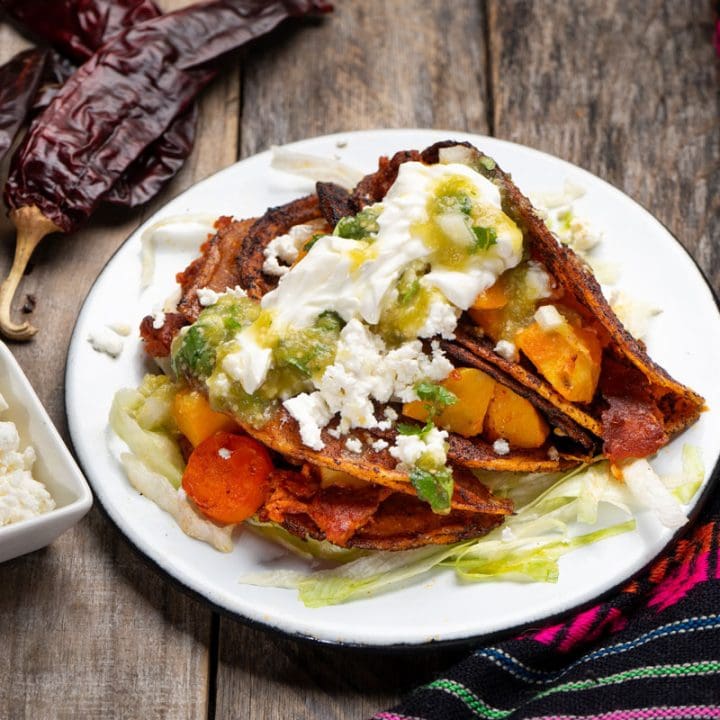
Enchiladas Potosinas (Red Chile Masa Enchiladas)
Enchiladas potosinas from San Luis Potosí: red chile masa tortillas filled with queso fresco and salsa, folded, cooked on a comal and fried until crisp. Served with crema, lettuce and papas y zanahorias.
Ingredients
For the chile paste
- 2 dried ancho chiles, stemmed and seeded
- 2 dried guajillo chiles, stemmed and seeded
- 1 cup very hot water, for soaking
- 1 small garlic clove
For the filling
- 2 Roma tomatoes
- 1 to 2 serrano peppers
- ¼ white onion, plus 2 tablespoons finely chopped
- 1 small garlic clove, unpeeled
- 1 teaspoon neutral oil
- 1½ cups (6 oz / 170 g) crumbled queso fresco
- Salt, to taste
For the red masa
- 2 cups (240 g) masa harina, such as Maseca
- 1 teaspoon fine salt
- ½ cup chile paste (from above)
- ¾ to 1 cup warm water, as needed
- 1 tablespoon lard or neutral oil
To cook and serve
- ⅓ cup lard or neutral oil, for frying
- 2 cups shredded iceberg or romaine lettuce
- ½ cup Mexican crema
- ½ cup crumbled queso añejo or cotija
- ½ white onion, thinly sliced
- 1 avocado, sliced (optional)
Papas y zanahorias (optional side)
- 2 medium waxy potatoes, cut into ½-inch dice
- 2 medium carrots, cut into ½-inch dice
- 4 oz Mexican chorizo, casing removed (optional)
Instructions
Make the chile paste
- Toast the stemmed, seeded ancho and guajillo chiles on a dry comal over medium heat for 15 to 20 seconds per side, just until fragrant. Don't let them smoke.
- Put the chiles in a bowl, cover with the very hot water and soak 15 to 20 minutes, until soft.
- Drain, reserving ½ cup of the soaking water. Blend the chiles, garlic and reserved water until completely smooth, then press through a fine sieve. You'll have about ⅔ cup paste.
Make the filling
- Roast the tomatoes, serranos, onion quarter and garlic on the comal over medium-high heat, turning, 8 to 10 minutes until charred in spots. Peel the garlic.
- Blend into a coarse, thick salsa without adding water.
- Heat 1 teaspoon oil in a small pan over medium heat. Add the salsa and 1 tablespoon of the chile paste and fry 5 to 6 minutes, stirring, until thick and no longer watery. Season with salt and let cool completely.
- Fold the queso fresco and finely chopped onion into the cooled salsa.
Make the red masa
- In a large bowl, mix the masa harina and salt. Add ½ cup chile paste, the lard and ¾ cup warm water.
- Knead 3 to 5 minutes, adding warm water a tablespoon at a time, until the dough is soft like Play-Doh and a flattened piece doesn't crack at the edges.
- Cover with a damp towel and rest 15 minutes. Divide into 12 balls (about 1½ oz / 40 g each) and keep covered.
Shape and cook
- Line a tortilla press with two pieces of plastic cut from a freezer bag. Press a ball into a 4½-inch round about ⅛ inch thick.
- With the tortilla still on the bottom plastic, spoon about 1½ tablespoons filling onto one half. Use the plastic to fold it into a half-moon and press the edges to seal.
- Heat a lightly greased comal or cast-iron skillet over medium heat. Cook the enchiladas 1½ to 2 minutes per side, until the masa is set and lightly spotted. Transfer to a plate and cover with a towel. Repeat with the rest.
- Heat the ⅓ cup lard or oil in a large skillet over medium-high heat (about 350°F). Fry the enchiladas in batches 1 to 2 minutes per side, until the edges blister and crisp. Drain on paper towels.
- Serve 3 per plate over shredded lettuce, topped with crema, crumbled queso añejo, sliced onion and avocado, with papas y zanahorias on the side.
Papas y zanahorias (optional side)
- Boil the diced potatoes and carrots in salted water 6 to 8 minutes, until just tender. Drain well.
- If using chorizo, cook it in a skillet over medium heat 4 to 5 minutes, breaking it up. Add the vegetables (and 1 tablespoon oil if not using chorizo) and fry 5 to 7 minutes until browned. Season with salt.
Notes
Fresh masa: Use 1 lb (450 g) fresh masa and knead in about ⅓ cup chile paste; you'll need little or no water.
Chiles: Use ancho, not mulato—held up to the light, an ancho looks reddish-brown, a mulato nearly black, and it turns the masa brown. All ancho or all guajillo also works.
Cracking dough: The masa is too dry. Knead in warm water a tablespoon at a time.
Make ahead: Comal-cooked, unfried enchiladas keep 3 days in the fridge or 2 months frozen. Fry just before serving, from thawed or over medium-low heat from frozen.
Air fryer: After the comal, brush with oil and air-fry at 375°F for 6 to 8 minutes, turning once.
Hungry for more? Explore our Mexican main dish recipes, our list of Mexican peppers and our guide to Mexican ingredients.
More Mexican Foods
See all →
Jorge Garcia is the founder of AmigoFoods, where he has spent over 20 years helping readers discover authentic Latin American and Spanish cuisine. Raised in a Cuban-American household, Jorge learned to cook at the hands of his mother and grandmother, carrying forward generations of family recipes. That heritage, backed by his family’s four-generation history in the Latin food industry, inspired him to launch AmigoFoods in 2003. With more than 1,000 published articles on recipes, ingredients, and food culture, Jorge’s mission is simple: make authentic Latin cooking approachable for home cooks everywhere while honoring the traditions behind every dish.