
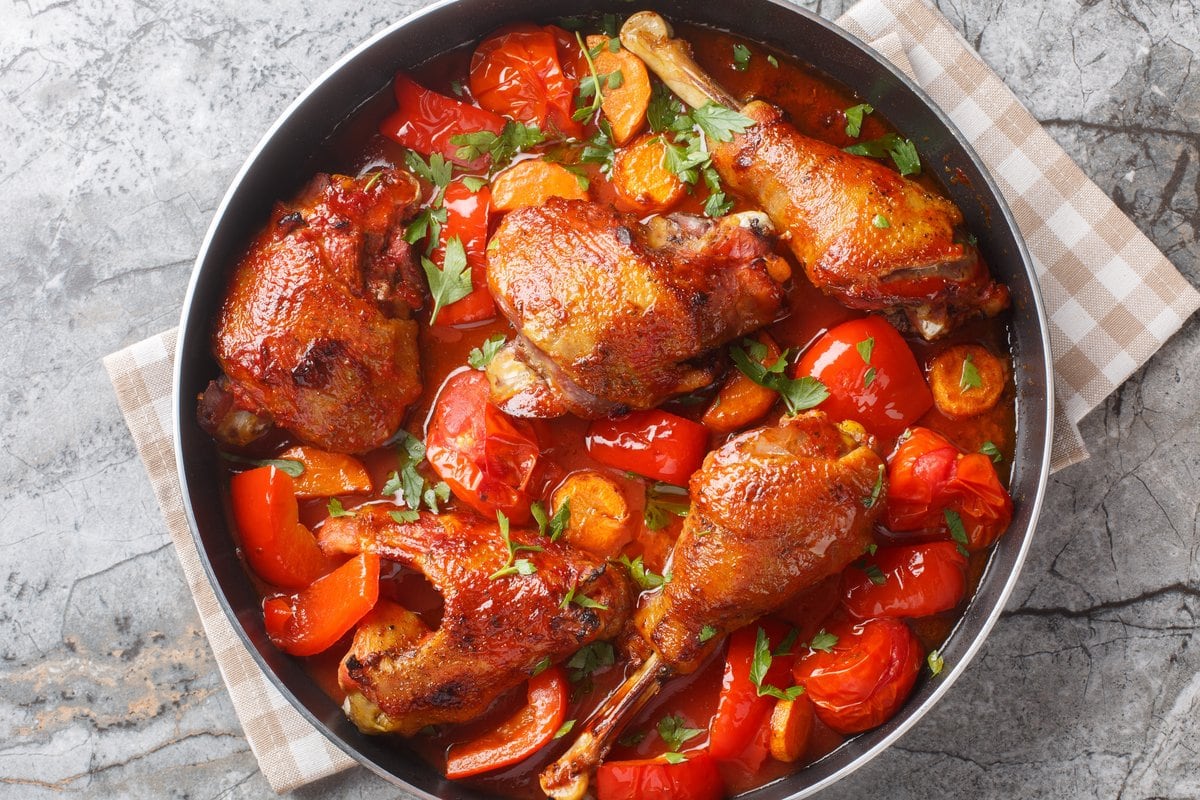
Pollo guisado is bone-in chicken braised with garlic, oregano, peppers, onion and tomato until the meat falls off the bone. Dominicans make it so often that it is one third of la bandera, the everyday lunch of rice, beans and meat, and Puerto Ricans and Cubans have their own versions. All three start from the same pantry: oregano, sazón, sofrito and a heavy caldero. Below are the ingredients that make each version taste right and a complete recipe for the Dominican one.
Pollo Guisado at a Glance
AmigoFoods may earn a commission from qualifying Amazon purchases made through links on this page.
What is pollo guisado?
Guisar means to stew, so pollo guisado is simply stewed or braised chicken. The name is used all over Latin America, but in the United States it usually means one of three Caribbean dishes: Dominican, Puerto Rican or Cuban. All three start with seasoned bone-in chicken and a tomato sauce, and all three go over white rice. They differ in the seasoning, the browning and what else goes into the pot.
In the Dominican Republic it is a weekday staple. Clara González of Dominican Cooking calls it the country’s favorite way to cook chicken, and it is on our lists of traditional Dominican dishes and Dominican soups and stews. Cooks traditionally cut a whole chicken into small bone-in pieces, but packaged thighs and drumsticks work just as well.
The Dominican seasoning: sazón, oregano and lime
Most of the flavor comes from the marinade. The chicken gets lime or sour orange juice, mashed garlic, salt, dried oregano and sliced onion, pepper and celery. Many cooks add a spoonful of homemade sazón, a blended paste of ají gustoso or cubanela peppers, onion, garlic, cilantro or culantro and oregano. Our guide to Dominican ingredients covers each one.
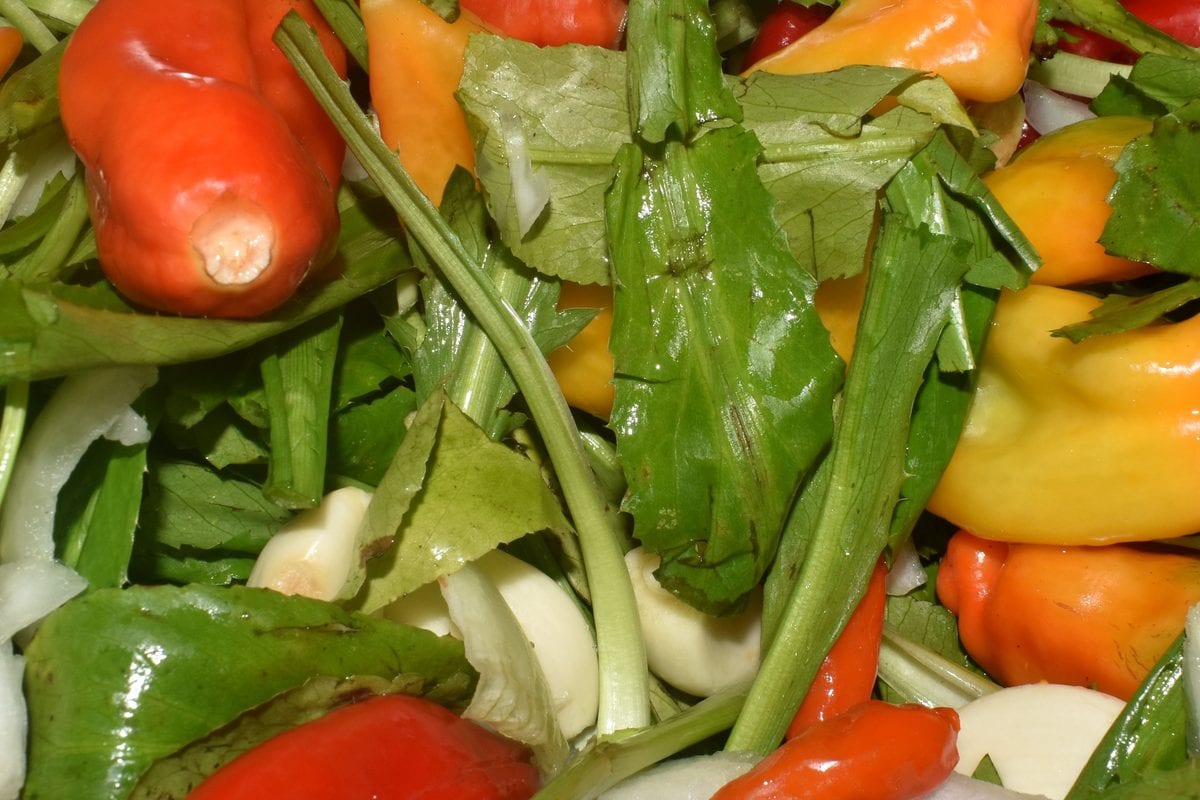
When there is no time to chop, three pantry items do most of the work:
- Dominican oregano: Stronger and more peppery than Mediterranean oregano. Use about 1/2 teaspoon per pound of chicken, a little more if you substitute Greek.
- Liquid sazón: Baldom Sazón Ranchero is the Dominican shelf staple. A tablespoon replaces most of the chopping.
- Sazón packets: Goya Sazón con Culantro y Achiote adds salt, garlic, coriander and the red-orange color of achiote. It is optional in the Dominican dish and standard in the Puerto Rican one. See our adobo vs sazón guide for the difference.

The Dominican step: browning in sugar
The Dominican version gets its deep brown color from sugar. The cook heats oil with a spoonful of sugar until it turns dark amber, then adds the chicken and turns it in the caramel. The sugar is there for color, not sweetness, and you will not taste it in the finished sauce.
Use corn, peanut or vegetable oil; olive oil starts smoking before the sugar is ready. Let the sugar go past golden to the color of dark honey and add the chicken right away. A few seconds too long and it turns black and bitter.
If you skip the sugar, brown the chicken in plain oil and add a teaspoon of tomato paste for color. Older Dominican cooks used achiote oil (aceite de bija) for the same job.
How to braise it
Guisado here means braising, not boiling. After browning, the chicken cooks covered over medium-low heat with only a couple of tablespoons of water at a time, added whenever the pot starts to stick. The chicken releases its juices, the marinade vegetables melt into them, and the tomato sauce and a little more water at the end make a thick sauce. Pour in two cups of water at the start and you get chicken soup.
The traditional pot is a caldero, the heavy cast-aluminum pot with a tight lid that also makes the rice in most Dominican kitchens. A Dutch oven or any heavy 4- to 5-quart pot with a lid works the same way.

- COOKINGCAPACITY: This IMUSA caldero offers a generous 4.8 quart cooking capacity, perfect for...
- DURABLE AND RELIABLE: This caldero pot features durable cast aluminum walls that distribute heat...

Puerto Rican pollo guisado
The Puerto Rican version is closer to a stew. The chicken is seasoned with adobo and browned in oil, without sugar. Then it simmers with sofrito or recaito, tomato sauce and a packet of sazón, which turns the sauce red-orange. Potatoes and often carrots go in the pot, with alcaparrado (olives, pimientos and capers), a bay leaf and enough broth for plenty of sauce. It takes about 35 to 60 minutes.

It belongs to the same family as Puerto Rican carne guisada, which is made with beef. The recipe notes below show how to cook our recipe the Puerto Rican way, and our Puerto Rican ingredients guide covers the pantry.
Cuban fricasé de pollo
The Cuban chicken stew is fricasé de pollo, and despite the name it has little to do with the creamy French fricassee. The chicken marinates in sour orange and garlic, much like Cuban mojo, then is browned and simmered with onion, green pepper, tomato sauce and dry white wine. Potatoes and green olives are standard, and many families add raisins, capers or a bay leaf. The Three Guys From Miami recipe takes the skin off the chicken first.
The sauce is tangier and a little sweeter than the Dominican one, and it goes over white rice. It appears in our guides to Cuban food and Cuban soups and stews. The same sauce made with ground beef is close to picadillo.
Dominican vs Puerto Rican vs Cuban
| Dominican | Puerto Rican | Cuban fricasé | |
|---|---|---|---|
| Marinade | Lime or sour orange, garlic, oregano | Adobo, sometimes lime | Sour orange and garlic |
| Browning | Oil and caramelized sugar | Oil | Oil, sometimes a dusting of flour |
| Aromatics | Red onion, cubanela pepper, celery, cilantro | Sofrito or recaito | Onion, green pepper, garlic |
| Sauce | Tomato sauce and a little water | Tomato sauce, sazón and broth | Tomato sauce and white wine |
| Also in the pot | Green olives (optional) | Potatoes, carrots, alcaparrado, bay leaf | Potatoes, olives, raisins (optional) |
What to serve with pollo guisado
In the Dominican Republic, pollo guisado is the meat in la bandera: white rice, stewed red beans and a simple salad. Dominican Cooking suggests tostones and a few slices of avocado on the side, and sweet plátanos maduros are just as common. For more ideas, see our Dominican side dishes.

Puerto Ricans serve their version with white rice or arroz con gandules, and Cubans serve fricasé over white rice with black beans. For a dish where the rice and chicken cook together, try Dominican locrio de pollo.
Make ahead and storage
Pollo guisado is better the next day. Refrigerate it in a covered container for up to 4 days or freeze it for up to 3 months. Reheat it gently with a few tablespoons of water until it reaches 165°F. You can marinate the chicken in the refrigerator overnight, but the lime starts to change the texture of the surface after about 24 hours.
Troubleshooting
| Problem | Why it happens | Fix |
|---|---|---|
| The sugar burned | The heat was too high or the sugar sat too long. | Wipe out the pot and start again. Add the chicken at dark amber. |
| Watery sauce | Too much water early on. | Uncover and simmer 5 to 10 minutes. |
| Dry, stringy chicken | Breast meat, or the heat was too high. | Use thighs and drumsticks and keep the pot at a gentle simmer. |
| Too salty | Sazón packets or bouillon plus salt. | When you use packets, skip the added salt and taste at the end. |
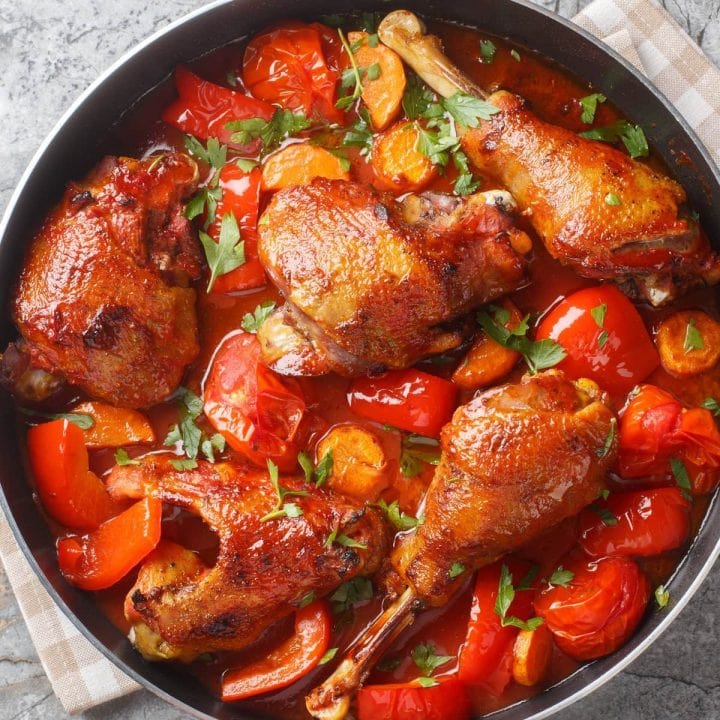
Pollo Guisado (Dominican Stewed Chicken)
Dominican pollo guisado: bone-in chicken marinated in lime, garlic and oregano, browned in caramelized sugar and braised with peppers, onion, tomato and olives until it falls off the bone. Puerto Rican and Cuban variations are in the notes.
Ingredients
Chicken and marinade
- 3 pounds bone-in chicken thighs and drumsticks (or a whole chicken cut into small pieces), skin removed
- 2 tablespoons fresh lime juice (about 1 lime), or sour orange juice
- 4 garlic cloves, mashed (about 1 tablespoon)
- 1 teaspoon dried oregano, preferably Dominican
- 1 1/2 teaspoons salt (use 1 teaspoon if adding a sazon packet)
- 1/4 teaspoon ground black pepper
- 1 small red onion, sliced
- 1 cubanela pepper (or 1 green bell pepper), sliced
- 1/2 cup chopped celery (optional)
- 1/4 cup chopped cilantro, plus more to finish
- Optional: 1 tablespoon liquid sazon (such as Baldom) or 1/2 packet sazon con culantro y achiote (such as Goya)
For the pot
- 2 tablespoons corn, peanut or vegetable oil
- 1 tablespoon white sugar
- 2 plum tomatoes, chopped
- 1/4 cup pitted green olives (optional)
- 1/2 cup tomato sauce
- About 1 1/4 cups water, added a little at a time
Instructions
- Marinate. In a large bowl, toss the chicken with the lime juice, garlic, oregano, salt, pepper and sazon (if using). Add the onion, cubanela, celery and cilantro and mix well. Cover and refrigerate for at least 30 minutes or up to overnight.
- Caramelize the sugar. Heat the oil in a heavy 4- to 5-quart pot (a caldero or Dutch oven) over medium-high heat. Add the sugar and let it melt without stirring until it turns dark amber, about 1 to 2 minutes. Watch it closely; if it turns black, wipe out the pot and start again.
- Brown the chicken. Lift the chicken out of the marinade, letting the juice drip off, and set the vegetables aside. Carefully add the chicken to the pot (it will spatter) and turn it in the caramel until browned on all sides, 5 to 6 minutes.
- Braise. Add 2 tablespoons of water, cover and reduce the heat to medium-low. Cook for 15 minutes, stirring now and then and adding water 2 tablespoons at a time whenever the pot looks dry.
- Add the vegetables. Stir in the reserved marinade vegetables and their juice, the tomatoes and the olives. Cover and cook for 10 minutes, until the vegetables are soft.
- Make the sauce. Stir in the tomato sauce and 1 cup of water. Simmer, partly covered, for 15 minutes, until the sauce thickens and the chicken reaches 165 degrees F at the thickest part and pulls easily from the bone. Taste for salt and stir in more cilantro.
- Serve. Serve hot with white rice, stewed beans and a green salad, or with tostones and avocado.
Notes
No sugar: Brown the chicken in plain oil and add 1 teaspoon of tomato paste with the vegetables for color.
Boneless chicken: Use boneless thighs and cut the braise in step 4 to 5 minutes. Breast dries out quickly; keep the heat low.
Puerto Rican style: Season the chicken with 1 teaspoon adobo instead of the lime and oregano, skip the sugar, and brown it in oil. Cook 1/4 cup sofrito or recaito and 1 sazon packet before adding the tomato sauce, then add 2 cubed potatoes, 1 sliced carrot, 2 tablespoons alcaparrado, 1 bay leaf and 1 1/2 cups broth. Simmer covered 35 to 40 minutes.
Cuban fricase style: Marinate in sour orange juice and garlic, skip the sugar, and brown in oil. Add 1/2 cup dry white wine with the tomato sauce, plus 2 cubed potatoes, green olives and 2 tablespoons raisins (optional). Simmer covered 30 to 35 minutes.
Storage: Refrigerate up to 4 days or freeze up to 3 months. Reheat with a splash of water to 165 degrees F.
Nutrition Information:
Serving Size: 1/6 of recipeAmount Per Serving: Calories: 280Total Fat: 12gSaturated Fat: 2.5gTrans Fat: 0gUnsaturated Fat: 9gCholesterol: 157mgSodium: 930mgCarbohydrates: 7gFiber: 1gSugar: 5gProtein: 34g
Pollo Guisado FAQ
What is pollo guisado in English?
Stewed or braised chicken. Guisado comes from guisar, to stew. Dominican Cooking translates it as braised chicken, because the Dominican version cooks in very little liquid.
Is pollo guisado Dominican or Puerto Rican?
Both. Dominican pollo guisado is browned in caramelized sugar and has a thick sauce with peppers, onion and olives. Puerto Rican pollo guisado uses sofrito, sazón and potatoes and has more sauce. Cubans make a similar dish called fricasé de pollo.
What is the difference between pollo guisado and fricasé de pollo?
Fricasé is the Cuban version. It is marinated in sour orange and garlic, cooked with white wine and usually includes potatoes, olives and sometimes raisins. Dominican pollo guisado has no wine and is browned in sugar.
Why do Dominicans put sugar in pollo guisado?
For color. A tablespoon of sugar caramelized in the oil gives the chicken and sauce a deep brown color. It does not make the dish sweet, and you can leave it out.
Can I make pollo guisado with boneless chicken?
Yes. Use boneless thighs and cut the first covered braise to about 5 minutes, so the whole cook takes about 30 minutes. Breast works too, but it dries out faster, so keep the heat low.
How many calories are in pollo guisado?
A serving of this recipe, one sixth of the pot, has about 280 calories without rice. A cup of cooked white rice adds about 200 more.
More Dominican food
For the rest of the plate, see la bandera and our Dominican side dishes. For a bigger pot, make sancocho de siete carnes, and for breakfast, mangú con los tres golpes. Other chicken stews on the blog include Puerto Rican asopao de pollo, Peruvian estofado de pollo, Cuban arroz con pollo and achiote chicken. For beef, see our carne guisada guide.
Shopping list: Goya Sazón con Culantro y Achiote, Baldom Sazón Ranchero, Dominican oregano, Goya Adobo and Goya Recaito for the Puerto Rican version, Goya Alcaparrado, an IMUSA caldero and an instant-read thermometer.
Sources
- Dominican Cooking (Clara González): Pollo Guisado, Dominican Braised Chicken
- Spin the Globe: Pollo Guisado, a San Juan, Puerto Rico Recipe
- Taste of Home: Pollo Guisado
- Three Guys From Miami: Cuban Chicken Fricassée (Fricasé de Pollo)
- Abuela’s Cuban Counter: Fricase de Pollo
- USDA FSIS: Safe Minimum Internal Temperature Chart
- USDA FoodData Central (nutrition estimate)
More Dominican Foods
See all →
Jorge Garcia is the founder of AmigoFoods, where he has spent over 20 years helping readers discover authentic Latin American and Spanish cuisine. Raised in a Cuban-American household, Jorge learned to cook at the hands of his mother and grandmother, carrying forward generations of family recipes. That heritage, backed by his family’s four-generation history in the Latin food industry, inspired him to launch AmigoFoods in 2003. With more than 1,000 published articles on recipes, ingredients, and food culture, Jorge’s mission is simple: make authentic Latin cooking approachable for home cooks everywhere while honoring the traditions behind every dish.