

Casabe is a thin, crisp flatbread made from just one ingredient: grated yuca (cassava). The Taíno were baking it on clay griddles long before Columbus arrived, and it is still eaten every day in the Dominican Republic, Haiti, Cuba, Venezuela and Honduras. In English it is called cassava bread. Below is everything to know about it, plus a step-by-step recipe for making casabe at home with fresh or frozen yuca.
Casabe at a Glance
AmigoFoods may earn a commission from qualifying Amazon purchases made through links on this page.
What is casabe?

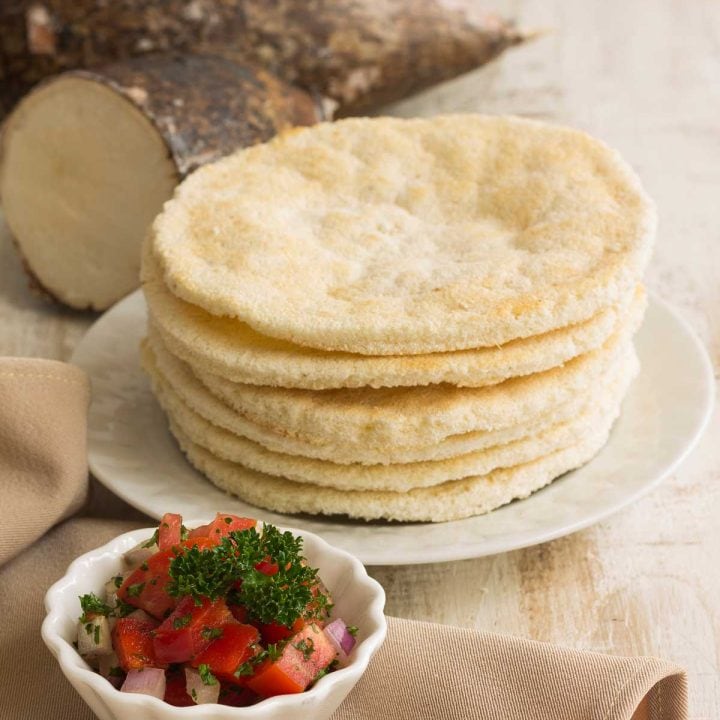
Casabe (also spelled cazabe) is a round, unleavened bread made by grating yuca, squeezing out its juice, and toasting the dry meal on a hot griddle until it binds into a single crisp disc. There is no flour, no yeast, no oil and usually no salt. The starch in the cassava is the only thing holding it together.
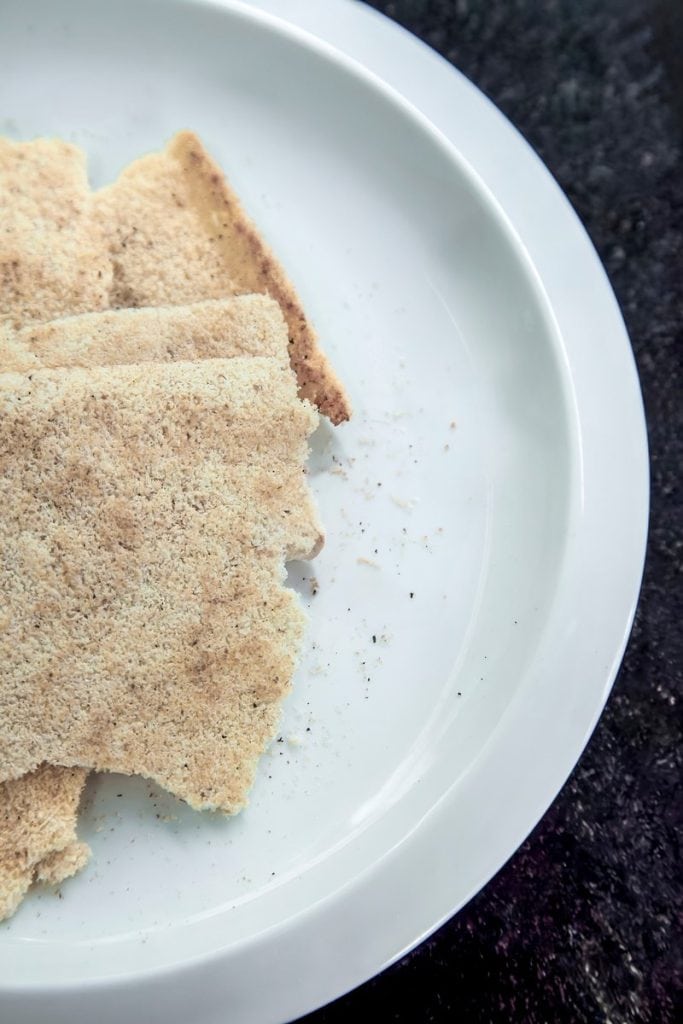
Dominican casabe is pale and thin, about the thickness of a cracker, and the traditional rounds are big enough to cover a dinner table. You break off pieces by hand. The texture is dry and crunchy, a little like a rice cake, and the flavor is mild, faintly nutty and toasty. That plainness is the point: casabe is a vehicle for whatever you put on it.
The English name is cassava bread, and in Spanish you will also hear pan de casabe or casabe de yuca. In Haiti it is kasav, and among the Garífuna of Honduras it is ereba.
Where casabe comes from

Casabe is older than the Dominican Republic itself. The Taíno, the Indigenous people of Hispaniola, Cuba and Puerto Rico, grew bitter yuca and turned it into bread with three tools: a guayo (a grating board), a cibucán (a long woven tube that wrings the juice out of the pulp) and a burén (a flat clay griddle set over the fire). Cassava bread in the Caribbean and South America goes back more than two thousand years.
Spanish colonists called it “bread of the Indians” and quickly came to depend on it, because casabe keeps for months and survived long sea voyages where wheat bread went moldy. When the Taíno population collapsed, the knowledge passed to enslaved Africans and their descendants, which is why casabe is just as much a part of Afro-Caribbean cooking today.
Dominicans still say “a falta de pan, casabe” (if there’s no bread, there’s casabe), and the town of Monción, in Santiago Rodríguez province, is known as the casabe capital of the country. Much of the casabe sold in the United States is made there with bitter yuca from the surrounding hills.
Casabe around the Caribbean

Every country that makes casabe makes it a little differently: thicker or thinner, white or golden, plain or sweet. Here is how the versions compare.
| Country | Name | What makes it different |
|---|---|---|
| Dominican Republic | Casabe | Thin, pale, very large rounds; eaten plain, with garlic butter (casabe de ajo) or alongside stews |
| Venezuela | Casabe | Huge, thin sheets made from bitter yuca, a staple of Indigenous and Afro-Venezuelan communities in the east and the Amazon; often eaten with fish |
| Cuba | Casabe | Made in rural provinces of central and eastern Cuba; now promoted as a gluten-free bread in Havana restaurants |
| Haiti | Kasav | Often slightly thicker; sold plain or sweetened with coconut, and commonly eaten spread with peanut butter |
| Honduras | Ereba | A daily bread of the Garífuna on the Caribbean coast, served with fish and coconut dishes |
| Jamaica | Bammy | A thick, smaller cassava cake; soaked in coconut milk and fried, classically with escovitch fish |
For the rest of the Dominican table, see our guide to Dominican food, or explore Venezuelan food and Honduran food.
Casabe vs. other cassava breads
Search for “cassava bread” and you will find several very different things. They are easy to mix up, so here is the short version:
| Bread | Made from | Texture |
|---|---|---|
| Casabe | Fresh grated yuca, squeezed and griddled | Thin and crisp, like a cracker |
| Pan de yuca | Yuca starch plus cheese and egg | Soft, chewy, cheesy rolls (our recipe) |
| Brazilian tapioca | Hydrated tapioca starch | Soft, folded crêpe (our recipe) |
| Cassava-flour loaf | Dried cassava flour, eggs, baking powder | A modern gluten-free sandwich bread |
Only casabe is made from the whole fresh root with nothing added. If you want to understand the plant itself, start with our guide to yuca and cassava root, or see how it fits into the bigger family of Latin American roots and tubers.
Ingredients for homemade casabe

- Yuca: About 2 pounds of fresh yuca (two medium roots) makes three 10-inch rounds. Buy firm roots with no soft spots; snap off an end in the store if you can and check that the flesh is pure white. Gray or blue streaks mean it is old.
- Or frozen grated yuca: Latin grocery freezers sell bags of grated cassava (yuca rallada). It is the biggest shortcut in this recipe because the peeling and grating are already done. Thaw it completely before squeezing.
- Salt: Optional. Traditional Dominican casabe is unsalted, but ½ teaspoon of fine salt makes homemade casabe taste better on its own.
- For casabe de ajo: Butter or olive oil, fresh garlic and a little parsley.
How to make casabe
1. Peel the yuca
Cut the yuca into 3-inch sections. Stand each one on end, slice down through the waxy brown bark and the pink layer underneath, then pry the peel off with your thumb. Halve each piece lengthwise and cut out the woody string in the center.
2. Grate it finely
Grate the yuca on the smallest holes of a box grater, or cut it into chunks and pulse it in a food processor until it looks like wet, fine sand. The finer the grate, the better the casabe holds together.
3. Squeeze out the juice
Pile the grated yuca into a cheesecloth or nut-milk bag and twist it hard over a bowl, the same job the Taíno cibucán did. Keep twisting until almost nothing drips. You should be left with a damp meal that holds its shape when squeezed in your fist but crumbles apart when poked. Expect to lose about a third of the weight as liquid.
4. Sift the meal
Break up the pressed cake with your fingers and rub it through a colander or coarse sieve so you have loose, even crumbs. Mix in the salt, if using. Sifting is what gives casabe its fine, even texture instead of lumpy patches.
5. Press it onto a hot griddle
Heat a dry 10- to 12-inch cast-iron comal or nonstick skillet over medium heat. No oil. Scatter about 1 heaping cup of the meal across the pan, then press it flat with the back of a wide spatula into an even layer about ¼ inch thick, pushing the edges in to make a neat round. As it heats, the starch melts and glues the crumbs together.
6. Cook and flip
Cook for 5 to 7 minutes, pressing occasionally, until the round holds together when you shake the pan and the bottom is set with a few pale golden spots. Slide it onto a plate, invert the pan over it and flip it back in. Cook the second side for 4 to 6 minutes. Repeat with the rest of the meal.
7. Dry until crisp
Straight off the griddle, casabe is soft and slightly chewy, and many people eat it just like that. For the classic cracker-crisp casabe, set the rounds directly on the rack of a 250°F (120°C) oven for 40 to 50 minutes, until they are completely dry and snap cleanly. In the Dominican Republic the rounds are dried in the sun instead.

Casabe de ajo (garlic casabe)
Casabe de ajo is the version Dominican restaurants put in the bread basket, and it is the best way to win over anyone who finds plain casabe too dry. Melt 3 tablespoons of butter (or warm olive oil) with 3 finely minced garlic cloves and a pinch of salt for 1 minute, until fragrant but not browned. Brush it over a dried casabe round, sprinkle with chopped parsley, and bake at 375°F (190°C) for 4 to 5 minutes until it sizzles. Break it into pieces and serve hot. Store-bought casabe works perfectly here too.
Tips for crisp casabe
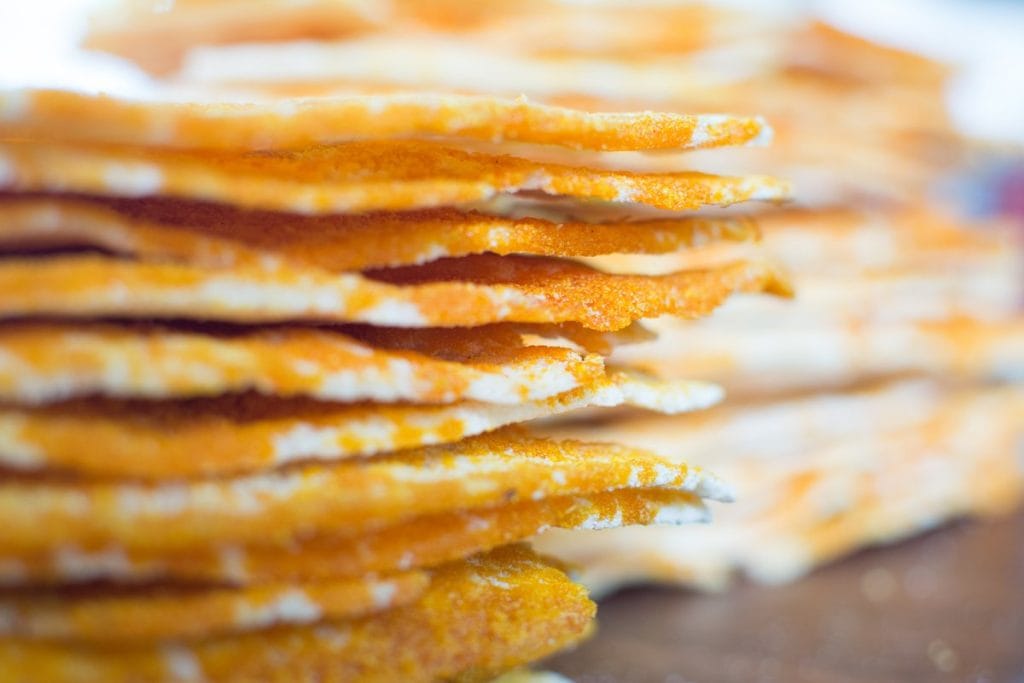
- Squeeze harder than you think. Wet meal steams instead of toasting and turns gummy. If your first round sticks or stays pasty in the middle, squeeze the rest again.
- Keep it thin and even. Thick spots stay soft while the edges burn. Use the spatula to push the meal into a uniform layer.
- Medium heat, not high. Casabe needs time for the starch to melt before the outside colors. High heat browns it before it binds.
- Don’t skip the sifting. Clumps of meal never fully cook and leave hard lumps.
- Dry it all the way. Any moisture left in the center will turn crisp casabe leathery within a day.
How to eat casabe
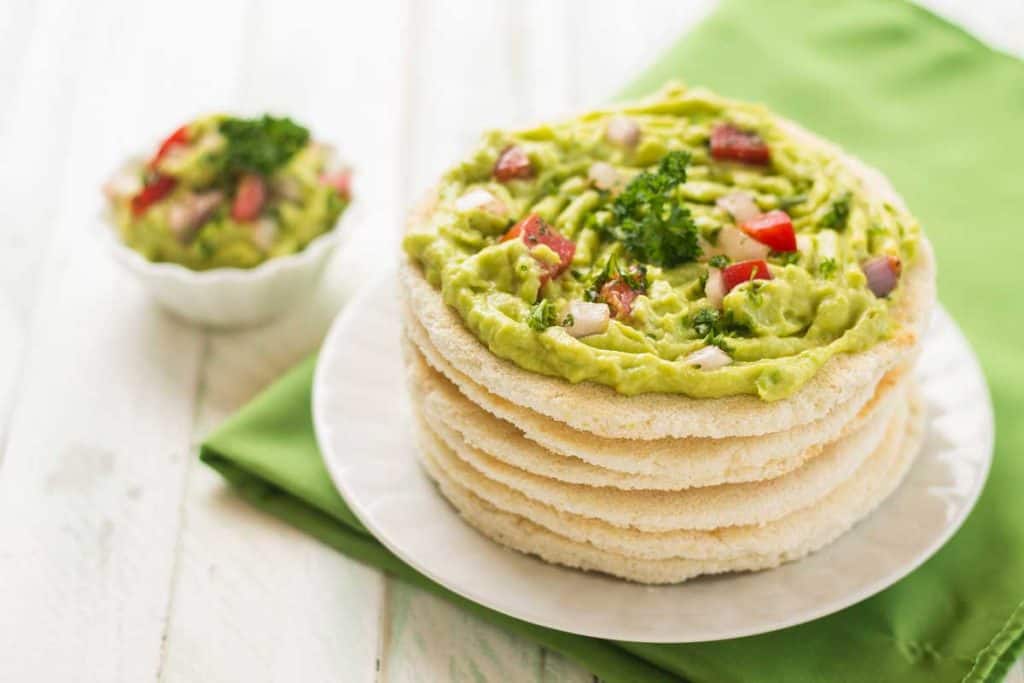
In the Dominican Republic casabe is eaten the way bread or crackers are eaten everywhere else. Some favorite ways to serve it:
- With soups and stews. A piece of casabe on the side of sancocho is classic. Dip it into the broth so it softens. Our Dominican soups and stews all pair well.
- At breakfast. With butter, cheese, avocado or eggs, next to mangú or the rest of a Dominican breakfast, and a cup of coffee or hot chocolate.
- Instead of rice. Some families serve casabe in place of rice with la bandera, stewed meats or beans.
- As a picadera. Topped with guacamole, avocado salad, cheese, or shrimp ceviche, it turns into a party snack. See our list of Dominican picaderas for more.
- Sweet. With honey, guava paste, fruit preserves or dulce de leche.
- With habichuelas con dulce. During Lent, buttered and toasted casabe is the crunchy side for a bowl of habichuelas con dulce, the Dominican sweet cream of beans.

Is casabe healthy?
Casabe is about as simple as bread gets: nothing but cassava, so it is naturally gluten-free, grain-free, dairy-free, vegan and, unless you add butter, essentially fat-free. That makes it a useful bread for people avoiding wheat.
It is also almost pure starch, with very little protein or fiber. So does casabe make you gain weight (¿el casabe engorda?)? Not on its own, but it is not a “free” food either. Because it is so dry and light, it is easy to eat a lot of it. The toppings usually matter more than the casabe: a round with avocado or beans is a balanced snack, while one soaked in garlic butter is a treat.
Where to buy casabe

In the United States, look for casabe in the Caribbean section of Latin supermarkets and bodegas, especially in New York, New Jersey, Massachusetts and Florida. It comes in large, flat sealed bags. Check the label: real casabe lists only cassava (and sometimes salt). Brands we like:
Making it yourself? A 12-inch cast-iron comal gives you the flat, even surface casabe needs, a sturdy box grater handles the yuca, and a cheesecloth bag makes squeezing out the juice much easier. For the rest of the Dominican pantry, see our guide to Dominican ingredients.
How to store casabe
Fully dried casabe keeps for months. Store it in an airtight bag or tin in a cool, dry cupboard, away from the stove and dishwasher steam. Humidity is the enemy: if it goes soft or leathery, put it on the rack of a 300°F (150°C) oven for 5 to 10 minutes and it will crisp right back up. Soft, freshly griddled casabe should be eaten the same day or dried in the oven before storing.
Casabe FAQ
What is casabe in English?
Casabe is called cassava bread in English. It is a crisp, round flatbread made from grated cassava (yuca).
What is casabe made of?
Only cassava. The root is peeled, grated, squeezed to remove the juice, sifted and toasted on a griddle. Some versions add salt, garlic or coconut.
What does casabe taste like?
Mild and slightly nutty, with a toasty flavor and a dry, cracker-like crunch. It tastes a little like a plain rice cake, which is why it is almost always eaten with something on it.
Is casabe gluten-free?
Yes. Cassava contains no gluten. If you have celiac disease, check packaged brands for a gluten-free label, since some are made in shared facilities.
Is casabe Dominican or Venezuelan?
Both. Casabe is Taíno and Indigenous South American in origin, and it belongs to the whole Caribbean basin. That is why five countries (the Dominican Republic, Cuba, Haiti, Honduras and Venezuela) nominated it to UNESCO together.
Can I make casabe with cassava flour?
Not the traditional kind. Casabe relies on freshly grated, squeezed yuca. Dry cassava flour makes a softer flatbread closer to a tortilla. For the real texture, use fresh or frozen grated yuca.
How long does casabe last?
Fully dried casabe lasts several months in an airtight container in a dry place. Freshly griddled soft casabe is best the same day.
Casabe Recipe
Casabe (Dominican Cassava Bread)
Casabe is the crisp Dominican cassava bread the Taíno made from nothing but grated yuca. Squeeze the yuca dry, toast it on a hot comal and dry it in a low oven for crackly, gluten-free rounds, or brush it with garlic butter for casabe de ajo.
Ingredients
- 2 pounds (900 g) fresh yuca (about 2 medium roots), or 2 pounds frozen grated yuca, thawed
- 1/2 teaspoon fine salt (optional)
- 3 tablespoons butter or olive oil (optional, for casabe de ajo)
- 3 garlic cloves, finely minced (optional, for casabe de ajo)
- 1 tablespoon chopped fresh parsley (optional, for casabe de ajo)
Instructions
- Cut the yuca into 3-inch sections. Slice off the waxy brown bark and pink layer underneath, halve each piece lengthwise and cut out the woody center string.
- Grate the yuca on the smallest holes of a box grater, or pulse it in a food processor until it looks like wet, fine sand. (Skip steps 1 and 2 if using thawed frozen grated yuca.)
- Put the grated yuca in a cheesecloth or nut-milk bag and twist hard over a bowl until almost no liquid drips out. The meal should hold together when squeezed but crumble when poked. Discard the juice.
- Break up the pressed meal and rub it through a colander or coarse sieve into loose, even crumbs. Mix in the salt, if using.
- Heat a dry 10- to 12-inch cast-iron comal or nonstick skillet over medium heat. Scatter about 1 heaping cup of the meal into the pan and press it into an even round about 1/4 inch thick with the back of a wide spatula, pushing the edges in neatly.
- Cook 5 to 7 minutes, pressing occasionally, until the round holds together and the bottom is set with a few pale golden spots. Slide onto a plate, invert the pan over it and flip it back in. Cook the second side 4 to 6 minutes. Repeat with the remaining meal.
- For crisp casabe, set the rounds directly on the rack of a 250°F (120°C) oven for 40 to 50 minutes, until completely dry and they snap cleanly. Cool on a rack.
- For casabe de ajo (optional): melt the butter with the garlic and a pinch of salt for 1 minute. Brush over the dried rounds, sprinkle with parsley and bake at 375°F (190°C) for 4 to 5 minutes. Break into pieces and serve hot.
Notes
Frozen grated yuca: Latin grocery freezers sell grated cassava (yuca rallada). Thaw it completely, then start at step 3.
Safety: Never eat yuca raw or drink the squeezed juice. Squeezing and cooking the meal all the way through makes it safe.
Soft or crisp: Straight off the griddle casabe is soft and slightly chewy; eat it the same day. Oven-dried casabe keeps for months in an airtight container.
Re-crisping: If stored casabe goes soft, warm it on the oven rack at 300°F (150°C) for 5 to 10 minutes.
More Dominican breads and sides
Casabe is one of many starches on the Dominican table. Try yuca con mojo or crisp yuca fries, browse our Dominican side dishes, or see every bread and side on our Dominican breads and sides page.
More Dominican Foods
See all →
Jorge Garcia is the founder of AmigoFoods, where he has spent over 20 years helping readers discover authentic Latin American and Spanish cuisine. Raised in a Cuban-American household, Jorge learned to cook at the hands of his mother and grandmother, carrying forward generations of family recipes. That heritage, backed by his family’s four-generation history in the Latin food industry, inspired him to launch AmigoFoods in 2003. With more than 1,000 published articles on recipes, ingredients, and food culture, Jorge’s mission is simple: make authentic Latin cooking approachable for home cooks everywhere while honoring the traditions behind every dish.