

Latin America is not only renowned for its breathtaking tropical landscapes, world-class soccer teams, and vibrant, hip-shaking music; it’s also home to a rich culinary tradition.
Here is our list of the top 50 latin dishes;
50. Sopes

Sopes is a popular Mexican appetizer or antojito served with a host of toppings.
An easy and quick dish to make, sope is a thick tortilla with meat and vegetable adornments.
The tortilla base is a fried masa sphere with pinched edges.
Crumbled cheese, onions, lettuce, green or red sauce, etc., are the toppings used.
49. Chicha Morada

Chicha morada is a traditional Peruvian purple corn drink. Yes, that’s right, purple corn drink.
While popular through out the year, it certainly is the beverage of choice during the summer months.
This refreshing drink is made from Peruvian purple corn, otherwise known as maiz morado.
This unique type of corn, which Peru produces over 55 varieties of, is grown in the Andes mountains.
48. Pabellón Criollo

Venezuela is well-known for its rich culture and diversified population.
And lucky for us, that various ethnic backgrounds translate into an outstanding cuisine.
There’s no better way to relish that cuisine than savoring their national dish: Pabellón Criollo.
Pabellon Criollo is probably the richest dish you’ll ever try in your whole life.
It combines juicy shredded beef, salty black beans, white rice, and fried sweet plantains.
47. Pozole

Pozole is a traditional Mexican soup that typically consists of hominy, pork, chicken, and spices.
It likely originates from the ancient Aztecs, but contemporary audiences continue to enjoy pozole’s savory taste.
Making this dish requires several hours and moderate preparation.
There are three types of pozole;
46. Jibarito

Plantains are a staple of Puerto Rican cuisine that are made in many delicious ways.
One dish, the jibarito, uses plantains in place of bread in a steak sandwich.
The jibarito is a Puerto Rican sandwich made by stacking meat, latin cheese, and other sandwich ingredients between two slices of fried plantain.
Since its creation, the jibarito has been introduced to Chicago cuisine, which is now considered a regional staple.
45. Choripan

Choripan is a beloved street food in Argentina, both by the locals and the tourists.
It consists of Argentine sausage and bread. It’s almost always suggested when you’d ask for things to try out in the country.
Choripan is delicious, affordable, and quick and easy to prepare.
In Argentina, the choripan is sort of a tradition.
Choripan is traditionally served when you’re at an asado or barbecue.
These sandwiches are served while the guests wait for the meat to be cooked.
You can season it with various latin condiments, but most of the time, people use chimichurri sauce, which is what gives this sandwich its distinct – and addictive – flavor.
44. Moqueca

For the uninitiated, the Moqueca Brazilian cuisine is a saltwater fish stew.
Any tropical fish will work on this delicious dish, from black sea bass to Mahi-mahi.
The fish combines with plantain slices and coconut milk to make a sweet, savory consistency.
In the more common iterations, Moqueca will have some shrimp as a second source of protein as well.
This is one of the best Brazilian foods you need to try as soon as possible!
43. Milanesa

Argentina’s milanesa was brought to South America by Italian immigrants in the late 1800s.
It quickly became a popular dish among Argentinians and remains popular today.
It’s made with beef or veal, covered in breadcrumbs, and pan-fried in oil.
Milanesa is the name of the Argentinian version of cotoletta.
It’s unclear how the dish earned the name milanesa.
It could be a reference to the dish’s origin in Milan, but in Spanish, milanesa means “breaded.”
“Breaded” and “Milan” are both relevant to the dish, so it’s difficult to decipher the exact origin of the name.
42. Pico de Gallo
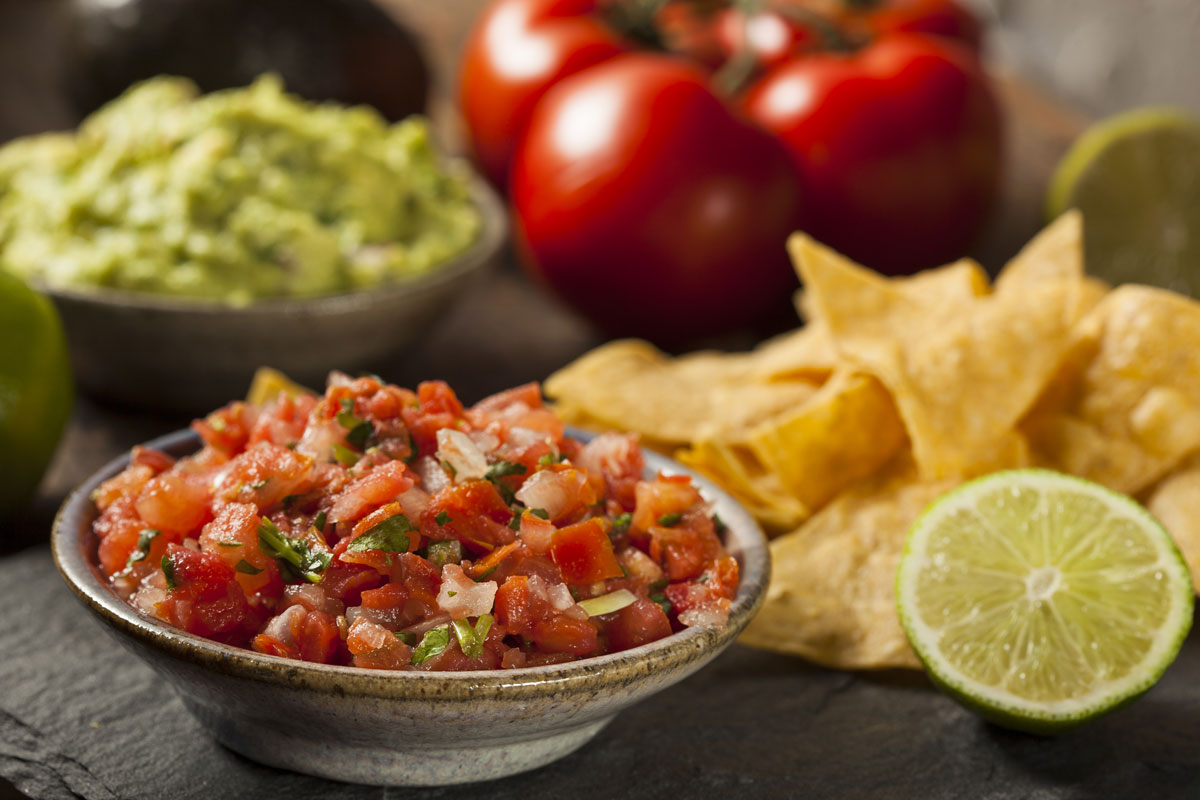
Pico de Gallo is a Mexican dip/sauce with five main ingredients: onion, cilantro, red tomatoes, peppers (jalapeno or serrano), and lime.
The dish is very versatile, as you can eat it with chips as a dip or serve it on top of the chicken, tacos, fish, pork, or burritos.
Some also call the Mexican side dish salsa Fresca or salsa cruda.
41. Picarones

Street food is a big part of the Peruvian culture.
You can find vendors selling grilled meats, corn on the cob, tamales, popcorn and more.
But picarones may be the most popular Peruvian street food of all!
Picarones are a popular Peruvian dessert made from dough fried in oil, then drenched in syrup called chancaca.
They are also called picarones peruanos made with the traditional receta picarones.
40. Chilaquiles

Chilaquiles is a typical Mexican breakfast dish made using some fried tortillas and salsa verde.
If you made too many tortillas last night and have quite a few to spare, use them to make some chilaquiles.
It’s a dish consisting of lightly fried, cut corn tortillas immersed in mole or salsa verde.
It’s typically topped with cheese, shredded chicken, sliced onions, and scrambled or fried eggs.
Like most Mexican dishes, chilaquiles is spicy, but you can certainly fine-tune the same.
There are three types of chilaquiles;
- chilaquiles rojos
- chilaquiles verdes
- chilaquiles blancos
39. Hallacas

Hallacas are the Venezuelan version of a tamale.
Hallacas contain a delightfully tasty meat stew inside garnished with manzanilla olives, raisins, almonds, giardiniera, and dijon mustard.
The corn dough can be made with roasted red peppers for a unique taste and color.
These are traditionally eaten in Venezuela around Christmas time.
38. Chaja

If you want a light dessert that won’t make you feel heavy if you eat one too many slices, you need to try Uruguay’s Chaja cake.
Chaja is a favorite Uruguayan cake that layers delicious layers of sponge cake with whipped cream, meringue, and peaches.
It might even have dulce de leche layered in as well.
It is a light, airy cake that traditionally has three layers of cake, but you may also find it with two.
37. Pupusas

Pupusas is a stuffed, thick flatbread that originated in Central America.
Many people compare the thick, disc-shaped to pancakes.
They’re also referred to as closed-sided corn flour quesadillas due to the stuffing.
This yummy dish is the “National Dish of El Salvador” and is found throughout the region.
The popular Salvadoran food even has a whole day dedicated to the celebration of the dish.
36. Bacalaitos

Since bacalaitos are not common in the United States, you may not have heard about them before today.
Bacalaitos, or cod fritters, are a Puerto Rican staple.
They are flat and chewy on the inside and crispy on the outside.
Bacalaitos are typically sold at food kiosks along the country’s beaches.
Although they first appeared during the time of the Spanish explorers, they originated in Africa.
35. Leche de Tigre

Leche de Tigre (meaning tiger’s milk) is a ceviche beverage made from raw fish marinated in citrus fruits and spiced with peppers, onions, and other seasonings.
Many Peruvian families widely recognize the tiger’s milk as an appetizer, an aphrodisiac, and a cure for hangovers.
It’s no wonder it is listed as one of the Peruvian Food: 47 Traditional Dishes to Try!
34. Tamales

Tamales have gained popularity all over the world for their delectable taste and unique character.
However they remain a favorite in many Latin American countries, such as Mexico, Guatemala, Honduras and Colombia.
Tamales begin with masa dough with a hearty filling inside.
You can find pork, chicken, beef, cheese, or bean tamales.
They are traditionally wrapped in a plantain leaf or corn husk and steamed.
You may see them served on a plate or still in the leaf.
Wash them down with your favorite latin beer and you’ll be in business!
33. Churros

Churros are known throughout the world. However, Mexican churros and Spanish churros are most popular.
Churros is a famous pastry snack usually eaten for breakfast with different sweet dipping sauces in Mexico, Portugal, Spain, etc.
Churros are crispy from the outside and soft and tender from within. The dish is best served fresh and hot.
Sugar is sprinkled on the churros to lend the dish increased sweetness.
32. Elotes

In Spanish, “elote” translates to corn on the cob.
The Mexican elotes are a typical street food. You’ll see it everywhere in the streets of Mexico City, sold next to tacos on street carts.
The sweet, tender kernels are covered by the soft Mexican Crema.
A small layer of cotija (famous Mexican cheese) is sprinkled on top as a light savory layer.
And finally, the chili powder on the outermost layer gives the ultimate explosive taste with every single bite.
31. Encebollado

Encebollado is a fish stew made of fresh tuna, onions, yuca, and a bunch of spices, along with the secret ingredient: cilantro.
The word itself is Spanish, and it literally translates to “onioned,” but the Ecuadorian seafood dish doesn’t have that much onion in it.
I think it got its name because onions are usually on top, so it’s the most visual ingredient.
Encebollado is the Ecuadorian national dish.
30. Mangú

If you’re always on the hunt for the next unique flavor, then this delicious Dominican dish is for you.
Mangú is made with plantains, and it’s simply something you won’t regret it.
Traditional mangú means mashed green plantains and it is typically topped with perfect fried onions, eggs, cheese, and salami.
And varying the sides can bring variation, too.
Try adding avocado to the three hits (egg, cheese, salami), otherwise known as “los tres golpes.”
29. Alfajores

Alfajores are a traditional South American sandwich cookie.
However, Argentina is the world’s largest consumer of alfajores.
It is an Argentine pastime and very much a part of Argentina’s culture.
The alfajor consists of two shortbread cookies filled with a rich and creamy caramel confection otherwise known as dulce de leche.
The shortbread cookies can be covered with chocolate, white chocolate, dark chocolate or covered in grated coconut or powdered sugar.
They are eaten at any time of day and there is no wrong time to indulge oneself.
In fact, there are cafe chains that specialize in serving alfajores, most notably Havanna alfajores in Argentina and in Peru, La Casa del Alfajor.
28. Bandeja Paisa

If “Bandeja Paisa” sounds like Greek to you, don’t worry, it’s Spanish.
Bandeja literally translates to platter and paisa refers to the place in Colombia.
If you’re ever in the mood for some authentic Colombian cuisine, this right here should be your go-to.
A typical serving of Bandeja Paisa is made up of chorizo, minced meat, red beans, white rice, Colombian flatbreads (arepa), a tomato-based sauce, fried eggs, fried pork (chicharron), plantain and a slice of avocado.
Unlike many other Latin American national dishes, it wasn’t until recently, in 2005 the government of Colombia decided to name it their national food.
27. Ropa Vieja

Ropa vieja is a hearty, nutritious, and delicious dish that’s popular all across Latin America.
It’s the pride and joy of traditional Cuban cuisine, to the point that it’s considered the national dish of Cuba.
The most common version of ropa vieja is made with meat, shredded beef to be more specific.
It also typically contains onions, peppers, and salsa de tomate.
As delicious and hearty as this popular meal is, the name ropa vieja does nothing to hint at the flavors or ingredients you expect to get from or find in the dish.
“Ropa vieja” literally translates to “old clothes”, which admittedly, doesn’t sound appetizing at all.
But a taste of the traditional Cuban stew and you’ll instantly be hooked!
26. Arroz con Leche

Arroz con leche is a popular Spanish and Latin American dessert that can be made with three simple ingredients.
This hearty dessert is found in similar tastes all around the world.
The reason is probably its easily accessible ingredients that combine to create a culinary gem.
Arroz con leche, which is also known as rice pudding, can be made in half an hour. Using only milk, sugar, and rice.
The basics can be found everywhere, but the special flavors and toppings of cinnamon sticks and a dash of tangy lemon is where the magic happens.
25. Yerba Mate

Yerba mate is a nutritionally rich drink. It has many benefits ranging from neurological health to energy boosting.
The Yerba mate plant originated in South America.
It starts as a small shrub then as it matures, bears harvestable leaves.
These leaves, called “yerba,” form the basis for Yerba mate tea.
Several regions of the world cultivate yerba mate differently. The tea making process depends on culture and technology.
Traditional yerba mate is drank in a gourd, which is another word for “mate.”
One puts the yerba in a gourd, then crushes or grounds the leaves and stems.
Then, one pours cold water into the gourd to begin the infusion process.
Once this is completed, hot water is poured into the gourd until the herbs infuse into the water.
24. Acai

Every few years a new “superfood” will pop up in the USA from other regions of the world.
Then, it crops up in everything from fine dining to supplements at a health store.
Acai (pronounced Ah-sigh-EE) is a type of berry that grows on acai palm trees.
Acai is native to the rainforests of Brazil in South America. This Brazilian berry has been a staple food of people in these regions for thousands of years.
Unlike other berries, this fruit isn’t overly sweet.
Acai berries have a subtle sweetness, paired with a tart earthy flavor akin to pomegranate, raspberry, or blueberry.
Acai is used as an ingredient or topping in many Brazilian recipes such acai na tigela and in smoothies and cereal.
Not only does it taste good it is also are high in fiber and heart-healthy fats amongst other health benefits.
23. Chimichurri

While like pesto, chimichurri is a blend of either lemon juice or vinegar, and a blend of several types of spices.
Some of these include garlic, thyme, oregano, parsley, scallions, and a variety of hot peppers.
There are many versions, which are used for grilling several types of meat in bright colors such as green, orange, and red varieties.
Sometimes, people will marinate their meats in chimichurri sauce.
But it’s used to add an extra kick to any barbeque or grilled recipe.
22. Flan

Flan is a creamy custard made from eggs, sugar, milk, and sometimes vanilla.
It has a crystallized caramel topping and is perfect for special occasions.
While there are many, many recipes and types of flan throughout Latin America & Spain, the general cooking method is the same.
Usually, there is the custard and the caramel sauce, along with whatever else to mix it up.
Also, the inversion of the dish onto a platter is a necessity upon serving.
21. Tostones

Unlike bananas, plantains are usually used in savory dishes, like tostones, or “twice-fried plantains.”
There are many ways to cook them, but deep-fried is the most popular method in the Caribbean countries of Cuba, Puerto Rico and the Dominican Republic.
The most traditional tostones are made when the plantain is green. The greenest ones will fry the best, especially in hot, clean oil.
Because the fruit is so firm at this stage, it resembles a starchy vegetable.
The first fry is crucial because it softens the plantain pieces before you press them. They’ll get crispy in the second fry.
A popular latin appetizer!
20. Pastelón

Pastelón is one of the traditional foods that are served in Puerto Rico as well as some other Caribbean countries.
The classic Puerto Rican lasagna-like dish contains plantains, which are the star ingredient of the meal.
The dish is a nice mix between the sweet taste of the very ripe plantains and ground beef.
Some regions use Picadillo instead of regular ground beef for the plate.
Pastelón is baked in a casserole dish and bound together using a handful of beaten eggs to help it maintain its block-like shape as it cools off.
19. Lomo Saltado

Lomo saltado translates to “stir-fried beef” and was created by Chinese cooks in Peru during the first half of the twentieth century.
Made with marinated strips of beer combined with vegetables and served with French fries or rice, lomo saltado is widespread throughout most of Latin America.
Lomo saltado is one of Peru’s most beloved recipes and one that you are sure to enjoy.
Every Peruvian family has their own “secret recipe,” and most restaurants serve it year-round.
18. Mole

Mole is a Mexican sauce that’s versatile enough to use in a variety of Mexican dishes.
It plays a significant role in Mexican culture and cuisine.
Cooking your traditional mole can take hours and require a lot of ingredients.
To cook a mole, you’ll need multiple chilis, spices, sweeteners, and thickeners.
How you cook your mole will determine how long the process will take.
17. Cachapa

Cachapa is a traditional dish that is widely consumed in Venezuela and Colombia, and this tasty dish has become a worldwide favorite because it’s delicious and relatively easy to prepare.
It is also known as Arepa de Choclo and is simply made of ground corn and cheese.
These Venezuelan pancakes have a mouth-watering taste and unique texture that you will definitely enjoy and truly a Venezuelan dish you have to try.
It’s usually served with home-made fresh Venezuelan cheese or queso de mano.
The pancakes can also be served with butter and different meat fillings.
16. Dulce de Leche

Dulce de Leche is a thick, caramel like milk based spread. It is extremely popular throughout Latin America.
And it continues to grow in popularity within the United States.
However, it’s name varies greatly from country to country in Latin America.
In Argentina, Uruguay, the Dominican Republic, Puerto Rico and Costa Rica it goes by the name of dulce de leche.
In countries such as Ecuador, Chile, and Panama it is referred to as Manjar.
Peruvians and Colombians prefer Manjar Blanco or Arequipe depending on the region.
While Mexicans and Nicaraguans use the title, cajeta. And in Brazil, where the native language is Portuguese, doce de leite is it’s proper name.
15. Enchiladas

Enchiladas are a favorite in most Mexican houses. They are as popular (if not more) as the tacos, burritos, and quesadillas of the world.
Enchiladas are rolled corn tortillas stuffed with cheese, meat, and chile sauce and then topped with the same savory sauce.
It’s served with Mexican yellow rice, lettuce, tomato slices, guacamole, etc.
Before rolling, the tortillas are coated with the sauce and fried in a pan for a few minutes.
There are different ways to make enchiladas as there are many variations of enchiladas, such as enchiladas suizas, enchiladas con mole, enchiladas poblanas, enchiladas potosinas, enchiladas verdes and so on.
14. Gallo Pinto

Gallo Pinto is the national and extraordinarily popular dish of Costa Rica.
Translated into english, gallo pinto means spotted rooster.
The name comes from the dish’s multi-colored appearance of the combination of white rice and beans.
It is a hearty and nutritious dish. Because of it’s inexpensive ingredients, it is a staple of many Latin American countries.
Nicaraguans will tell you it’s native to their country but Costa Ricans will insist it’s in fact their own.
The main difference in the two, the Nicaraguan dish uses either black or red beans and the Costa Rican one uses primarily black beans.
But whatever you do, don’t forget the salsa lizano!
13. Feijoada

Brazilian feijoada derives its name from the Portuguese word Feijao, which means beans, the primary ingredient in preparing the dish.
You need beans, slices of bacon, boneless pork, bay leaves, and salt to make it.
Other ingredients include black pepper, beef, onions, and garlic.
Feijoada is Brazil’s famous dish with a long history dating back to the European settlers in the Americas.
It is relatively low-cost, and you can prepare in large quantities without much effort for a large family.
12. Tres Leches Cake

The literal translation of “Tres Leches” is “three milks,” and the tres leches cake is a very soft cake that is soaked in a sweetened milk mixture.
The tres leches cake is a very light sponge cake that is soaked in three different kinds of milk: condensed milk, evaporated milk, and thick cream.
Mexico and most parts of Latin America began making this dessert as early as the 19th century, and it is still a favorite among many even to this day.
11. Chilean Sea Bass

Have you ever heard of Patagonian or Antarctic toothfish?
Both of these are names for the popular Chilean sea bass that is available at select seafood restaurants.
Chilean sea bass is a white and flaky fish that tastes similar to cod.
When it is properly cooked, it should have a smooth and buttery feel and taste.
It can be cooked in almost any way imaginable and the spice options for it are endless.
Because this type of fish pairs so well with spices, it is easy to integrate into your diet and favorite recipes.
10. La Bandera

You could peruse the list of latin national dishes for each country around the globe, and add the ones that appeal to you the most to your bucket list.
But a great place to begin is with one of the Dominican Republic’s most famous foods, La Bandera.
La Bandera is the national dish of the Dominican Republic. This dish consists of rice, red beans, and meat.
Most often served for lunch or dinner, a salad and a side dish usually complete the meal.
The literal Spanish to English translation for La Bandera is ‘The Flag.’
9. Aji de Gallina

Aji de Gallina is one of the most popular Peruvian chicken dishes.
It’s a chicken stew in chile sauce. The sauce is flavored with aji amarillo peppers, parmesan cheese, and walnuts.
Serve the Aji de Gallina with aceitunas botijas (Peruvian black olives) and quartered eggs on top.
You can also serve the Aji de Gallina over sliced potatoes or rice (or serve the rice or potatoes on the side). Your choice.
Peruvians have been enjoying this dish since the 16th century.
It is believed that African slaves introduced it to Peru when brought to the country by the Spanish.
Aji de gallina was created as a way to not waste any leftover potatoes and chicken.
8. Cuban Sandwich

Cuban immigrants brought this style of sandwich with them when they came to Florida in the 19th century.
The Cuban sandwich layers sliced ham, marinated pork, swiss cheese, pickles, and mustard between a special signature bread.
Depending on the location, you might find salami inside as well. The sandwich is then pressed overheat, making the outside nice and crispy.
Cuban immigrants brought this style of sandwich with them when they came to Florida in the 19th century, and it has become an American favorite ever since.
The sandwich has become widely available, and today you can see them as items on many bars, restaurant, and sandwich shop menus, along with its tasty cousin, the Medianoche.
7. Arroz con Gandules

Arroz means rice, and gandules refers to pigeon peas, which are small, round beans that pack a nutritional punch.
When you combine these ingredients along with sofrito, the island’s most popular seasoning, you have yourself Puerto Rico’s loved national dish.
One of the hallmarks of arroz con gandules is its seasoning.
Many cooks use a product called Sazon, which consists of turmeric, coriander, annatto, garlic powder, and oregano.
Some recipes call for bacon or another type of pork fat as seasoning.
Ask any native Puerto Rican, and they will likely claim that their Abuela’s arroz con gandules is the best.
And while recipes handed down through the generations will always have a special appeal, the truth is that even the most amateur attempt at arroz con gandules is going to taste great.
6. Guacamole

If you’re a fan of Mexican foods, you’ve definitely heard of guacamole.
Guacamole is a Mexican dip, spread, or salad made of avocado, which is used as a dip or condiment in American and Mexican cuisine.
It can also be served as a side dish or salad and as a delicious topping for many popular Mexican foods.
It’s simple and quick to make, and everybody has the ingredients at home. The ingredients include avocado, sea salt, onion, tomato, and lime juice.
One thing you may not have at a home is a molcajete.
It is a traditional Mexican kitchen tool used to make guacamole and it can be purchased on Amazon.
5. Pao de Queijo

You’ll find them devoured all over Brazil; in Brazilian kitchens and restaurants. Sold in bakeries and by street vendors alike.
Pão de queijo is Brazil’s #1 culinary pastime. The famous Brazilian cheese bread is a staple of the Brazilian diet and with good reason.
The typical pão de queijo recipe calls for two main ingredients. The first is cassava which is used to make manioc flour and tapioca flour.
The second main ingredient is the traditional Brazilian cheese used in making pao de queijo called queijo de Minas.
Pao de queijo is a great breakfast companion to your favorite Brazilian coffee. Or even as a snack enjoyed in between meals.
4. Arepas

Arepas are one of the yummiest treats to come out of Central and South America and they can be eaten in a variety of ways.
An arepa is a flat, round, cornmeal cake. They resemble English muffins or pitas only that they are often stuffed with many different fillings.
The name arepa came from the Indigenous form of the name, “erepa,” which means “corn.”
Originally, they were eaten as a bread or as a side sold in restaurants and as a Colombian street food.
But now they are served as a main dish and are topped or stuffed with a variety of meats, cheeses, and vegetables.
Colombia and Venezuela are known for their arepas more than any other countries.
While there are some differences one commonality is that both countries love to use the same corn meal, Harina P.A.N.
This brand of corn meal is overwhelmingly the #1 choice to make the perfect arepa.
3. Ceviche

Have you ever had Japanese sashimi? Ceviche is kind of like that. It’s raw seafood that has been marinated in lime and lemon juices.
The popular Peruvian dish is also much more than just raw fish.
With the red chilies, cilantro, and other ingredients, Peruvian ceviche is a seafood meal that you won’t be forgetting any time soon.
There are many ways that you can eat Peruvian ceviche.
You can use it as a dip for crackers or enjoy it on toast or bagel for a spin on your morning breakfast.
If you’re looking for a wine to pair with it, anything sweet usually works.
Rule of thumb, if it’s seafood, white wine is the way to go.
2. Tacos

There is no perfect occasion or day to eat a taco. If you’re feeling like eating a taco, pretty much any day can be a “taco day.”
And if you want to make the tacos unique, there are quite a few varieties to indulge in even without visiting Mexico.
Taco is a popular Mexican dish consisting of a wheat or corn tortilla stuffed with fillings, primarily containing meat.
The bread is folded when eaten, a tacos trademark.
Make sure the tortilla is malleable to be folded. Besides being fun to eat, you can get quite creative with the fillings.
The following are some of the popular fillings:
- Al Pastor Tacos – Loosely translating to “shepherd-style” pork, tacos al pastor consists of pork meat marinated in a smooth paste of spices and chiles.
- The meat is typically topped with pineapples. (In this article, you’ll learn how to make tacos al pastor.)
- Tacos Arabes – As the name indicates, this tacos variety denotes a connection between Mexico and the Middle East. The taco employs flavor-rich pork slices from a trompo, which is quite a departure as Muslims consider pork as “haram” (forbidden).
- Barbacoa Tacos – If tacos Arabes has the Middle East connection, barbacoa references the Caribbean cooking style, particularly the Taino cooking method. Beef cheeks or head (cachete) or goat is utilized for this preparation.
Campechanos tacos, carne asada tacos, carnitas tacos, Cecina tacos, birria tacos, etc., are some other popular varieties or fillings.
And those whose dietary needs are different, you can even find vegan tacos.
1. Empanadas

An empanada is a latin pastry or turnover that’s filled with savory ingredients and served hot.
The name comes from the verb “empanar” meaning “to wrap or coat in bread or dough.”
The basic ingredients combine three things: a dough, a filling, and a cooking method.
Empanadas come baked or fried and shaped like triangles or half-moons.
Popular fillings include ground or minced beef, chicken, or even a ham-and-cheese combo. You can also buy them filled with vegetables or fruit.
If you go to an empanada restaurant, you can find endless varieties.
This pocket-sized meal can be found everywhere while visiting Latin America.
Many families will cook empanadas as an easy dinner meal or party food.
Street corners and fairs will feature fresh empanadas as take-and-go street food for walkers.
More Latin Favorites
See all →
Jorge Garcia is the founder of AmigoFoods, where he has spent over 20 years helping readers discover authentic Latin American and Spanish cuisine. Raised in a Cuban-American household, Jorge learned to cook at the hands of his mother and grandmother, carrying forward generations of family recipes. That heritage, backed by his family’s four-generation history in the Latin food industry, inspired him to launch AmigoFoods in 2003. With more than 1,000 published articles on recipes, ingredients, and food culture, Jorge’s mission is simple: make authentic Latin cooking approachable for home cooks everywhere while honoring the traditions behind every dish.